
Seawall Material Selection & Construction Guide Daytona Beach
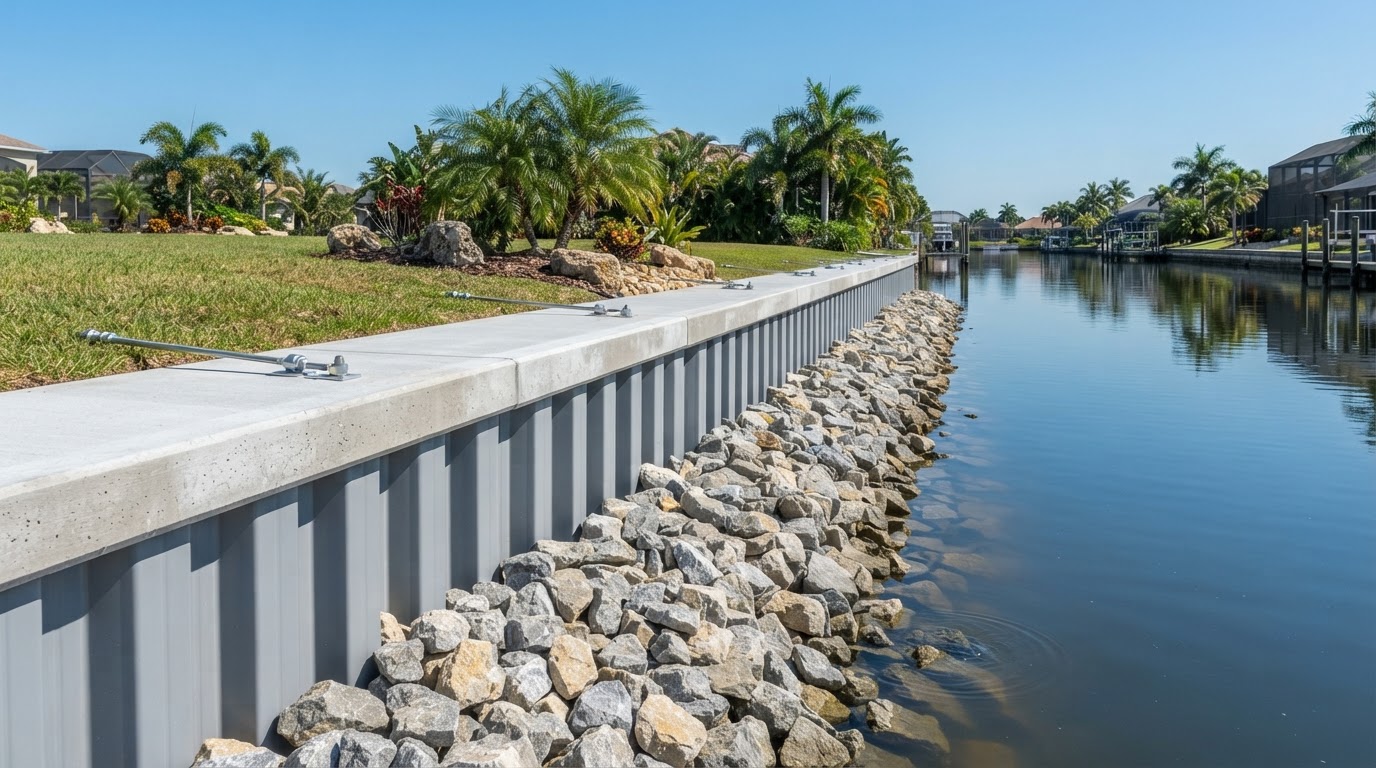
Seawall material selection is a site-specific engineering decision, not a ranking of which material is universally strongest, longest-lasting, or cheapest. This guide compares vinyl, concrete, timber, and other seawall systems for Daytona Beach waterfronts, explains how drainage, tiebacks, and retained-soil conditions shape the choice, and distinguishes structural walls from riprap and living shoreline treatments.
Request a Marine Construction Estimate
Share your dock, seawall, or boat lift project details and we'll review the requirements for your Daytona Beach area waterfront property.
Seawall Materials in Daytona Beach
A seawall retains soil and resists water-side forces, so its material is only one part of a system that also includes drainage, tiebacks or anchors, the retained-soil conditions, and the exposure environment. Selecting a material without considering the rest of the system can lead to a wall that looks complete on paper but performs poorly on the site.
This page compares common seawall materials and the design considerations that affect which may suit a specific waterfront in Daytona Beach. It does not recommend a material without site-specific consideration, does not claim one material is always stronger or longer-lasting, and refers structural design decisions to qualified professionals.
- Vinyl, concrete, timber, and other wall systems
- Drainage, tiebacks, and retained-soil conditions
- Wall panels versus caps
- Seawalls versus riprap and living shorelines
- Maintenance and repairability by material
- Why material choice is site-specific
Vinyl Seawall Construction Considerations
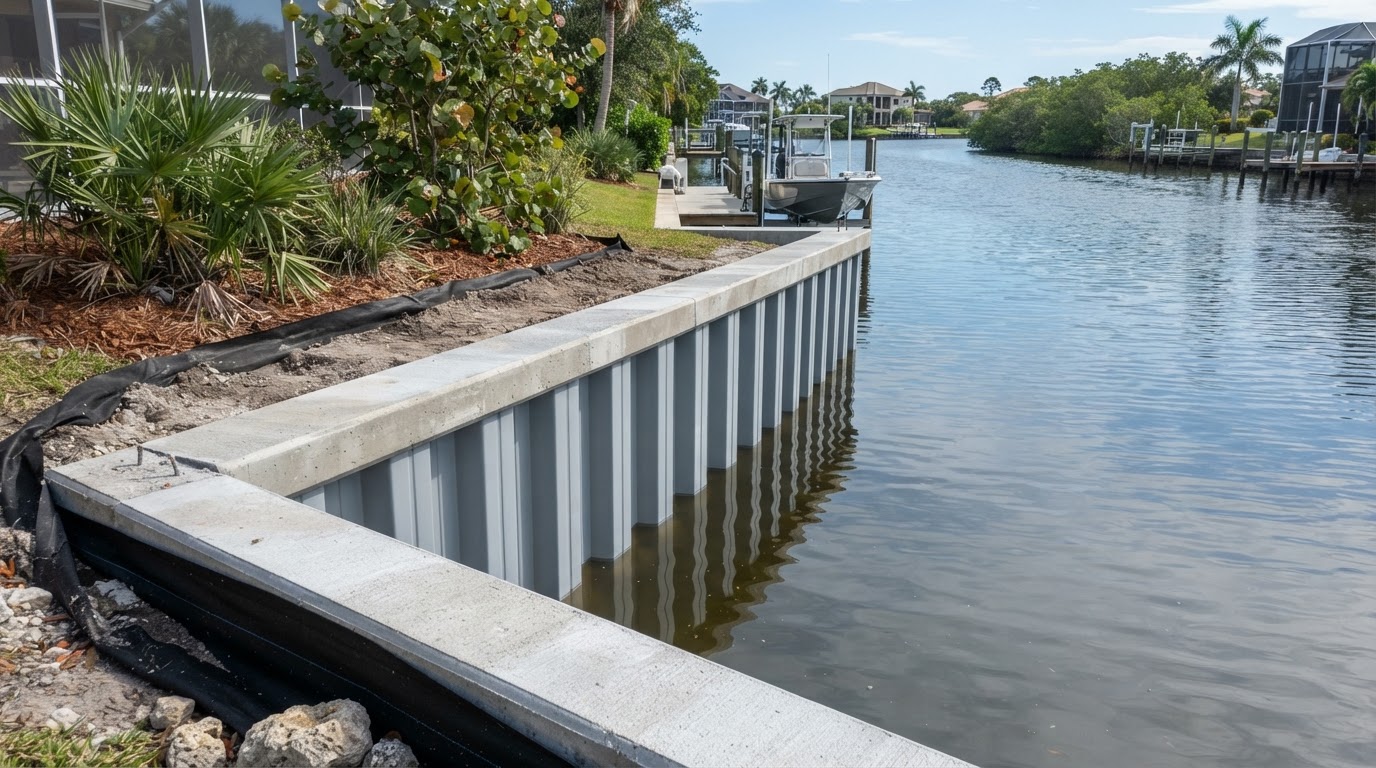
Vinyl seawall systems use interlocking sheet panels driven into the soil to form a continuous wall. Vinyl is resistant to the corrosion that affects some metal systems and is marketed for low maintenance. Whether vinyl suits a specific site depends on the retained height, soil conditions, exposure, and the engineering of the panel, tieback, and anchorage system — not on the material alone.
This page does not claim that vinyl is always better or always cheaper than other materials. A vinyl wall's performance depends on proper installation, adequate tiebacks, and effective drainage behind the wall. Selecting vinyl without site-specific engineering review would not be a sound basis for a wall that must retain soil and resist water forces.
- Vinyl uses interlocking sheet panels driven into the soil
- Vinyl is corrosion-resistant and marketed for low maintenance
- Performance depends on retained height, soil, exposure, and anchorage
- Vinyl is not universally better or cheaper than other materials
Concrete Seawall Systems Near Daytona Beach
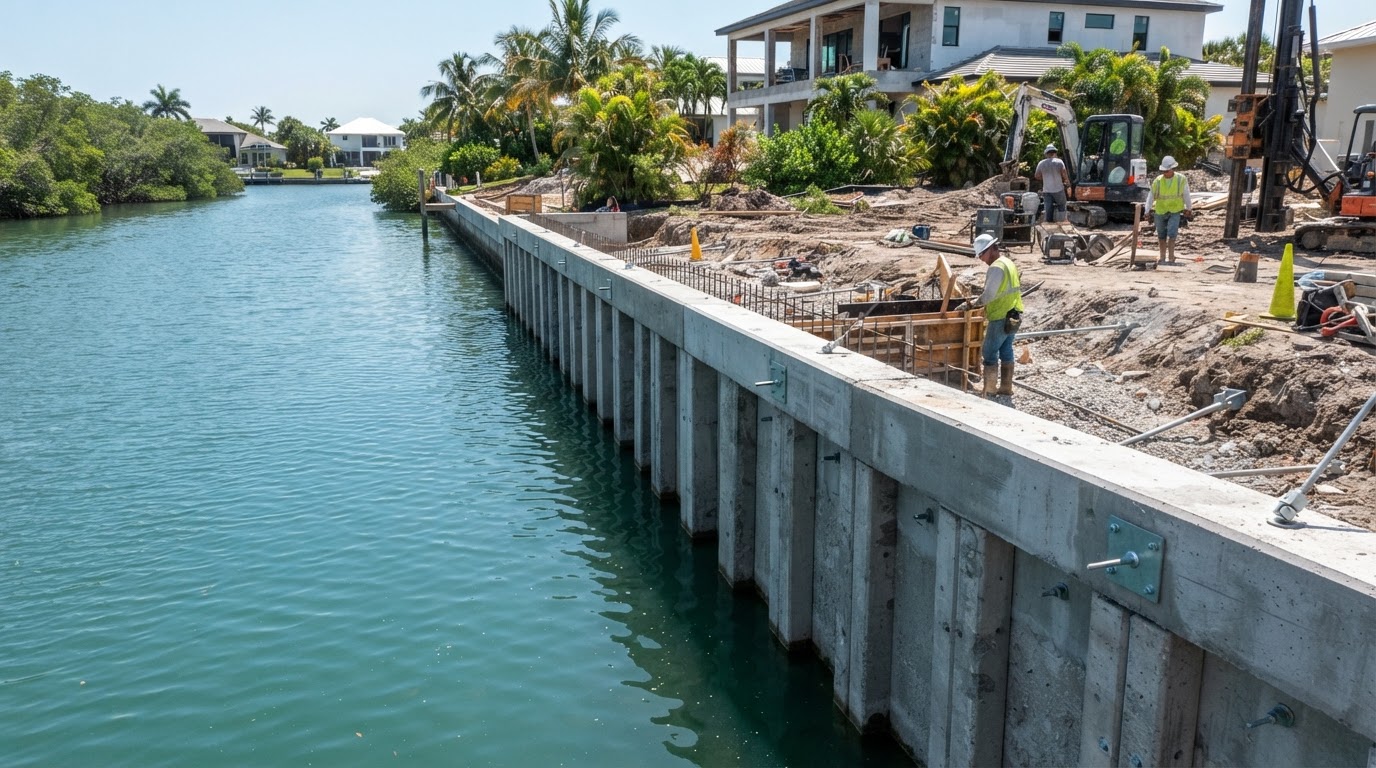
Concrete seawall systems are a common choice for walls that must resist significant loads. Concrete can be formed and reinforced for specific site conditions, and its performance depends on the design, reinforcement, drainage, and the quality of placement and curing. Concrete is not hurricane-proof, and this page does not claim that a concrete wall will withstand every storm.
Whether concrete suits a specific waterfront depends on the retained height, soil conditions, exposure, and engineering — the same site factors that govern any wall material. Concrete walls also require attention to drainage behind the wall and to the condition of the cap and any joints over time.
- Concrete can be formed and reinforced for specific site conditions
- Performance depends on design, reinforcement, drainage, and placement
- Concrete is not hurricane-proof and will not withstand every storm
- Drainage, cap, and joint condition need ongoing attention
Timber and Other Bulkhead Materials
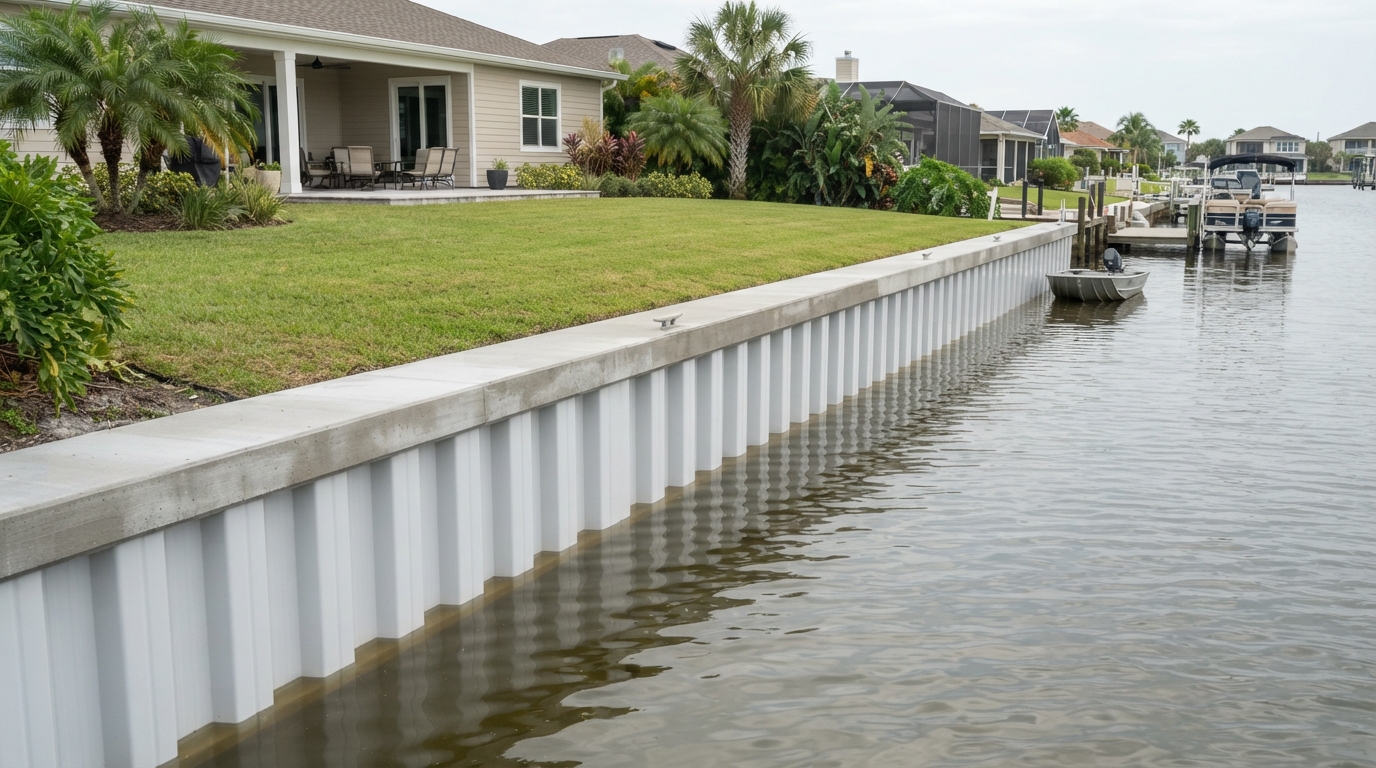
Timber bulkheads use treated wood sheet piling or planking to retain soil. Timber is a traditional material whose suitability depends on the wood species, treatment, exposure, and the wall's design. Other structural systems, including steel and composite panel systems, are also used in certain conditions, each with their own corrosion, installation, and engineering considerations.
This page does not rank these materials from best to worst. The appropriate material for a given bulkhead depends on the retained height, soil, waterbody, exposure, access for installation, and engineering requirements. A material that works well on one canal may be unsuitable on an exposed shoreline.
- Timber bulkheads use treated wood sheet piling or planking
- Steel and composite panel systems are used in certain conditions
- Each material has corrosion, installation, and engineering considerations
- Suitability depends on site factors, not a universal ranking
Drainage, Anchoring and Structural Design
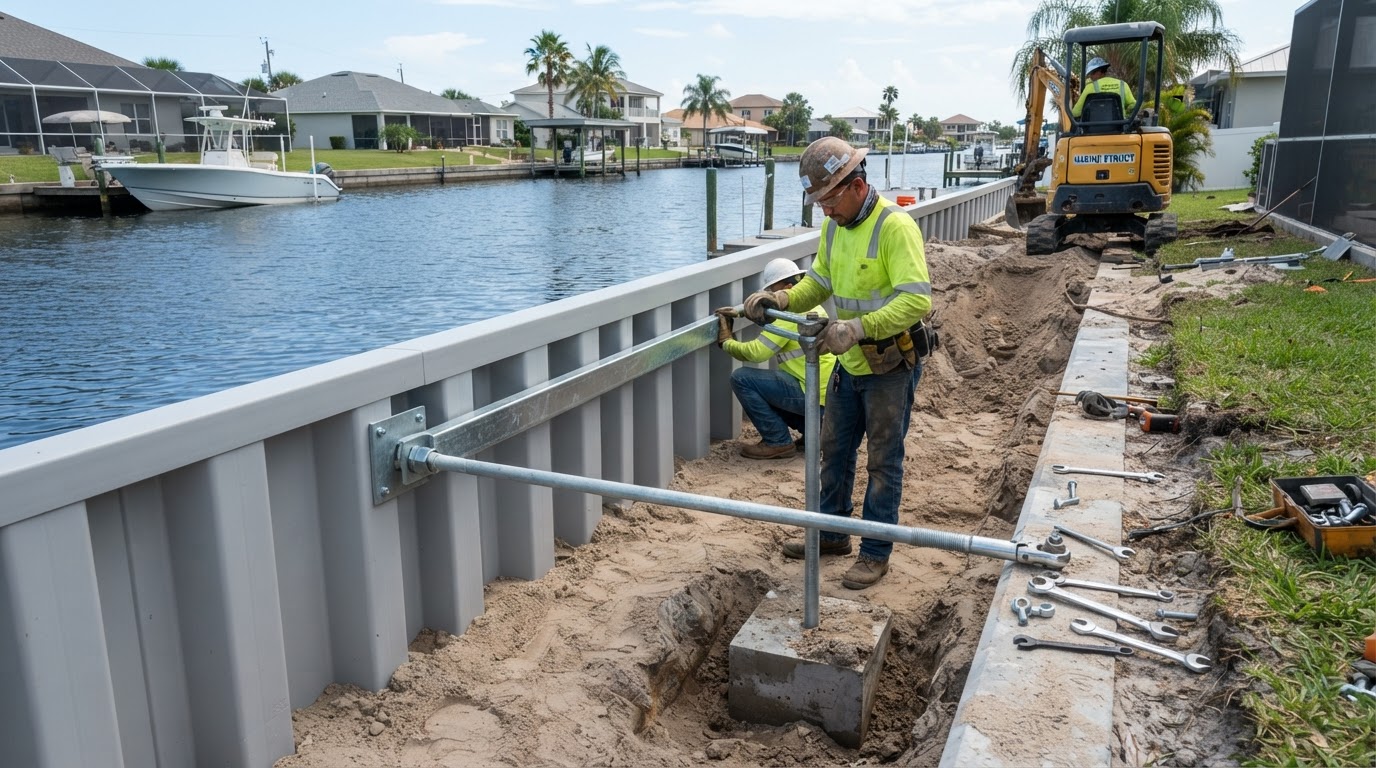
A seawall's performance depends as much on drainage and anchoring as on the panel material. Water that builds up behind a wall exerts hydrostatic pressure, which is a common cause of wall movement and failure. Drainage features and weep holes manage that pressure, and tiebacks or anchors resist the lateral loads the wall must hold back.
This means material selection cannot be separated from the wall's drainage and anchorage design. A well-chosen panel material with inadequate drainage or insufficient tiebacks can still fail. Structural design decisions — including retained height, tieback spacing, and drainage layout — are referred to qualified professionals.
- Hydrostatic pressure behind a wall is a common cause of movement
- Drainage features and weep holes manage water pressure
- Tiebacks and anchors resist lateral loads
- Material selection cannot be separated from drainage and anchorage design
Seawall Materials Versus Riprap and Living Shorelines
Structural walls, riprap revetments, and living shorelines serve different purposes and are not interchangeable.
Structural Seawalls
- Retain soil and resist lateral water forces
- Material choice is an engineering decision tied to drainage and anchorage
- Suited to sites where a vertical retaining wall is appropriate
- Performance depends on the full system, not the panel alone
Riprap & Living Shorelines
- Riprap uses stone to armor a slope against erosion
- Living shorelines use natural materials and vegetation for stabilization
- These are shoreline treatments, not vertical retaining walls
- Suitability depends on site conditions and environmental review
Material Maintenance and Repair Considerations
Different seawall materials have different maintenance and repair profiles. A vinyl panel may resist corrosion but still depend on the condition of its tiebacks and drainage. A concrete wall may need attention to cracks, joints, and the cap. A timber bulkhead may face rot and borer damage over time. None of these materials is maintenance-free, and this page does not promise that any material lasts a fixed number of years. Whether a wall can be repaired with the same or a different material depends on the existing condition and a qualified assessment — not a universal rule.
Related Services Near Daytona Beach
Explore other marine construction topics relevant to your waterfront project.