
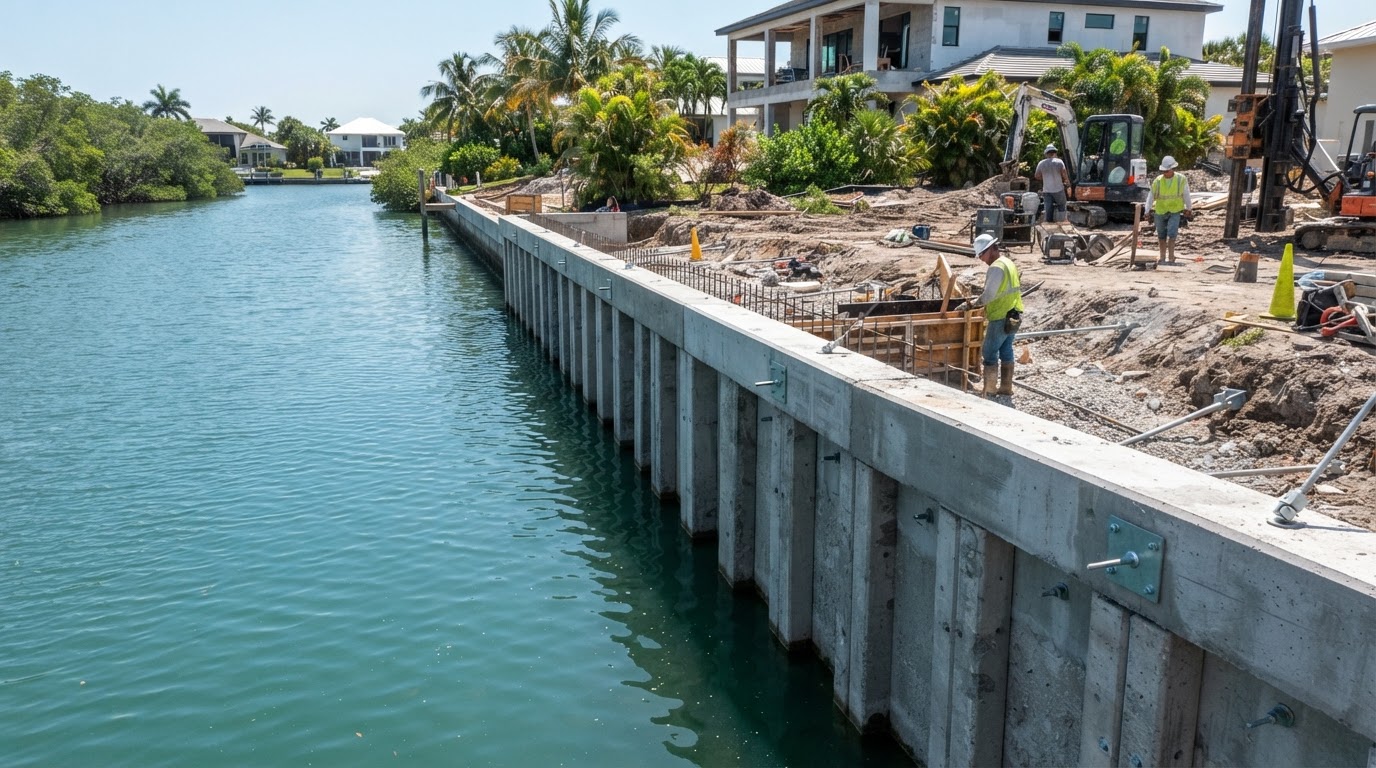
Seawall Tieback & Anchor Installation Daytona Beach
Tiebacks and anchors are the structural components that resist the lateral soil pressure acting on a seawall. This page explains how anchoring systems work, the signs of potential problems, and why qualified evaluation is essential before any tieback repair or installation.
Request a Marine Construction Estimate
Share your dock, seawall, or boat lift project details and we'll review the requirements for your Daytona Beach area waterfront property.
Seawall Tieback & Anchor Installation in Daytona Beach
A seawall holds back upland soil along a waterfront, and the soil behind it exerts lateral pressure that pushes the wall toward the water. Tiebacks and anchors resist that pressure, anchoring the wall to the soil behind it and keeping the structure stable. Along Daytona Beach canals and Intracoastal waterfronts, anchoring systems are a critical part of a complete seawall structure.
Tieback and anchor work is structural — it requires qualified evaluation before any repair or installation. This page explains the general role of anchoring systems and the signs that may indicate problems, but it does not prescribe structural specifications. The appropriate design depends on the wall system, soil conditions, and engineering for the specific site.
- Tiebacks resist lateral soil pressure on seawalls
- Anchoring is a critical structural component
- Signs of problems require qualified evaluation
- Engineered wall-system compatibility for new walls
- No structural specifications without qualified design
How Seawall Anchoring Systems Work
A seawall anchoring system works by connecting the wall panels to the soil behind them through tieback rods and anchor elements. The wall panels resist the soil; the tiebacks transfer the lateral force back into stable ground; the cap ties the system together; and drainage relieves water pressure. Each component is part of a complete engineered system.
The relationship between seawall panels, caps, anchoring components, tieback connections, soil conditions, and structural design means no single component works in isolation. A wall panel without adequate anchoring cannot resist soil pressure; a tieback without proper anchorage cannot hold the wall. This page does not prescribe structural specifications — the appropriate design depends on engineering for the specific site.
- Seawall panels resist the soil load
- Tieback rods connect wall to anchor elements
- Anchors transfer force into stable ground
- Caps tie the wall system together
- Drainage relieves water pressure behind the wall
Signs of Potential Tieback or Anchor Problems
Several indicators may suggest anchoring concerns. No single symptom confirms anchor failure — qualified evaluation is required to determine the cause.
- Wall movement or shifting outward toward the water
- Leaning or bowing of the wall
- Cap separation or cracking
- Visible deterioration of connections or hardware
- Unusual settlement of soil behind the wall
- Repeated structural problems after prior repairs
Seawall Tieback Repair Near Daytona Beach
Tieback repair requires qualified evaluation before any work is selected. A leaning wall may reflect tieback failure, soil loss, drainage problems, or a combination of factors — the cause must be understood before a repair approach is chosen. Selecting a repair without understanding the underlying issue can mask a deeper problem. Qualified structural evaluation determines the appropriate path for the specific wall.
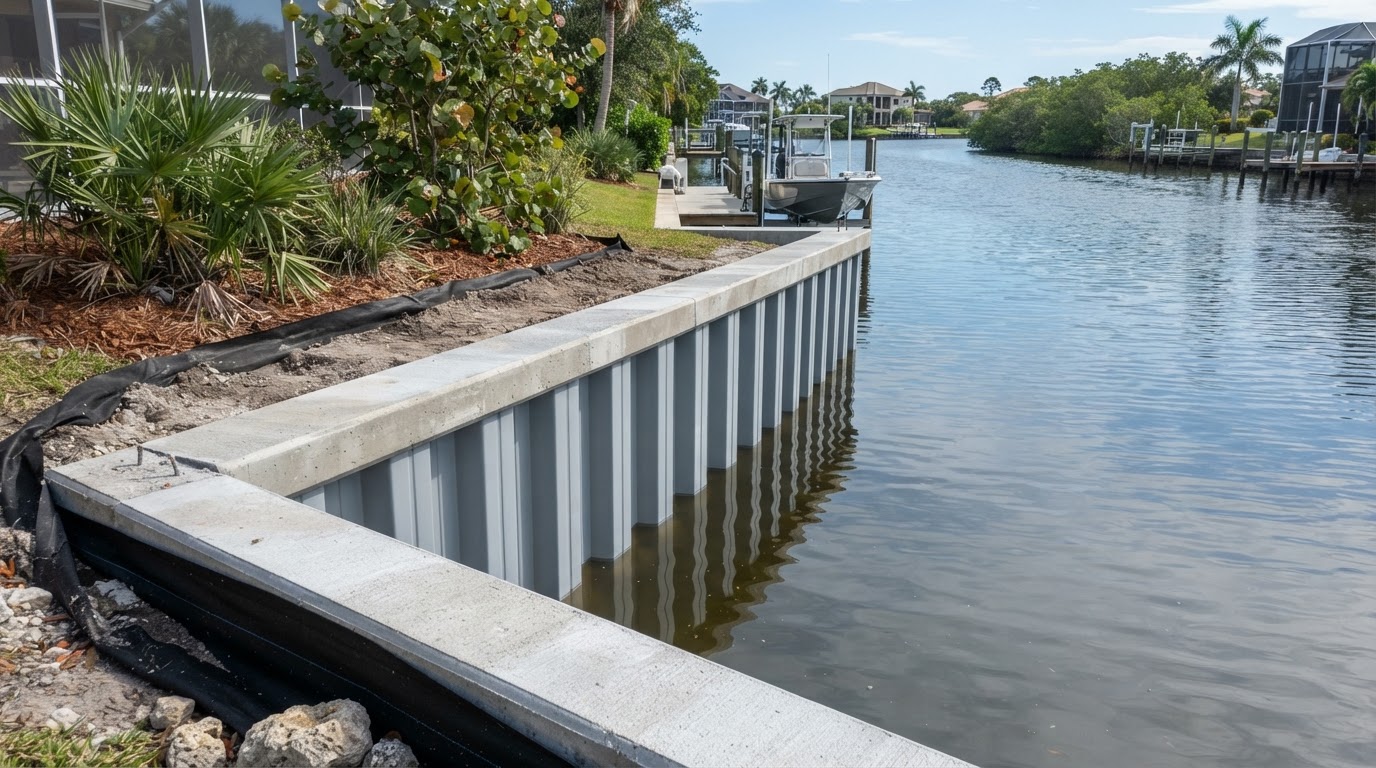
Tieback Installation for New Seawalls
For new seawall construction, tieback installation is part of the engineered wall system. The anchoring components must be compatible with the wall panels, cap, soil conditions, and the forces at the specific site. Engineered wall-system compatibility is essential — the tiebacks, panels, and anchors are designed together as a complete structure.
No universal tieback design applies to every wall. The appropriate anchoring depends on wall height, soil conditions, water depth, and engineering requirements for the specific site. New wall construction should follow qualified engineering design rather than generic specifications.
- Anchoring designed as part of the complete wall system
- Compatibility with panels, cap, and soil conditions
- Sized for wall height and lateral forces
- Engineered design for the specific site
Anchoring Considerations for Existing Bulkheads
Existing bulkheads may differ in materials, conditions, and structural configuration from new walls. Anchoring work on existing structures requires careful evaluation.
- Existing materials and their current condition
- Original anchoring configuration and capacity
- Soil conditions behind the wall
- Compatibility with any repair or reinforcement
- Qualified structural evaluation before work
Seawall Stabilization vs. Replacement
Whether a leaning or damaged wall can be stabilized or requires replacement depends on the extent and cause of the problem. Not every leaning wall can be stabilized.
Stabilization
- May be considered for localized or repairable issues
- Depends on the cause and extent of movement
- Requires qualified structural evaluation
- Not appropriate for every leaning wall
Replacement
- May be necessary for widespread structural failure
- When anchoring or wall integrity is compromised
- When stabilization cannot address the cause
- Requires complete assessment of wall and soil
Professional Structural Evaluation
Seawall movement, anchor deterioration, and wall stability require qualified structural assessment. This page provides general information only and does not prescribe structural specifications, repair methods, or engineering conclusions. Any signs of wall movement or anchoring concern should be referred to qualified professionals who can evaluate the specific structure, identify the cause, and recommend appropriate action.
Related Services Near Daytona Beach
Explore other marine construction topics relevant to your waterfront project.