
Soil Loss Repair Behind Seawalls Daytona Beach
Soil loss behind a seawall can produce settlement, voids, and changes near the wall that property owners observe from the surface. This page explains what to watch for, the possible causes, and why investigation — not assumption — determines the appropriate response.
Request a Marine Construction Estimate
Share your dock, seawall, or boat lift project details and we'll review the requirements for your Daytona Beach area waterfront property.
Soil Loss Repair Behind Seawalls in Daytona Beach
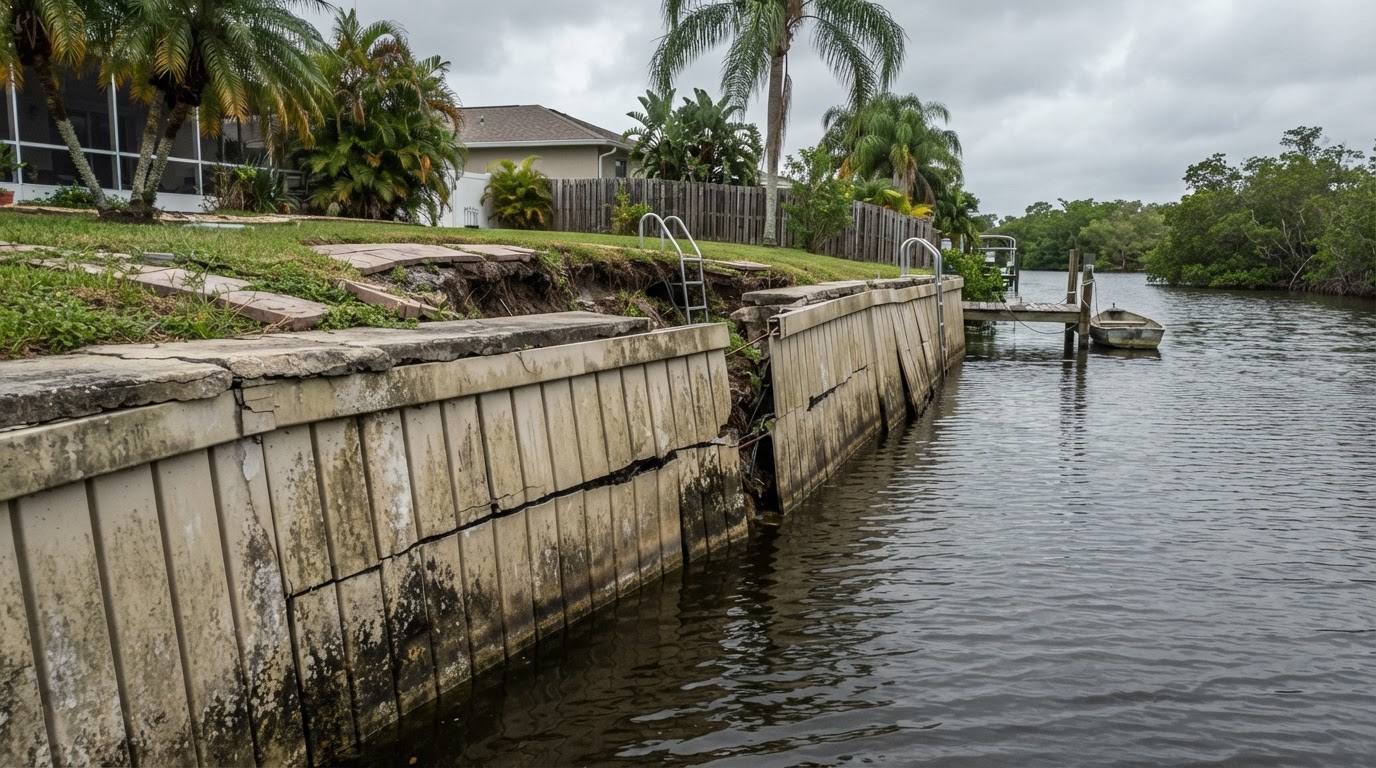
Soil loss behind a seawall occurs when material migrates from behind the wall, producing ground settlement, depressions, voids, or washout near the structure. Along Daytona Beach canals and Intracoastal waterfronts, property owners may notice these changes as the ground behind the wall settles or changes shape over time.
Not every depression is a sinkhole, and not every soil change reflects the same cause. Soil loss may relate to water movement, drainage deficiencies, wall defects, joint deterioration, backfill conditions, or soil characteristics. Investigation is needed to determine the actual cause before any repair approach is selected.
- Settlement, depressions, and voids near the wall
- Possible causes include drainage, wall defects, and soil conditions
- Not every depression is a sinkhole
- Investigation determines the actual cause
- Qualified evaluation before any repair approach
Common Signs of Soil Loss Near Daytona Beach
Several surface signs may indicate soil loss behind a seawall. Not all indicate the same cause or severity.
- Ground settlement behind the wall
- Visible depressions or voids in the yard
- Washout indicators or material migration
- Changes in the ground near the wall
- Surface cracking parallel to the shoreline
- Unusual water movement or pooling
Potential Causes of Soil Loss Behind Seawalls
Soil loss behind a seawall may result from several factors. Water movement through wall defects or joints can carry soil with it over time. Drainage deficiencies may allow water to build up and migrate. Wall defects, joint deterioration, or failed connections can create pathways for material loss. Backfill conditions and soil characteristics also influence how the ground behind the wall behaves.
No single cause applies to every situation, and multiple factors may combine. Investigation is needed to determine the actual cause for the specific wall and site. This page does not diagnose specific causes without inspection or prescribe repair methods without qualified evaluation.
- Water movement through wall defects or joints
- Drainage deficiencies allowing water buildup and migration
- Wall defects creating pathways for material loss
- Joint deterioration or failed connections
- Backfill conditions and soil characteristics
Seawall Soil Loss & Structural Stability
Loss of supporting soil behind a seawall may affect nearby improvements or wall performance. The soil behind the wall contributes to the structure's stability; significant loss can change the forces acting on the wall and may contribute to movement or failure. This page does not provide property-specific engineering conclusions — the relationship between soil loss and structural stability must be evaluated by qualified professionals for the specific site.
Evaluating Seawall Voids & Washouts
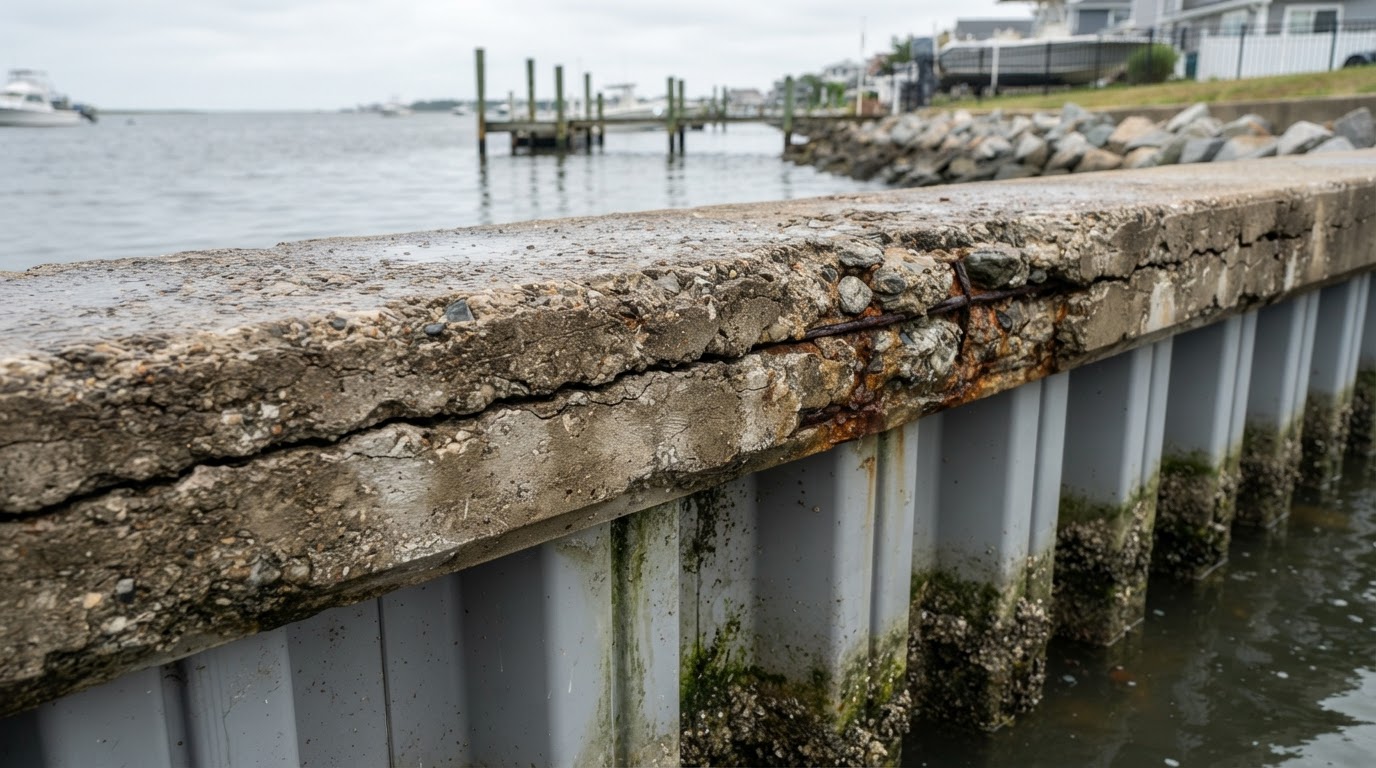
Evaluating soil loss behind a seawall involves qualified site inspection and, where necessary, engineering or geotechnical assessment. The visible surface signs may not reveal the full extent of voids or the condition of the wall and soil beneath. A complete evaluation considers the wall, the soil, the drainage, and the relationship between them.
Where voids or significant washout are present, the evaluation should determine the extent of material loss, the cause, and the implications for the wall and nearby improvements. This may involve more than surface observation. Qualified professionals can assess whether the issue is localized or systemic and what response is appropriate.
- Qualified site inspection of visible signs
- Engineering or geotechnical assessment where needed
- Evaluation of wall, soil, and drainage together
- Determination of extent, cause, and implications
Soil Stabilization & Repair Considerations
Remedial planning depends on the cause and extent of soil loss. This page does not prescribe specific materials or procedures.
- Address the underlying cause, not just the void
- Repair wall defects or joints if they contribute
- Correct drainage deficiencies where present
- Stabilize soil based on qualified evaluation
- No prescribed injection materials or excavation depths
- Qualified design for the specific site conditions
Drainage & Seawall Joint Problems
Drainage and joint conditions may relate to soil migration. Understanding the relationship helps guide appropriate response.
Drainage Issues
- Water buildup behind the wall
- May contribute to soil migration
- Can relate to wall performance
- Requires evaluation of drainage design
Joint Problems
- Joints can be pathways for material loss
- Separation may allow water and soil migration
- May indicate wall movement
- Requires evaluation within the wall system
Soil Loss Repair vs. Seawall Replacement
Whether soil loss can be repaired without replacing the wall depends on the condition of the wall, the extent of soil loss, and the underlying cause. If the wall structure remains sound and the cause can be addressed, repair may be appropriate. If the wall is compromised or the cause cannot be resolved without reconstruction, replacement evaluation may be needed. A complete assessment of the wall and surrounding ground determines the appropriate path.
Related Services Near Daytona Beach
Explore other marine construction topics relevant to your waterfront project.