
Dock Maintenance, Inspection & Repair Guide Daytona Beach
Dock maintenance needs depend on the dock type, materials, age, waterbody, exposure, and actual condition — not on a fixed calendar. This guide explains what to observe on a residential or commercial dock in Daytona Beach, how routine care differs from professional repair, and when a qualified inspection is warranted — without prescribing a universal maintenance schedule or providing DIY structural or electrical instructions.
Request a Marine Construction Estimate
Share your dock, seawall, or boat lift project details and we'll review the requirements for your Daytona Beach area waterfront property.
Dock Maintenance in Daytona Beach
A dock is a marine structure exposed to sun, moisture, tides, boat wakes, and — on saltwater sites — corrosion. Maintenance is the routine observation and care that keeps a sound dock serviceable and helps an owner notice when conditions change. It is not a substitute for professional repair when a component is deteriorated, loose, or structurally compromised.
This page describes general maintenance considerations for docks in Daytona Beach and the surrounding waterfront areas. It does not prescribe a universal maintenance frequency, does not provide DIY structural or electrical repair instructions, and does not encourage anyone to walk on or under an unstable dock. Where a concern involves structure, pilings, or electrical systems, a qualified professional should evaluate it.
- Routine observation versus preventive maintenance
- Decking, fastener, and piling warning signs
- Fixed versus floating dock maintenance differences
- Dock electrical and utility safety
- When maintenance becomes a repair project
- When to request a professional inspection
Common Dock Maintenance Tasks
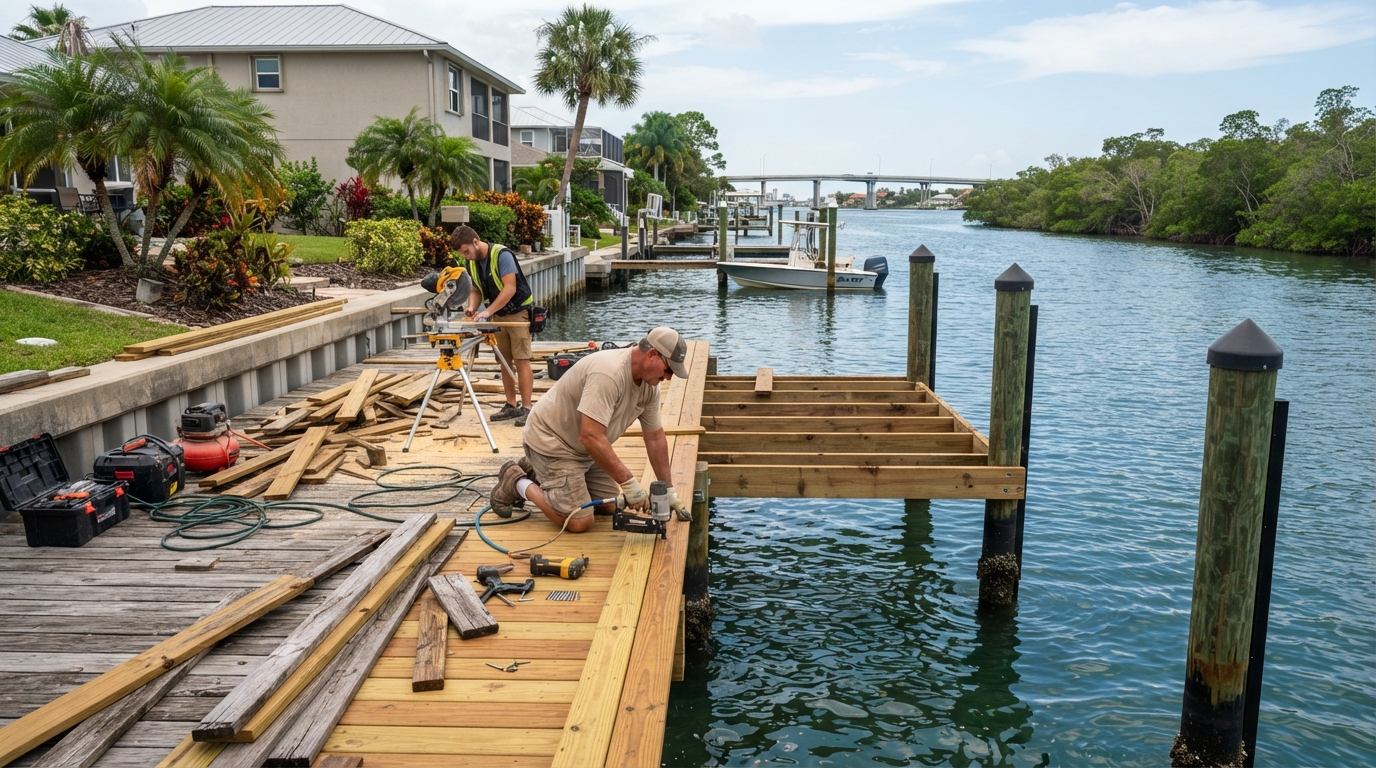
Routine dock maintenance typically involves observing the structure, keeping walking surfaces clear, and noting changes in condition over time. Common tasks include checking for loose boards, raised fasteners, debris buildup, and changes in how the dock feels underfoot. These observations help an owner decide whether the dock simply needs cleaning and minor attention or whether something has changed that warrants a closer look.
Preventive maintenance — such as addressing a loose board or a corroded cleat before it worsens — is different from a repair project. The goal of routine care is to keep a sound dock serviceable and to catch visible changes early. This page does not prescribe a fixed maintenance interval, because the right frequency depends on the dock's materials, age, exposure, and actual condition.
- Observe decking, framing, and fasteners for visible changes
- Keep walking surfaces clear of debris and marine growth
- Note loose boards, raised fasteners, or corroded hardware
- Record changes over time rather than relying on a fixed schedule
Decking and Fastener Warning Signs
Visible changes in decking and hardware can signal that a dock needs closer attention.
Decking Deterioration
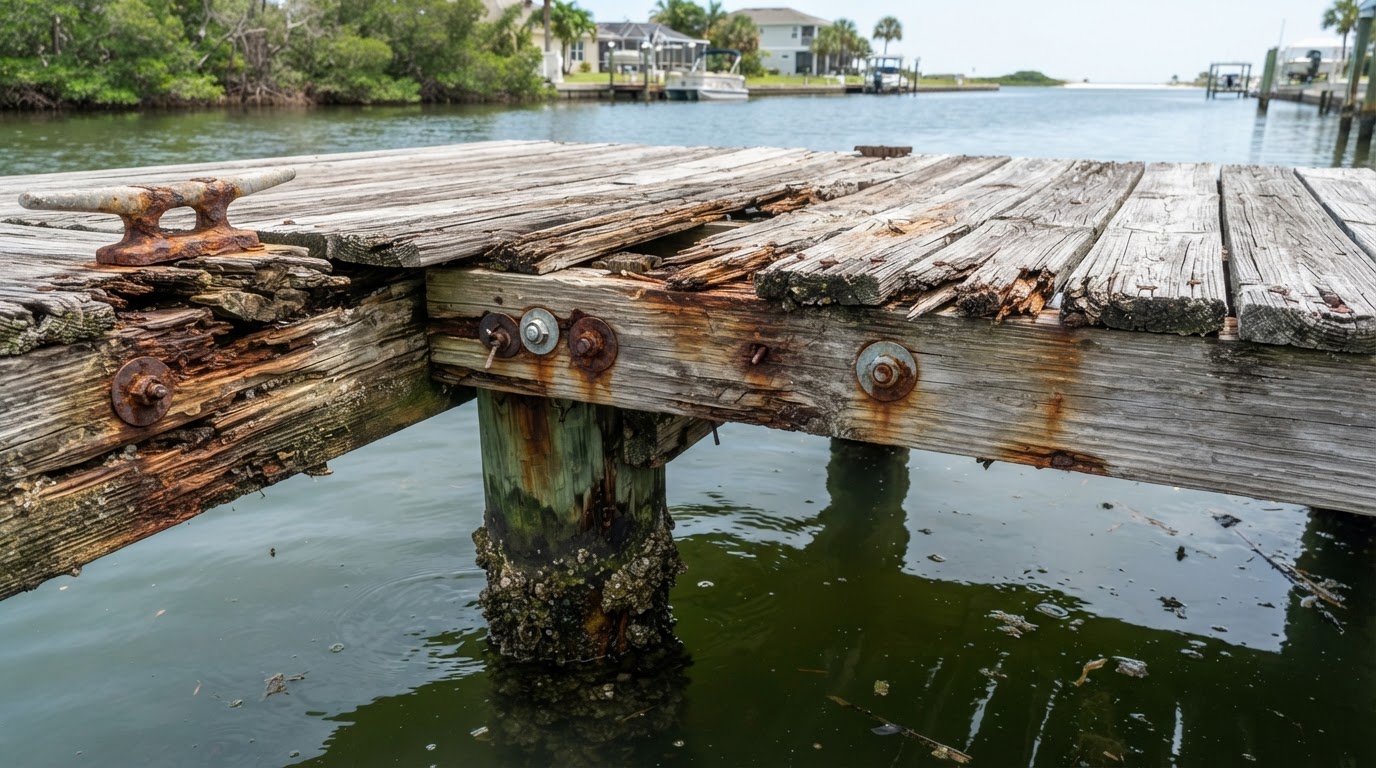
Cracked, warped, splintered, rotting, or hollow-sounding boards can indicate decking that needs attention. Composite and wood decking show different signs, and not all discoloration is structural.
Loose or Raised Fasteners
Fasteners that have backed out, corroded, or lost their grip can loosen boards and framing. Corroded fasteners are a common concern on saltwater docks and may warrant professional evaluation.
Surface Movement
Bounce, sag, or visible movement in the deck surface can point to framing or support concerns. Changes in how a dock feels underfoot are worth documenting and reviewing.
Corroded Hardware
Cleats, brackets, and connectors exposed to saltwater can corrode over time. Corroded hardware may still look functional but have reduced holding capacity.
Moisture Traps
Debris, algae, or standing water trapped between boards can accelerate deterioration of wood and some composites. Keeping surfaces clear helps reveal the actual condition.
Record Changes
Noting when a change first appeared helps a professional understand whether it is progressing. Photos and dates are more useful than memory for tracking dock condition.
Piling and Structural Concerns Near Daytona Beach
Pilings are the foundation of most fixed docks, and their condition drives the dock's overall serviceability. Visible signs that may warrant professional attention include marine borer damage, rot at the waterline, cracking, splitting, or a piling that appears to have shifted. A dock owner can observe these signs from a safe vantage point, but evaluating piling integrity is a job for a qualified professional.
This page does not instruct owners to enter the water, climb beneath the dock, or test structural components. If a piling looks compromised or the dock has changed in level or stability, the appropriate next step is to restrict access and request a professional inspection rather than attempt a do-it-yourself repair.
- Pilings are the foundation of most fixed docks
- Rot, borer damage, cracking, and shifting are warning signs
- Observe from a safe vantage point only
- Restrict access and seek professional evaluation for structural concerns
Maintaining Fixed Versus Floating Docks
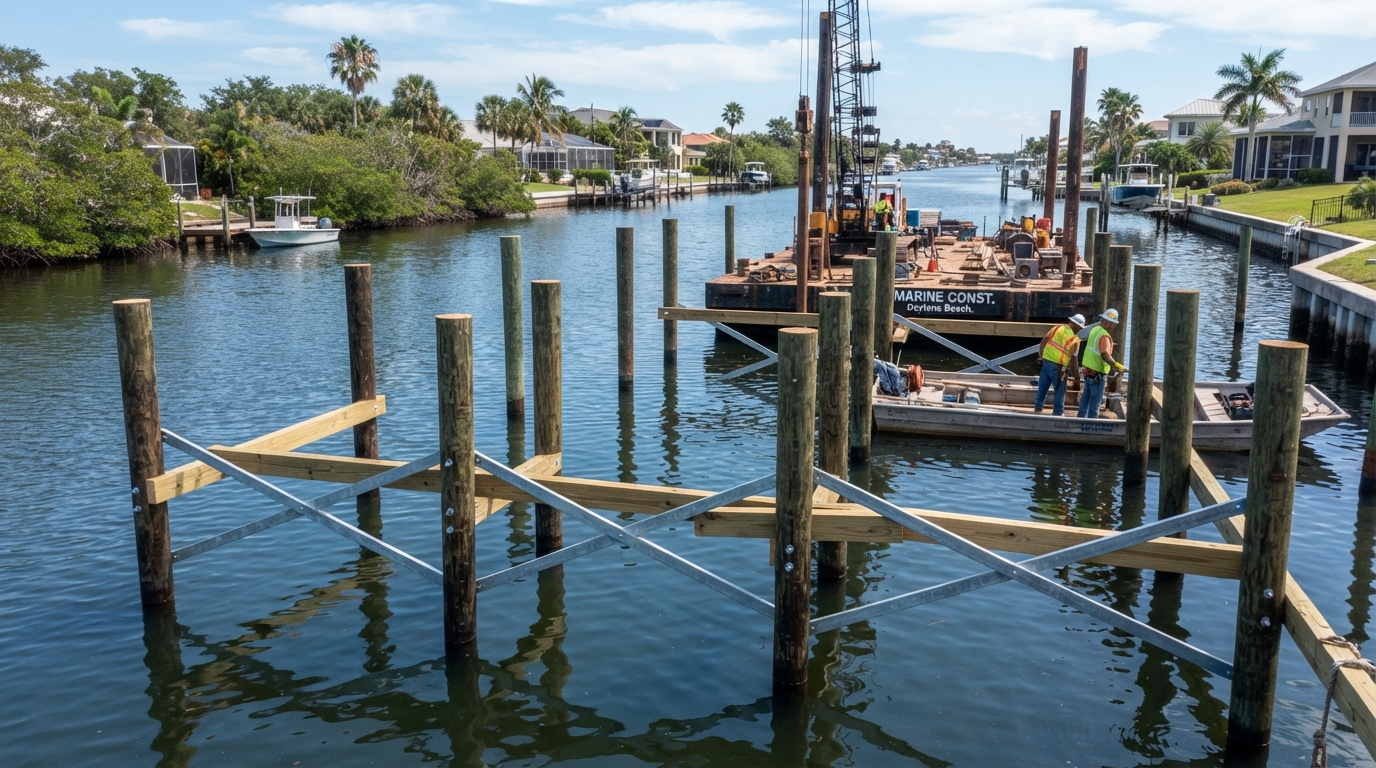
Fixed and floating docks have different components and different maintenance considerations.
Fixed Docks
- Maintenance focuses on pilings, framing, decking, and fasteners
- Piling condition at and below the waterline is a key concern
- Hardware corrosion is common on saltwater fixed docks
- Structural movement may indicate piling or connection issues
Floating Docks
- Maintenance includes floats, connections, and guide systems
- Piling guides and anchoring hardware experience wear from movement
- Gangway connections and hinges need regular observation
- Float integrity and freeboard changes may signal a concern
Dock Electrical and Utility Safety
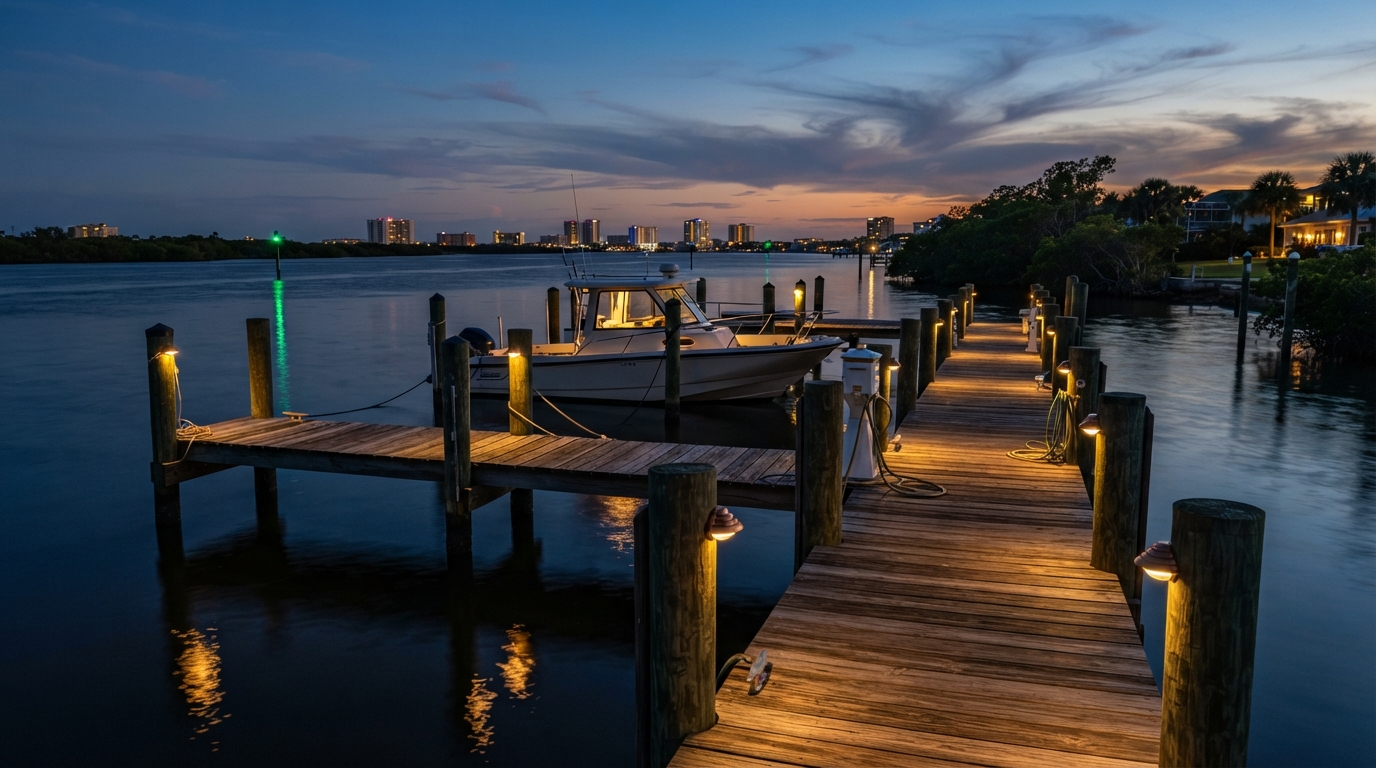
Where a dock has lighting, shore power, or water utilities, those systems add a maintenance and safety dimension beyond the structure itself. Exposed wiring, corroded outlets, damaged conduit, or fixtures that have shifted are reasons to stop using the electrical system and have a qualified professional evaluate it. Water and electricity are a dangerous combination, and dock electrical work is not a do-it-yourself task.
This page does not provide electrical repair instructions and does not recommend operating equipment that appears damaged. If a dock's electrical system shows any sign of damage or corrosion, the safe course is to disconnect power at the source if it is safe to do so and arrange qualified inspection before using it again.
- Dock electrical work is not a do-it-yourself task
- Exposed wiring or corroded outlets warrant disconnecting and inspection
- Damaged fixtures or conduit should be evaluated by a qualified professional
- Do not operate electrical equipment that appears damaged
When Maintenance Becomes a Repair Project
Routine maintenance keeps a sound dock serviceable, but it cannot reverse deterioration. When observation reveals rotted pilings, significant framing damage, loose structural connections, electrical hazards, or changes in dock level or stability, the situation has moved from maintenance into repair. At that point, the useful next step is to document what was observed and request a professional evaluation rather than continue routine care on a compromised structure. This page does not guarantee that any particular dock can be repaired rather than replaced — that determination depends on the actual condition and a qualified assessment.
Related Services Near Daytona Beach
Explore other marine construction topics relevant to your waterfront project.