
Seawall Repair Services Daytona Beach
Seawalls deteriorate over time, and recognizing the signs early can prevent more costly failure. This page helps Daytona Beach waterfront property owners understand common seawall damage, when qualified evaluation may be necessary, and how repair approaches differ.
Request a Marine Construction Estimate
Share your dock, seawall, or boat lift project details and we'll review the requirements for your Daytona Beach area waterfront property.
Seawall Repair Services in Daytona Beach
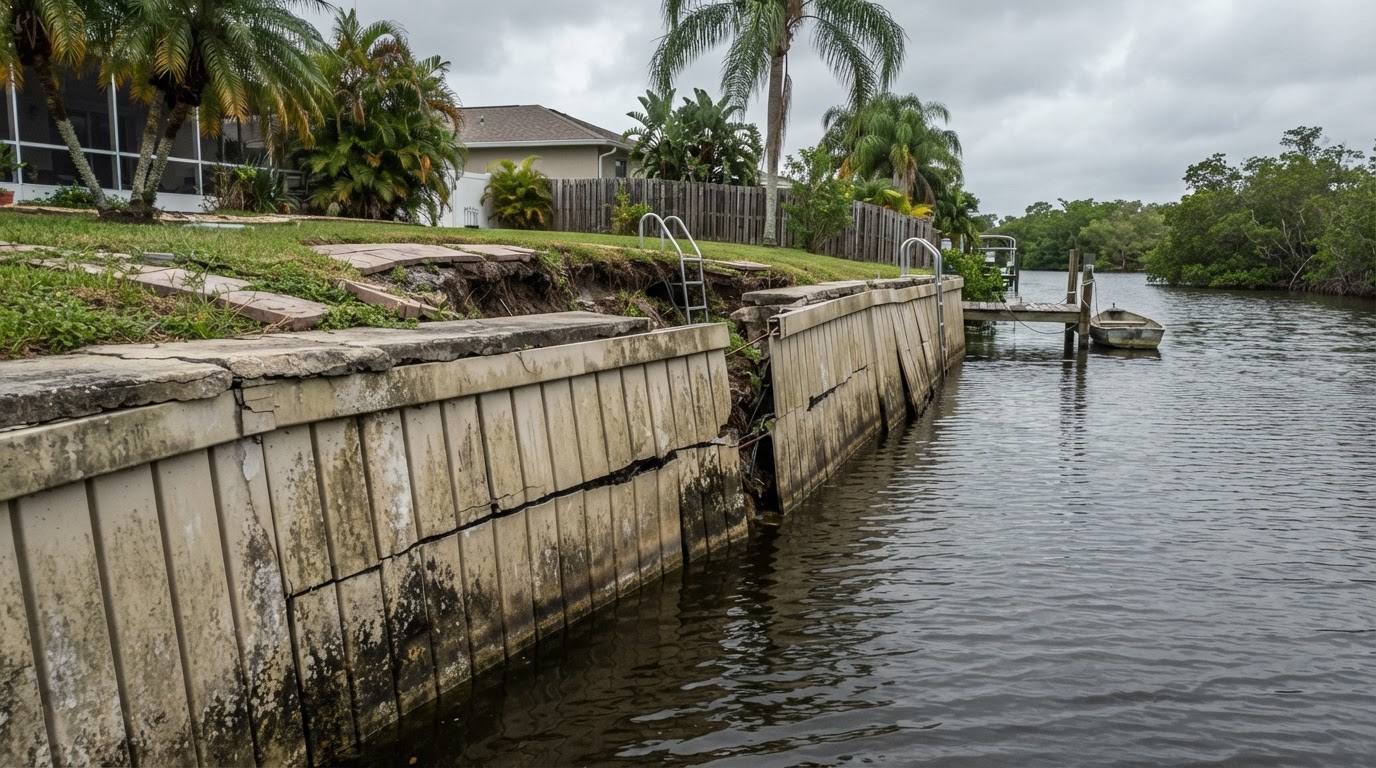
Seawalls along Daytona Beach waterways are exposed to tidal pressure, wave action, storm surge, and the constant weight of retained soil. Over time, these forces can produce cracking, movement, cap deterioration, soil loss, and drainage problems. Not every visible issue signals structural failure, but signs of deterioration warrant qualified evaluation.
Seawall repair addresses specific defects — a cracked cap, a leaking joint, a failing tieback — while leaving sound portions of the wall intact. The appropriate repair depends on the cause and extent of the deterioration, which a qualified inspection helps determine. Cosmetic patching is not a substitute for addressing structural damage.
- Cracking and joint separation
- Wall movement, leaning, or bowing
- Cap deterioration and spalling
- Soil settlement and washouts
- Drainage problems and hydrostatic pressure
Common Signs of Seawall Damage Near Daytona Beach
These symptoms may indicate that a seawall needs professional evaluation. Not all visible cracks have the same cause or severity.
- Visible cracking in the wall panels or cap
- Wall movement, leaning, or bowing outward
- Cap deterioration, spalling, or separation
- Soil settlement or sinkholes behind the wall
- Washouts or voids along the wall base
- Joint problems and panel separation
- Drainage concerns or water pooling behind the wall
- Exposed or compromised structural elements
Seawall Crack, Joint & Cap Repair
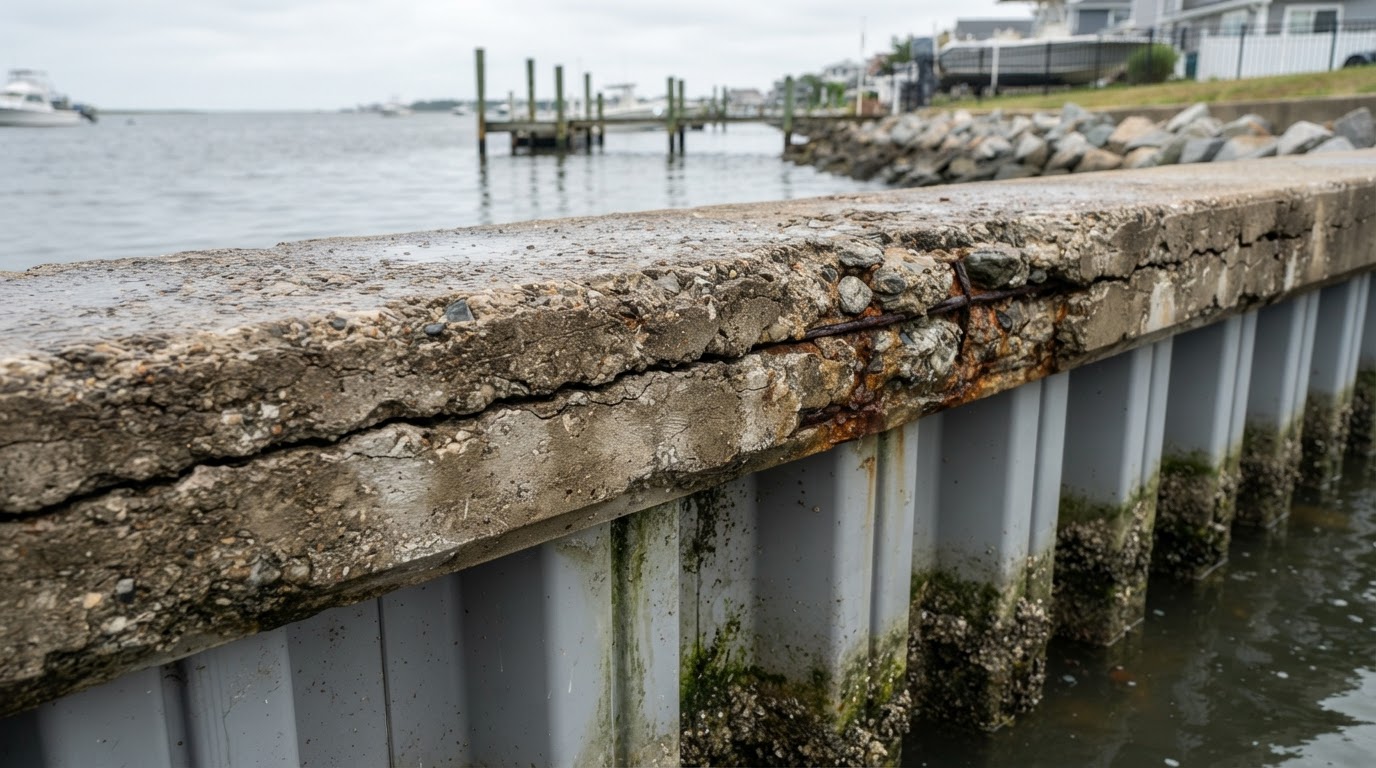
Localized deterioration — a cracked cap, a separated joint, a single failing panel — may be addressed with targeted repair that leaves the sound portions of the wall intact. Crack and joint repair can stop water and soil migration through gaps; cap repair restores the protective top of the wall.
However, visible defects can sometimes indicate deeper structural problems. A cracked cap may reflect wall movement; a leaking joint may signal failed anchoring. Distinguishing surface deterioration from structural issues requires qualified evaluation before choosing a repair approach.
- Crack sealing to stop water and soil migration
- Joint repair for separated or leaking panel connections
- Cap restoration for spalling or cracked concrete caps
- Targeted repair preserves sound wall sections
- Surface defects may mask deeper structural issues
Soil Loss Behind Seawalls in Daytona Beach
Settlement and erosion behind a seawall can relate to several conditions, each requiring investigation rather than assumption.
- Inadequate drainage allowing water to carry soil through gaps
- Hydrostatic pressure building behind the wall without relief
- Joint or crack deterioration creating migration paths
- Wall movement opening gaps for soil to escape
- Scour at the wall base undermining support
- A qualified inspection identifies the specific cause on a given property
Seawall Tiebacks, Anchors & Structural Concerns
Anchoring systems resist the lateral soil pressure behind a seawall. Signs of anchoring failure should be evaluated by qualified professionals.
- Tiebacks and anchors resist lateral soil pressure
- Failed anchoring can allow the wall to lean or bow outward
- Leaning or bowing may indicate tieback deterioration
- Structural concerns require professional evaluation
- Repair may involve tieback replacement or reinforcement
- Do not attempt structural seawall repairs without qualified assessment
Seawall Repair vs. Replacement Near Daytona Beach
Repair may be appropriate for localized issues; widespread deterioration may require replacement evaluation. A qualified inspection determines which is appropriate.
When Repair May Be Considered
- Localized deterioration affecting individual components
- Cracked cap or separated joints with sound wall structure
- Soil loss from a specific, addressable defect
- Core structure remains intact and functional
When Replacement May Be Evaluated
- Widespread structural deterioration across the wall
- Significant movement, leaning, or bowing
- Repeated failures or recurring repairs
- Extensive soil loss or compromised anchoring
Storm-Related Seawall Damage
After severe weather, a seawall inspection can document damage and identify whether repair or further evaluation is needed. Not all storm damage is covered by insurance, and coverage determinations are made by the property owner's insurer — this site does not represent insurance documentation as proof of coverage.
Related Services Near Daytona Beach
Explore other marine construction topics relevant to your waterfront project.