
Bulkhead Construction & Installation Daytona Beach
A marine bulkhead is a vertical shoreline retaining structure that holds back upland soil and resists the forces acting on the waterfront. This page explains bulkhead construction, the materials and structural components involved, and how bulkheads relate to seawalls and other shoreline protection.
Request a Marine Construction Estimate
Share your dock, seawall, or boat lift project details and we'll review the requirements for your Daytona Beach area waterfront property.
Bulkhead Construction & Installation in Daytona Beach
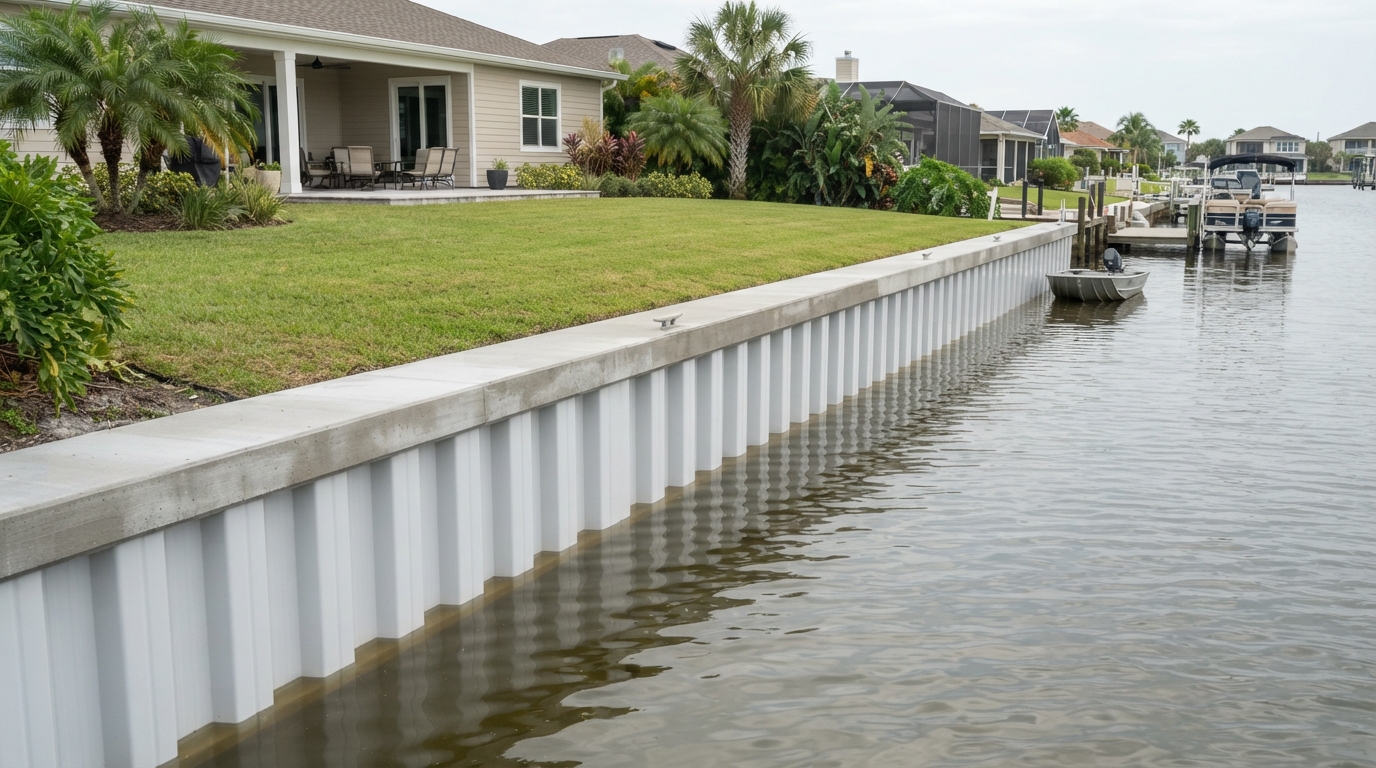
A bulkhead is a waterfront retaining wall that holds back upland soil along a canal, river, or Intracoastal shoreline. Along Daytona Beach area waterways, bulkheads protect property from erosion, maintain shoreline grade, and provide a stable edge for docks, lifts, and waterfront access. The appropriate bulkhead system depends on soil conditions, water depth, shoreline geometry, and the forces at the specific site.
Bulkhead construction involves driving vertical wall panels into the shoreline, installing a cap, anchoring the wall with tiebacks, providing drainage to relieve hydrostatic pressure, and backfilling behind the new structure. Each component is sized and engineered for the site — a wall panel alone is not a complete structural system.
- Soil conditions and water depth at the wall location
- Shoreline geometry and existing structures
- Construction access and equipment mobilization
- Engineering requirements and potential environmental review
- Vinyl, concrete, and other engineered material options
Types of Marine Bulkheads Near Daytona Beach
Bulkheads can be built from several material systems, each suited to different conditions. No material is universally appropriate for every waterfront.
Vinyl Sheet Piling Bulkheads
Interlocking vinyl sheet piles offer corrosion resistance in salt and brackish water and suit many residential canal and Intracoastal applications where moderate wall heights and soil conditions are appropriate.
Concrete Bulkhead Components
Reinforced concrete provides heavy-duty capacity for higher-load or more exposed installations, engineered for the specific wave, soil, and height conditions of the site.
Caps & Tieback Systems
The cap protects the top of the wall and ties panels together, while tiebacks and anchors resist the lateral soil pressure behind the bulkhead. These components complete the structural system.
Drainage Components
Drainage and weep holes relieve hydrostatic pressure that builds behind the wall. Without proper drainage, water pressure can damage even a well-built bulkhead over time.
Bulkheads vs. Seawalls
The terms bulkhead and seawall are often used interchangeably, though the distinction can vary by project and region. Practical considerations matter more than an absolute label.
Bulkhead
- Often emphasizes retaining upland soil along a shoreline
- Common on canal and Intracoastal waterfronts
- Engineered for lateral soil pressure and water depth
- Term usage can vary by region and project
Seawall
- Often emphasizes resisting direct wave action
- Common on more exposed shorelines
- Engineered for wave energy and tidal forces
- Designs and applications may overlap with bulkheads
Waterfront Bulkhead Construction Considerations
Several site-specific factors shape bulkhead design and whether a material system is appropriate for a given waterfront.
- Soil conditions and geotechnical considerations
- Water depth and tidal range at the wall location
- Shoreline geometry and existing improvements
- Existing structures and utility locations
- Construction access for equipment and materials
- Engineering requirements for the specific site
- Potential environmental review based on waterbody and jurisdiction
Bulkhead Repair vs. Replacement Near Daytona Beach
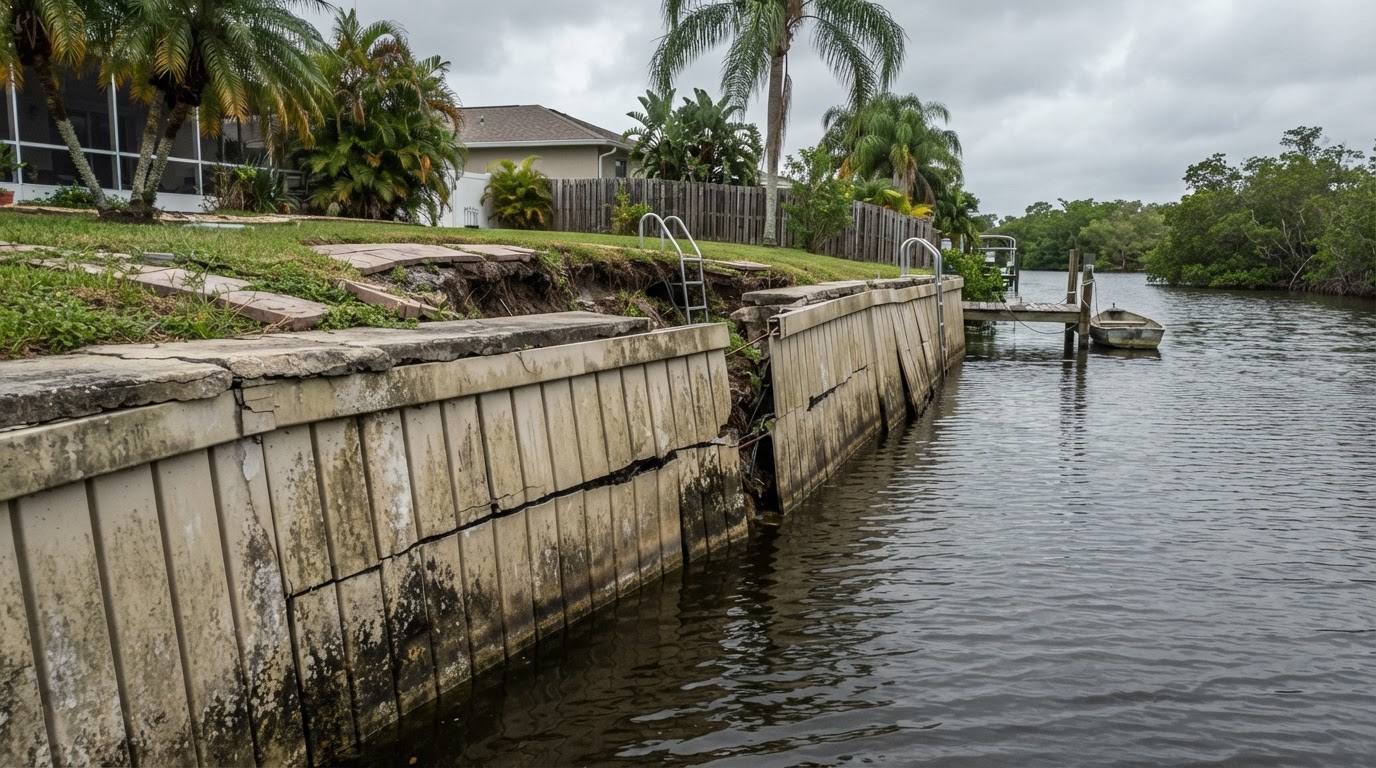
Common bulkhead concerns include wall movement, cap damage, corrosion or material deterioration, drainage problems, soil loss behind the wall, and failed structural connections. Some issues can be addressed with targeted repair; others may point toward replacement evaluation.
The distinction between a repairable defect and a structural problem requires qualified evaluation. A leaning wall may reflect tieback failure; a cracked cap may indicate movement beneath. Selecting a repair approach without understanding the cause can mask a deeper issue. Qualified inspection determines the appropriate path.
- Wall movement, leaning, or bowing outward
- Cap damage, spalling, or separation
- Corrosion or material deterioration
- Drainage problems and hydrostatic pressure
- Soil loss or voids behind the wall
- Failed structural connections and anchoring
Residential & Commercial Bulkhead Applications
Bulkhead projects range from private residential waterfronts to larger marina and association properties, each with distinct planning considerations.
Residential Bulkheads
- Private canal, river, and Intracoastal waterfronts
- Single-property shoreline protection
- Coordination with private docks and lifts
- Typical residential wall heights and soil conditions
Commercial & Association
- Marina facilities and shared waterfronts
- Larger association and multi-parcel projects
- Coordinated access and scheduling
- Distinct engineering and approval considerations
Maintaining Marine Bulkheads in Daytona Beach
Bulkhead maintenance generally involves periodic inspection of the cap, wall panels, tiebacks, drainage, and the soil behind the wall. Watching for movement, cracking, soil loss, or drainage problems helps catch issues early. Structural bulkhead repairs should be referred to qualified professionals rather than attempted without assessment — no universal maintenance interval applies.
Related Services Near Daytona Beach
Explore other marine construction topics relevant to your waterfront project.