
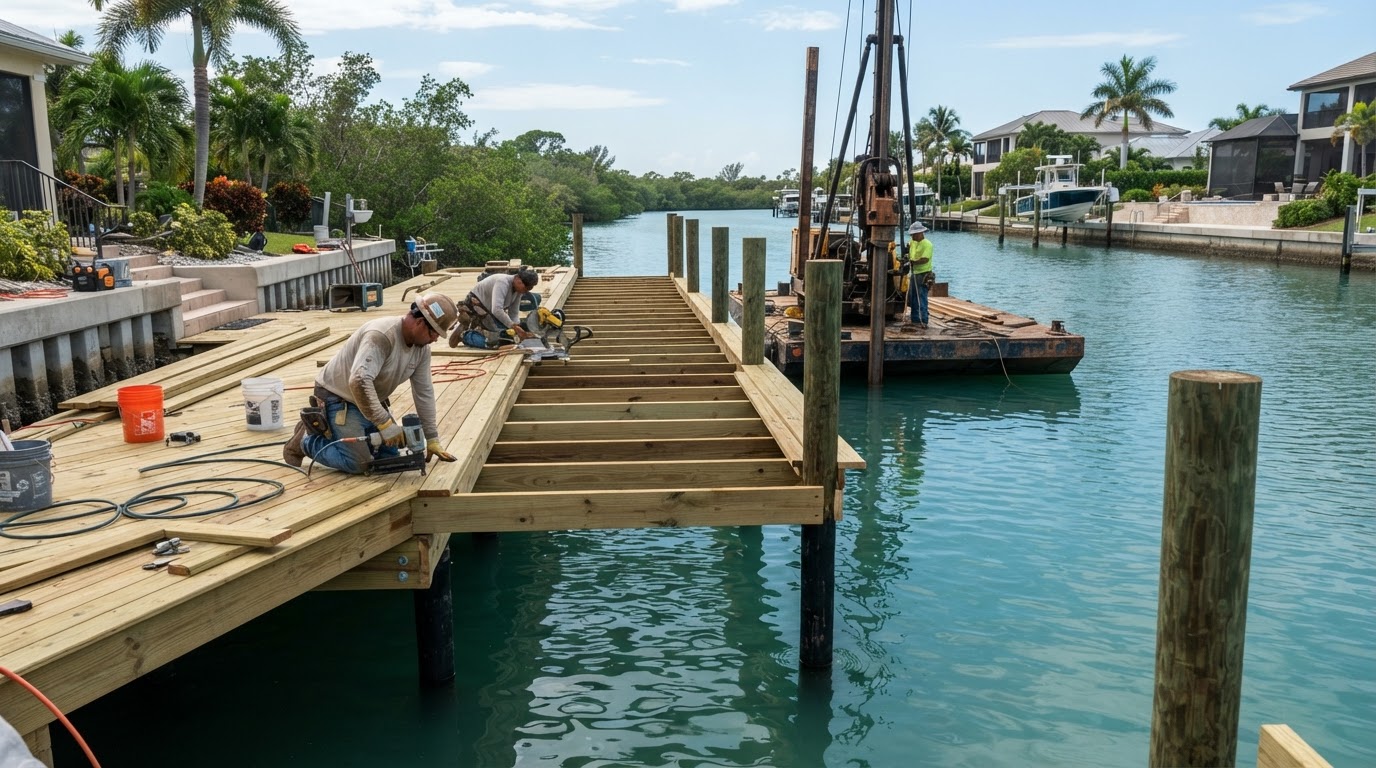
Dock Construction & Installation Daytona Beach
Planning a new dock on a Daytona Beach waterfront property depends on the shoreline, water depth, intended vessel use, and applicable approvals. This page explains the dock construction options and considerations property owners should understand before requesting an estimate.
Request a Marine Construction Estimate
Share your dock, seawall, or boat lift project details and we'll review the requirements for your Daytona Beach area waterfront property.
Dock Construction & Installation in Daytona Beach
Residential dock construction along Daytona Beach waterways is shaped by the specific property it serves. The waterbody, shoreline configuration, water depth, intended use, and existing improvements all influence what kind of dock is appropriate and how it should be built. No single dock design suits every waterfront parcel, and not every property is suitable for a dock at all.
Before construction begins, the project is evaluated against waterfront access, vessel considerations, dock footprint, construction materials, property access, and environmental review where applicable. Understanding these factors helps property owners prepare useful information when requesting an estimate and sets realistic expectations for the planning process.
- Waterfront access and shoreline configuration
- Intended dock use and vessel considerations
- Existing shoreline conditions and seawalls
- Dock footprint and construction materials
- Property access and equipment mobilization
- Environmental review and permitting where applicable
Fixed & Floating Dock Options Near Daytona Beach
Fixed and floating docks serve different waterfront conditions. The right choice depends on water depth, tidal variation, and how the dock will be used.
Fixed Dock Construction in Daytona Beach
Piling-supported fixed docks provide a stable, rigid platform where water levels stay relatively consistent. Fixed construction suits many Intracoastal and canal properties where tidal range is moderate and a steady deck surface is preferred for boarding, loading, and lounging.
Floating Dock Installation Near Daytona Beach
Floating docks rise and fall with the water, making them well suited to deeper water, greater tidal variation, or locations where a fixed structure would sit too high or low at different times of day. Float configuration and anchoring depend on the waterbody and intended use.
Dock Construction Materials for Daytona Beach Waterfronts
Material selection shapes both the initial build and long-term maintenance of a dock. Marine-grade treated wood remains a common structural choice for pilings and framing, while composite decking offers lower maintenance on the walking surface. Aluminum framing is used in some configurations for its corrosion resistance.
Hardware and fastening choices matter in a salt or brackish water environment — galvanized and stainless components resist corrosion where ordinary hardware would deteriorate. No material offers a universal lifespan guarantee; performance depends on exposure, water chemistry, and upkeep.
- Marine-grade treated wood for pilings and framing
- Composite decking for low-maintenance walking surfaces
- Aluminum framing for corrosion resistance
- Galvanized and stainless hardware and fasteners
- Material maintenance and waterfront exposure considerations
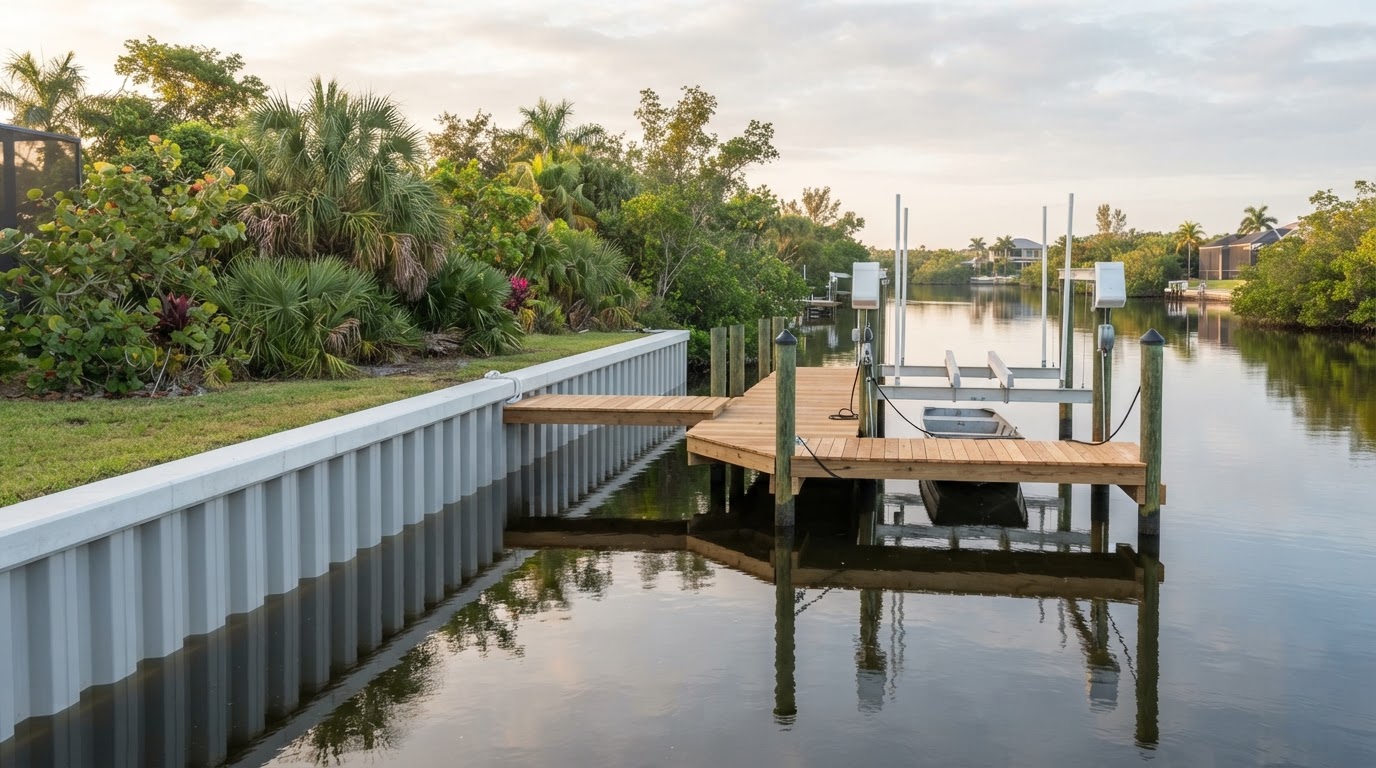
Waterfront Access & Dock Design Considerations
Several property-specific factors shape how a dock is designed and whether a fixed or floating configuration is appropriate.
- Water depth and vessel draft at the dock location
- Dock approach and how the structure reaches the water
- Vessel dimensions and required slip length
- Water-level variations from tide or seasonal changes
- Existing seawalls and their structural condition
- Pilings — reuse of existing or new installation
- Property access for equipment and materials
- Permitting considerations based on waterbody and jurisdiction
New Dock Construction vs. Dock Replacement
Building an entirely new structure differs from replacing an existing dock. Extensions and expansions are separate considerations again.
New Dock Construction
- Building on a shoreline with no existing dock structure
- Establishing a new footprint, piling layout, and access path
- Full environmental and permitting review for the new structure
- Site-specific design based on current vessel and use needs
Dock Replacement
- Removing an aging or damaged existing dock and rebuilding
- Often reusing the existing footprint and piling locations
- May allow reuse of sound pilings where structurally viable
- Distinct from extensions, which add to an existing structure
Professional Assessment for Dock Projects
Dock design involves structural, environmental, and permitting considerations that vary by property and waterbody. Specific determinations — piling depth, load capacity, dock height, and permit applicability — should be referred to qualified professionals and the appropriate authorities rather than assumed from general guidance.
Related Services Near Daytona Beach
Explore other marine construction topics relevant to your waterfront project.