
Volusia County Dock Permit Guide Daytona Beach
Planning a dock project in Volusia County usually means understanding more than one reviewing authority. This guide explains where dock permitting in Daytona Beach and the surrounding county typically begins, what information helps, and why a single permit rarely satisfies every agency — without claiming this site is a permitting office or that any specific project will be approved.
Request a Marine Construction Estimate
Share your dock, seawall, or boat lift project details and we'll review the requirements for your Daytona Beach area waterfront property.
Dock Permit Requirements in Volusia County
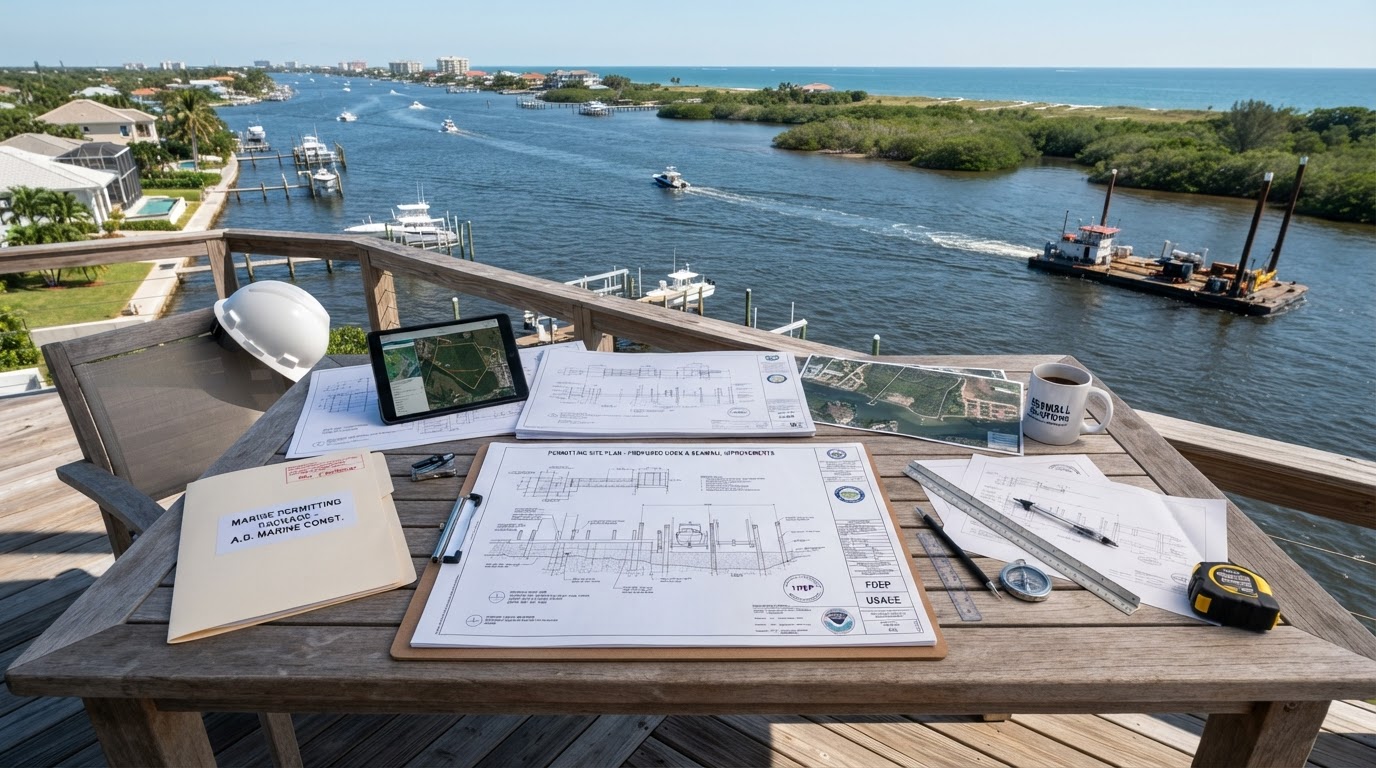
Dock permitting in Volusia County can involve several layers of review rather than a single application. A property owner may need to consider local building and zoning review, state environmental review, possible sovereign submerged-lands authorization, and potential federal review — and an approval from one authority does not automatically satisfy the others. This page explains how those layers relate so you can gather the right information before requesting guidance.
The details below are general educational guidance, not an agency determination. Where a specific rule, fee, or timeline is mentioned, verify it against the current official source before relying on it. This site is not a permitting agency and does not issue, approve, or guarantee any permit.
- Local building and zoning review (city or county)
- State environmental review through Florida DEP
- Possible sovereign submerged-lands authorization
- Potential federal review through the Army Corps
- Protected habitat or species considerations
- Differences between new docks, repairs, and extensions
Where to Start with a Dock Permit in Daytona Beach
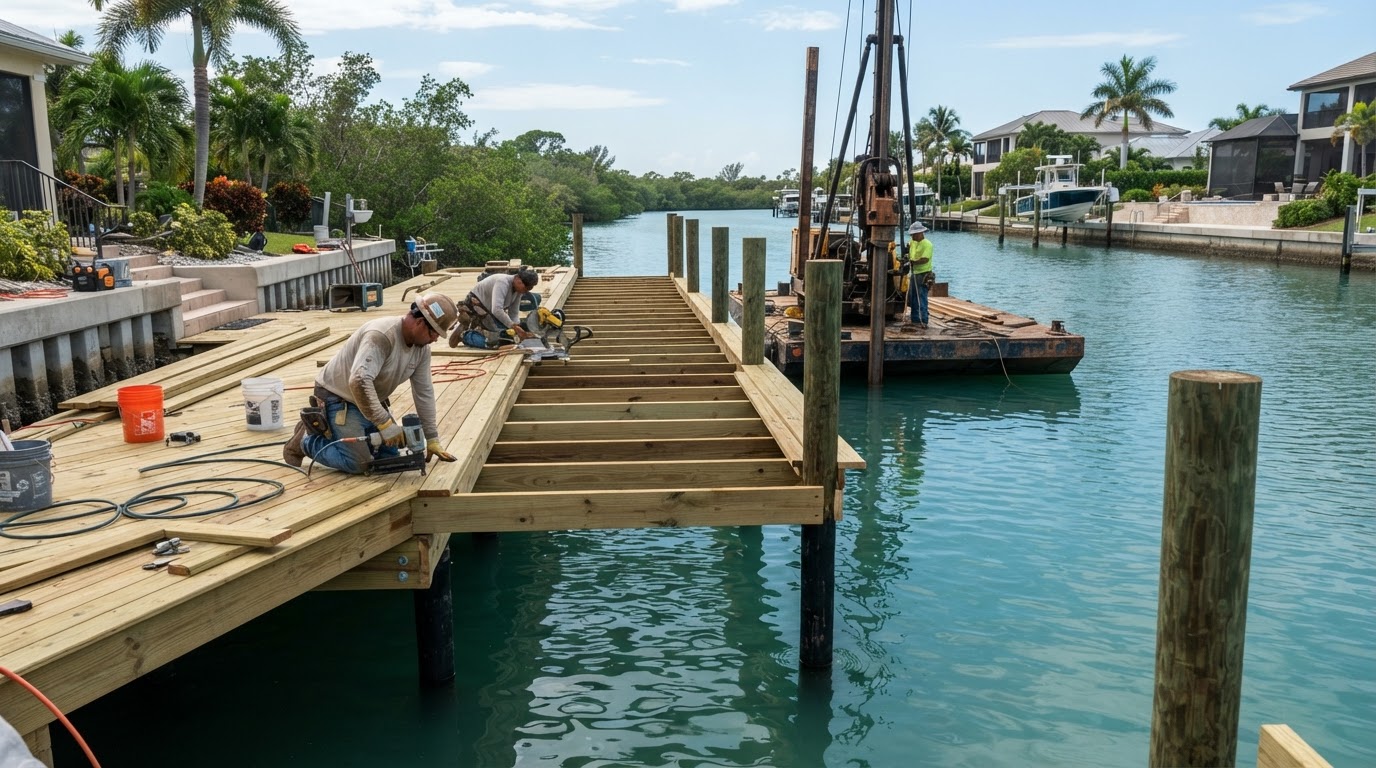
The first step is usually identifying which local authority reviews construction for the specific parcel. Volusia County contains both unincorporated areas and incorporated municipalities, and the property's mailing city alone may not establish its permitting jurisdiction. A Daytona Beach address may fall under the City of Daytona Beach, while a neighboring parcel outside the city limits may fall under unincorporated Volusia County. Confirming the correct local office avoids starting with the wrong department.
Once the local authority is identified, the proposed activity shapes what follows. New dock construction, a dock extension, a dock replacement, a localized repair, and adding a boat lift can each raise different questions. This page does not claim these activities always follow the same process, and does not publish a universal dock-length limit, setback, slip count, permit fee, or processing timeline without current official verification.
- Confirm whether the parcel is in an incorporated city or unincorporated county
- Identify the proposed activity (new, extend, replace, repair, or add a lift)
- Document the existing dock dimensions if one exists
- Note the waterbody and frontage type
- Separate local building review from state and federal questions
City and County Building Department Responsibilities
Local review typically addresses construction and zoning on the upland parcel. State and federal review address separate concerns and are not interchangeable with a local building permit.
Local Building Review
The city or county building department generally reviews construction standards and zoning for the parcel. The responsible office depends on whether the property is inside an incorporated municipality or unincorporated county.
State Environmental Review
Florida DEP's Environmental Resource Permitting program addresses impacts to state waters and submerged lands. A state exemption or permit is a separate question from a local building permit.
Federal Review
The U.S. Army Corps of Engineers may review work in navigable waters under federal authority. A federal authorization is independent of state and local approvals.
Submerged Lands
Occupying state-owned submerged lands may require a proprietary authorization separate from environmental permitting. Owning upland waterfront does not automatically convey water-bottom rights.
Habitat & Species
Seagrass, manatee protection, and other habitat considerations may apply depending on the waterbody and project scope. These are site-specific, not universal.
Qualified Review
Engineering, surveys, and site plans may be needed depending on the project. The appropriate level of review depends on the proposed work and the authority's requirements.
New Docks Versus Repairs and Extensions
The proposed activity affects which reviews apply. A repair, a replacement, an extension, and new construction are not automatically treated the same way.
New Construction & Extensions
- New docks and extensions beyond an existing footprint often raise the broadest review questions
- Footprint, length, and waterward placement may affect state, federal, and submerged-land review
- A neighboring dock's layout does not prove a similar project is permissible on your parcel
- Habitat and navigation considerations may apply to new waterward construction
Repairs & Replacements
- Repairs and replacements may follow different review paths than new construction
- Rebuilding within an existing footprint is not automatically exempt from review
- A previous owner's approval does not guarantee new work is authorized
- Adding a boat lift can be a separate question from repairing the dock itself
Information to Gather Before Applying
Gathering the right information before contacting an authority can make the process clearer. Useful details include the parcel's location and jurisdiction, the waterbody and frontage type, the existing dock dimensions (if any), the proposed dimensions and configuration, the intended vessel use, and the construction scope. A site plan, survey, or existing permit records — where available — can also help.
This page does not suggest that gathering this information guarantees approval, or that a neighboring property's approval applies to your parcel. Each determination depends on the parcel, waterbody, ownership, proposed activity, and current agency requirements.
- Parcel location and confirmed local jurisdiction
- Waterbody and frontage type (canal, river, Intracoastal, lagoon, oceanfront)
- Existing dock dimensions and condition, if a dock exists
- Proposed dimensions, configuration, and vessel use
- Available site plans, surveys, or prior permit records
Waterbody and Environmental Questions Near Daytona Beach
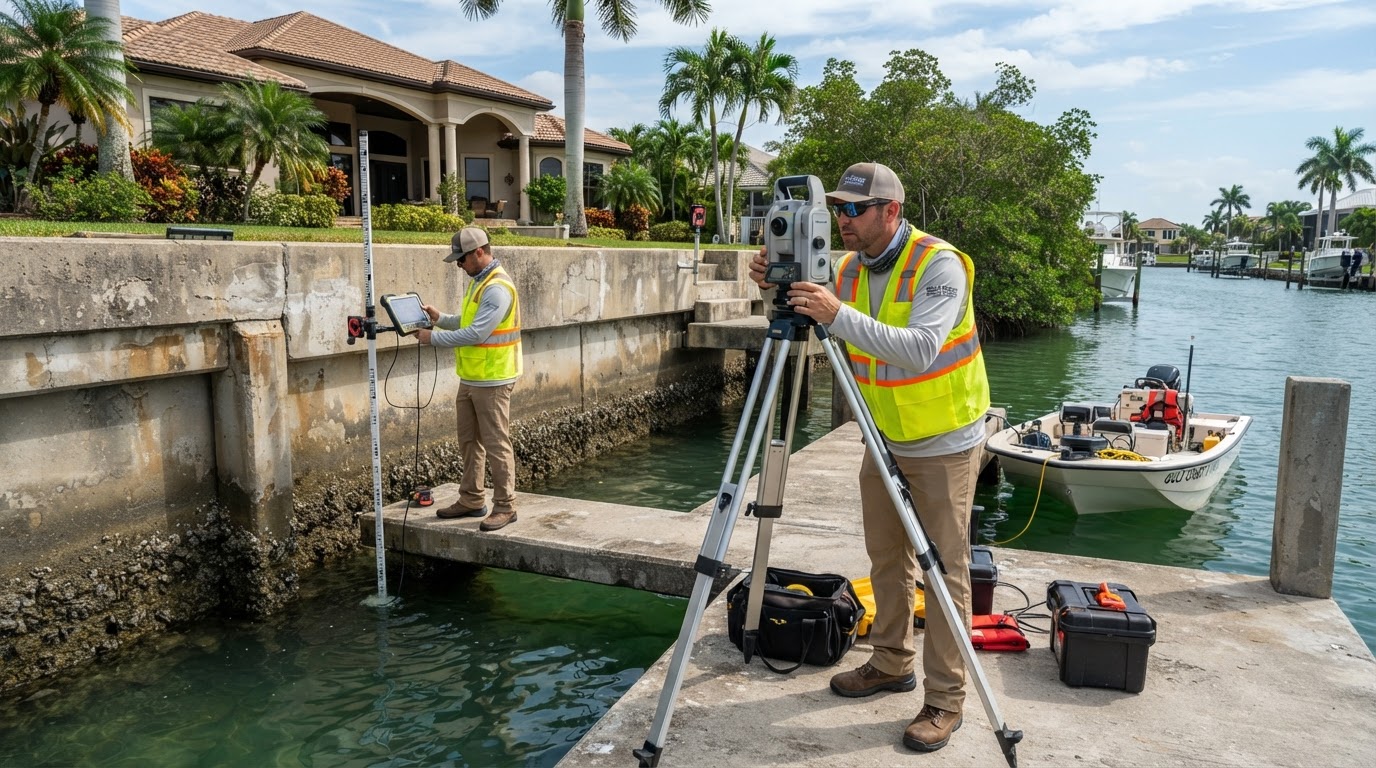
Environmental considerations depend on the specific waterbody and project scope, not on the city name alone.
- Seagrass and shallow-water habitat may be relevant on lagoon or Intracoastal frontage
- Manatee protection zones may affect certain waterways — verify with current FWC maps
- Navigation and neighboring dock access can matter on shared waterways
- Beachfront and dune conditions raise coastal-specific questions distinct from canal work
- An exemption from one authority does not resolve requirements from another
Where to Verify Current Guidance
For current official information, consult the Volusia County Building and Code Administration (volusia.org/services/growth-and-resource-management/building-and-zoning/), the Florida DEP Environmental Resource Permitting program (floridadep.gov), and the U.S. Army Corps of Engineers Jacksonville District. This page provides general guidance and does not replace agency determinations or qualified professional advice.
Related Services Near Daytona Beach
Explore other marine construction topics relevant to your waterfront project.