
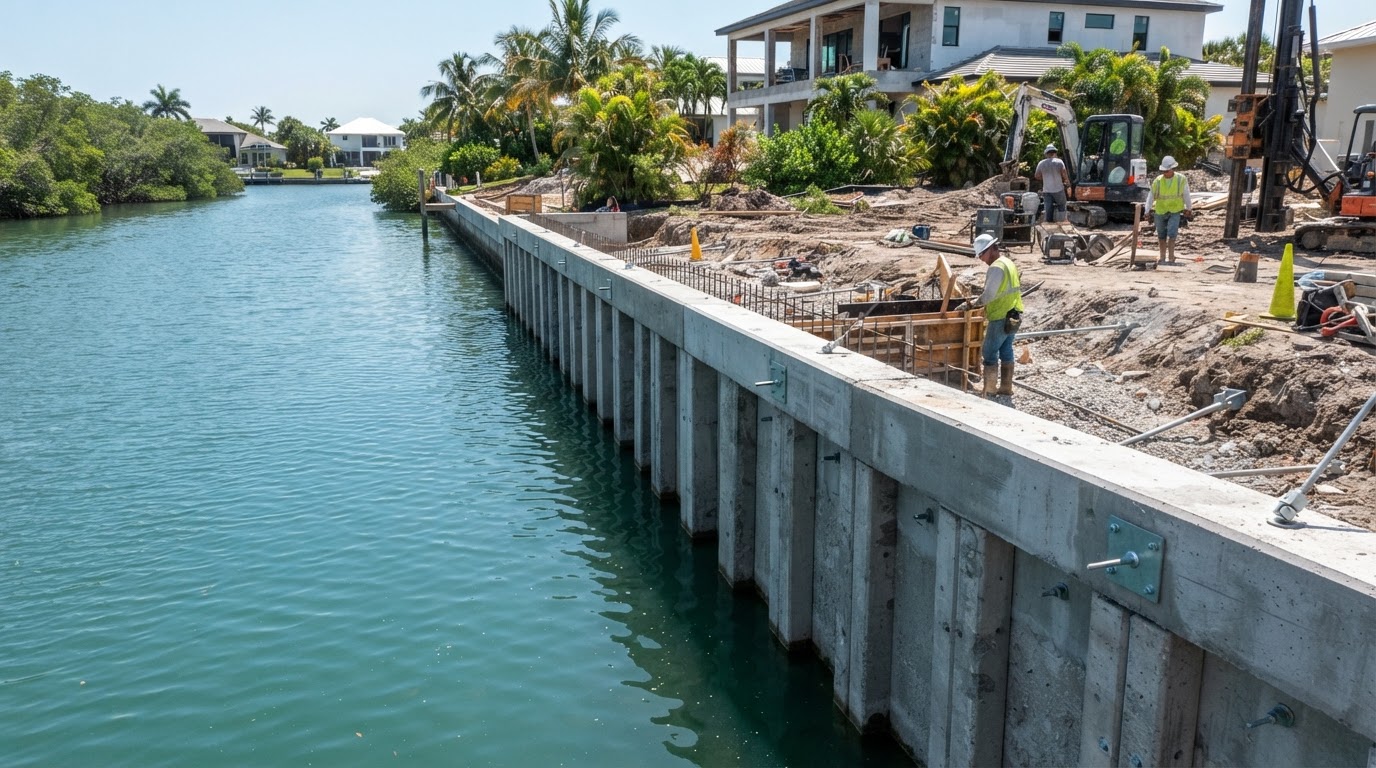
Concrete Seawall Builders & Installation Daytona Beach
Reinforced concrete seawalls provide heavy-duty shoreline retention for Daytona Beach waterfront properties. This page explains concrete seawall systems, structural components, and how concrete compares with vinyl — without prescribing a universal design.
Request a Marine Construction Estimate
Share your dock, seawall, or boat lift project details and we'll review the requirements for your Daytona Beach area waterfront property.
Concrete Seawall Construction in Daytona Beach
A concrete seawall is a reinforced marine retaining wall built to hold back upland soil and resist the forces acting on the waterfront. Along Daytona Beach waterways, concrete systems are used where higher loads, greater exposure, or specific site conditions call for a heavy-duty structure.
Concrete seawall construction involves foundations, reinforcement, wall placement, caps, tieback anchoring, drainage, and backfill — each engineered for the specific site. No universal structural design applies; reinforcement details, site conditions, and engineered design determine performance.
- Reinforced concrete wall systems and foundations
- Caps, tiebacks, and anchoring components
- Drainage and engineered backfill
- Residential, canal, river, and commercial applications
- Engineering design and environmental review
Concrete Seawall Design & Structural Components
A concrete seawall is an assembly of structural components: the wall itself, reinforcement, a cap, connections, tiebacks or anchors, a foundation, drainage, and backfill. Each element is sized and engineered for the wave, soil, and height conditions at the specific site.
Reinforcement details and concrete mix design matter for long-term performance in a marine environment. No universal load rating, reinforcement specification, or guaranteed service life applies — these depend on engineering, exposure, and construction quality.
- Concrete wall systems and foundations
- Reinforcement engineered for the site
- Caps and structural connections
- Tiebacks and anchoring systems
- Drainage and engineered backfill
Concrete Seawall Applications Near Daytona Beach
Concrete suits a range of waterfront conditions. No single design suits every environment — residential, canal, river, and commercial sites each have distinct considerations.
- Residential canal and Intracoastal waterfronts
- Riverfront properties with specific soil conditions
- Higher-load or more exposed installations
- Commercial and association waterfronts
- Sites where heavy-duty capacity is appropriate
- Engineering design for the specific site
Reinforced Concrete Seawall Construction
Reinforcing details, site conditions, and engineered design determine a concrete seawall's performance. Unsupported load ratings, reinforcement specifications, or guaranteed service lives are not appropriate — these depend on the specific project and qualified engineering. Concrete mix design and marine exposure also influence long-term performance.
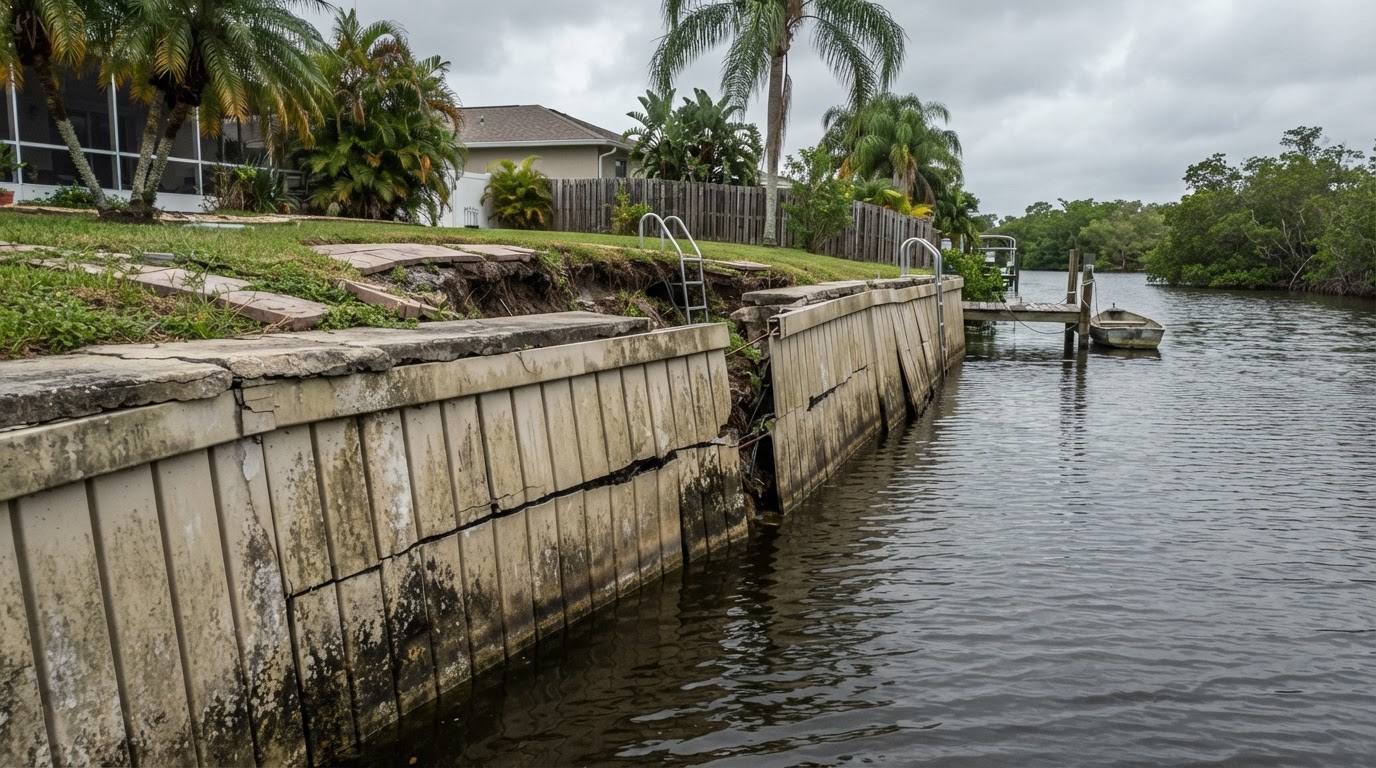
Concrete Seawall Repair vs. Replacement
Common concrete seawall concerns include cracking, spalling, joint deterioration, cap damage, wall movement, and broader structural issues. Some defects can be addressed with targeted repair; others may point toward replacement evaluation.
Symptoms require evaluation before choosing a repair approach. A surface crack may be cosmetic, or it may indicate movement beneath. Spalling may expose reinforcement to corrosion. Qualified inspection determines whether repair or replacement is appropriate for the specific wall.
- Cracking and spalling of concrete surfaces
- Joint deterioration and separation
- Cap damage and deterioration
- Wall movement, leaning, or bowing
- Broader structural concerns requiring evaluation
Concrete vs. Vinyl Seawalls in Daytona Beach
Concrete and vinyl suit different conditions. A balanced comparison considers materials, site suitability, construction access, and engineering requirements.
Concrete Seawalls
- Heavy-duty capacity for higher-load sites
- Reinforced for engineered wave and soil forces
- Different construction access requirements
- Maintenance focuses on cracking and spalling
Vinyl Seawalls
- Corrosion-resistant in salt and brackish water
- Common for moderate residential wall heights
- Different installation considerations
- Maintenance focuses on caps, anchors, and drainage
Planning Concrete Seawall Projects Near Daytona Beach
Several site-specific factors shape concrete seawall construction and whether it is appropriate for a given waterfront.
- Property access for equipment and excavation
- Adjacent improvements and utility locations
- Shoreline conditions and water depth
- Engineering design and reinforcement details
- Construction access and potential barge mobilization
- Environmental review based on waterbody and jurisdiction
Related Services Near Daytona Beach
Explore other marine construction topics relevant to your waterfront project.