
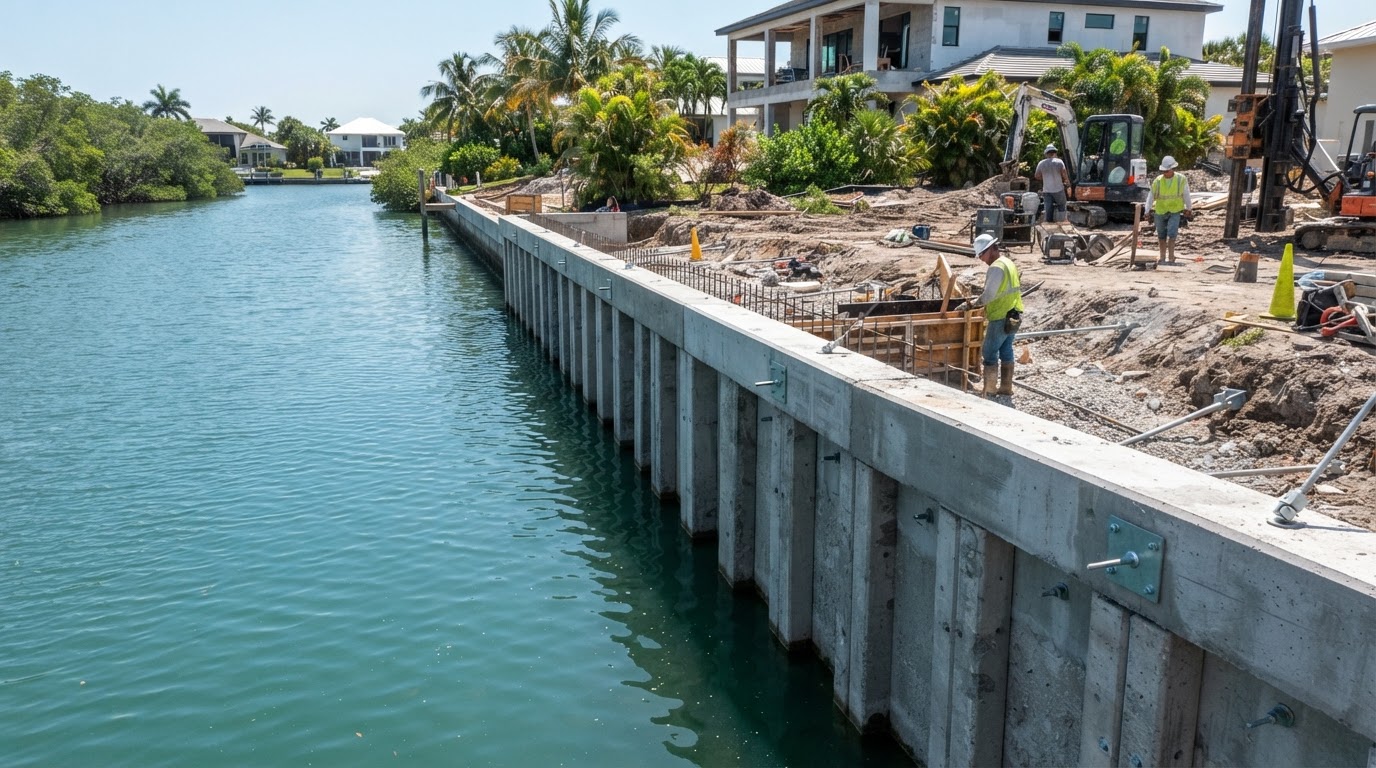
Seawall Drainage & Weep Holes Daytona Beach
Drainage behind a seawall relieves the water pressure that builds up against the wall. This page explains how drainage systems work, the signs of potential problems, and why drainage features must be evaluated within the complete wall design — not modified without qualified assessment.
Request a Marine Construction Estimate
Share your dock, seawall, or boat lift project details and we'll review the requirements for your Daytona Beach area waterfront property.
Seawall Drainage & Weep Holes in Daytona Beach
Drainage design and water movement matter to the performance of many seawall systems. Water that accumulates behind a wall exerts pressure that pushes the wall toward the water; drainage features relieve that pressure by allowing water to escape. Along Daytona Beach canals and Intracoastal waterfronts, drainage is a critical part of how a seawall performs over time.
Not every seawall contains identical drainage components, and not every drainage problem is caused by blocked weep holes. This page explains general drainage considerations — it does not provide DIY drilling or modification instructions, and it does not prescribe drainage designs without qualified evaluation of the specific wall.
- Drainage relieves water pressure behind seawalls
- Components vary by wall design
- Not every problem is caused by blocked weep holes
- Features must be evaluated within the complete wall design
- No DIY drilling or modification without qualified assessment
Understanding Seawall Drainage Systems
Seawall drainage may involve several components. Not every wall contains identical drainage features — design varies by wall type and site.
Drainage Pathways
Drainage pathways allow water behind the wall to escape, relieving hydrostatic pressure. These may be designed into the wall system as part of the original engineered structure.
Filter Materials
Filter materials may be used to allow water to pass while preventing soil from migrating through drainage pathways. Proper filtration helps maintain drainage function over time.
Weep Holes
Weep holes are openings that allow water to drain through the wall where appropriate. Not every wall design includes weep holes — their suitability depends on the wall system and site conditions.
Engineered Features
Other engineered drainage features may be part of a complete wall design. Drainage is considered as part of the overall structure, not added in isolation without evaluation.
Water Pressure & Seawall Performance
Water that accumulates behind a seawall exerts hydrostatic pressure that pushes the wall toward the water. Drainage and site conditions should be considered during professional evaluation of wall performance. This page does not provide pressure calculations or technical specifications — the relationship between drainage and wall performance must be evaluated by qualified professionals for the specific structure and site.
Signs of Potential Drainage Problems Near Daytona Beach
Several signs may indicate drainage concerns. Not every symptom is caused by blocked weep holes — the cause must be evaluated.
- Unusual water accumulation behind the wall
- Soil settlement or changes near the wall
- Water migration or seepage through the wall
- Drainage obstruction or reduced flow
- Wall movement that may relate to pressure
- Surface deterioration near drainage areas
Seawall Weep Hole Repair Considerations
Weep holes, where present, must be evaluated within the complete wall design. They are part of the engineered drainage system, not standalone features to be modified without understanding the wall. Blocked weep holes may contribute to pressure buildup, but drilling new openings or modifying existing drainage without qualified assessment can compromise the wall.
This page does not provide DIY drilling or modification instructions. Weep hole repair or modification requires qualified evaluation of the wall design, the drainage system, and the specific conditions. The appropriate response depends on the wall system and the cause of any drainage concern.
- Weep holes are part of the engineered drainage system
- Evaluate within the complete wall design
- No DIY drilling or modification without assessment
- Repair depends on wall system and cause
Drainage Problems & Soil Loss
Improperly functioning or unsuitable drainage arrangements may contribute to broader shoreline concerns beyond the wall itself.
- Poor drainage may contribute to soil migration
- Water pressure can affect wall stability
- Drainage and soil loss may be related
- Complete evaluation considers both wall and soil
- Addressing drainage alone may not resolve soil loss
- Qualified assessment of the relationship is needed
Seawall Drainage Repair vs. Structural Repair
Addressing drainage conditions differs from repairing damaged wall components. The appropriate scope depends on what the evaluation reveals.
Drainage Repair
- Addresses water pressure and flow behind the wall
- May involve clearing or restoring drainage pathways
- Appropriate when wall structure is sound
- Evaluated within the complete wall design
Structural Repair
- Addresses damaged wall components
- Needed when wall integrity is compromised
- May be required alongside drainage work
- Depends on the condition of the wall system
Professional Drainage Evaluation
Seawall drainage evaluation considers site-specific structural and soil conditions. This page provides general information only and does not prescribe drainage designs, drilling instructions, or modification procedures. Any drainage concern — water accumulation, soil changes, or wall movement — should be referred to qualified professionals who can evaluate the complete wall system and recommend appropriate action for the specific site.
Related Services Near Daytona Beach
Explore other marine construction topics relevant to your waterfront project.