
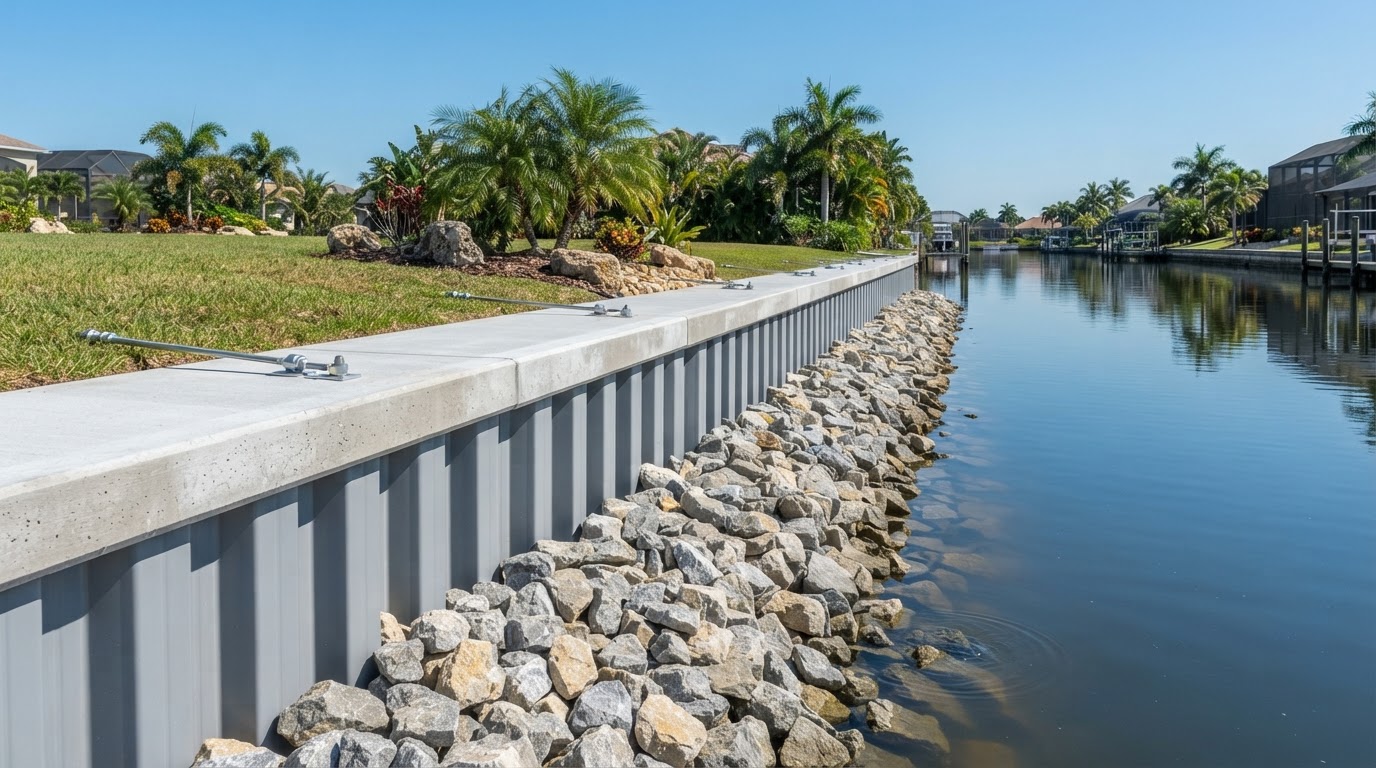
Seawall Lifespan & Structural Warning Signs Daytona Beach
Seawall service life varies with material, design, construction quality, water conditions, drainage, and maintenance — no single number applies to every wall. This guide explains what affects seawall lifespan near Daytona Beach, the warning signs that may warrant professional review, and how to distinguish cosmetic wear from potential structural problems — without promising a fixed lifespan or diagnosing failure from a photograph.
Request a Marine Construction Estimate
Share your dock, seawall, or boat lift project details and we'll review the requirements for your Daytona Beach area waterfront property.
Seawall Lifespan in Daytona Beach
A seawall's service life depends on many factors, including its material, original design, construction quality, water and soil conditions, drainage, loading, corrosion exposure, maintenance, storm events, adjacent structures, and previous repairs. Because these factors vary, no particular material always lasts a fixed number of years.
This page is general educational guidance, not a structural assessment. It does not state that a particular material always lasts a fixed number of years, does not diagnose structural failure based solely on photographs, and refers engineering and condition conclusions to qualified professionals. Where numeric lifespan estimates would require reliable dated support, this page uses practical qualitative guidance instead.
- What affects the service life of a seawall
- Warning signs of seawall deterioration
- Cracks, leaning walls, and structural movement
- Soil loss and drainage problems near Daytona Beach
- Seawall repair versus replacement
- Why professional evaluation matters
What Affects the Service Life of a Seawall?
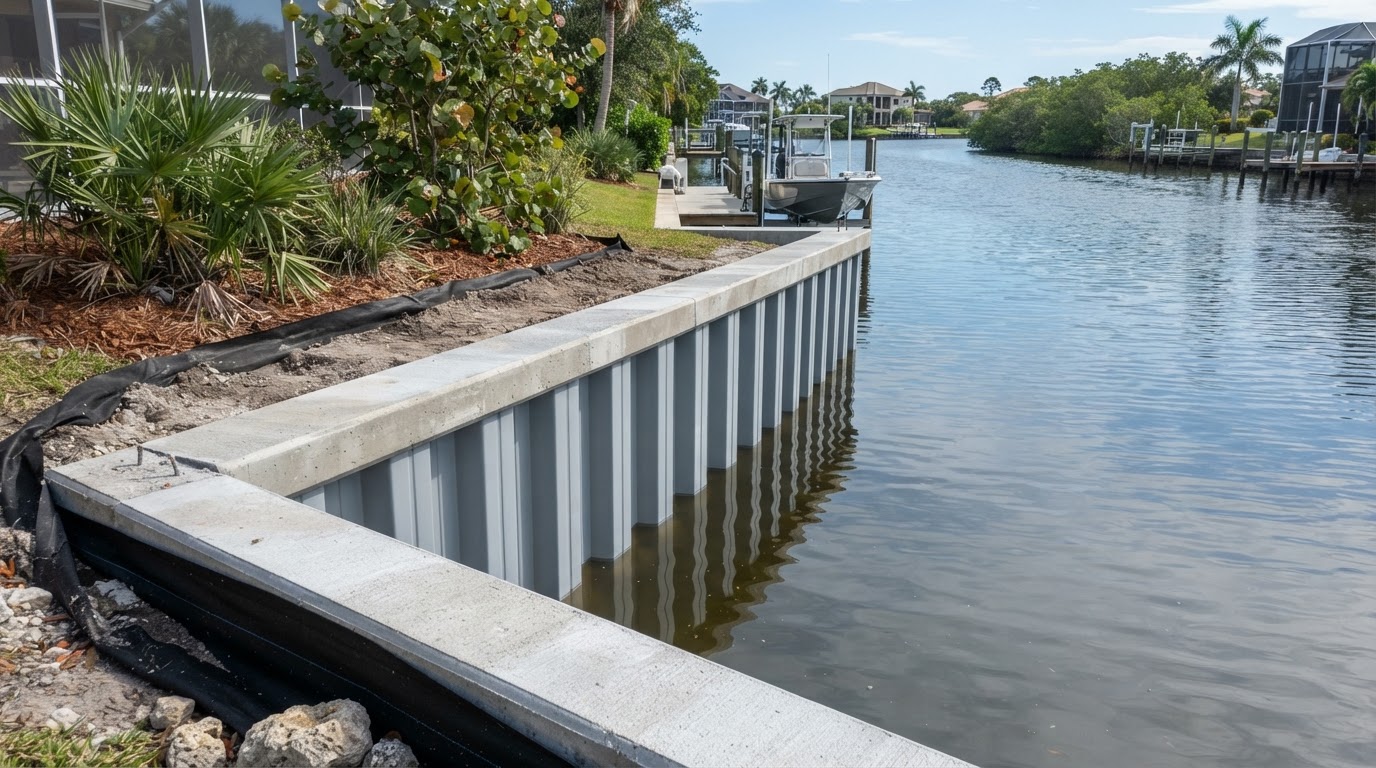
Seawall service life is influenced by material, original design, construction quality, water and soil conditions, drainage, loading, corrosion exposure, maintenance, storm events, adjacent structures, and previous repairs. A wall in a protected canal may face different conditions than one on an exposed shoreline, and a well-maintained wall may perform differently than one with deferred drainage or soil-loss issues.
This page does not state that a particular material always lasts a fixed number of years. Where numeric lifespan estimates would require reliable dated support, applicable material assumptions, and clear limitations, this page prefers practical qualitative guidance and refers specific conclusions to qualified professionals.
- Service life depends on material, design, and construction quality
- Water, soil, drainage, and corrosion exposure all matter
- Maintenance, storms, and adjacent structures affect longevity
- No material is assigned a fixed number of years here
Evaluating Material Condition
Vinyl and concrete seawalls can have different maintenance concerns, but neither has a guaranteed lifespan.
Vinyl Seawalls
- Vinyl sheet-pile walls resist some forms of corrosion that affect steel
- May still be affected by loading, soil, drainage, and installation factors
- Cap, tieback, and connection conditions matter regardless of material
- No fixed lifespan is assigned to vinyl here
Concrete Seawalls
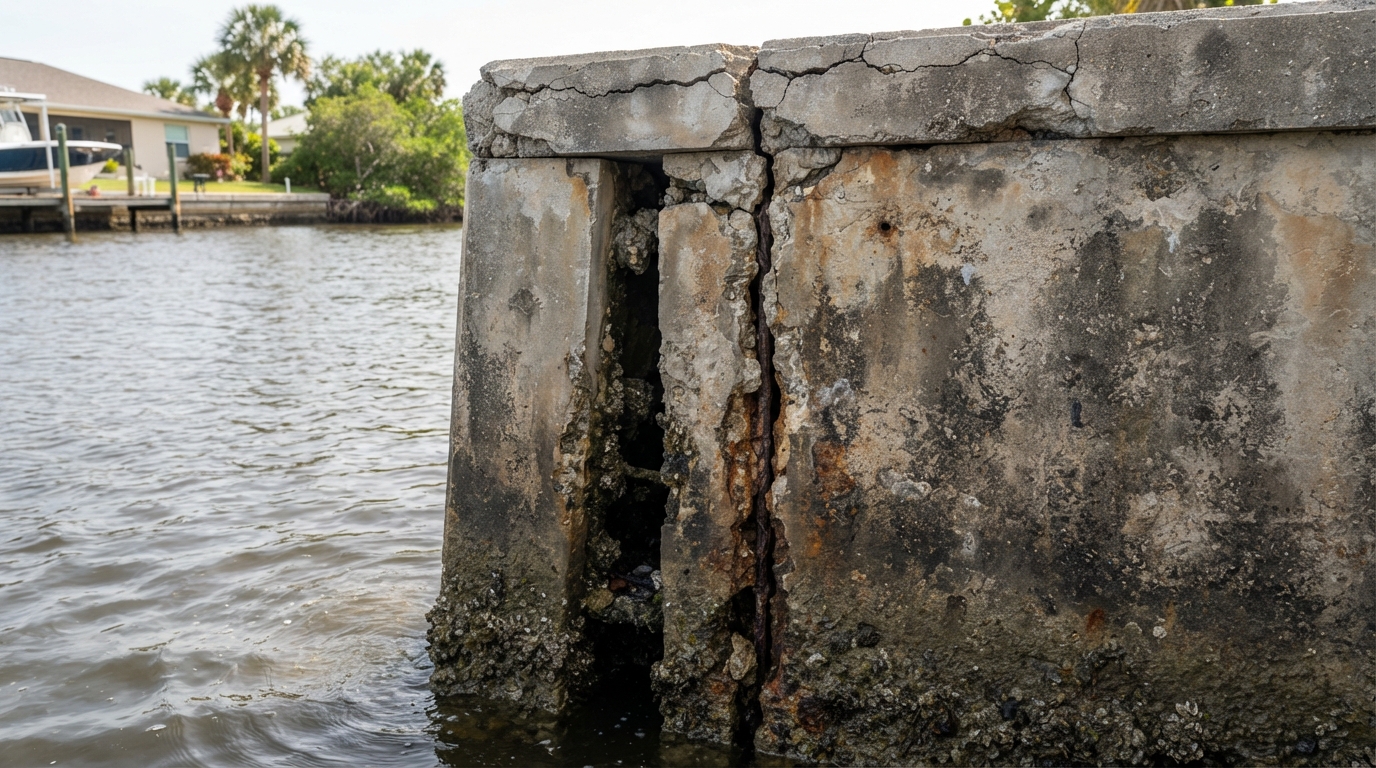
- Concrete walls can be affected by cracking, spalling, and reinforcement corrosion
- Cap, joint, and drainage conditions affect performance
- Material alone does not determine service life
- No fixed lifespan is assigned to concrete here
Warning Signs of Seawall Deterioration
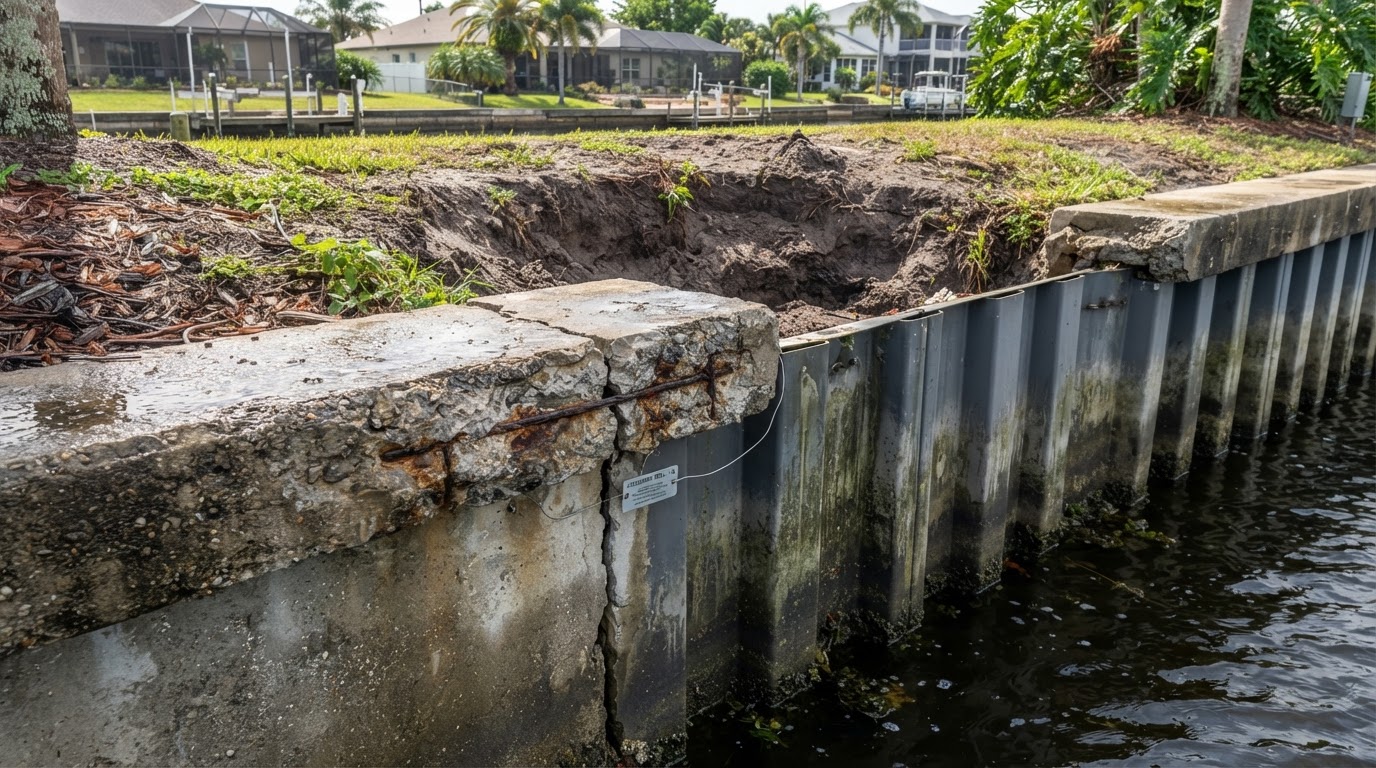
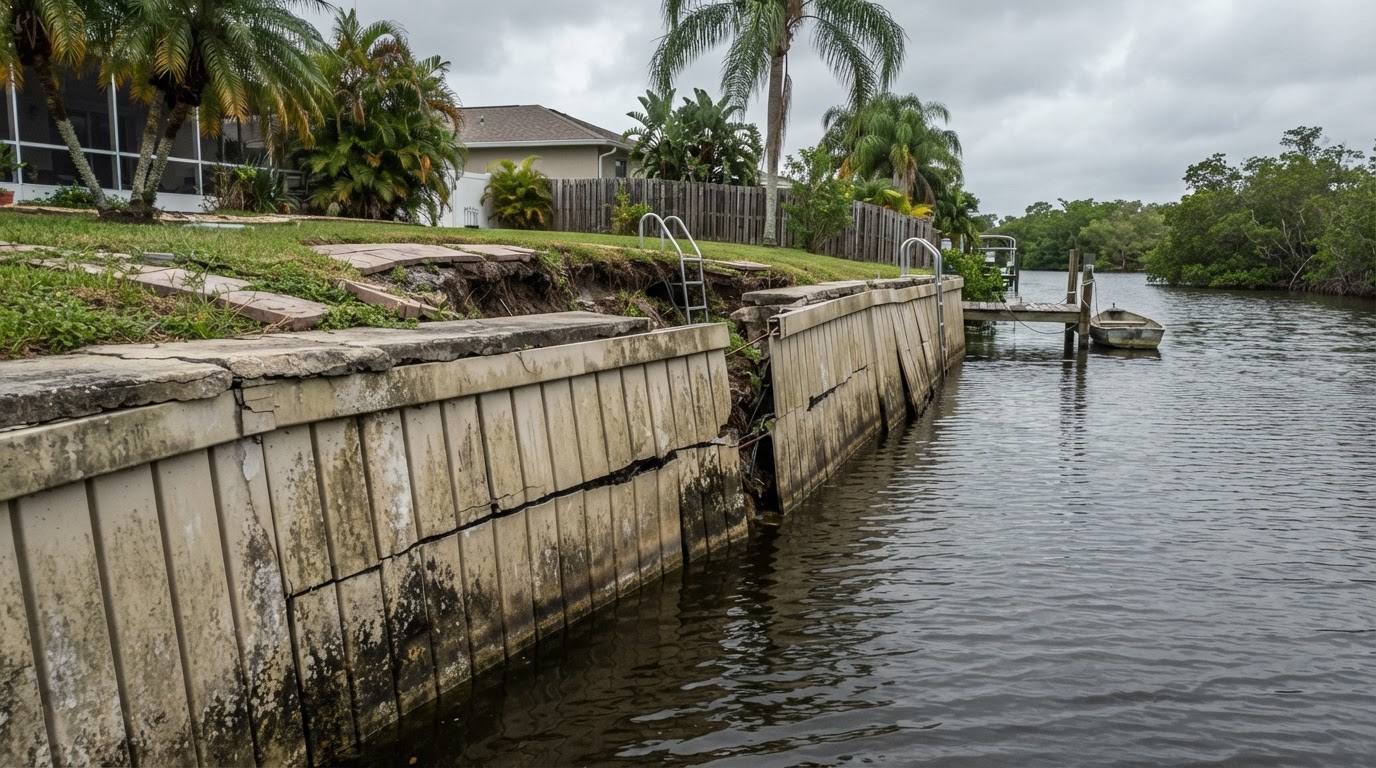
Observable warning signs may include cracks, joint deterioration, wall movement, bowing or leaning, cap damage, tieback concerns, settlement, soil washouts, drainage issues, and visible deterioration. These signs do not by themselves determine structural capacity, and some visible wear may be cosmetic rather than structural.
This page distinguishes visible cosmetic wear from potential structural problems, and does not diagnose structural failure based solely on photographs. Warning signs are a reason to seek qualified evaluation, not a definitive diagnosis of the wall's condition.
- Warning signs include cracks, movement, bowing, and cap damage
- Soil washouts, drainage issues, and settlement may also appear
- Signs do not by themselves determine structural capacity
- Some visible wear may be cosmetic rather than structural
Cracks, Leaning Walls and Structural Movement
Specific warning signs may warrant professional review, but none alone diagnoses failure.
Cracks & Joints
Cracks and joint separation can range from cosmetic to structural. Not all cracks are serious, but changes in cracking or widening joints may warrant evaluation.
Bowing & Leaning
Bowing or leaning can indicate movement under soil or water loading. A change in wall alignment may warrant qualified evaluation of the wall and its anchorage.
Cap Damage
Cap deterioration or cracking can affect the wall's top connection. Cap condition is one part of the overall wall assessment.
Tieback Concerns
Tieback or anchorage concerns can affect wall stability. Tieback conditions are evaluated as part of a structural review.
Drainage Issues
Drainage problems can increase loading behind the wall. Poor drainage is a common factor in seawall deterioration.
Previous Repairs
Previous repairs may mask or address earlier issues. A history of patchwork can be relevant to understanding current condition.
Soil Loss and Drainage Problems Near Daytona Beach
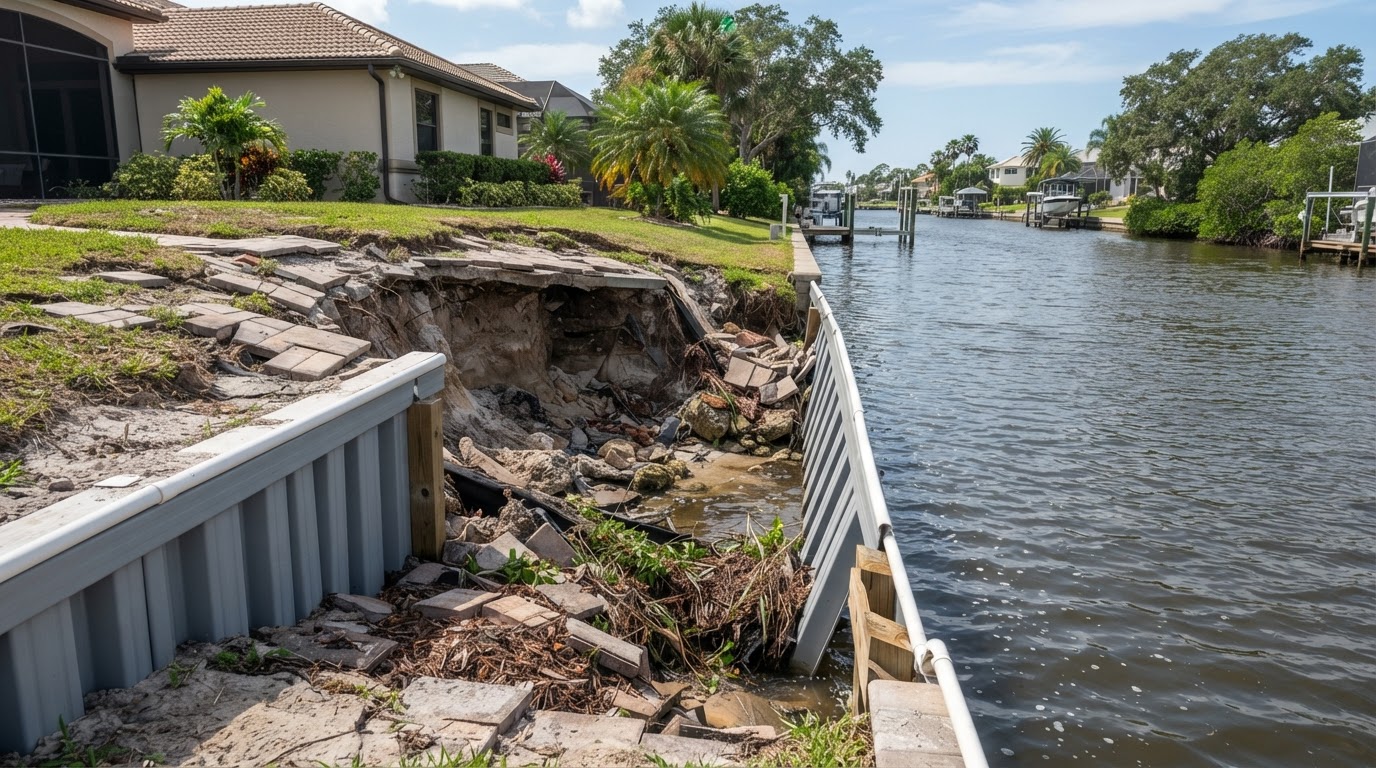
Soil loss behind a seawall and drainage problems are common factors in seawall deterioration. Water that builds up behind a wall increases loading, and soil that washes out can create voids that affect stability. These issues may be visible as settlement, sinkholes, or gaps behind the wall.
This page does not diagnose structural failure based solely on photographs, and does not promise that a repair extends service life by a specific number of years without supporting evidence. Soil loss and drainage concerns are reasons to seek qualified evaluation.
- Soil loss and drainage problems are common deterioration factors
- Water buildup behind a wall increases loading
- Soil washout can create voids that affect stability
- No repair is promised to extend service life by a fixed number of years
Seawall Repair Versus Replacement
Whether a seawall can be repaired or needs replacement depends on the wall's condition, the extent of deterioration, the cause, and qualified evaluation. A localized crack repair may be appropriate where the wall is otherwise sound, while widespread movement or soil loss may point toward replacement. The right approach is determined for the specific wall.
This page does not promise that a repair extends service life by a specific number of years, and does not diagnose structural failure based solely on photographs. Repair-versus-replacement decisions are referred to qualified professionals.
- Repair or replacement depends on condition, extent, and cause
- A localized repair may suit a wall that is otherwise sound
- Widespread movement or soil loss may point toward replacement
- Repair-versus-replacement decisions are referred to qualified professionals
Why Professional Evaluation Matters
Visible warning signs are a reason to seek qualified evaluation, not a substitute for it. A professional review can assess the wall's condition, the cause of observed signs, and whether repair or replacement is appropriate. Routine condition reviews can also help owners catch changes early, before a small concern becomes a larger one.
This page does not diagnose structural failure based solely on photographs, and does not promise a repair extends service life by a specific number of years. Structural and condition conclusions are referred to qualified professionals.
- Visible signs are a reason to seek evaluation, not a substitute for it
- A professional review assesses condition, cause, and appropriate action
- Routine condition reviews can catch changes early
- Structural and condition conclusions are referred to qualified professionals
When to Seek Qualified Evaluation
If you observe cracks, wall movement, bowing or leaning, soil loss, drainage problems, or other warning signs, seek qualified professional evaluation rather than relying on a visual assessment alone. This page provides general educational guidance and does not replace a structural assessment, agency determination, or qualified professional advice.
Related Services Near Daytona Beach
Explore other marine construction topics relevant to your waterfront project.