
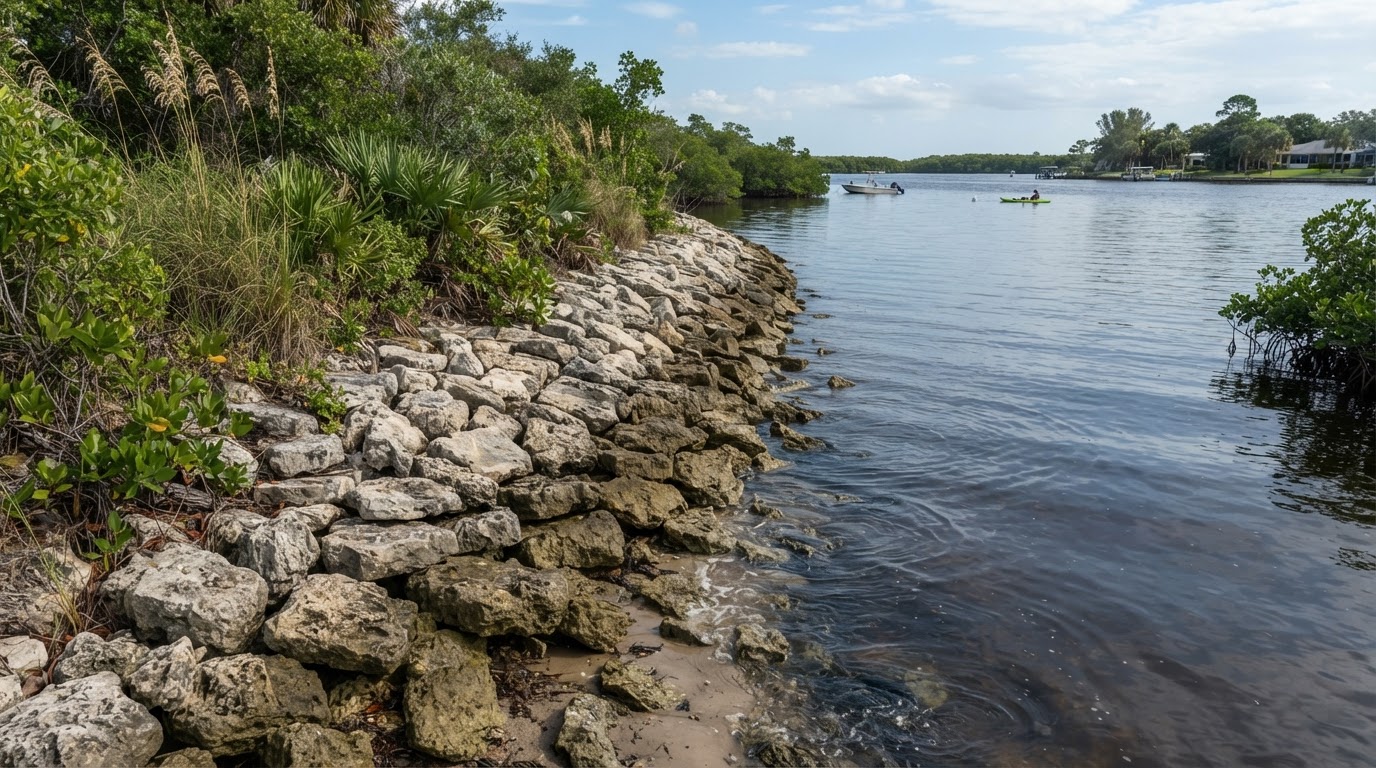
Riprap & Revetment Installation Daytona Beach
Riprap and revetment systems use placed stone or engineered materials to stabilize shorelines against erosion. This page explains how these systems work, where they may be appropriate, and how they compare with seawalls and living shorelines.
Request a Marine Construction Estimate
Share your dock, seawall, or boat lift project details and we'll review the requirements for your Daytona Beach area waterfront property.
Riprap & Revetment Installation in Daytona Beach
Riprap and revetments are shoreline stabilization approaches that use placed stone or engineered materials to resist erosion along suitable waterfronts. Along Daytona Beach area waterways, these systems may be considered for certain shoreline applications where site conditions and approvals permit.
Riprap and revetments are not suitable or authorized for every property. Suitability depends on shoreline configuration, water movement, soil conditions, environmental sensitivity, and applicable review. No universal stone sizing, slope, or construction method applies — these depend on engineered design for the specific site.
- Stone placement and shoreline geometry
- Water movement and erosion considerations
- Soil conditions and filter layers where applicable
- Site access and construction logistics
- Environmental review and permitting where applicable
Understanding Riprap Shoreline Stabilization
Riprap shoreline stabilization places stone of appropriate size along a shoreline to resist erosion from water movement. The stone absorbs and deflects wave energy, protecting the soil beneath. Filter layers may be used beneath the stone to prevent soil migration through the gaps.
Shoreline geometry, water movement, soil conditions, erosion considerations, and site access all influence the design. No universal stone sizing, slope, or construction method is appropriate for every site — these depend on engineered design and the specific shoreline.
- Stone sized for the site's water movement
- Shoreline geometry and slope considerations
- Filter layers to prevent soil migration where applicable
- Water movement and erosion analysis
- Site access for stone delivery and placement
Riprap vs. Seawalls Near Daytona Beach
Riprap and seawalls take different structural approaches to shoreline protection. Neither is universally cheaper or superior — suitability depends on the site.
Riprap & Revetments
- Placed stone resists erosion along the shoreline
- Sloped, armor-style approach
- Suitability depends on shoreline configuration
- Environmental considerations may differ
Seawalls
- Vertical retaining wall holds back upland soil
- Engineered for wave and soil forces
- Common on canal and Intracoastal waterfronts
- Different maintenance and access considerations
Revetment Installation Considerations
Several site-specific factors shape revetment design and whether it is appropriate for a given shoreline.
- Waterfront exposure and wave energy
- Shoreline grading and slope
- Existing improvements and structures
- Water access for equipment and materials
- Engineering design for the specific site
- Construction logistics and scheduling
Environmental Considerations for Shoreline Projects
Applicable habitat protections and review requirements can vary by site. Potential considerations may involve aquatic vegetation, oyster habitat, manatee-related protections, shoreline vegetation, and other site-specific environmental conditions. Not every project requires the same mitigation or permit conditions — environmental review depends on the waterbody, jurisdiction, and project scope.
Riprap vs. Living Shorelines
Structural armoring and living shorelines take different approaches to shoreline protection. Site suitability must be evaluated rather than assumed.
Riprap Armoring
- Structural stone armoring resists erosion
- Engineered for the site's water movement
- Suitability depends on shoreline conditions
- Different environmental considerations
Living Shorelines
- Natural vegetation and habitat features
- Hybrid approaches where suitable
- Suitability depends on wave exposure and space
- Different environmental review considerations
Repairing Existing Shoreline Stabilization Systems
Existing riprap or revetment systems may require inspection when stone has displaced, settled, or deteriorated. Displaced stone can expose the soil beneath to erosion; settlement can reduce the system's effectiveness. General inspection considers stone placement, filter layer condition, and shoreline changes over time.
Repair of an existing system depends on the extent of displacement or deterioration and whether the underlying cause — such as changed water conditions or inadequate original design — has been addressed. Qualified evaluation helps determine the appropriate repair approach.
- Displaced or settled stone
- Filter layer condition where applicable
- Shoreline changes over time
- Underlying cause of any deterioration
- Qualified evaluation of repair options
Related Services Near Daytona Beach
Explore other marine construction topics relevant to your waterfront project.