
Living Shoreline Design & Installation Daytona Beach
A living shoreline is a natural or hybrid approach to shoreline stabilization that combines vegetation, appropriate materials, and habitat features where site conditions and approvals permit. This page explains how living shorelines differ from conventional armoring and when they may be appropriate for a Daytona Beach waterfront property.
Request a Marine Construction Estimate
Share your dock, seawall, or boat lift project details and we'll review the requirements for your Daytona Beach area waterfront property.
Living Shoreline Design & Installation in Daytona Beach
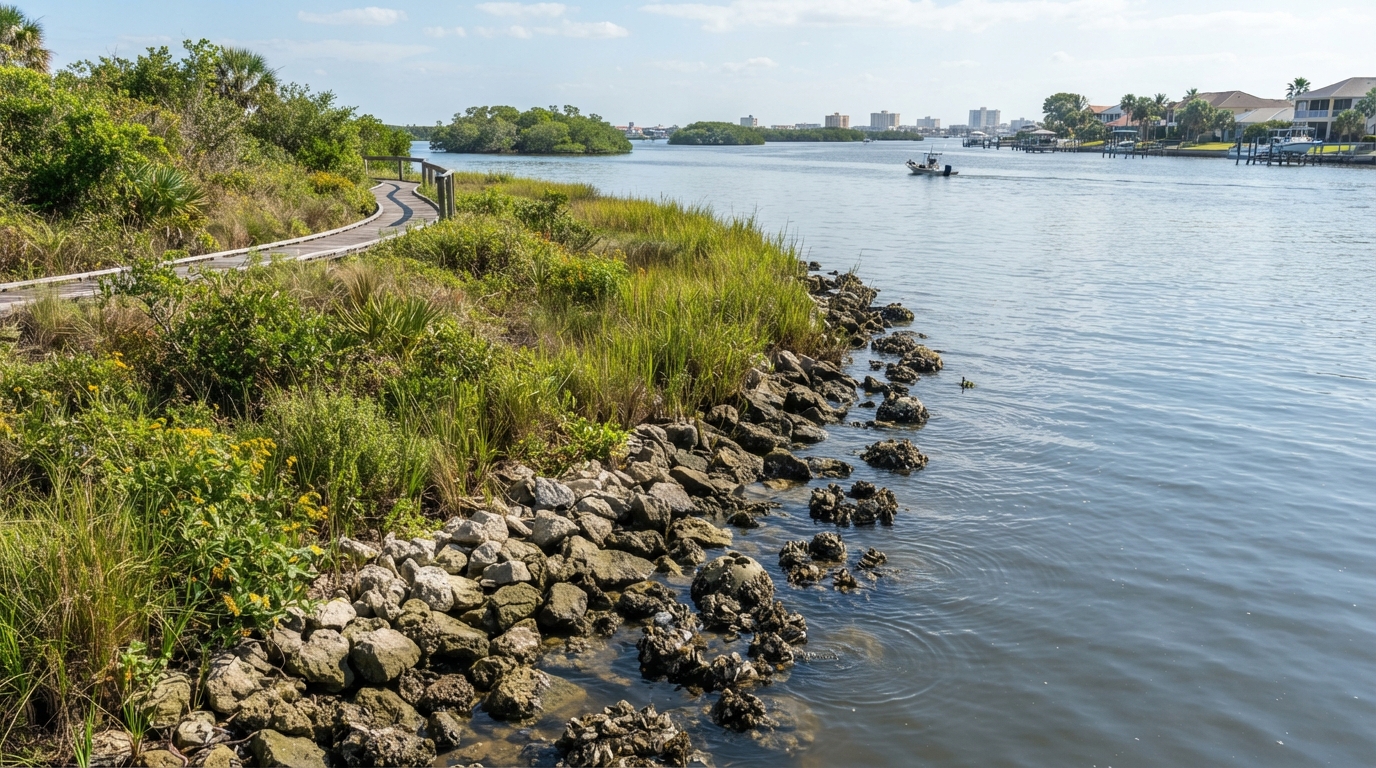
A living shoreline stabilizes a waterfront using natural elements — native shoreline vegetation, organic or engineered materials, riprap toe protection, and habitat features like oyster reefs or shell bags — rather than a single vertical wall. Where wave energy is moderate, water depth is suitable, and environmental review allows, a living shoreline can protect property while supporting coastal habitat and water quality.
Living shorelines are not appropriate for every property. Suitability depends on wave exposure, water depth, shoreline geometry, existing infrastructure, navigation needs, and the environmental requirements that apply to the specific waterbody. Not every living shoreline requires the same components — a protected canal may call for a different design than an exposed lagoon shoreline.
- Native shoreline vegetation and erosion considerations
- Shoreline slope and water movement
- Site access and property use
- Habitat conditions and environmental review
- Wave exposure and navigation needs
Natural Shoreline Stabilization Near Daytona Beach
Natural shoreline stabilization draws on living and structural elements working together. Shoreline vegetation stabilizes the bank with roots, slows runoff, and dampens wave energy at the waterline. Riprap or a stone toe can armor the base where wave action is stronger, while oyster habitat features and filter layers protect the slope beneath the surface.
Design depends on shoreline slope, water movement, the existing shoreline condition, and how the property is used. A gentle, sheltered bank may support a primarily vegetated approach; a more exposed shoreline may require a hybrid combining vegetation with structural toe protection. Site access for planting and material placement also factors into what is practical.
- Shoreline vegetation to stabilize the bank with root structure
- Erosion history and existing shoreline condition
- Shoreline slope and water movement analysis
- Habitat conditions and site access for installation
- Property use and environmental review requirements
Living Shoreline Applications for Waterfront Properties
Suitability of a living shoreline depends on several site-specific factors. Not every waterfront is a candidate for this approach.
- Wave exposure — living shorelines suit low to moderate energy settings
- Water depth and shoreline slope at the project location
- Existing infrastructure such as docks, seawalls, or bulkheads
- Available space for a graded, vegetated slope
- Navigation needs and vessel access requirements
- Applicable environmental and permitting requirements for the waterbody
Living Shorelines vs. Seawalls in Daytona Beach
A living shoreline and a vertical seawall serve shoreline protection in fundamentally different ways. Neither is universally preferable — the right choice depends on the site.
Living Shoreline
- Natural or hybrid approach using vegetation and habitat
- Suitable for low to moderate wave energy
- Supports coastal habitat and water quality
- Requires space for a graded, vegetated slope
Vertical Seawall
- Engineered vertical retaining structure
- Suited to higher wave energy and constrained shorelines
- Holds back soil with a rigid barrier
- Requires less shoreline area in tight waterfronts
Living Shorelines vs. Riprap & Revetments
Riprap and revetments are structural approaches that absorb wave energy with stone. A living shoreline blends vegetation with these elements where appropriate.
- Riprap uses layered stone to absorb wave energy on a sloped bank
- Revetments are engineered sloped structures protecting the shoreline
- Living shorelines combine vegetation with structural elements where suited
- A hybrid approach may pair a riprap toe with vegetated upper banks
- Site suitability must be evaluated rather than assumed
Environmental Review & Shoreline Planning
Habitat features, aquatic vegetation, wildlife protections, and permitting requirements for living shoreline projects depend on the specific site and project scope. Manatee-related protections, sea turtle nesting season, submerged aquatic vegetation, and sovereign submerged lands may all be relevant depending on the waterbody. Specific local requirements should be verified against current official sources rather than assumed from general guidance.
Related Services Near Daytona Beach
Explore other marine construction topics relevant to your waterfront project.