
Seawall Cap Construction & Repair Daytona Beach
A seawall cap protects the top of a marine retaining wall and ties its components together. This page explains the role of seawall caps, common cap problems, and how cap repair relates to the broader wall system.
Request a Marine Construction Estimate
Share your dock, seawall, or boat lift project details and we'll review the requirements for your Daytona Beach area waterfront property.
Seawall Cap Construction & Repair in Daytona Beach
A seawall cap is the structural element that runs along the top of a seawall, tying wall panels or sections together and protecting the top edge from water, weather, and impact. Along Daytona Beach waterways, caps are commonly concrete and are integral to the wall's overall performance.
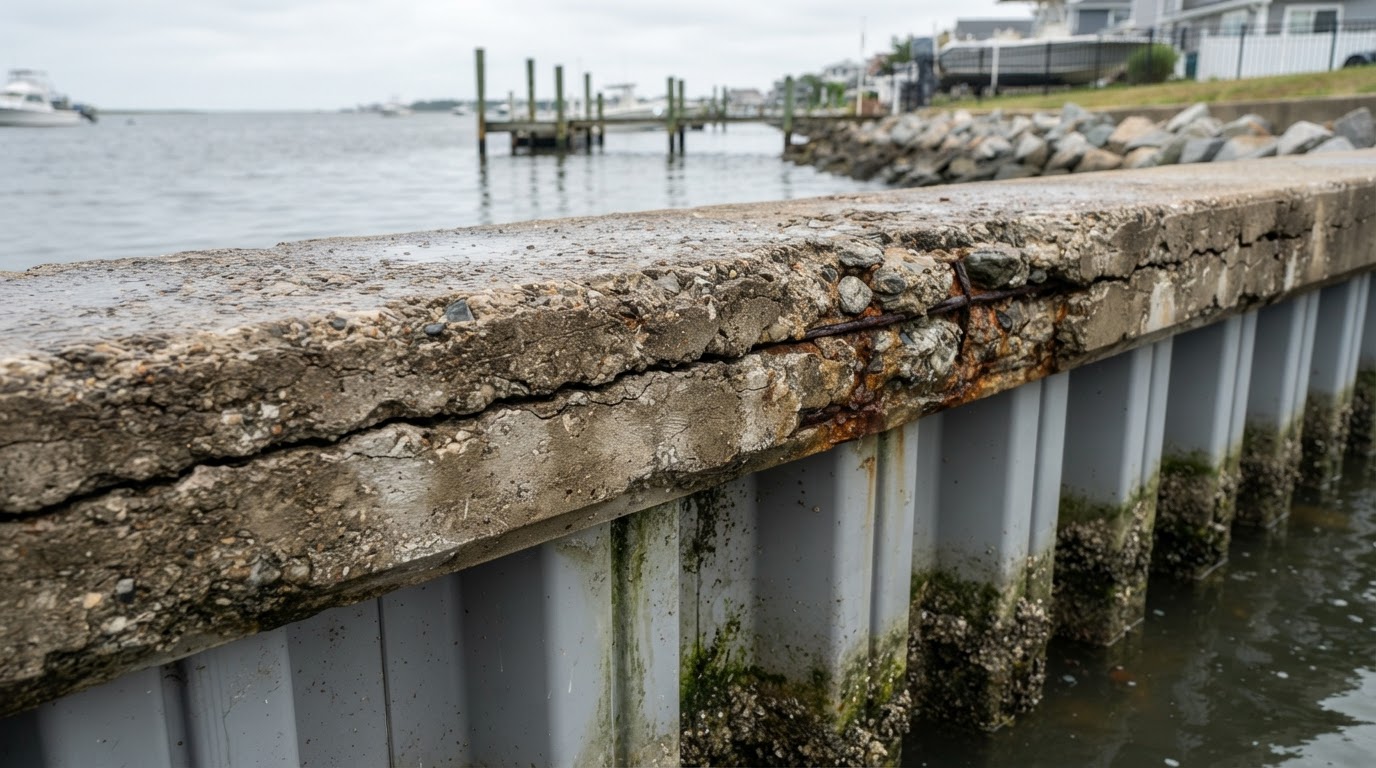
Cap damage — cracking, spalling, separation, or movement — may be a localized issue or a sign of deeper problems beneath. Because the cap is part of the broader wall system, it should be evaluated alongside the wall panels, tiebacks, drainage, and soil behind the wall rather than in isolation.
- Caps tie wall components together
- Protect the top edge from water and impact
- Integrate with tiebacks and anchoring systems
- Cap damage may indicate deeper wall issues
- Repair vs. replacement depends on cause and extent
The Role of Seawall Caps in Marine Construction
A seawall cap connects the wall panels or sections, protects the top of the wall from water and weather, and integrates with the supporting tieback and anchoring systems. The cap is part of the wall's structural design — not every cap performs the same structural function, and its role depends on the wall system.
Material and exposure considerations influence how a cap performs over time. Concrete caps are common, but reinforcement, connections, and the wall system beneath all matter. A cap should be evaluated as part of the complete wall rather than as a standalone element.
- Connections between wall components
- Structural design within the wall system
- Protection of wall tops from water and impact
- Integration with supporting tieback systems
- Material and marine exposure considerations
Common Seawall Cap Problems Near Daytona Beach
Cap damage may be localized or a sign of deeper issues. These symptoms warrant evaluation rather than a single assumed cause.
- Cracking across the cap surface
- Spalling or surface deterioration
- Joint problems and separation
- Cap separation from the wall beneath
- Visible movement or displacement
- Damage that may indicate deeper wall issues
Seawall Cap Repair vs. Replacement
The extent and cause of cap deterioration influence whether repair or replacement is appropriate. Qualified evaluation determines the right approach.
Cap Repair
- Localized cracking or spalling
- Sound wall structure beneath the cap
- Targeted restoration of damaged areas
- Addressing the cause before repairing
Cap Replacement
- Extensive cap deterioration
- Movement or separation indicating deeper issues
- Replacement as part of broader wall work
- Rebuilding the cap with the wall system
Concrete Seawall Cap Construction
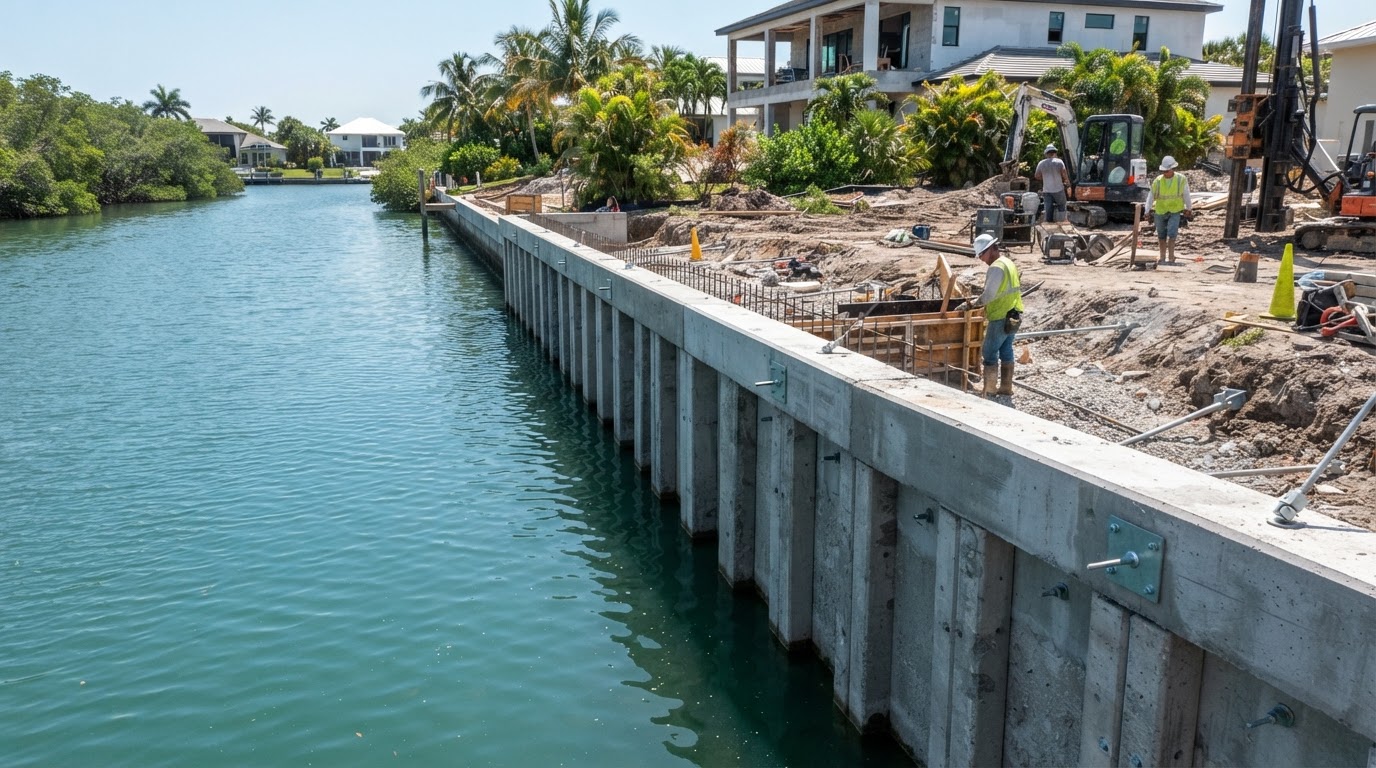
Concrete seawall cap construction involves material selection, reinforcement, connections to the wall beneath, and professional design considerations. The cap must integrate with the wall system and the tiebacks that anchor it. No universal technical specification applies — reinforcement and connection details depend on the specific wall.
A cap built without regard to the wall system beneath it may not perform as intended. Professional design and qualified construction ensure the cap functions as part of the complete structure rather than as a separate surface.
- Material selection for marine exposure
- Reinforcement engineered for the wall
- Connections to wall panels and tiebacks
- Professional design considerations
Seawall Caps, Tiebacks & Existing Wall Conditions
The cap should be evaluated as part of the broader seawall system. Cap damage may reflect tieback failure, wall movement, or soil loss beneath — problems that a cap repair alone will not address. Evaluating the cap alongside the wall panels, anchoring, drainage, and soil helps identify the actual cause before any repair approach is selected.
Maintaining Seawall Caps Near Daytona Beach
General observation and qualified inspection help catch cap issues early. Structural cap repairs should be referred to professionals.
- Periodic inspection for cracking and spalling
- Watching for cap separation or movement
- Observing drainage and soil conditions behind the wall
- Noting changes after storms or heavy rain
- Referring structural concerns to qualified professionals
- No universal maintenance interval applies
Related Services Near Daytona Beach
Explore other marine construction topics relevant to your waterfront project.