
Floating Dock Builders & Installation Daytona Beach
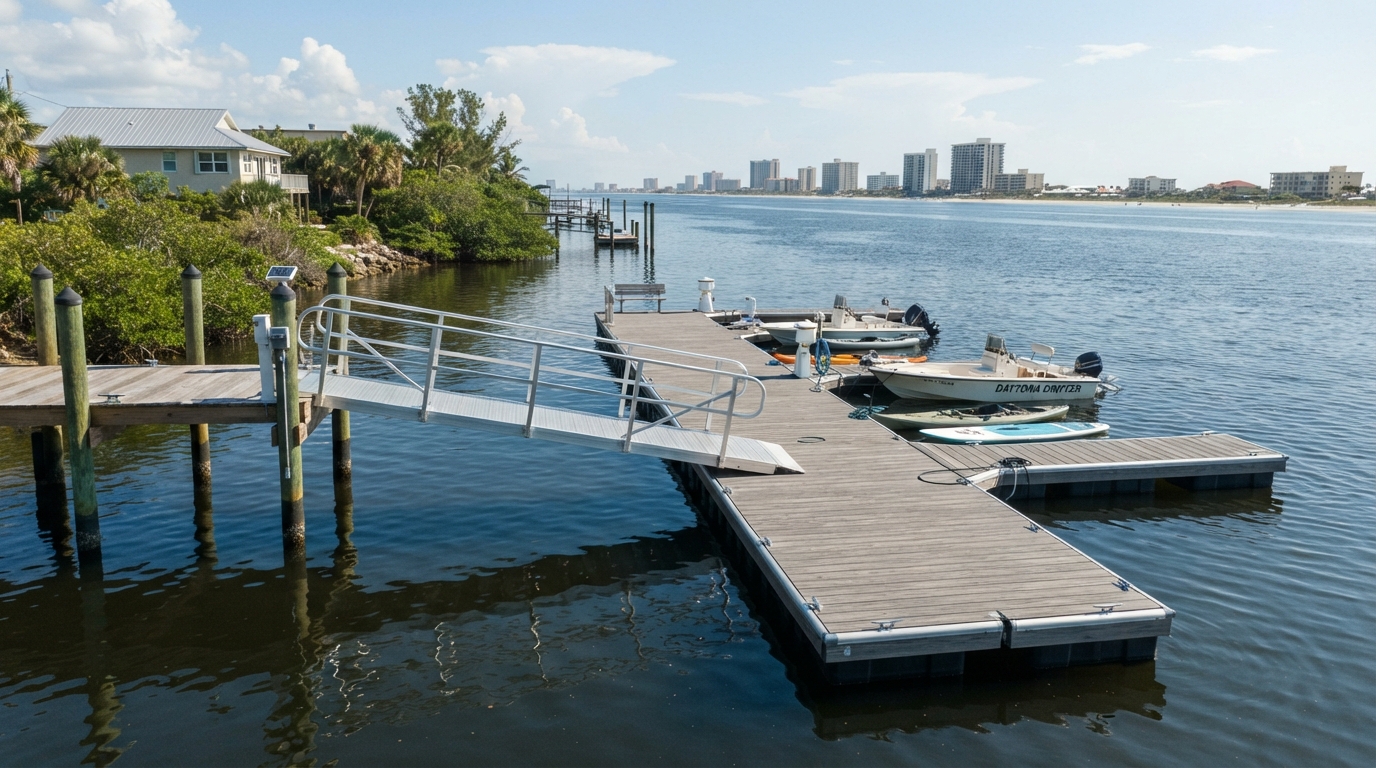
A floating dock is a platform that rises and falls with the water, providing a stable surface that adapts to changing water levels. This page explains how floating dock systems work, where they are appropriate, and the materials and planning considerations involved in a Daytona Beach floating dock project.
Request a Marine Construction Estimate
Share your dock, seawall, or boat lift project details and we'll review the requirements for your Daytona Beach area waterfront property.
Floating Dock Construction & Installation in Daytona Beach
A floating dock rests on buoyant floats and moves with the water, keeping the deck surface at a consistent height relative to the water regardless of tide or seasonal level changes. Along Daytona Beach waterways, floating docks suit deeper water, greater tidal variation, or locations where a fixed structure would sit too high or low at different times of day.
A floating dock is an assembly of components — the floating platform, flotation elements, anchoring or restraint systems, connections to the shore or fixed structures, gangways, decking, and access features. Each must be selected for the waterbody, intended use, and site conditions. No universal anchor or flotation design applies to every property.
- Floating platforms and flotation components
- Anchoring or restraint systems for the waterbody
- Connections and gangways for shore access
- Decking materials and hardware
- Water depth and water-level variation
How Floating Dock Systems Work
A floating dock combines a buoyant platform with flotation elements that keep it on the water, an anchoring or restraint system that holds it in position, and connections or gangways that link it to the shore or a fixed structure. The deck surface sits at a consistent height above the water as it rises and falls.
Flotation, anchoring, connections, and decking are all selected for the waterbody and intended use. A dock on a protected canal calls for a different configuration than one on a more exposed waterway. No universal anchor or flotation design applies — the appropriate system depends on the site and how the dock will be used.
- Floating platforms with appropriate flotation
- Anchoring or restraint systems for the waterbody
- Connections to shore or fixed structures
- Gangways for safe access
- Decking and hardware selected for exposure
Floating Dock Applications Near Daytona Beach
Floating docks suit a range of waterfront conditions. Suitability should not be assumed without site evaluation.
- Residential waterfronts with deeper water or tidal variation
- Waterways with significant water-level changes
- Recreational access for boating and fishing
- Paddlecraft access such as kayak and paddleboard launches
- Certain marina and multi-slip facilities
- Sites where a fixed structure would sit at the wrong height
Floating Dock Materials & Construction Options
Floating docks can be built from several decking and framing materials, each with different maintenance and exposure considerations.
Wood Decking
Treated wood decking offers a traditional look and economical construction but requires periodic maintenance to address weathering and wear in a marine environment.
Composite Decking
Composite decking resists rot and splintering with less upkeep than wood, suiting owners who want a lower-maintenance walking surface on the floating platform.
Framing & Flotation
Appropriate framing systems, flotation materials, and corrosion-resistant hardware support the platform and its movement with changing water levels.
Floating vs. Fixed Docks in Daytona Beach
Floating and fixed docks serve water access in different ways. The right choice depends on water depth, water-level variation, and intended use.
Floating Dock
- Rises and falls with the water
- Suited to deeper water and greater tidal variation
- Deck stays at a consistent height relative to water
- Adapts to changing water levels
Fixed Dock
- Piling-supported, rigid platform
- Suited to moderate, stable water levels
- Stays at a constant height regardless of water level
- Preferred where a steady deck surface matters
Floating Dock Access & Gangways
Gangways connect the floating platform to the shore or a fixed structure. Access slope, connections, and changing water levels all factor into the design.
- Gangway slope adjusts with changing water levels
- Connections to shore or fixed structures
- Safety considerations for access angles and handrails
- Anchor points that accommodate movement
Floating Dock Maintenance Near Daytona Beach
General inspection of flotation, anchoring, connections, and decking helps catch issues on a floating dock before they grow.
- Inspect flotation for damage or waterlogging
- Check anchoring and restraint systems
- Examine connections and gangway hardware
- Monitor decking for wear and weathering
Planning a Floating Dock Project
A floating dock project involves vessel use, water depth, site access, environmental sensitivity, and permit review specific to the waterbody. Floating docks on certain waterways may involve environmental or sovereign submerged lands considerations. Project-specific determinations should be referred to the appropriate authority and qualified professionals rather than assumed from general guidance.
Related Services Near Daytona Beach
Explore other marine construction topics relevant to your waterfront project.