
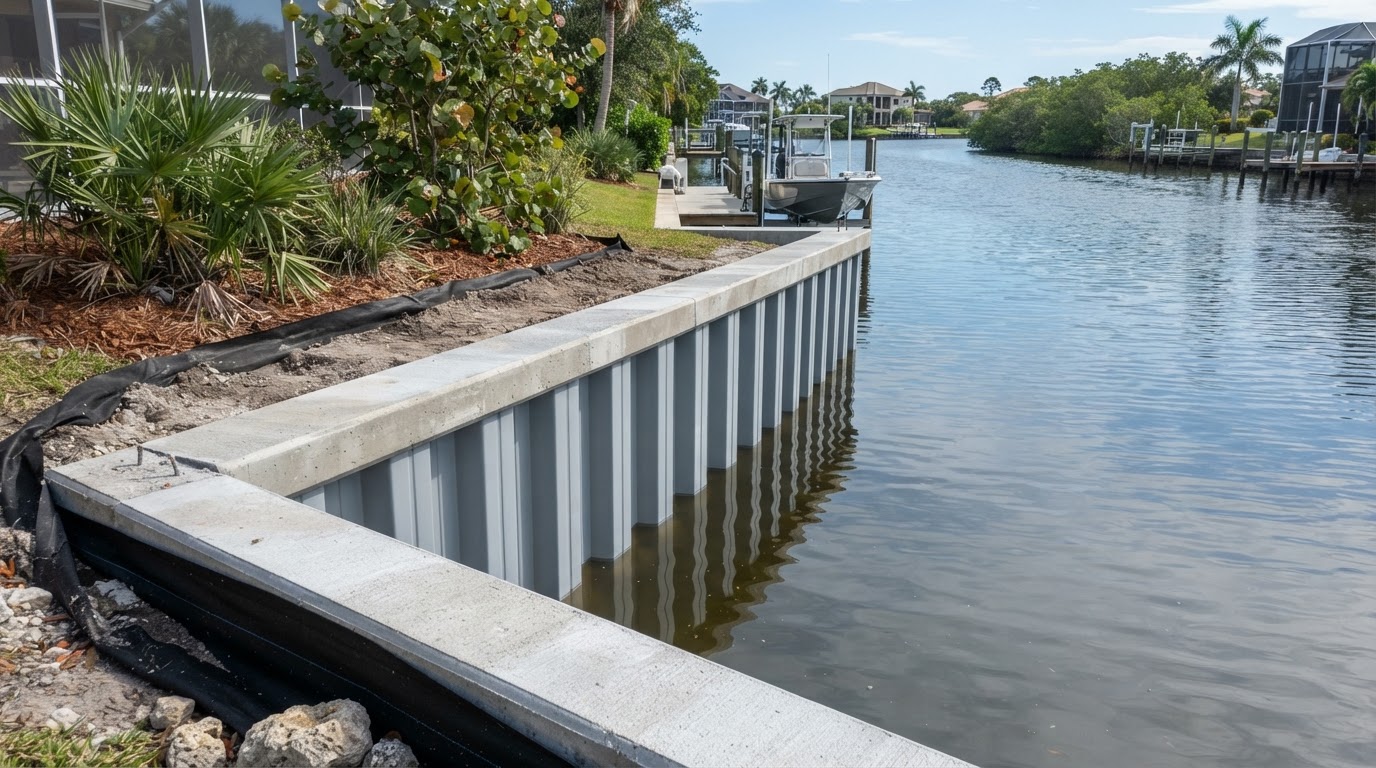
Vinyl vs Concrete Seawall Construction Daytona Beach
Neither vinyl nor concrete is universally better for every waterfront. A seawall's performance depends far less on the panel material alone than on the complete engineered system — the retained soil, the depth the panels are driven, the tiebacks or anchors that resist lateral load, the cap, and the drainage that relieves pressure behind the wall. This comparison explains how vinyl and concrete seawall systems differ in Daytona Beach so you can frame an informed, site-specific conversation rather than choosing a material by reputation.
Request a Marine Construction Estimate
Share your dock, seawall, or boat lift project details and we'll review the requirements for your Daytona Beach area waterfront property.
Vinyl vs Concrete Seawalls in Daytona Beach
Vinyl and concrete are two of the most common seawall materials used on Florida canals, Intracoastal shorelines, and riverfront properties, but they work differently and respond to different site conditions. Treating either material as a default choice skips the engineering questions that actually determine whether a wall performs over time.
This page does not declare a winner or publish a universal material ranking. The appropriate comparison depends on retained height, soil, water exposure, drainage, access, and the qualified professional design the parcel requires — not a blanket statement that one material is always stronger, cheaper, or longer-lasting.
- Panel material is one part of a complete retaining system
- Vinyl and concrete respond differently to soil, drainage, and exposure
- Caps, tiebacks, and drainage matter for both materials
- Site access and retained height shape the installation scope
- Maintenance and repairability differ by system and condition
- Material choice should follow site-specific professional review
How Vinyl Seawall Systems Work
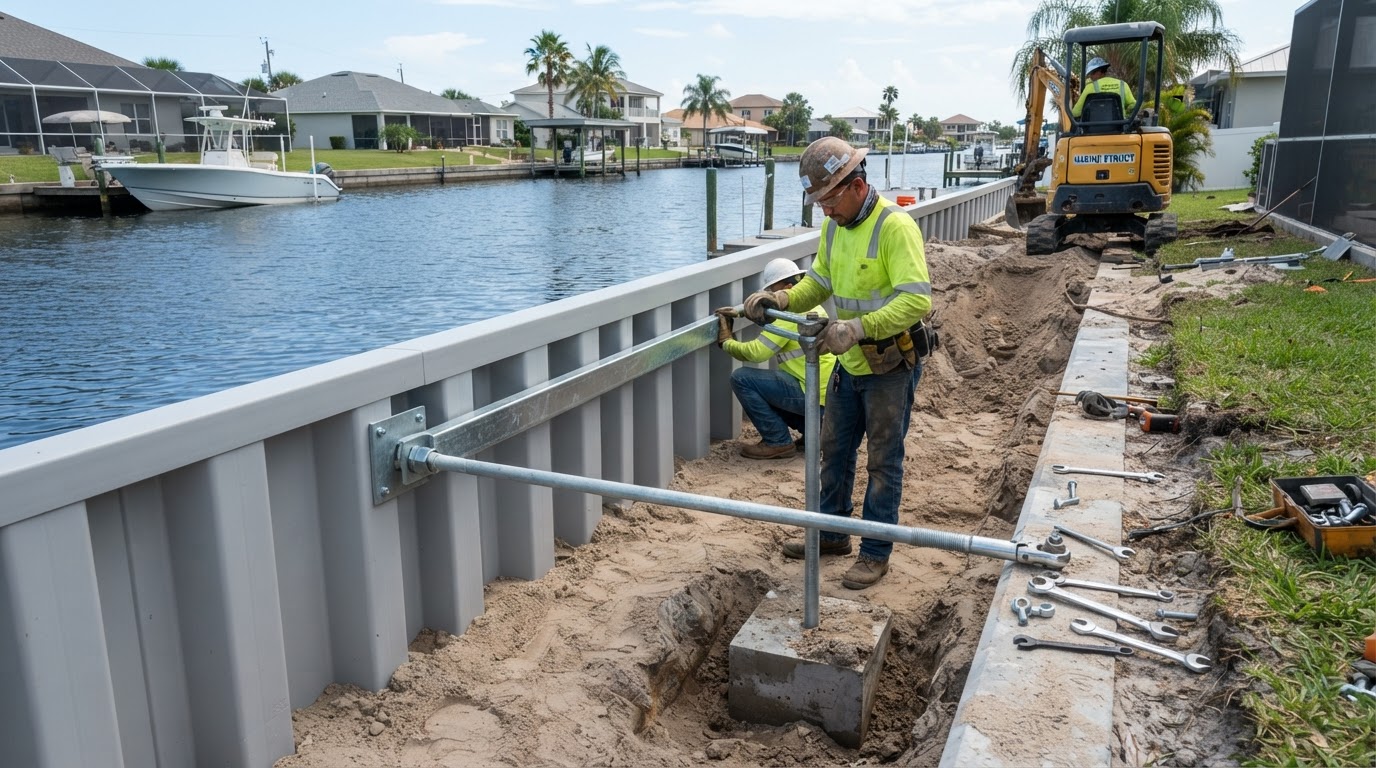
Vinyl seawalls use interlocking sheet panels driven into the soil to form a vertical retaining face. The panels resist soil and water pressure from the landward side, and the wall's performance depends on how deep the panels are embedded, the strength of the soil they engage, and the tiebacks or deadman anchors that resist lateral movement.
Vinyl is marketed for corrosion resistance and relatively low surface maintenance, but that does not mean a vinyl wall is maintenance-free or appropriate for every retained height. A taller retained bank, softer soil, or heavier exposure may require deeper driving, more robust anchorage, or a different system altogether — the material does not override the engineering.
- Interlocking sheet panels form the vertical retaining face
- Performance depends on driving depth, soil, and anchorage
- Corrosion resistance does not mean maintenance-free
- Not universally appropriate for every retained height
How Concrete Seawall Systems Work
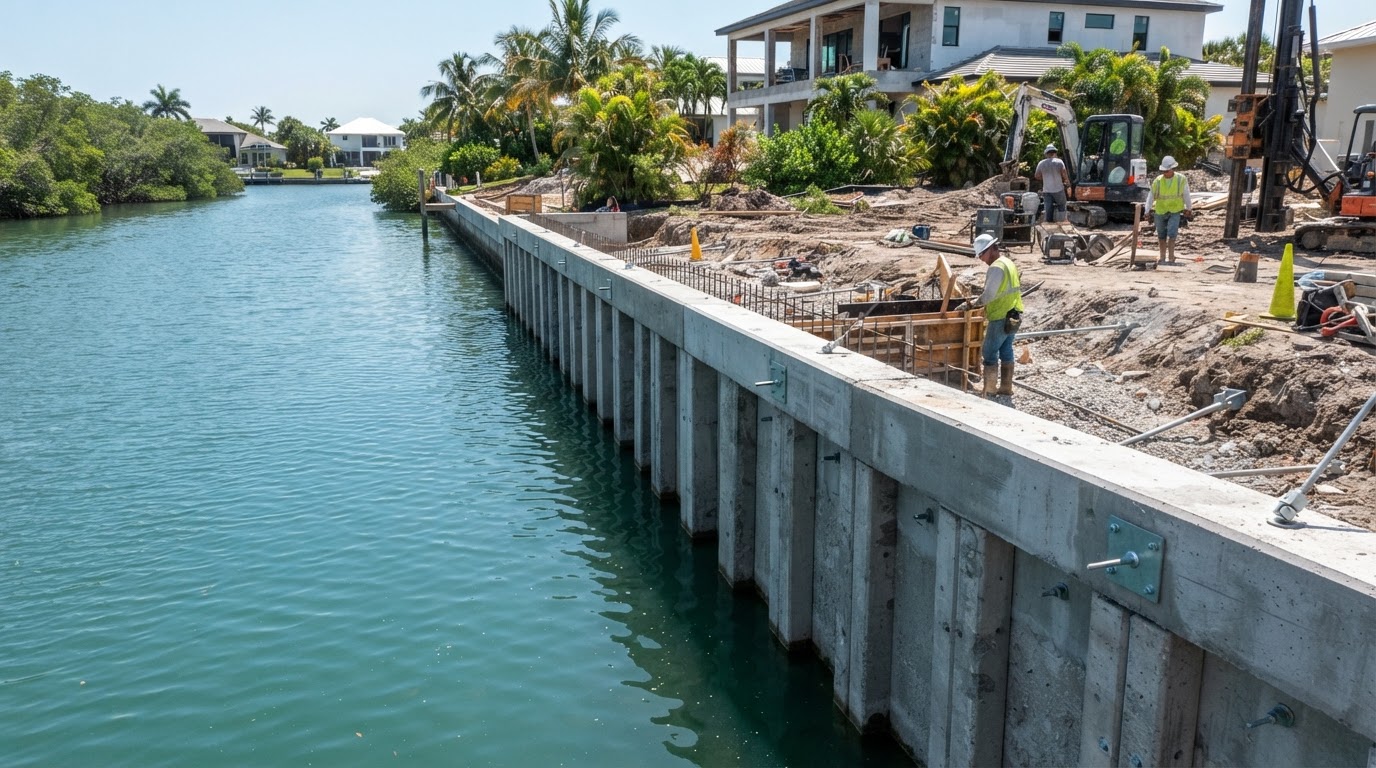
Concrete seawalls are formed and reinforced for the specific loads of a site. The panel, the reinforcement, the footing or pile foundation, the cap, and the tieback system are all designed together to resist the lateral pressure of the retained soil and the hydrostatic pressure that builds when water accumulates behind the wall.
Concrete is strong, but strength is not the same as guaranteed performance. A concrete wall without adequate drainage or properly engineered tiebacks can still move, crack, or fail under pressure. Concrete is not hurricane-proof, and this page does not claim it is universally stronger than vinyl or every other system — the comparison depends on the design and the site.
- Formed and reinforced for site-specific loads
- Strength depends on design, reinforcement, drainage, and anchorage
- Not hurricane-proof or maintenance-free
- Not universally stronger than every other material
Material and Maintenance Differences
Vinyl and concrete are different systems — neither is universally cheaper, stronger, or lower-maintenance. The right comparison is site-specific.
Vinyl Seawalls
- Sheet-pile panel system driven into the soil
- Corrosion-resistant surface; not maintenance-free
- Suitability depends on retained height and anchorage
- Not universally cheaper than concrete
Concrete Seawalls
- Formed and reinforced retaining system
- Performance depends on design and drainage
- Not hurricane-proof or universally stronger
- Not universally more expensive than vinyl
Structural Design and Soil Conditions Near Daytona Beach
The retained soil is what a seawall actually holds back, and soil conditions shape the design of both vinyl and concrete systems. Soft or saturated soil may demand deeper panel driving, heavier tiebacks, or more robust drainage, while a firmer, well-drained bank may support a lighter section. Retained height — the difference between the grade behind the wall and the mudline in front — is often more important than wall length.
This means a canal-front property and a riverfront property with the same wall length can require very different engineering. Comparing materials without the soil, retained height, and exposure context produces a misleading choice rather than a sound one.
- Retained soil and height often matter more than wall length
- Soft or saturated soil may require deeper driving and heavier anchorage
- Firm, well-drained banks may support a lighter section
- Material choice should follow the site's engineering needs
Caps, Tiebacks and Drainage Considerations
The cap protects the top of the wall and ties the panel system together, and tiebacks or deadman anchors resist the lateral load that pushes a wall toward the water. Both vinyl and concrete walls rely on properly engineered anchorage — a strong panel with inadequate tiebacks can still move or fail.
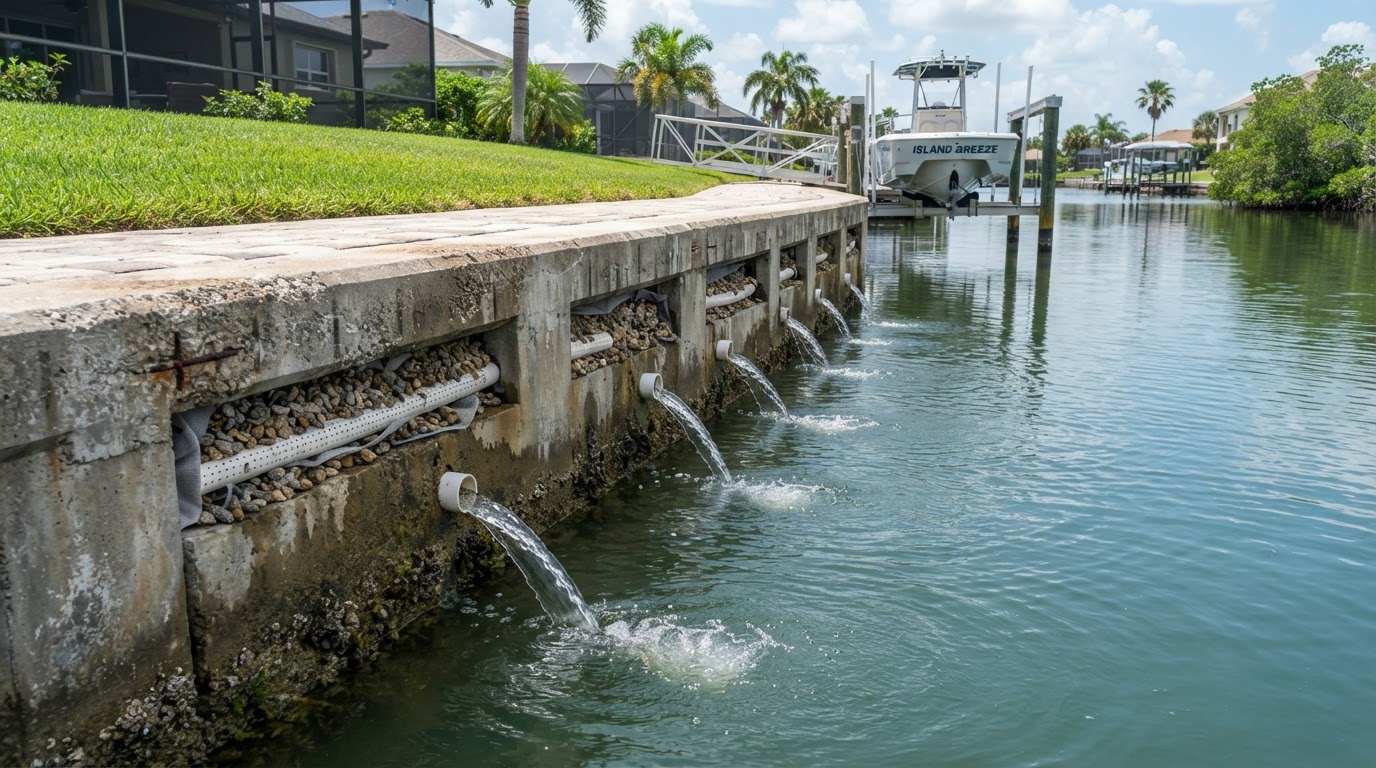
Drainage is equally critical for both materials. Water that builds up behind any wall creates hydrostatic pressure that can cause cracking, leaning, or collapse, so weep holes and drainage features manage that pressure. Choosing a material does not replace the need for drainage, and omitting drainage to reduce a number is not a sound basis for a retaining structure.
- Caps protect and unify the top of the wall for both materials
- Tiebacks resist lateral load regardless of panel type
- Drainage relieves hydrostatic pressure behind any wall
- A strong panel with poor anchorage can still fail
Installation Access and Project Scope
Installation access can change which system is practical for a given parcel. Barge mobilization, land-based equipment limits, narrow lots, overhead utility lines, and neighboring structures all affect how a wall can be built — and a material that is easy to install on an open shoreline may be far more complex on a constrained canal lot. A site-specific estimate weighs these access factors alongside the material, not as an afterthought. Referencing the specific parcel and a qualified review produces a more useful scope than a material comparison alone.
Related Services Near Daytona Beach
Explore other marine construction topics relevant to your waterfront project.