
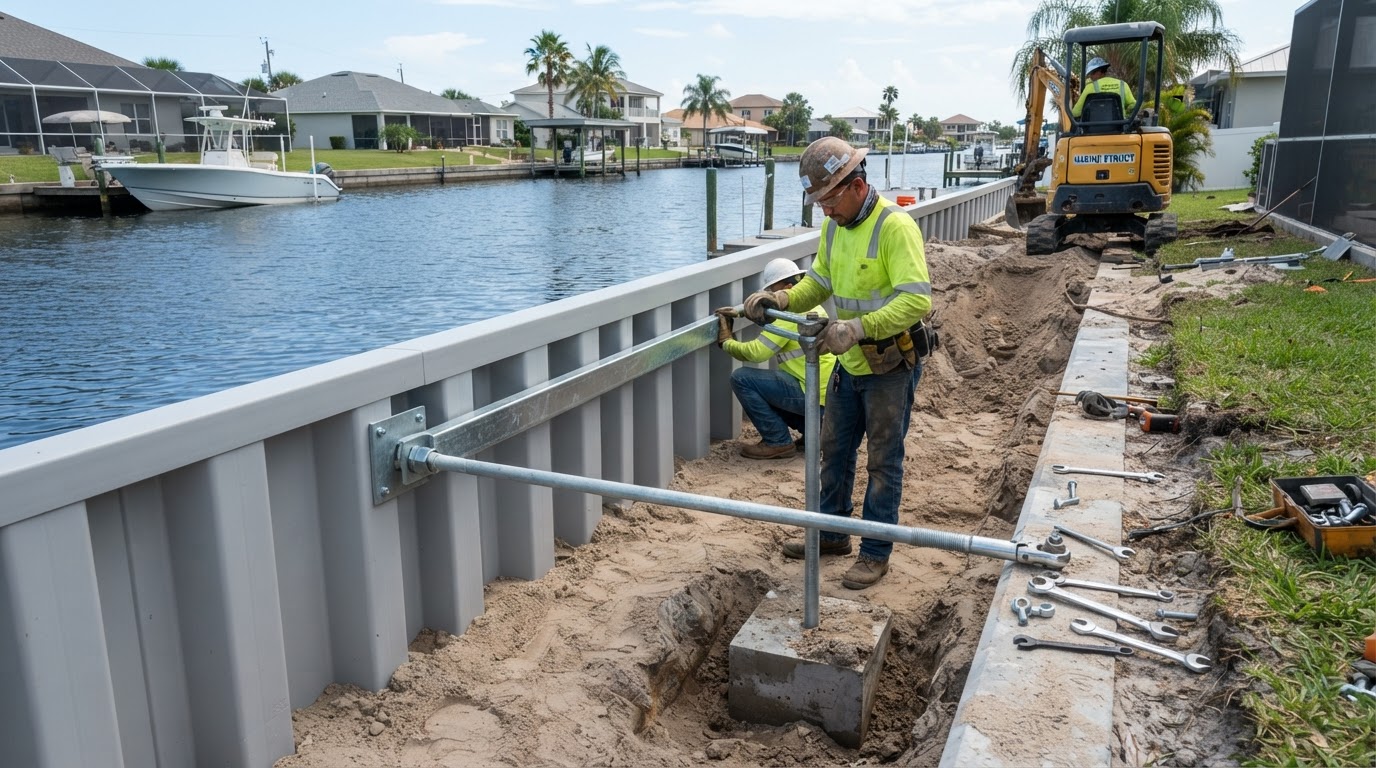
Leaning & Bowing Seawall Repair Daytona Beach
A seawall that leans, bows, or bulges outward may be showing signs of structural movement that warrants professional attention. This page explains the warning signs Daytona Beach waterfront owners should take seriously, the mechanisms that can produce similar visible symptoms, and why a moving wall requires qualified evaluation rather than a cosmetic fix.
Request a Marine Construction Estimate
Share your dock, seawall, or boat lift project details and we'll review the requirements for your Daytona Beach area waterfront property.
Why a Seawall May Lean or Bow in Daytona Beach
Visible movement in a seawall — leaning, bowing, bulging, or rotation — can stem from several different mechanisms. Lateral soil pressure, inadequate drainage, tieback or anchor distress, soil loss behind the wall, or changes in loading can each produce similar outward symptoms. Because the visible sign rarely identifies the cause on its own, a leaning or bowing wall is a reason for qualified evaluation.
This page does not offer quick cosmetic fixes for a potentially unstable structure. A patch applied to a moving wall does not address the underlying pressure or anchorage problem and may mask a condition that continues to worsen.
- Localized surface deterioration versus wall rotation
- Cracked caps and joints
- Progressive leaning over time
- Bowing or bulging sections
- Soil movement behind the wall
- Possible anchor or tieback problems
- Drainage-related pressure buildup
Warning Signs Around Waterfront Retaining Walls
Several visible signs can indicate movement. None of them alone confirms the cause, but together they help a qualified evaluator understand what to assess.
Outward Lean
A wall tilting toward the water may indicate rotation at the base or inadequate lateral resistance. The rate and extent of movement matter for assessing urgency.
Bulging Sections
A section that bows outward between support points can signal localized pressure, soil loss, or tieback distress in that area of the wall.
Cap Cracking
Cracks in the cap or separated joints can accompany movement, though they may also reflect surface deterioration. Their pattern helps distinguish the two.
Drainage Distress
Water pooling behind a wall or blocked drainage can build hydrostatic pressure that pushes the wall outward. Drainage and movement are often linked.
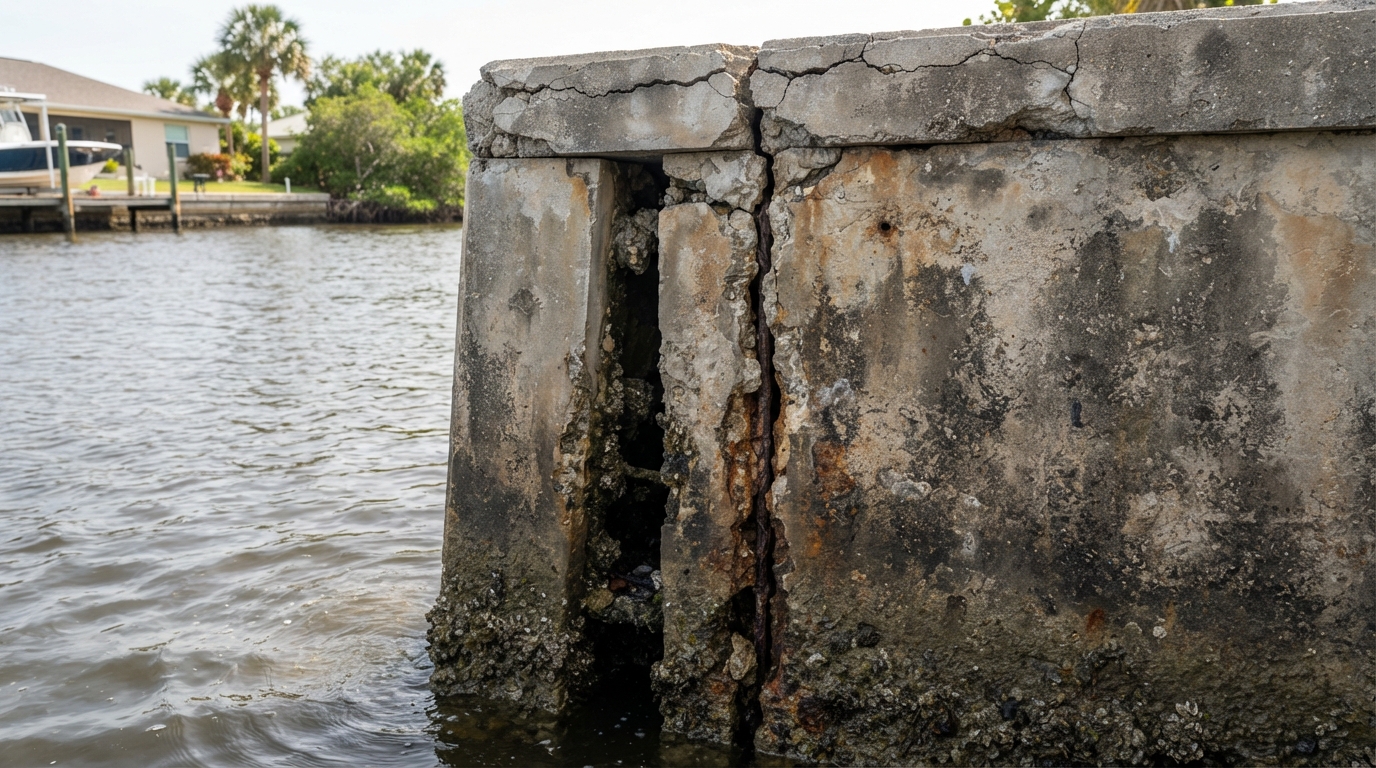
Potential Tieback, Drainage and Soil-Pressure Issues
Several mechanisms can produce a leaning or bowing wall. Tieback or anchor distress can reduce the wall's resistance to lateral soil pressure. Inadequate drainage allows water pressure to build behind the wall. Soil loss behind the wall removes support and can allow movement. Changes in loading — from a new dock, fill, or adjacent construction — can also alter the forces on the wall.
Because these mechanisms produce similar visible symptoms, the actual cause requires qualified evaluation. Diagnosing failure from a photograph or visual description alone is not reliable.
- Tieback or anchor distress reducing lateral resistance
- Hydrostatic pressure from inadequate drainage
- Soil loss removing support behind the wall
- Changed loading from adjacent improvements
- Age-related deterioration of materials or connections
Professional Assessment of a Moving Seawall
A qualified evaluator may consider the wall's condition, supporting soils, anchorage, loading, adjacent structures, and the extent of deformation before identifying an appropriate response. Active movement, unstable ground, significant displacement, or nearby utilities call for professional attention. Do not attempt to pull a leaning wall upright, tighten tiebacks, excavate behind a failing wall, or brace the structure without professional guidance.
Repair and Replacement Considerations Near Daytona Beach
Possible responses range from drainage and tieback reinforcement to partial or full replacement. The appropriate approach depends on the cause and extent of movement.
- Drainage and weep-hole restoration to relieve pressure
- Tieback or anchor reinforcement where anchorage is deficient
- Localized repair where movement is limited and the cause is addressed
- Partial reconstruction of affected sections
- Full replacement where the wall has lost structural function
- Encasement concepts where a new wall in front is feasible and approved
Drainage and Pressure Behind a Moving Wall
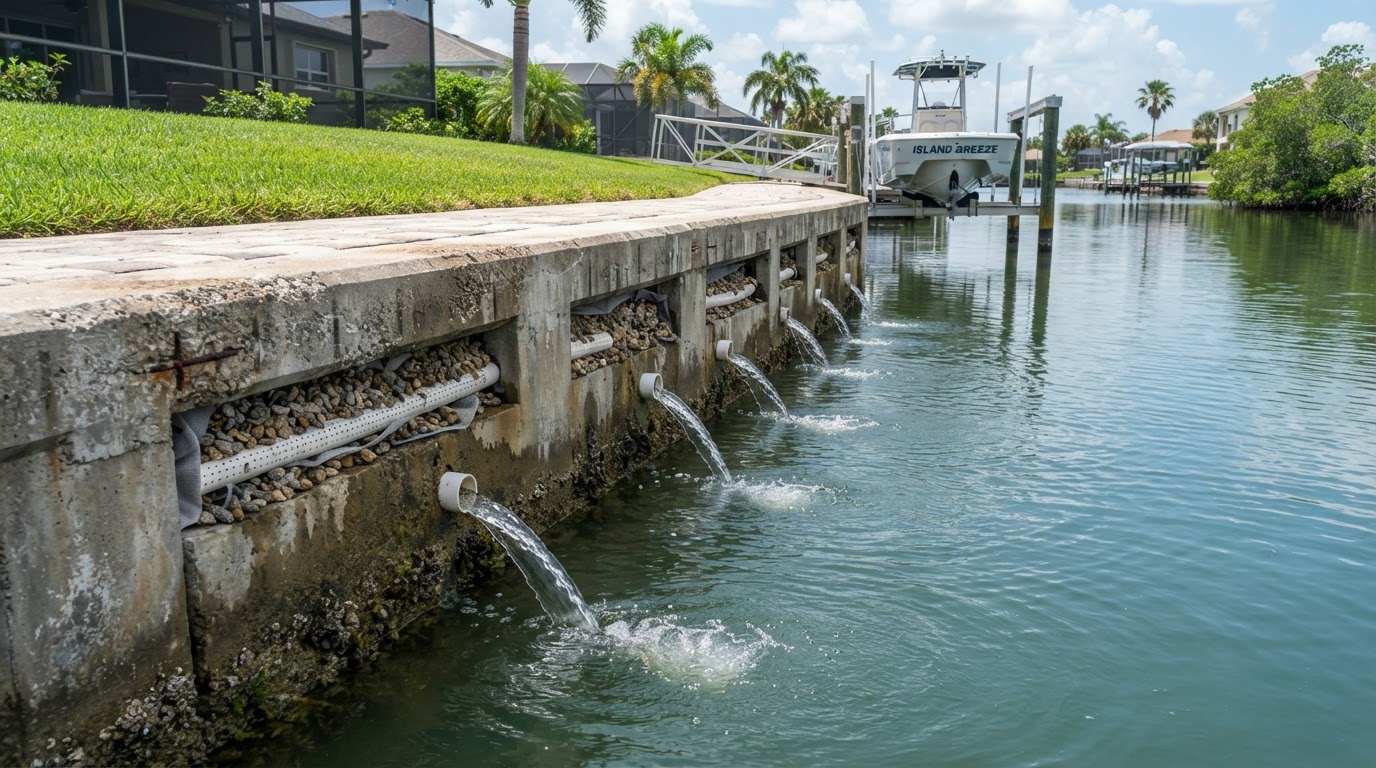
Drainage is frequently linked to wall movement. Water that cannot drain through or past the wall builds pressure against it. Restoring drainage — weep holes, filter systems, or pressure-relief paths — can reduce the force driving movement, but only where the wall's structure and anchorage remain adequate.
Where drainage alone does not explain the movement, tieback, soil, or loading factors are assessed together. A single-cause assumption can miss the real driver of the distress.
- Weep holes and filter systems that relieve pressure
- Drainage paths that prevent water buildup behind the wall
- Assessment of whether drainage explains the observed movement
- Coordination of drainage repair with any structural work
Related Services Near Daytona Beach
Explore other marine construction topics relevant to your waterfront project.