
Seawall Sinkhole & Soil Loss Repair Daytona Beach
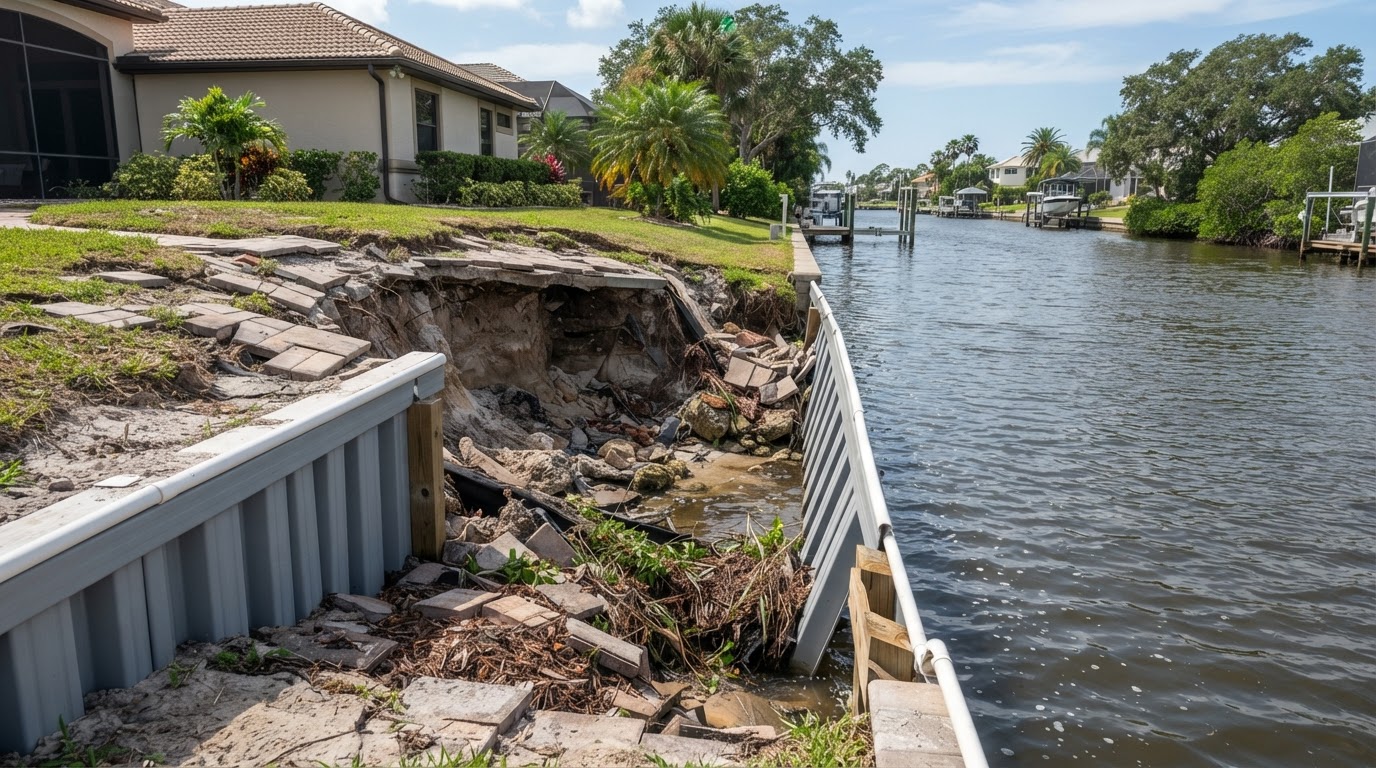
Depressions, holes, or settling ground behind a seawall are common reasons waterfront owners seek help. This page explains the warning signs of soil loss behind Daytona Beach seawalls, why the word "sinkhole" is used loosely but may not describe an actual geologic sinkhole, and why filling a visible hole without understanding the cause may not stop continuing loss.
Request a Marine Construction Estimate
Share your dock, seawall, or boat lift project details and we'll review the requirements for your Daytona Beach area waterfront property.
Signs of Soil Loss Behind Seawalls in Daytona Beach
Soil loss behind a seawall can appear as settling ground, small or expanding holes, surface depressions, washouts after rainfall, or material migrating through joints. These signs are worth taking seriously because the surface appearance may not reveal the full extent of underground voids.
The term "sinkhole" is often used to describe any depression behind a wall, but an actual geologic sinkhole determination is different from the everyday use of the word. Not every depression behind a seawall is a geologic sinkhole — many are caused by water movement, wall openings, drainage, or construction details that allow soil to migrate.
- Soil settling behind the wall
- Small or expanding holes near the wall
- Surface depressions or washouts after rainfall
- Loss of material through joints or drainage paths
- Drainage-related erosion
- Voids near dock connections or walkways
- Movement of paving or nearby improvements
Seawall Washouts, Settlement and Hidden Voids
Surface signs of soil loss are often the visible part of a larger issue. The void beneath the surface may extend beyond what is visible.
Settling Ground
Ground that has dropped behind the wall indicates material has migrated. The extent of settling may not reflect the full volume of lost soil.
Washouts
Erosion after rainfall can carry soil through joints, drainage paths, or beneath the wall, creating voids that widen over time.
Hidden Voids
A surface depression may sit over a larger underground void. Surface appearance alone does not establish the extent of the loss.
Joint Migration
Soil moving through separated joints or failed drainage filters can continue loss even after a visible hole is filled.
Drainage and Water Movement Near Daytona Beach Waterfronts
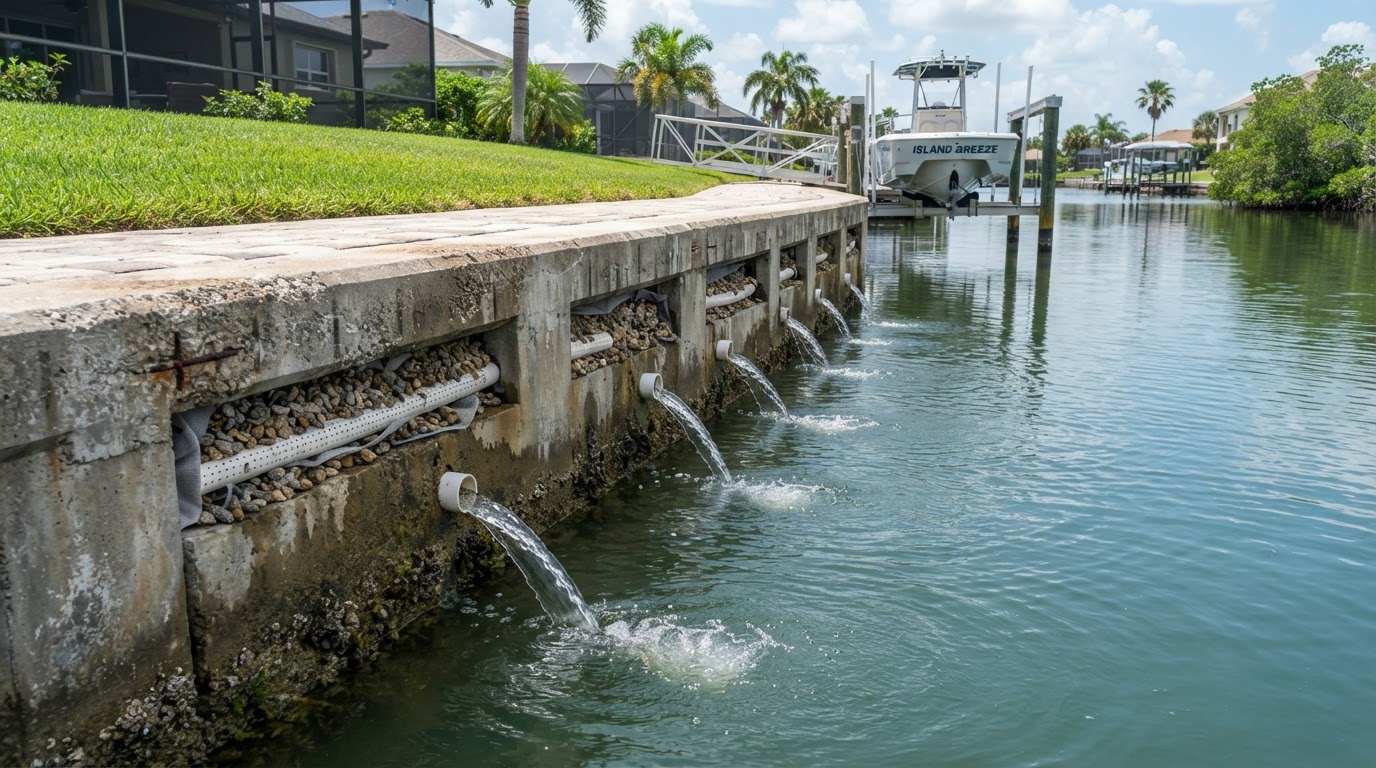
Soil loss is frequently tied to water movement. Drainage that allows water to carry soil through or beneath the wall, failed filter fabric, separated joints, or construction details that create migration paths can all allow material to leave the area behind the wall. Not every soil-loss condition is caused by a failed seawall — drainage, soil type, and nearby construction can each contribute.
Understanding the path the soil is taking is essential. Filling a visible hole without addressing the migration path may not stop continuing loss, and the void can reopen or expand elsewhere.
- Drainage paths that carry soil through or beneath the wall
- Failed or missing filter fabric
- Separated joints allowing material migration
- Soil type and compaction behind the wall
- Nearby construction or loading changes
Why a Site-Specific Assessment Matters
Because the surface signs of soil loss can share causes with other wall conditions, the actual source of the loss requires site-specific assessment. The relationship between the wall, drainage, soil, and any nearby dock supports, walkways, utilities, driveways, and landscaping is evaluated together. A single-cause assumption can miss the real driver and lead to a repair that does not hold.
Repair Planning for Soil Loss and Seawall Damage
Repair planning distinguishes soil stabilization from wall repair and full replacement. The appropriate scope depends on what the assessment finds.
- Identifying the migration path before any fill is placed
- Restoring drainage and filter systems where they contribute
- Sealing separated joints that allow soil migration
- Stabilizing soil behind the wall where voids have formed
- Addressing wall structure where the wall itself is the source
- Coordinating with any nearby dock, walkway, or utility affected
When Soil Loss May Point to a Larger Structural Problem
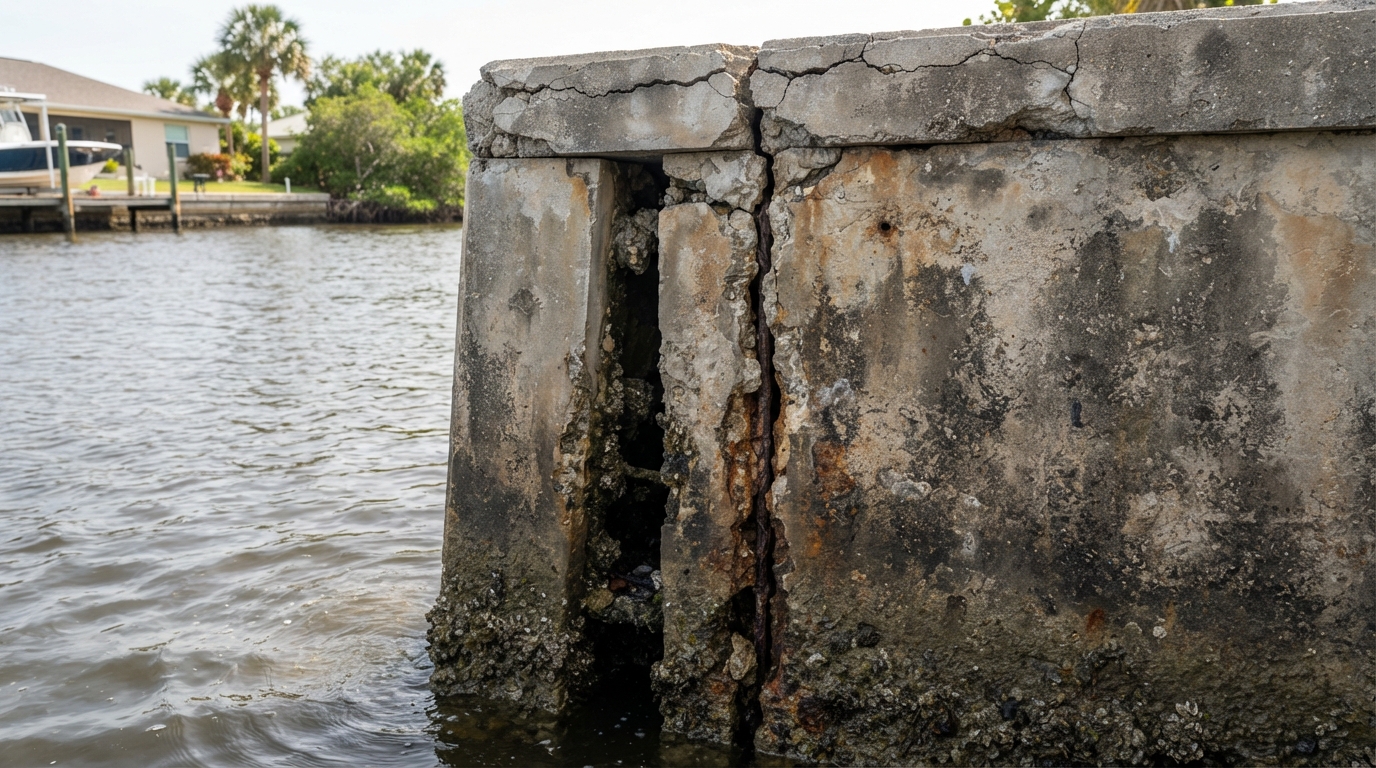
Soil loss can be a symptom of a broader wall problem. Where the wall has moved, cracked significantly, or lost anchorage, the soil loss may reflect structural distress rather than an isolated drainage issue. In those cases, addressing only the soil does not resolve the underlying wall condition.
Nearby improvements are part of the picture. A dock support, walkway, utility, driveway, or landscaping over or near an undermined area can be affected by the void beneath. The assessment considers these connections, not just the visible hole.
- Soil loss accompanying wall movement or cracking
- Voids beneath walkways, driveways, or landscaping
- Dock supports or pilings near an undermined area
- Utilities that may be exposed or affected
- Whether the wall itself requires repair or replacement
Related Services Near Daytona Beach
Explore other marine construction topics relevant to your waterfront project.