
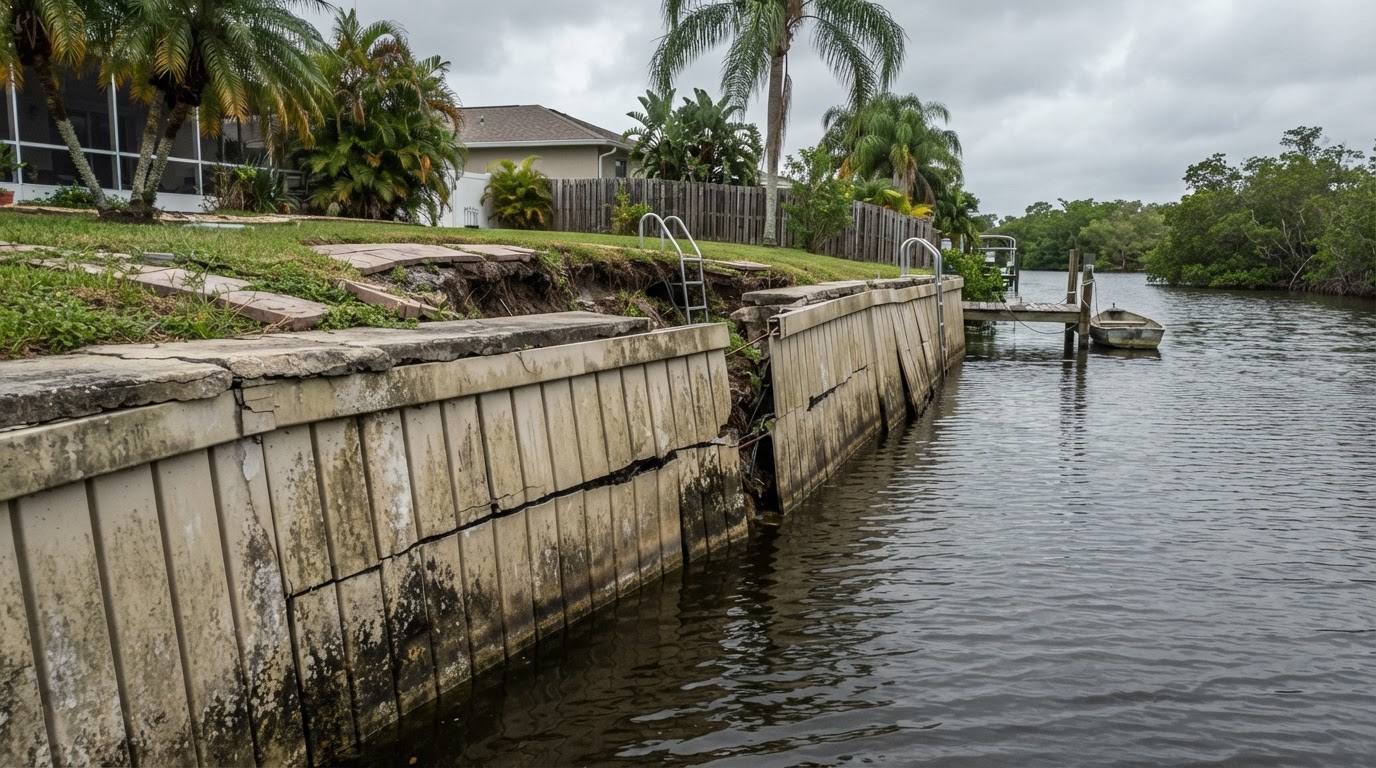
Seawall Crack & Joint Repair Daytona Beach
Cracks and joint problems in a seawall may range from surface deterioration to signs of deeper structural movement. This page explains the types of cracking, why evaluation matters, and how the cause — not just the visible crack — determines the appropriate response.
Request a Marine Construction Estimate
Share your dock, seawall, or boat lift project details and we'll review the requirements for your Daytona Beach area waterfront property.
Seawall Crack & Joint Repair in Daytona Beach
Cracks and joint problems are among the most common reasons waterfront property owners seek seawall evaluation. Along Daytona Beach canals and Intracoastal waterfronts, marine walls face soil pressure, water movement, and environmental exposure that can produce cracking, joint separation, and deterioration over time.
Not every crack indicates a structural problem, and not every crack can be repaired the same way. The appropriate response depends on the type, location, and cause of the cracking. This page explains general considerations — it does not diagnose specific causes without inspection or prescribe repair methods without qualified evaluation.
- Cracks range from surface deterioration to structural movement
- Joint separation may indicate underlying issues
- The cause — not just the visible crack — matters
- Cap cracks differ from wall cracks
- Qualified evaluation determines the appropriate response
Common Types of Seawall Cracking
Seawall cracking takes several forms, each with different implications. No specific cause can be diagnosed without inspection.
Surface Deterioration
Surface cracking or spalling may reflect environmental exposure and weathering rather than structural movement. These cracks may be cosmetic or may indicate the beginning of deeper deterioration requiring monitoring.
Movement-Related Cracks
Cracks that may indicate movement — diagonal, widening, or accompanied by wall leaning — can reflect structural stress, soil pressure, or anchoring concerns that require qualified evaluation.
Joint Separation
Separation at panel joints may indicate movement, soil loss, or connection problems. Joints are designed to accommodate some movement, but significant separation warrants evaluation.
Cap Cracking
Cracks in the seawall cap may reflect cap deterioration, wall movement beneath, or connection issues. Cap cracks differ from wall cracks and may have different causes and implications.
Seawall Joint Deterioration Near Daytona Beach
Joints between seawall panels are designed to accommodate some movement and connection. When joints separate significantly, deteriorate, or show signs of material loss, it may indicate movement, soil loss behind the wall, or connection problems. Joint conditions matter because they can be a pathway for water and soil migration.
Joint deterioration should be evaluated within the context of the complete wall system. A separating joint may be a symptom of a deeper issue — wall movement, anchoring failure, or drainage problems — rather than a problem in isolation. Qualified evaluation determines whether the joint itself needs attention or whether the underlying cause must be addressed.
- Joints accommodate designed movement and connection
- Significant separation may indicate deeper issues
- Joints can be a pathway for water and soil migration
- Evaluate joints within the complete wall system
Concrete Seawall Crack Repair Considerations
Before considering a repair method for a concrete seawall crack, the underlying cause must be identified. A crack that reflects wall movement will not be resolved by sealing the crack alone — the movement must be addressed. A crack that reflects surface deterioration may need different treatment than one reflecting structural stress. Qualified evaluation identifies the cause and determines whether crack repair, structural repair, or other action is appropriate.
Cracks, Water Movement & Soil Loss
Certain cracks and joint defects may be associated with water movement or loss of supporting material — but not every crack causes soil loss.
- Some defects allow water to migrate through the wall
- Water movement may carry soil with it over time
- Not every crack causes soil loss — cause must be evaluated
- Soil loss may occur without visible cracking
- Joint defects can be pathways for material migration
- Qualified evaluation identifies the relationship
Seawall Cap Cracks vs. Wall Cracks
Damage to the cap and deterioration of the wall itself differ in cause and implication. The location of cracking matters.
Cap Cracks
- Affect the top cap of the wall
- May reflect cap deterioration or movement beneath
- Can sometimes be addressed without full wall work
- May indicate wall movement requiring evaluation
Wall Cracks
- Affect the wall panels themselves
- May reflect structural stress or movement
- Can indicate deeper structural concerns
- Often require evaluation of the complete wall system
When Cracking May Require Structural Evaluation
Certain signs warrant qualified structural review rather than monitoring or surface repair.
- Cracks accompanied by visible wall movement
- Significant separation at joints
- Widening or lengthening cracks over time
- Settlement of soil behind the wall
- Cracks with water or soil migration
- Multiple cracks suggesting systemic issues
Seawall Crack Repair vs. Replacement
Whether a cracked seawall can be repaired or requires replacement depends on the condition and structural integrity of the wall. Localized cracking with sound structure may be repairable; widespread cracking with movement or soil loss may require replacement evaluation. Qualified assessment determines the appropriate path — no single crack automatically requires full replacement, and not every crack can be safely repaired.
Related Services Near Daytona Beach
Explore other marine construction topics relevant to your waterfront project.