
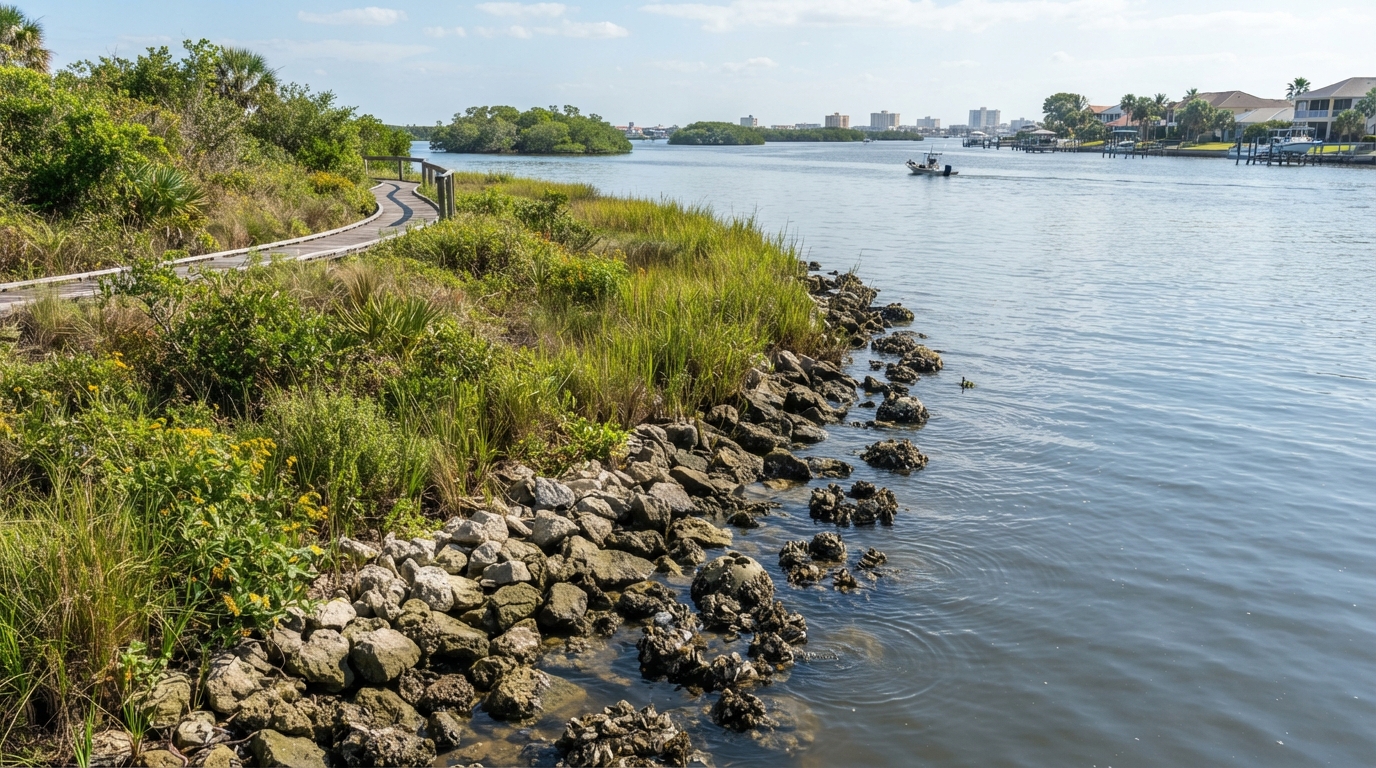
Seawall vs Riprap vs Living Shoreline Daytona Beach
A structural seawall, a sloped riprap revetment, and a living shoreline are not three versions of the same solution — they have different functions, footprints, and review paths. This guide explains how each approach works near Daytona Beach and why the right choice depends on erosion causes, wave exposure, bank slope, available shoreline area, habitat, and the approvals a specific waterway requires. No single option is universally the most environmentally beneficial or structurally appropriate.
Request a Marine Construction Estimate
Share your dock, seawall, or boat lift project details and we'll review the requirements for your Daytona Beach area waterfront property.
Seawall vs Riprap vs Living Shoreline in Daytona Beach
Waterfront erosion can be addressed in several ways, and the method that fits one bank may be unsuitable or impermissible on another. A vertical retaining wall, a stone revetment, and a vegetated or habitat-sensitive stabilization each respond to different conditions and are reviewed differently by local, state, and environmental authorities.
This page does not rank the three approaches or declare one universally best. Whether a structural seawall, riprap, a living shoreline, or a combined design is appropriate depends on the waterbody, exposure, soil, shoreline space, existing structures, habitat, and current permitting requirements for the parcel.
- Seawalls, riprap, and living shorelines serve different functions
- Erosion cause and wave exposure shape the appropriate approach
- Shoreline footprint and bank slope affect what is feasible
- Habitat and environmental review may influence the choice
- Combined designs may be considered under certain approvals
- No single approach is universally best for every shoreline
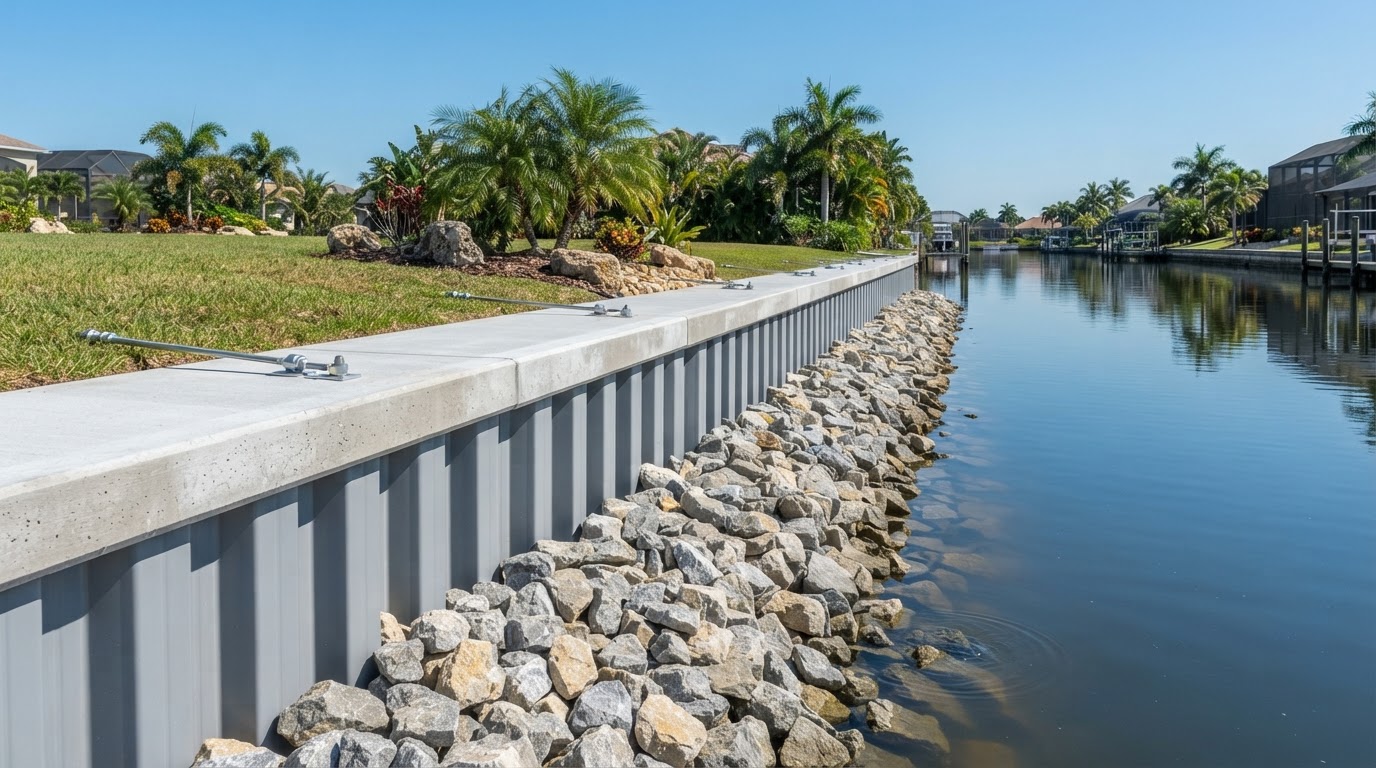
How Structural Seawalls Differ from Shoreline Stabilization
A structural seawall is a vertical retaining wall that holds back soil on the landward side and resists both lateral earth pressure and hydrostatic pressure. It is an engineered system of panels, cap, tiebacks or anchors, and drainage, designed for the retained height, soil, and exposure of the site. Its footprint is relatively compact, but it concentrates loads and requires anchorage and drainage to perform.
Riprap and living shorelines, by contrast, stabilize the bank through a sloped or naturalized approach rather than a single vertical face. They are not interchangeable with a retaining wall — each handles erosion differently, occupies a different footprint, and is reviewed under different conditions.
- Seawalls retain soil behind a vertical engineered face
- Riprap and living shorelines stabilize through slope and vegetation
- Each approach has a different footprint and load behavior
- A wall is not universally superior to a sloped stabilization
Riprap and Revetment Considerations
Riprap uses engineered stone or other armoring placed on a sloped bank or geotextile base to absorb wave energy and resist erosion. A revetment can be an effective shoreline treatment where there is room for a stable slope and the waterbody conditions suit it, but it requires more shoreline width than a vertical wall and is not appropriate for every lot.
Riprap is not required for every seawall, and this page does not claim a particular stone size or slope without site-specific design. Where riprap is combined with a wall, it is often used at the toe for scour protection, but that combination depends on the exposure and on the approvals the project requires.
- Riprap armors a sloped bank against wave energy
- Requires shoreline width for a stable slope
- Not required for every seawall or every shoreline
- Combined wall-and-toe designs depend on exposure and approval
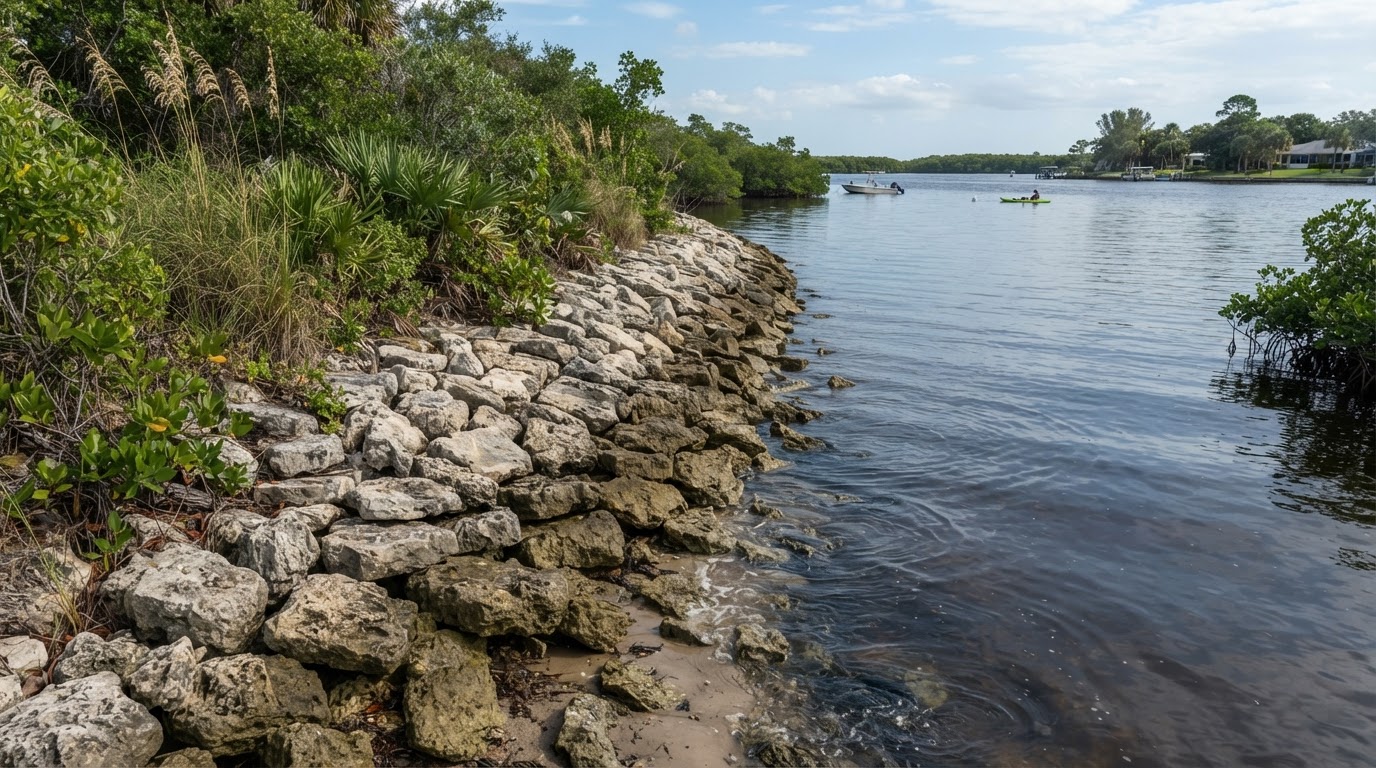
Living Shoreline Options Near Daytona Beach
A living shoreline uses native vegetation, sometimes combined with low-profile structures like oyster reefs or riprap at the waterline, to stabilize a bank while supporting habitat. These approaches can be well-suited to sheltered, lower-energy waterways where there is room for a naturalized slope and the site's habitat and exposure support the design.
Not every shoreline qualifies for a living shoreline. High wave energy, boat wakes, a steep bank, or a constrained lot may make a vegetation-based approach impractical, and a living shoreline is not a guaranteed replacement for a failing structural wall. Suitability depends on the waterbody, bank, soil, and the environmental review the site requires.
- Uses vegetation and low-profile elements to stabilize the bank
- Best suited to sheltered, lower-energy shorelines with adequate space
- Not suitable for every bank or exposure condition
- Not an automatic replacement for a failing structural wall
Wave Exposure, Soil and Shoreline Conditions
Each approach responds to different conditions — the right choice depends on the site, not a universal ranking.
Structural Seawall
- Vertical retaining system for soil and water pressure
- Compact footprint; requires tiebacks and drainage
- Suited to constrained lots and higher retained banks
- Requires engineered anchorage and cap
Riprap & Living Shorelines
- Sloped stabilization through stone or vegetation
- Requires shoreline width for a stable slope
- Best suited to sheltered, lower-energy shorelines
- Not interchangeable with a vertical retaining wall
Environmental and Habitat Review
Shoreline work near Daytona Beach may involve local, state, and environmental review depending on the waterbody, the footprint, and the presence of protected habitat. A living shoreline or riprap project can trigger habitat considerations that a simple wall repair may not, and oyster features are not appropriate everywhere or an automatic permit condition.
This page does not invent environmental approvals or habitat mitigation requirements. Whether a living shoreline, riprap, a wall, or a combination is permitted depends on the parcel, the waterway, and the current agency review — not a blanket rule that one approach is always the most beneficial.
- Shoreline work may involve local, state, and habitat review
- A living shoreline or riprap can trigger habitat considerations
- Oyster features are not appropriate everywhere or automatic
- Permissibility depends on the parcel and current agency rules
Maintenance and Cost Factors
Each approach carries different maintenance and cost considerations. A structural wall concentrates maintenance in its panels, cap, tiebacks, and drainage; riprap may require re-grading or stone replacement after storms; and a living shoreline may need vegetation establishment and monitoring. Cost factors differ by approach and site, and this page does not publish a universal price comparison or claim one approach is always cheaper. The right decision weighs erosion cause, exposure, shoreline space, habitat, and the approvals the specific parcel requires — and refers the site-specific design to qualified professionals and current agency guidance.
Related Services Near Daytona Beach
Explore other marine construction topics relevant to your waterfront project.