
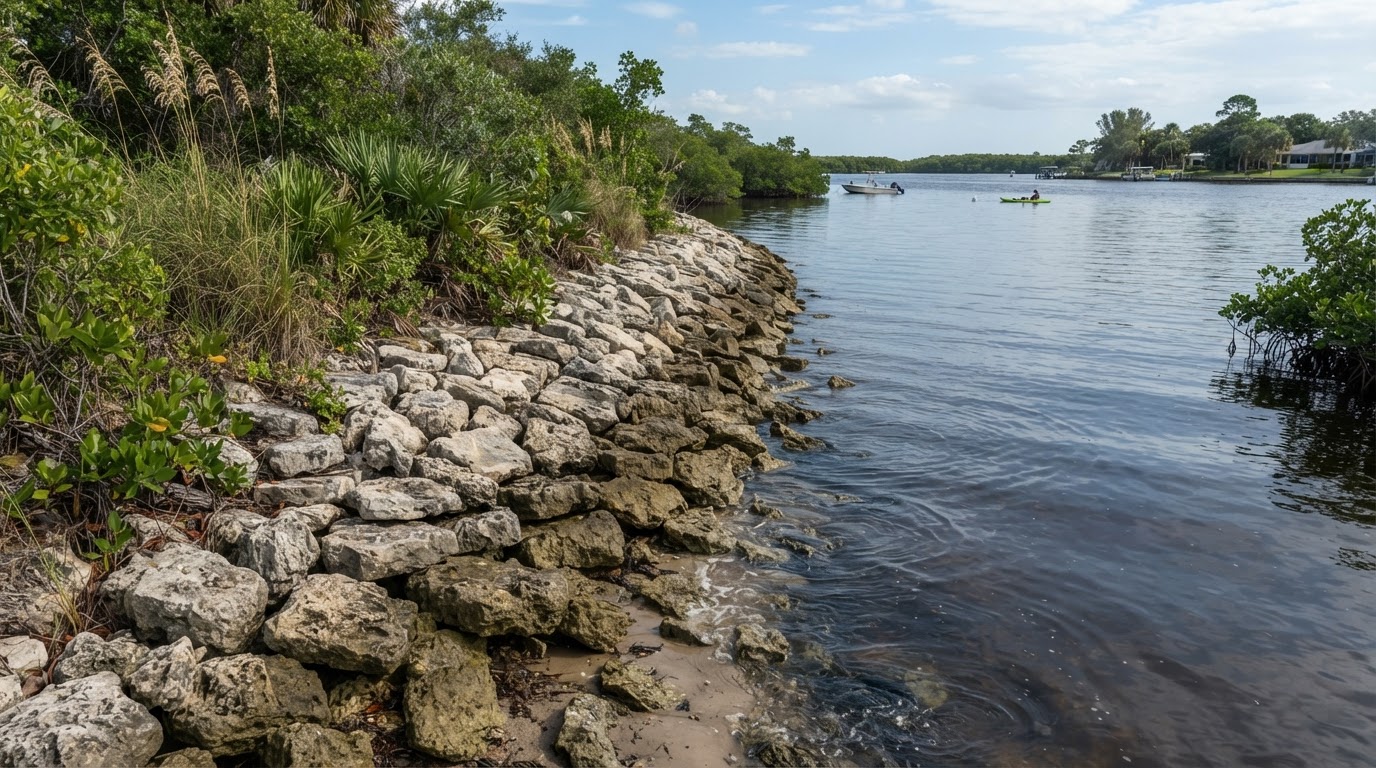
Riprap, Oyster Mats & Living Shoreline Requirements Daytona Beach
Riprap, oyster mats, and living shorelines are shoreline stabilization approaches that may be relevant to some waterfront projects near Daytona Beach — but they are not required for every seawall repair, and they are not interchangeable. This guide explains when each may be considered, how defined shoreline management overlays can affect requirements, and why one shoreline method does not fit every property — without inventing stone sizes, slopes, or universal mandates.
Request a Marine Construction Estimate
Share your dock, seawall, or boat lift project details and we'll review the requirements for your Daytona Beach area waterfront property.
Riprap and Living Shoreline Requirements Near Daytona Beach
Riprap, oyster-related measures, and living shorelines are shoreline stabilization approaches that may be appropriate or, in some cases, required under particular project designs or authorizations. They are not mandatory for every seawall repair, and an overlay-specific condition should not be extrapolated to every parcel in Volusia County.
This page is general educational guidance, not an agency determination. Whether a specific measure applies depends on the property, the proposed activity, current rules, and the applicable management overlay. Verify the specific overlay and current rule before relying on any requirement. This site does not issue or guarantee any permit.
- When shoreline stabilization may be considered
- Riprap versus oyster mats versus native vegetation
- Volusia County management area considerations
- Seawall repair and additional stabilization features
- Environmental review and design questions
- Why one shoreline method does not fit every property
When Shoreline Stabilization May Be Considered
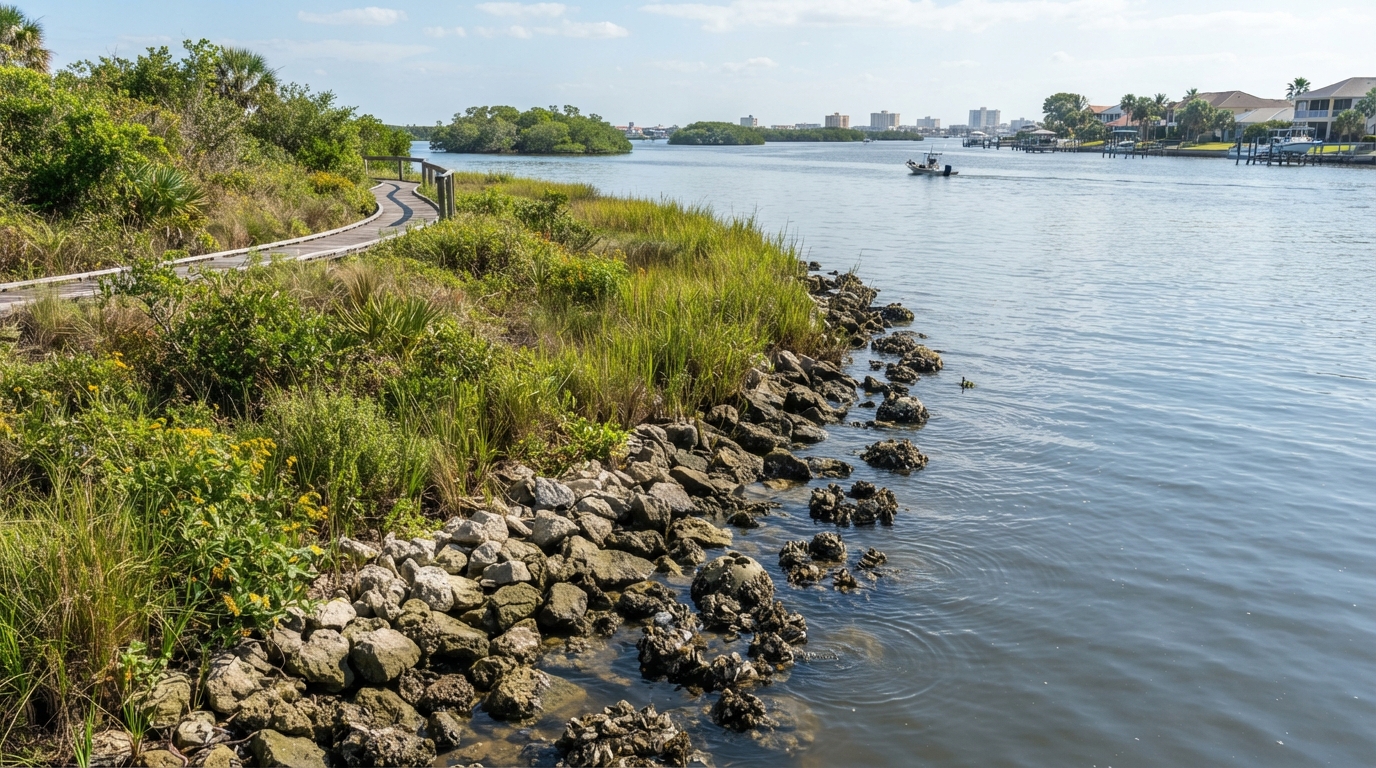
Shoreline stabilization may be considered when a bank is eroding, when wave energy or current exposure is affecting the shoreline, or when a project design calls for a softer or habitat-friendly approach. Riprap uses stone or similar appropriately designed material as part of a revetment; living shorelines combine native vegetation, natural materials, and sometimes structural elements to stabilize a bank; and oyster-related measures may be considered as site-appropriate habitat or restoration features.
These approaches are not the same thing, and they are not interchangeable. Riprap is a structural revetment material; oyster mats are a habitat measure; a living shoreline is a broader stabilization approach. Whether any of them is appropriate depends on wave energy, water depth, bank slope, soil stability, available shoreline space, and existing habitat.
- Stabilization may be considered for eroding or exposed banks
- Riprap, oyster mats, and living shorelines are different approaches
- They are not interchangeable and are not required for every repair
- Suitability depends on wave energy, depth, slope, and habitat
Riprap Versus Oyster Mats Versus Native Vegetation
Each shoreline method serves a different purpose and is not interchangeable with the others.
Riprap & Revetment
- Stone or similar designed material used as a structural revetment
- Intended to absorb wave energy and stabilize an eroding bank
- A structural stabilization feature, not a habitat measure
- Stone sizes, slopes, and dimensions are site-specific and not universal
Oyster Mats & Living Shorelines
- Oyster-related measures are site-appropriate habitat or restoration features
- Living shorelines combine native vegetation and natural materials
- Oyster mats do not automatically establish habitat or satisfy a rule
- Suitability depends on water conditions, habitat, and current exposure
Volusia County Management Area Considerations
Some official shoreline stabilization guidance addresses special conditions in defined management areas. A requirement that applies within a Natural Resource Management Area or another defined overlay may not apply to a property outside that area. The existence of an overlay-specific condition does not make it a universal rule for every parcel in Volusia County.
This page does not extrapolate an overlay-specific condition to every parcel, and does not imply that riprap or oyster mats are mandatory for every seawall repair. Verify whether a property falls within a defined management area and review the current scope of any applicable guide before relying on a requirement.
- Some guidance addresses special conditions in defined management areas
- An overlay-specific condition may not apply outside that area
- An overlay condition is not a universal rule for every parcel
- Verify whether a property falls within a defined management area
Seawall Repair and Additional Stabilization Features
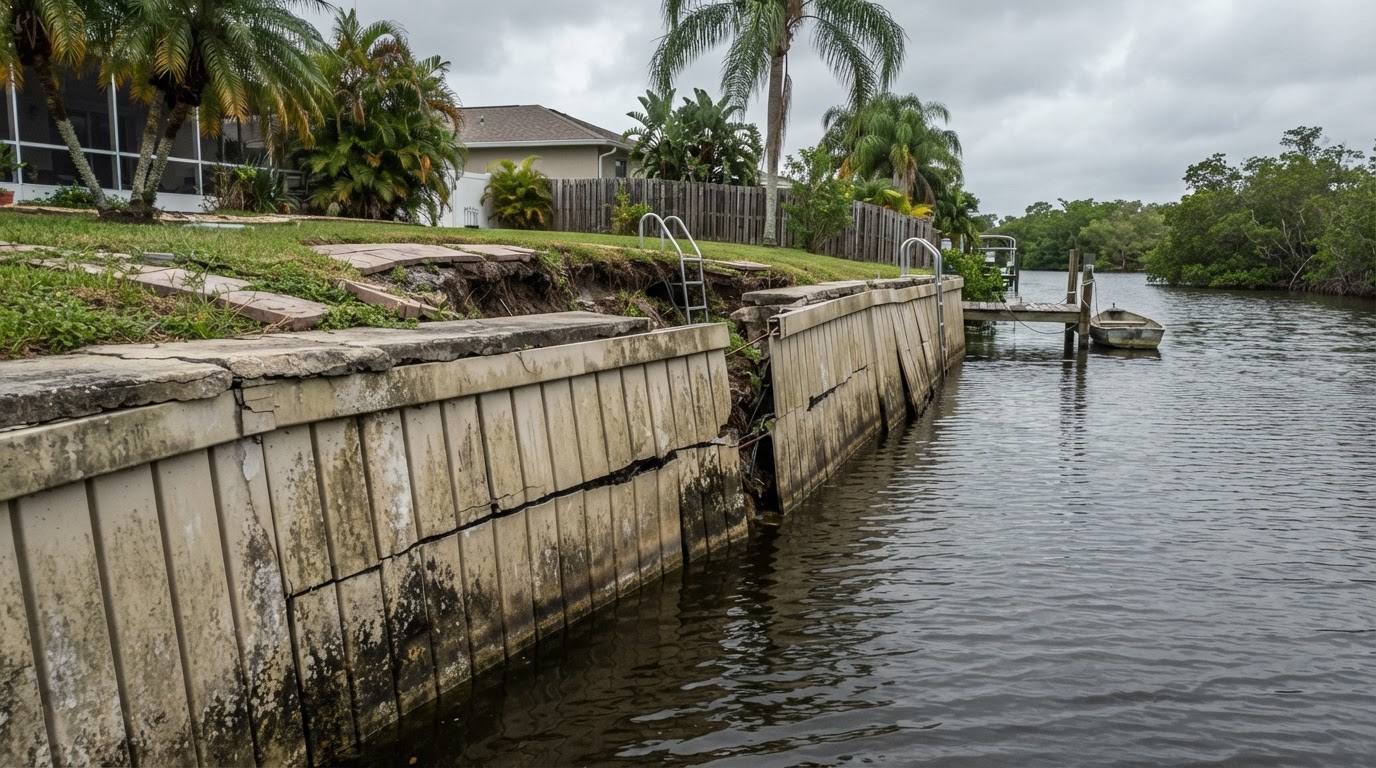
A structural seawall repair addresses the wall itself. An erosion-control or habitat feature such as riprap or an oyster measure is a separate consideration and may not resolve underlying wall instability. A property owner should not assume that adding a stabilization feature fixes a failing structural wall, or that a structural repair automatically requires a habitat measure.
This page distinguishes shoreline stabilization from the structural repair of a failing seawall, and does not claim oyster mats automatically establish habitat or satisfy an agency requirement. Whether a stabilization feature is relevant to a seawall project depends on the site and the proposed scope.
- A structural seawall repair addresses the wall itself
- An erosion-control feature may not resolve underlying wall instability
- A structural repair does not automatically require a habitat measure
- Oyster mats do not automatically establish habitat or satisfy a rule
Environmental Review and Design Questions
Shoreline method suitability depends on site-specific water conditions, habitat, and current agency review.
Wave Energy & Depth
Wave energy, water depth, and current exposure help determine whether riprap, a living shoreline, or another approach is appropriate. High-energy sites may not suit a soft approach.
Bank Slope & Soil
Bank slope, soil stability, and available shoreline space affect which stabilization method is feasible. These are evaluated for the specific property.
Existing Habitat
Existing habitat, protected species, and oyster habitat suitability are site-specific. Habitat measures are not assumed present at every property.
Waterway Access
Construction footprint and waterway access affect how a stabilization feature can be installed. Access is a site-specific planning consideration.
Permit Review
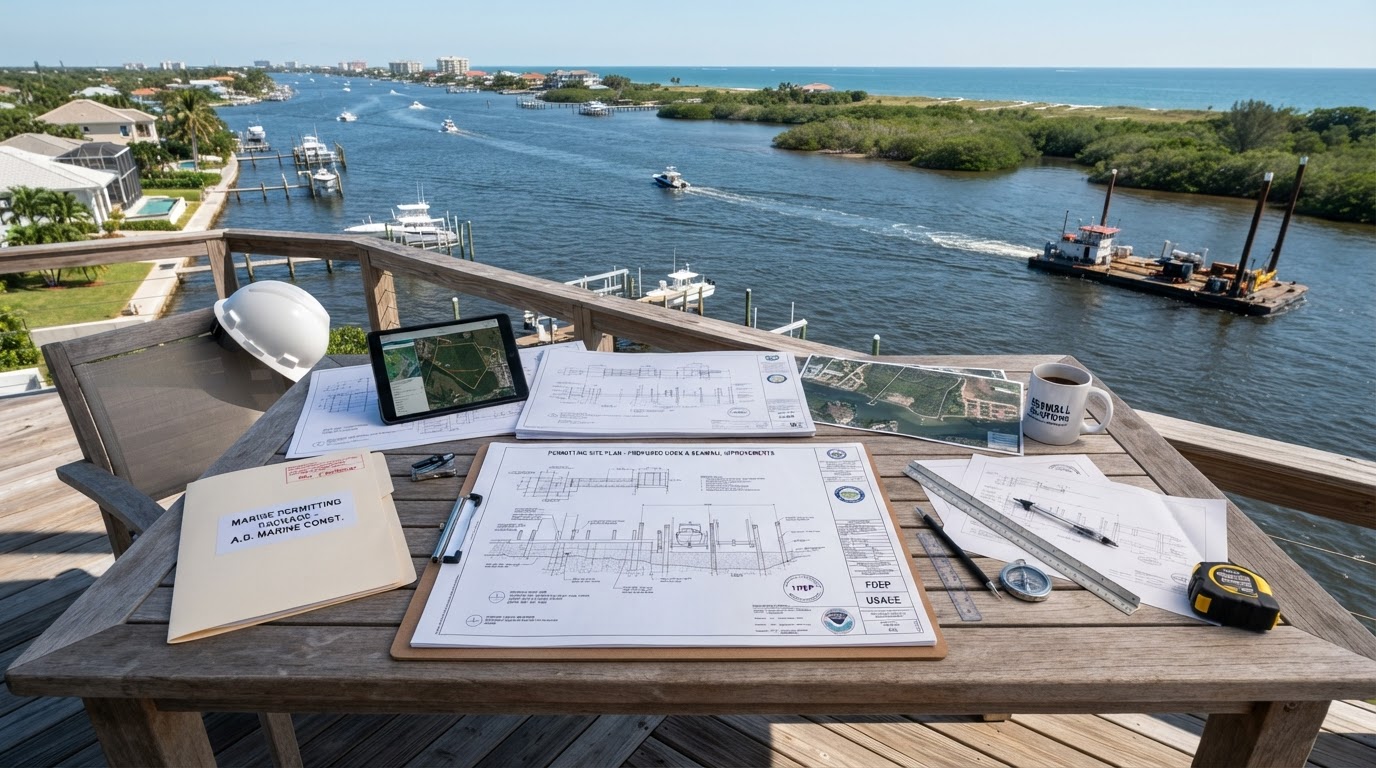
Shoreline stabilization may require environmental review and qualified design. Whether a method is approved depends on the property and current conditions.
Current Conditions
Shoreline requirements change. Verify the current scope of any applicable guide and whether a property falls within a defined overlay before relying on a requirement.
Why One Shoreline Method Does Not Fit Every Property
A shoreline method that works on one property may not work on another. Wave exposure, water depth, bank slope, soil, habitat, and available space all vary. A living shoreline suitable for a low-energy canal bank may not suit an exposed oceanfront, and riprap appropriate for one site may not be permitted at another.
This page does not publish universal stone sizes, slopes, dimensions, or planting specifications, and does not claim oyster mats automatically establish habitat or satisfy an agency requirement. The appropriate shoreline treatment is determined for the specific property through current agency review and qualified design.
- A method that works on one property may not work on another
- Wave exposure, depth, slope, soil, and habitat all vary
- No universal stone sizes, slopes, or planting specifications are published here
- The appropriate treatment is determined through current review and design
Where to Verify Current Guidance
For current official information, consult the Volusia County Shoreline Stabilization Guide (volusia.org) and review whether a property falls within a defined management area. Verify the current scope of any applicable guide and current Florida DEP requirements before relying on a specific shoreline requirement. This page provides general guidance and does not replace agency determinations or qualified professional advice.
Related Services Near Daytona Beach
Explore other marine construction topics relevant to your waterfront project.