
Seawall Repair with Riprap & Oyster Mats Daytona Beach
Riprap and oyster-related measures are not required for every seawall repair. This page explains when shoreline stone, oyster habitat measures, or other environmental conditions may be part of a seawall repair near Daytona Beach, how they differ from structural wall repair, and why placement, material, and ecological suitability are site-specific decisions verified through project review — not universal add-ons.
Request a Marine Construction Estimate
Share your dock, seawall, or boat lift project details and we'll review the requirements for your Daytona Beach area waterfront property.
Seawall Repair with Riprap Near Daytona Beach
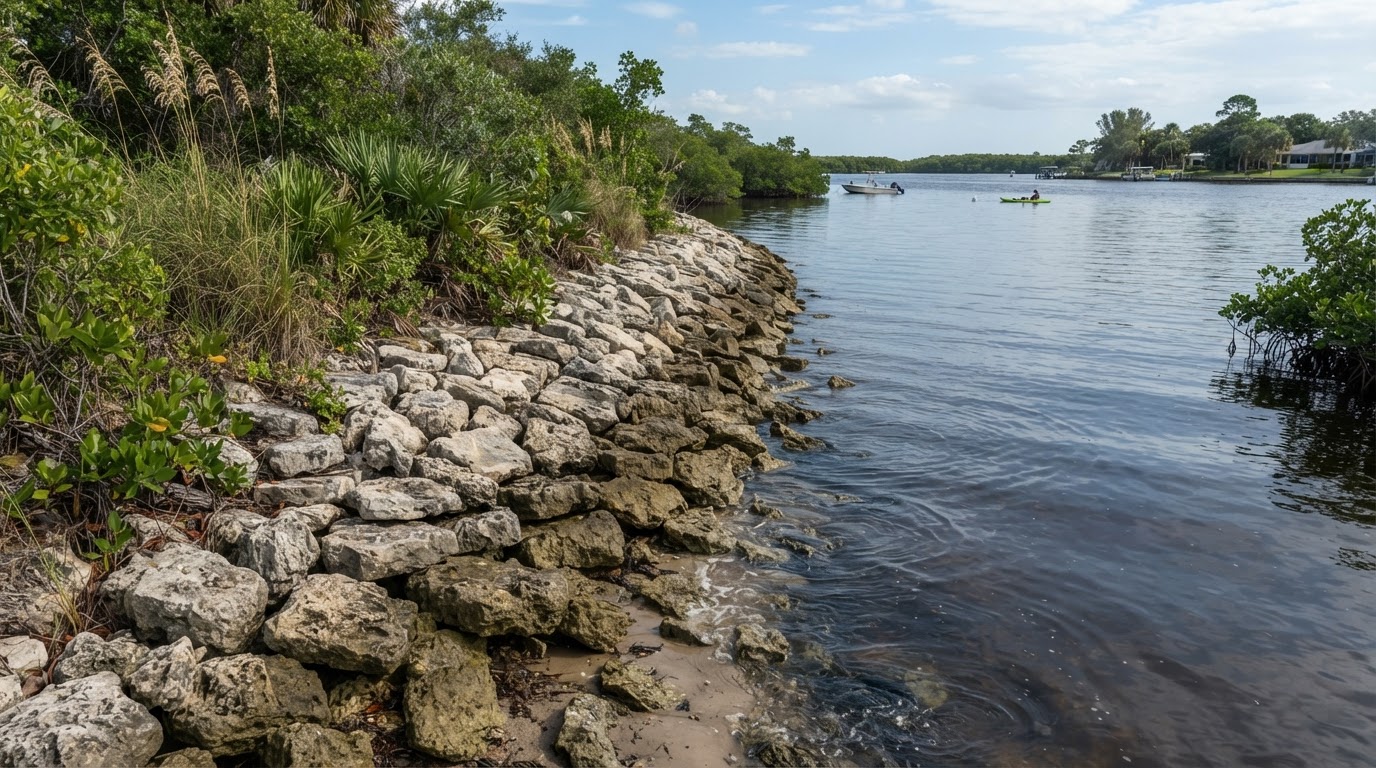
Riprap is stone or similar appropriately designed material sometimes used as part of shoreline stabilization or erosion-control approaches. Oyster-related measures are site-appropriate habitat or restoration measures that may be considered or required under particular project designs or authorizations. Neither is automatically part of a seawall repair, and neither is required for every project.
Whether riprap, oyster mats, or other environmental measures apply depends on the specific property, the permitted scope, environmental conditions, agency review, and applicable project authorization. Requirements are not uniform across Daytona Beach or Volusia County, and a measure required at one parcel may not apply at another. Treating these measures as universal requirements would be inaccurate.
- Condition of the existing seawall
- Shoreline erosion and wave or current exposure
- Bottom conditions and existing habitat
- Construction access and waterway space
- Material placement and dimensions
- Qualified design and environmental review
- Agency conditions and project authorization
When Oyster-Related Habitat Measures May Be Considered
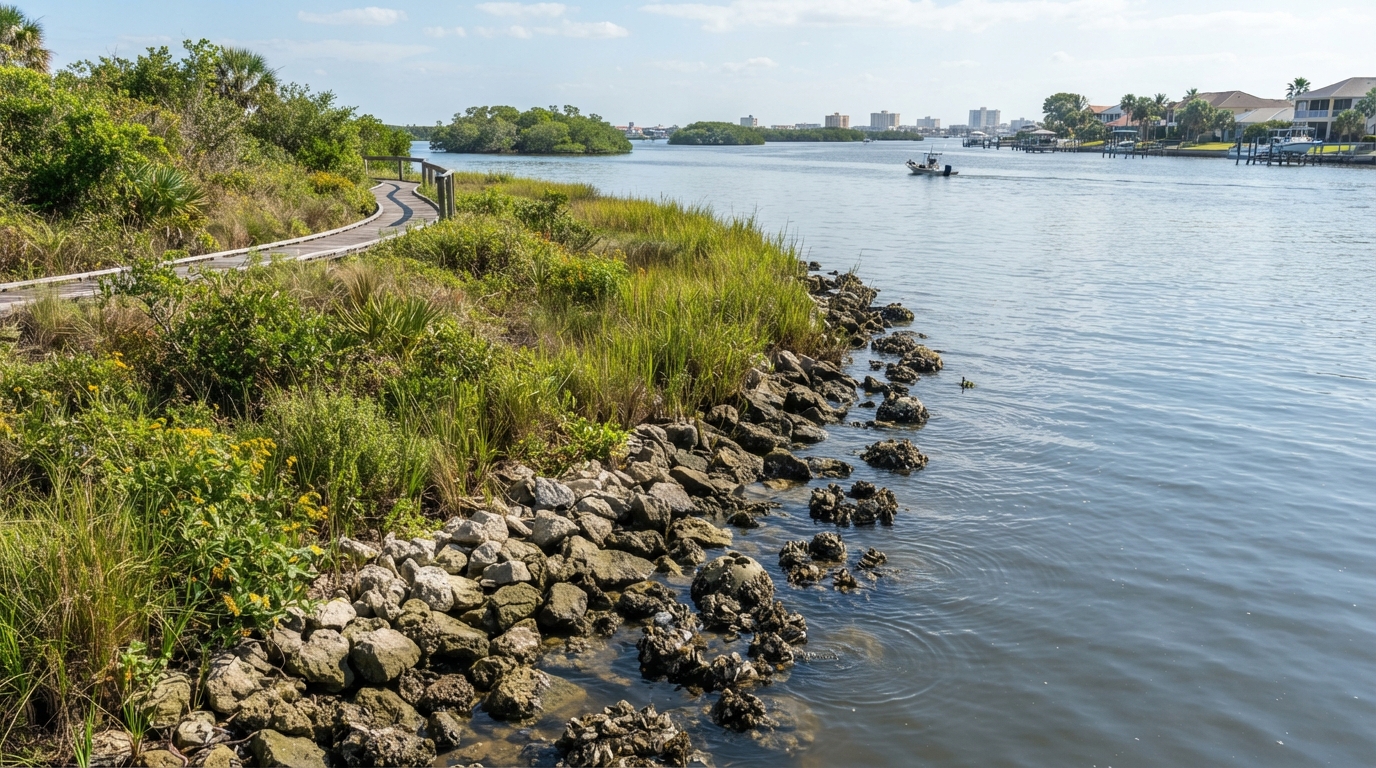
Oyster-related measures may be considered where a project's design, location, or authorization calls for habitat or restoration elements. These measures are site-specific: their placement, material, dimensions, and ecological suitability are not universal, and oyster mats are not interchangeable with riprap. Oyster mats do not automatically establish oyster habitat or satisfy regulatory requirements, and their use depends on conditions at the parcel and any agency conditions attached to the project.
Whether such measures are appropriate or required is determined through project review, not assumed from the waterbody name. A property near Mosquito Lagoon, the Intracoastal, or another waterway may have different habitat considerations, and the applicable requirements are verified for the specific parcel and scope.
- Considered where design or authorization calls for habitat measures
- Placement, material, and dimensions are site-specific
- Oyster mats are not interchangeable with riprap
- Do not automatically establish oyster habitat
- Suitability verified through project review
Riprap, Oyster Mats and Living Shorelines: Different Purposes
These shoreline approaches serve different functions and are not interchangeable. Confusing them can lead to a design that does not address the actual condition.
Riprap
- Stone or designed material for erosion control
- Placed along the shoreline or wall base
- Addresses wave and current energy
- Dimensions and gradation are engineered
- Not a structural wall repair
Living Shorelines
- Native vegetation and naturalized elements
- Stabilization through living, bioengineered systems
- Habitat and ecological function
- Oyster mats may be one component
- Distinct from a hard structural seawall
Why Site-Specific Environmental Review Matters
Environmental review considers the actual shoreline, bottom conditions, existing habitat, wave and current exposure, and adjacent uses at the parcel. A design that works at one property may not be appropriate at another, and an agency may attach conditions to a project that require specific measures or prohibit others. Review is not a formality — it determines what is allowed and what is required for the specific scope.
Seawall Structural Repairs Versus Shoreline Stabilization
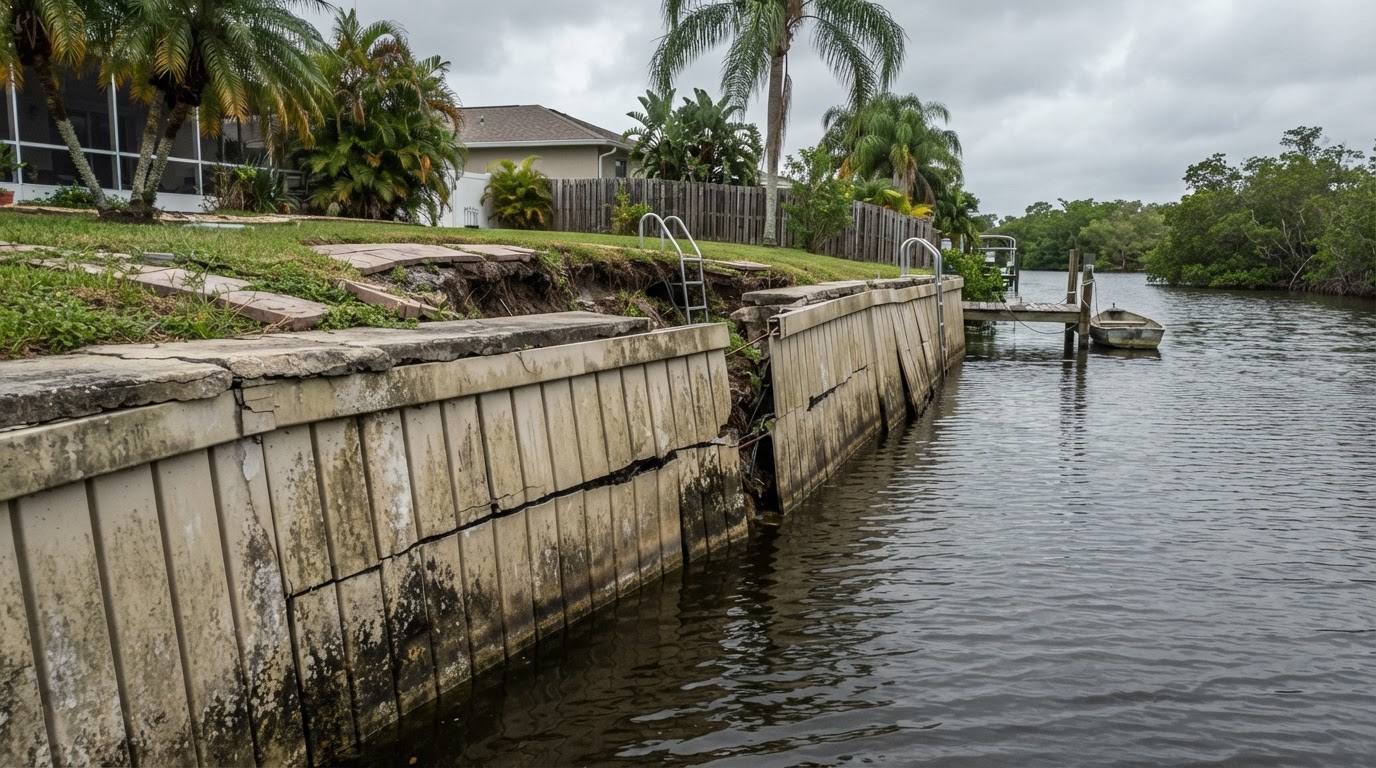
Shoreline stabilization and structural seawall repair are different objectives. Riprap or a living shoreline can address erosion at the waterline, but an erosion-control feature does not resolve underlying wall instability, soil loss behind the wall, or anchorage failure. A wall that is leaning or losing backfill has a structural problem that stabilization alone may not address.
Conversely, a structural wall repair may not need riprap or oyster measures unless the project's conditions or authorization call for them. The two scopes are evaluated separately, and a qualified assessment determines whether a project needs structural work, stabilization, or both.
- Stabilization addresses erosion at the waterline
- Structural repair addresses wall movement or soil loss
- An erosion-control feature does not fix wall instability
- A structural repair may not require riprap or oyster mats
- Both scopes are evaluated separately
Waterway Access and Habitat Considerations
Placement of riprap or habitat measures affects waterway access, navigation, and adjacent docks. Design considers the whole shoreline, not just the wall.
- Waterway space and navigation clearance
- Adjacent docks, boat lifts, and shoreline uses
- Existing habitat and bottom conditions
- Construction access for material placement
- Potential effects on neighboring shoreline
Understanding Project-Specific Approval Conditions
Approval conditions are project-specific. An agency may require riprap, oyster mats, or other measures as conditions of authorization, or it may prohibit certain approaches at a given parcel. Do not assume one design is approved throughout Daytona Beach or Volusia County, and do not assume an exemption from one authority resolves all other requirements. Detailed requirements will be addressed in a dedicated resource page after official-source verification; until then, project-specific determinations are referred to the appropriate authority and qualified professionals.
Related Services Near Daytona Beach
Explore other marine construction topics relevant to your waterfront project.