
Floating vs Fixed Dock Construction Daytona Beach
A floating dock and a fixed dock are two different ways of reaching the water, and neither is universally better for every waterfront. The right configuration depends on water depth, changing water levels, vessel requirements, boat-lift compatibility, shoreline access, bottom conditions, and the exposure the site must withstand. This comparison explains how floating and fixed dock systems differ in Daytona Beach so you can frame a site-specific conversation rather than choosing a dock type by preference alone.
Request a Marine Construction Estimate
Share your dock, seawall, or boat lift project details and we'll review the requirements for your Daytona Beach area waterfront property.
Floating vs Fixed Docks in Daytona Beach
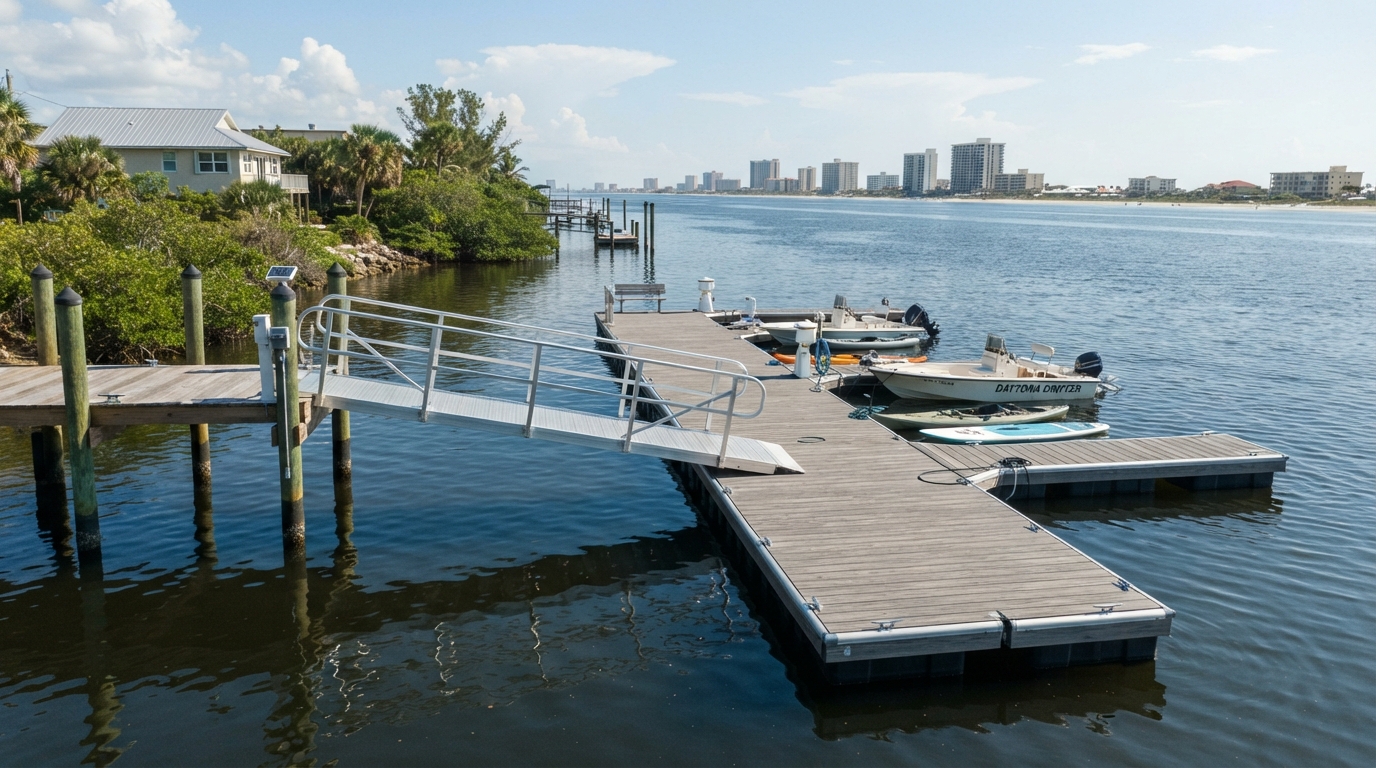
Floating docks use buoyant platforms held in place by anchoring or guide-piling systems and connected to shore by a gangway; fixed docks are pile-supported structures fixed at an established elevation. Each handles water levels, vessel access, and exposure differently, and each has different maintenance, construction, and permitting considerations.
This page does not claim floating docks are universally preferable where water levels vary, or that fixed docks are automatically stronger or more storm-resistant. The right choice depends on the waterbody, depth, exposure, vessel use, and shoreline conditions of the specific parcel.
- Floating docks rise and fall with the water level
- Fixed docks are pile-supported at a fixed elevation
- Vessel access and boat-lift compatibility differ by type
- Anchoring or piling requirements vary by site
- Maintenance and exposure considerations differ
- Neither type is universally best for every waterfront
How Floating Docks Work
A floating dock is a buoyant platform that rises and falls with the water level, held in place by anchors, cables, piling guides, or a combination. Because it moves with the water, it can keep the deck-to-vessel relationship relatively consistent where water levels change — but it is not automatically suitable for every water-level variation or exposure condition.
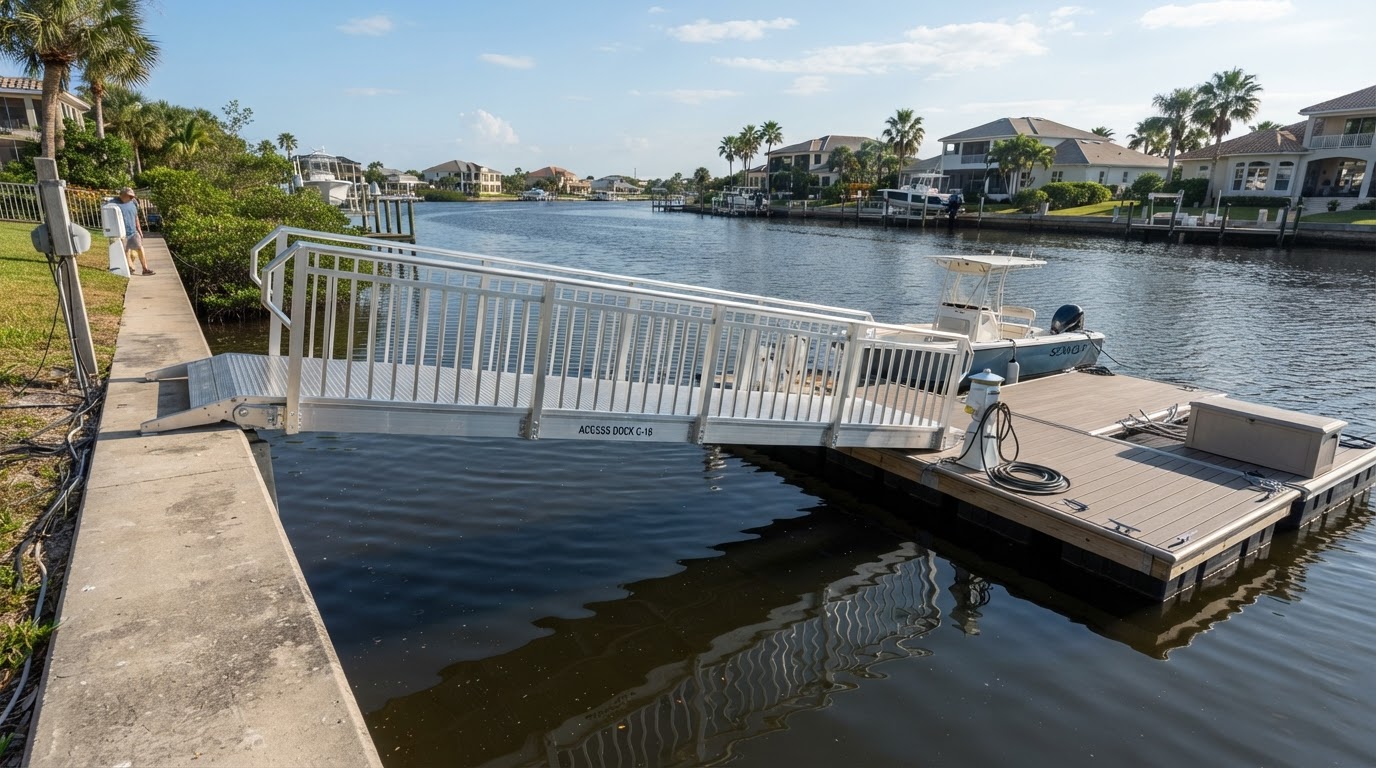
The gangway that connects the floating platform to shore is part of the system, not an accessory, and its length and slope depend on the elevation difference and applicable access requirements. The platform, connections, anchoring or guide system, and gangway are all part of the scope.
- Buoyant platform held by anchoring or piling guides
- Rises and falls with the water level
- Gangway is part of the system, not an accessory
- Not automatically suitable for every exposure
How Fixed Docks Work
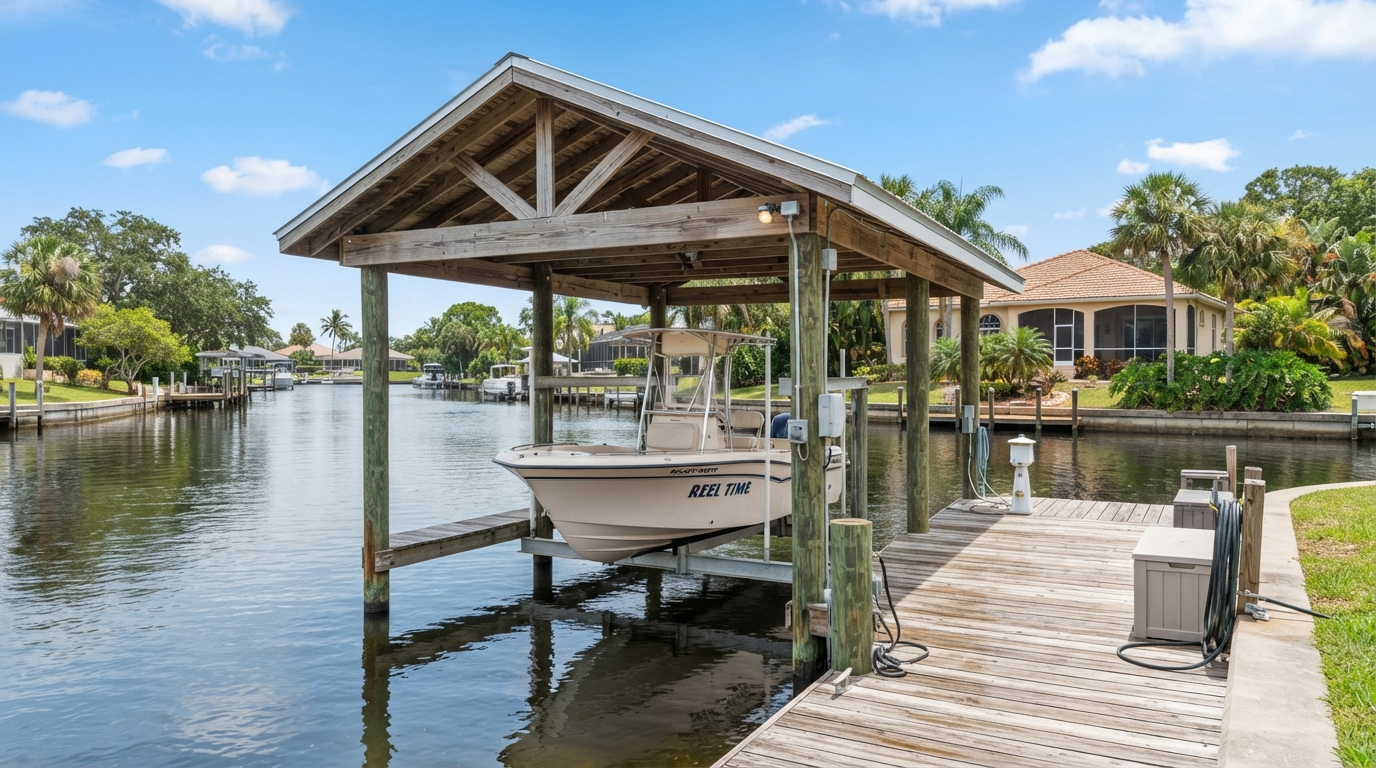
A fixed dock is supported by pilings driven into the bottom and framed at an established elevation above the water. It does not move with the water level, so the deck height stays constant, which can suit boat lifts and stable boarding access where depth and bottom conditions support piling installation.
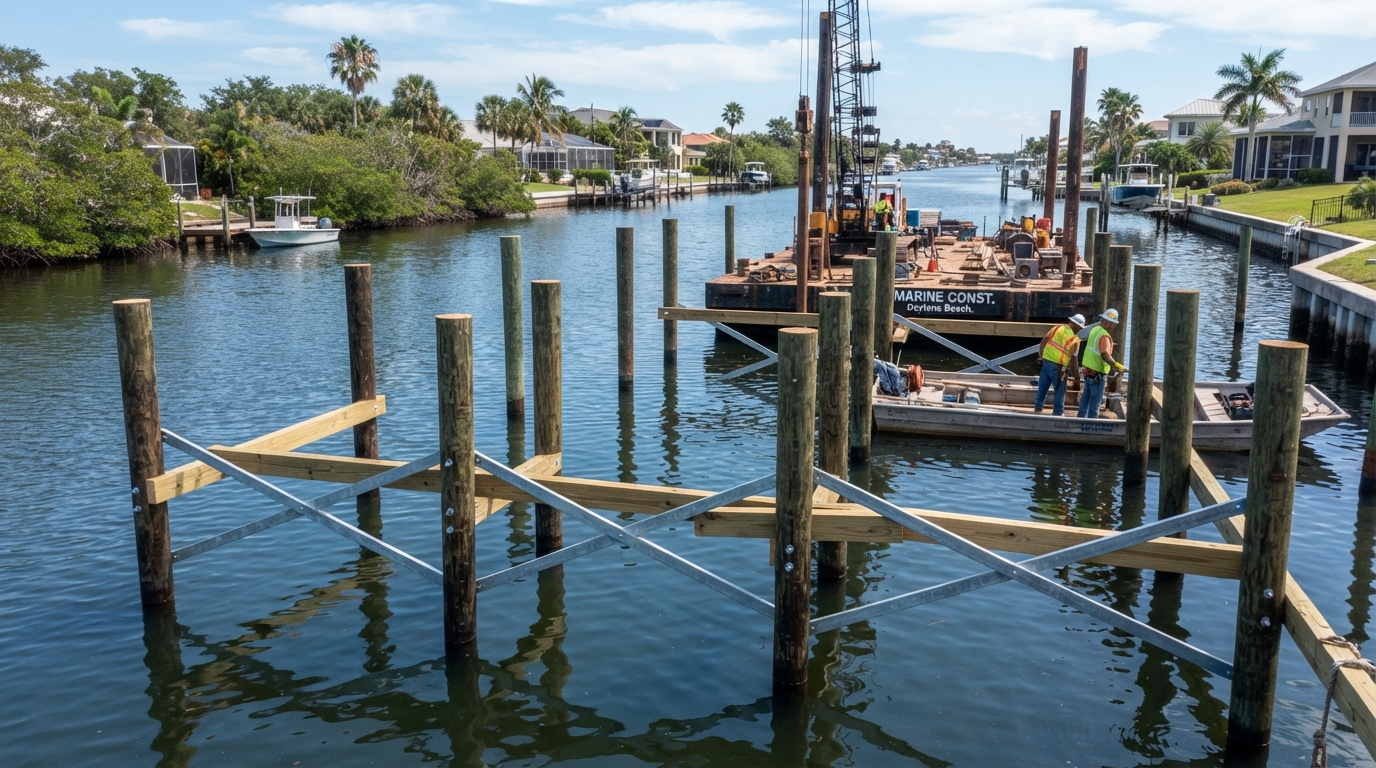
Fixed docks are not automatically stronger or more storm-resistant than floating docks, and this page does not invent universal load ratings. The structural design — piling count, bracing, framing, and connections — determines how a fixed dock performs, and that design depends on the water depth, bottom conditions, and exposure of the site.
- Pile-supported and fixed at an established elevation
- Deck height stays constant regardless of water level
- Can suit boat lifts and stable boarding access
- Structural design depends on depth, bottom, and exposure
Water-Level Changes and Dock Access
Water-level behavior is one of the biggest factors in the floating-versus-fixed decision. On a waterway with significant tide or river-level variation, a floating dock can keep the platform close to the vessel across a range of conditions, while a fixed dock may leave a large vertical gap between the deck and the water at low levels.
This does not mean floating is always preferable where water levels vary. In exposed sites with significant wave or current action, the anchoring or guide system must be engineered for those conditions, and a fixed structure may be more practical where the bottom supports piling installation. The comparison depends on the site.
- Water-level variation is a primary decision factor
- Floating docks can keep platform-to-vessel access consistent
- Fixed docks may leave a larger gap at low water
- Exposure and bottom conditions can favor either type
Anchoring and Piling Considerations Near Daytona Beach
Floating docks are held in place by anchoring systems, piling guides, or a combination, and the choice depends on water depth, bottom conditions, exposure, and existing structures. Piling guides use pilings as sliding guides that allow vertical movement while restraining horizontal drift; anchoring systems use cables, chains, or anchors to hold position.
Fixed docks rely on pilings driven into the bottom, so the bottom conditions and water depth directly affect the scope. A site that cannot support piling installation may not be suitable for a fixed dock, while a floating system may require engineered anchoring that adds scope. Neither approach is universally simpler or cheaper.
- Floating docks use anchors, piling guides, or both
- Fixed docks depend on drivable pilings and bottom conditions
- Water depth and exposure shape the anchoring or piling scope
- Neither approach is universally simpler or cheaper
Boat Access, Fishing and Recreational Use
Floating and fixed docks serve different uses — neither is universally best for boating, fishing, or recreation.
Floating Docks
- Platform rises and falls with the water
- Scope includes floatation, anchoring, and gangway
- Can suit paddlecraft and changing water levels
- Not automatically cheaper or more storm-resistant
Fixed Docks
- Pile-supported at a fixed elevation
- Can suit boat lifts and stable boarding
- Scope depends on piling count and bottom conditions
- Not automatically stronger than a floating dock
Maintenance and Construction Cost Factors
Both dock types have maintenance and eventual replacement considerations, and neither is maintenance-free. Floating docks require attention to connections, floatation, and anchoring hardware; fixed docks require attention to pilings, framing, fasteners, and connections. Construction cost factors differ — a floating dock's cost includes floatation and gangway work, while a fixed dock's cost depends on pilings, water depth, and bottom conditions — and this page does not publish a universal price comparison or claim one type is always less expensive. Permitting and environmental review may apply to either configuration depending on the waterbody, footprint, and shoreline work, so a useful estimate clarifies what is included, what is excluded, and which approvals the scope assumes.
Related Services Near Daytona Beach
Explore other marine construction topics relevant to your waterfront project.