
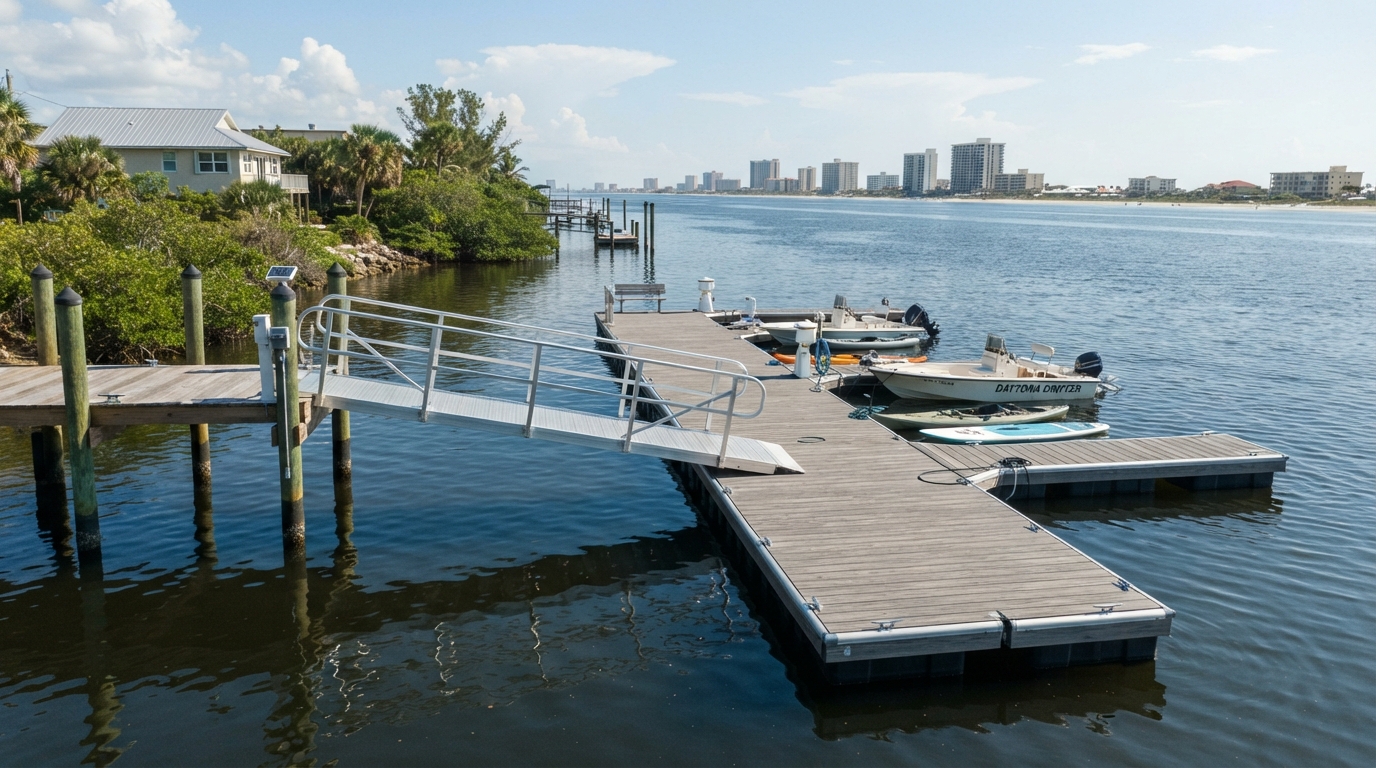
Commercial Floating Dock Systems & Installation Daytona Beach
Commercial floating dock systems in Daytona Beach are modular platforms that rise and fall with the water — useful where water levels change, where a fixed dock is impractical, or where a facility needs flexible multi-user access. This page explains floating-system planning considerations without claiming floating docks are hurricane-proof, maintenance-free, or suitable for every site.
Request a Marine Construction Estimate
Share your dock, seawall, or boat lift project details and we'll review the requirements for your Daytona Beach area waterfront property.
Commercial Floating Dock Systems in Daytona Beach
A commercial floating dock system is more than a residential float scaled up. Marina, ferry, waterfront-business, and rental applications involve larger vessels, heavier foot traffic, utility loads, gangway access, and connections between modules that must behave predictably under wind, current, and wake. The layout, anchoring, freeboard, and gangway design all interact.
This page compares fixed and floating approaches without presenting either as universally superior. It does not promise that floating systems automatically accommodate every water-level change, and does not invent load ratings or manufacturer specifications. Suitability depends on the site, the intended use, and qualified design.
- Floating platform configuration and module connections
- Anchoring, mooring, and piling-guide systems
- Gangway access and water-level accommodation
- Utility connections for shore power, water, and lighting
- Vessel access and dock-load considerations
- Environmental conditions and applicable approvals
Where Floating Dock Systems May Be Considered
Floating systems are often considered where water levels fluctuate — tidal areas, rivers with seasonal changes, or facilities where a consistent freeboard makes boarding easier. They can also make sense where a fixed piling-supported dock is impractical due to depth, bottom conditions, or access constraints. The right choice depends on the site's exposure, the vessels served, and how the facility is operated.
A protected canal, an exposed riverfront, and a busy marina each present different demands on a floating system. This page does not assume that a modular dock requires no engineering or authorization simply because it floats; floating systems are still subject to design, anchoring, utility, and permitting review.
- Tidal or variable-water-level sites
- Facilities needing consistent boarding freeboard
- Sites where fixed piling installation is impractical
- Multi-user marina or rental applications
- Exposure to wind, current, and wake at the site
Floating Dock Layout and Vessel Access
A floating system's layout — module size, connection type, finger floats, and orientation — shapes how vessels and users move through it.
Module Configuration
Float size, module count, and connection hardware determine how the dock behaves under load and how it can be reconfigured over time.
Anchoring & Guides
Guide piles, mooring whips, or anchors restrain movement. The method depends on depth, bottom conditions, and exposure.
Freeboard
Freeboard affects boarding ease and safety. The right height depends on the vessels served and how water levels change.
Vessel Clearances
Slip width, finger length, and fairway space should fit the vessel mix, not a generic layout assumed to suit every marina.
Module Connections
Connectors between floats carry both structural and movement loads. Their condition affects how the system behaves under use.
Orientation
Dock orientation to wind, current, and traffic flow affects boarding safety and how easily vessels enter and leave slips.
Anchoring, Piling Guides and Connections
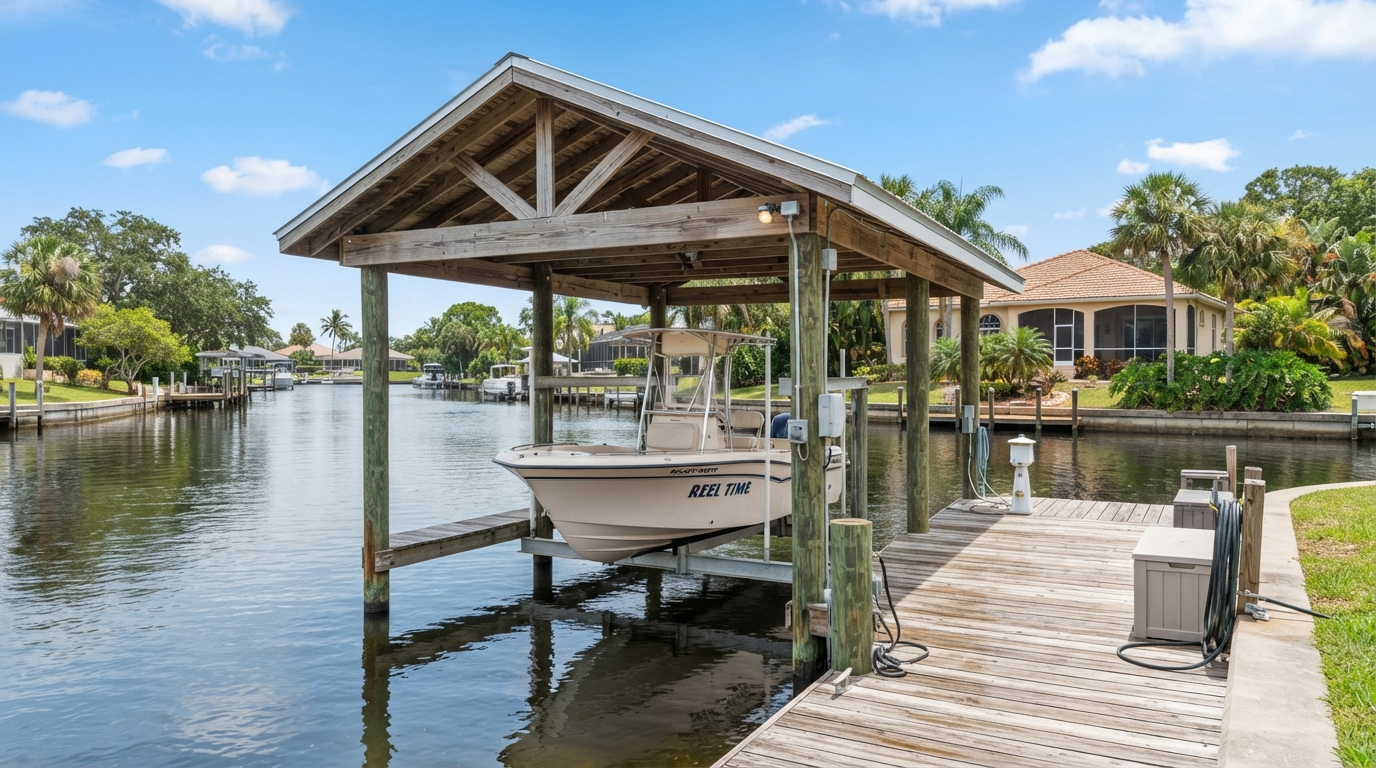
A floating dock must be held in place. Guide piles, cable-and-anchor systems, mooring whips, or a combination each behave differently under wind, current, and wake. The appropriate method depends on water depth, bottom conditions, exposure, and the size of the floating system. Guide piles also restrain lateral movement and keep the float in position as water levels change.
This page does not claim that one anchoring method is universally superior or that floating docks are storm-proof. Floating systems can shift, surge, or suffer connection damage under severe conditions; their performance depends on design, anchoring, and exposure — not a blanket guarantee.
- Guide piles versus cable-and-anchor systems
- Bottom conditions and holding capacity
- Exposure to wind, current, and wake
- Module connection hardware and maintenance
- Restraint of lateral movement under load
Gangways and Utilities Near Daytona Beach
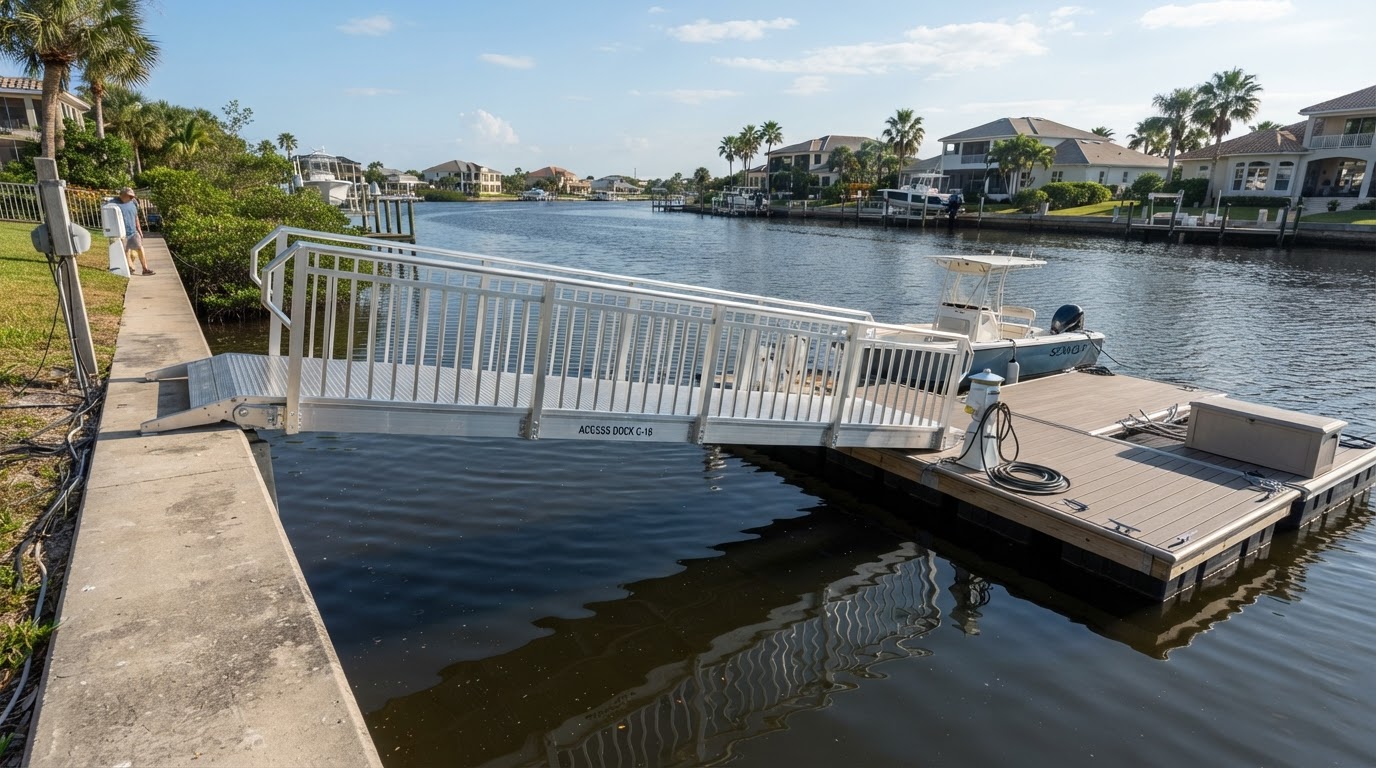
Because a floating dock moves with the water, the gangway is the critical link to the upland. Gangway length, rollers, landings, and slope all affect how safely people cross the changing gap between shore and float. A gangway that is too short can create steep or unsafe slopes during low water; one that is well-sized accommodates the full range of water levels at the site.
Utilities — shore power, water, and lighting — reach the floats through flexible connections sized to vessel and facility needs. This page does not provide electrical installation steps; electrical work on a floating system is referred to appropriately qualified professionals and applicable codes.
- Gangway length, slope, and landing design
- Rollers and accommodation for level changes
- Shore power pedestals sized to vessel needs
- Water and lighting utility connections
- Electrical work referred to qualified professionals
Floating Versus Fixed Commercial Docks
Fixed and floating commercial docks each suit different conditions. Neither is universally superior, and the choice depends on the site.
Floating Dock Systems
- Rises and falls with water-level changes
- Consistent freeboard for boarding
- Gangway accommodates the level gap
- Guide piles or anchors restrain movement
- Performance depends on exposure and anchoring
Fixed Dock Systems
- Pile-supported at a set elevation
- Stable platform under wind and current
- Height relative to typical water level
- Access changes with large level swings
- Piling design sized to site and loading
Maintenance and Operational Planning
Floating systems have maintenance and operational considerations that differ from fixed docks.
- Float inspection for watertight integrity
- Connection and hardware corrosion review
- Gangway roller and landing maintenance
- Utility-connection flexibility and strain
- Anchoring or guide-pile condition checks
- Seasonal or storm preparation where applicable
Environmental Review and Project Approvals
A commercial floating dock system may involve local, state environmental, submerged-lands, navigational, and federal review depending on the site and scope. Habitat, water quality, and navigation considerations are site-specific and must be verified rather than assumed. This page does not assume a modular system requires no authorization; project-specific determinations are referred to the applicable authority and qualified professionals.
Related Services Near Daytona Beach
Explore other marine construction topics relevant to your waterfront project.
Frequently Asked Questions About Commercial Floating Dock Systems in Daytona Beach
Planning a Commercial Floating Dock Project?
Share your facility type, intended vessel use, water-depth and level-change conditions, site exposure, gangway and utility needs, and any known approval considerations. That context helps frame a floating dock system approach suited to your site and operations.