
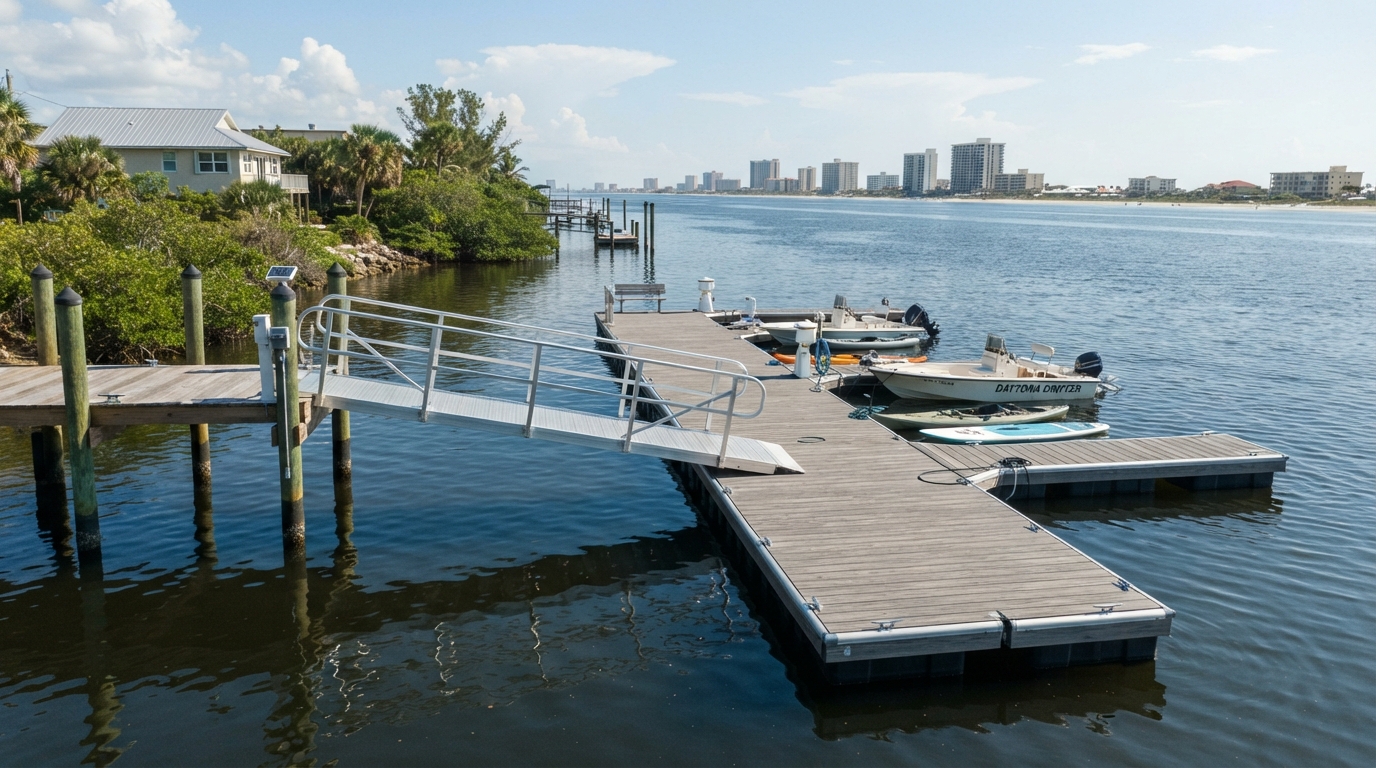
Floating Dock Construction Cost & Pricing Daytona Beach
A floating dock is not automatically cheaper than a fixed dock. Its cost reflects the platform size and materials, the floatation system, the connections between modules, the anchoring or piling guides that hold it in place, the gangway that connects it to shore, and the site conditions it must accommodate. This guide explains the factors that shape floating dock pricing near Daytona Beach without publishing an unsupported price-per-square-foot or claiming floating systems are universally less expensive.
Request a Marine Construction Estimate
Share your dock, seawall, or boat lift project details and we'll review the requirements for your Daytona Beach area waterfront property.
Floating Dock Cost in Daytona Beach
Floating dock pricing depends on the platform configuration, the floatation and connection hardware, the anchoring or guide-piling system, the gangway access to shore, and the water and exposure conditions the system must handle. Two floating docks of the same size can have very different scopes depending on the water-level variation, wave exposure, and shoreline access.
This page does not publish a floating dock price per square foot or claim that a floating system is always cheaper than a fixed dock. The appropriate comparison depends on the site, the intended vessel use, and the engineering and environmental review the project requires — not a universal cost-per-area figure.
- Platform size, configuration, and materials
- Floatation system and dock-module connections
- Anchoring, piling guides, and shoreline attachment
- Gangways and shoreline access
- Water-level variation, wave, and current exposure
- Utilities, maintenance, and replacement considerations
What Affects Floating Dock Installation Pricing?
A floating dock's price reflects the platform itself and the system that keeps it in place and accessible. The platform size and configuration determine the deck material and floatation required; the connections between modules determine how the dock behaves as a single surface; and the anchoring or guide-piling system resists wind, current, and wave action. Each of these is part of the scope, not a separate optional add-on.
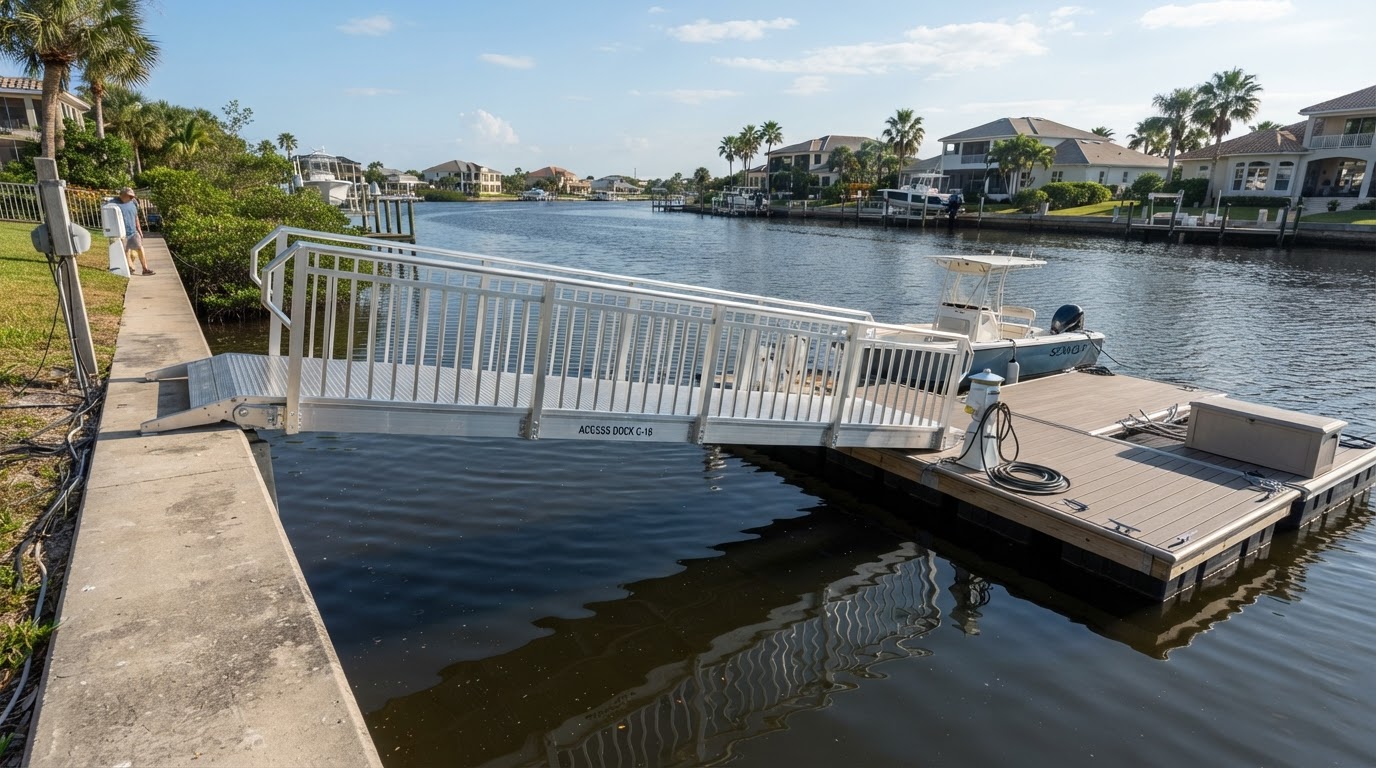
The gangway that connects the floating platform to shore is also part of the system. Its length and slope depend on the elevation difference between the shore and the water and on applicable access requirements, and it is not automatically included in a platform-only price.
Platform Size, Configuration and Materials
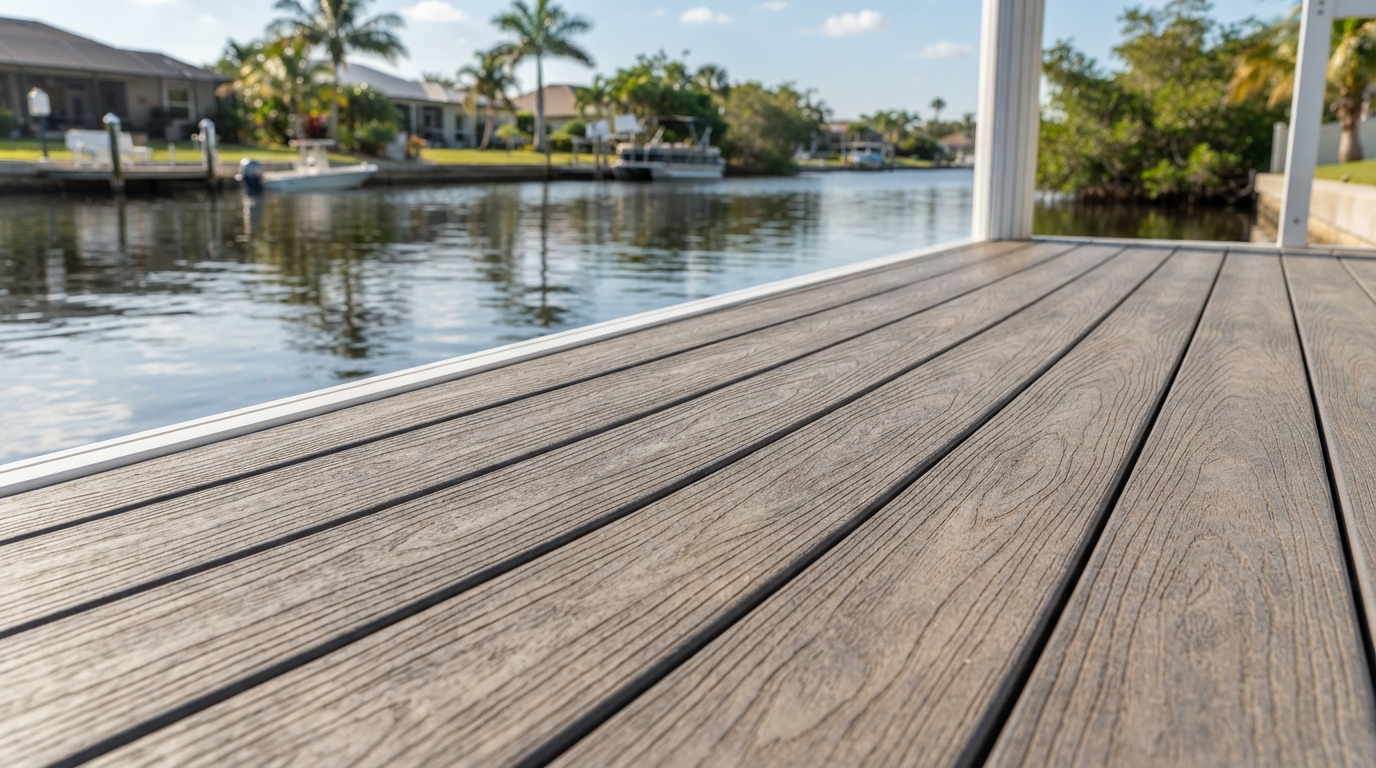
Larger platforms require more deck material, more floatation, and more connection hardware. The configuration — a single straight finger, a T-head, a U-slip, or a multi-module commercial layout — changes how the modules connect and how the loads are distributed, which affects both the material and the anchoring design.
Platform materials also vary. Composite, wood, and aluminum components each have different maintenance, weight, and exposure characteristics, and this page does not claim one is universally best or universally cheapest for a floating application.
- Larger platforms require more deck, floatation, and connection hardware
- Configuration affects module connections and load distribution
- Material choice interacts with exposure and maintenance
- No material is universally best or cheapest for floating docks
Anchoring and Piling Guide Considerations
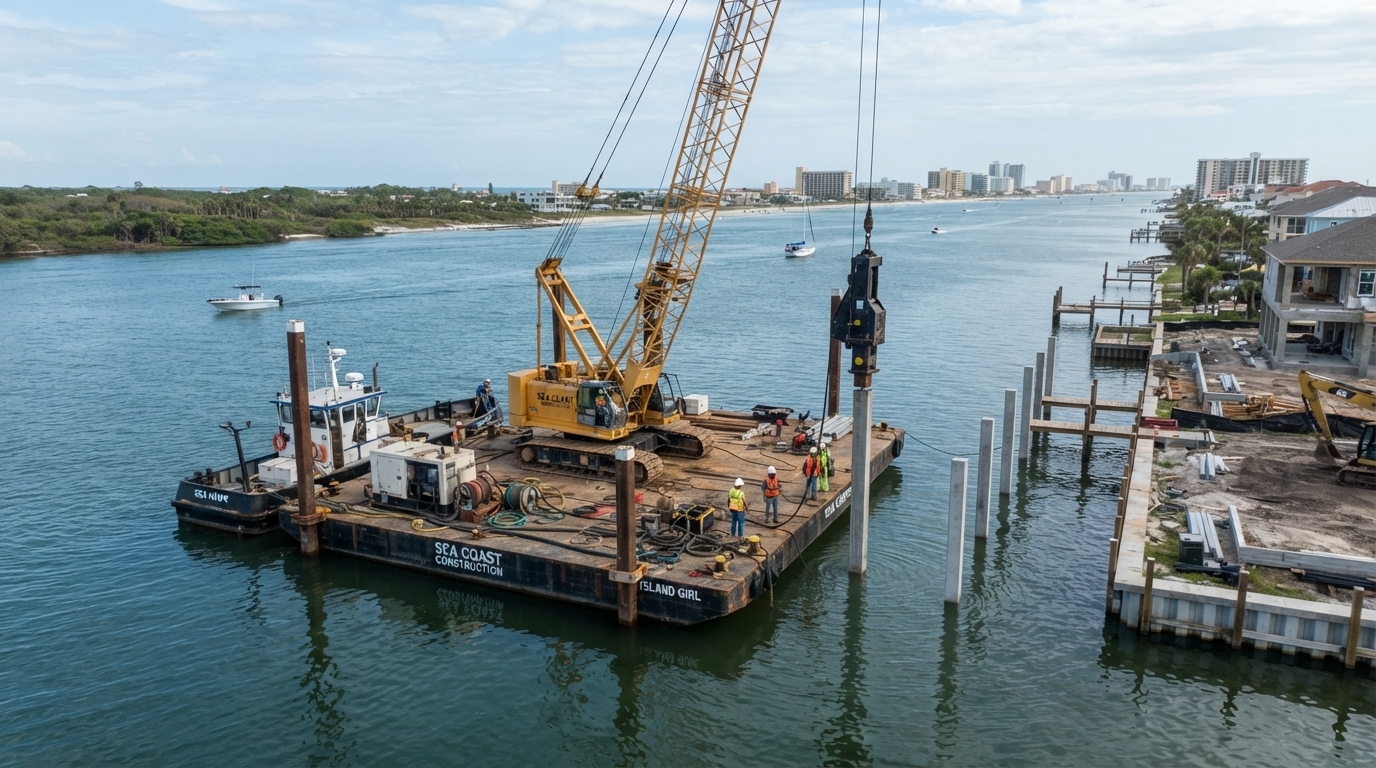
Floating docks are held in place by anchoring systems, piling guides, or a combination of both. Piling guides use pilings as sliding guides that let the platform rise and fall with the water level while restraining horizontal movement; anchoring systems use cables, chains, or anchors to hold the dock in position. The choice depends on the water depth, bottom conditions, exposure, and the site's existing structures.
This page does not claim every floating system automatically accommodates every water-level change. In sites with significant water-level variation or exposure, the anchoring or guide system must be engineered for those conditions, which can change the scope and the equipment required.
Gangways and Shoreline Access Near Daytona Beach
A gangway connects the floating platform to the shore, and its design depends on the elevation difference, the distance, and applicable access requirements. A greater elevation difference requires a longer gangway to maintain a safe slope, and the gangway and its landing are part of the floating dock system — not an optional accessory.
Shoreline access also affects installation. A site with a seawall, a fixed dock, or a constrained shoreline may require different connection hardware and staging than an open bank, which can change the work involved even when the platform is the same.
Floating Versus Fixed Dock Cost Factors
Floating and fixed docks are different systems — floating is not automatically cheaper, and the comparison depends on the site.
Floating Docks
- Rise and fall with the water level
- Scope includes floatation, connections, anchoring, gangway
- Not automatically cheaper than fixed docks
- Suitability depends on exposure and water-level change
Fixed Docks
- Pile-supported and fixed relative to the shoreline
- Scope depends on piling count, water depth, and bottom
- Not automatically more expensive than floating
- Suitability depends on the same site factors
Maintenance, Replacement and Approval Considerations
Floating docks have ongoing maintenance and eventual replacement considerations — connections, floatation, and hardware all require attention over time, and this page does not claim a floating system is stormproof or maintenance-free. Floating dock projects may also require local, state, or environmental review depending on the waterbody, anchoring method, and shoreline work. A useful estimate clarifies what is included, what is excluded, and which approvals the scope assumes.
Related Services Near Daytona Beach
Explore other marine construction topics relevant to your waterfront project.