
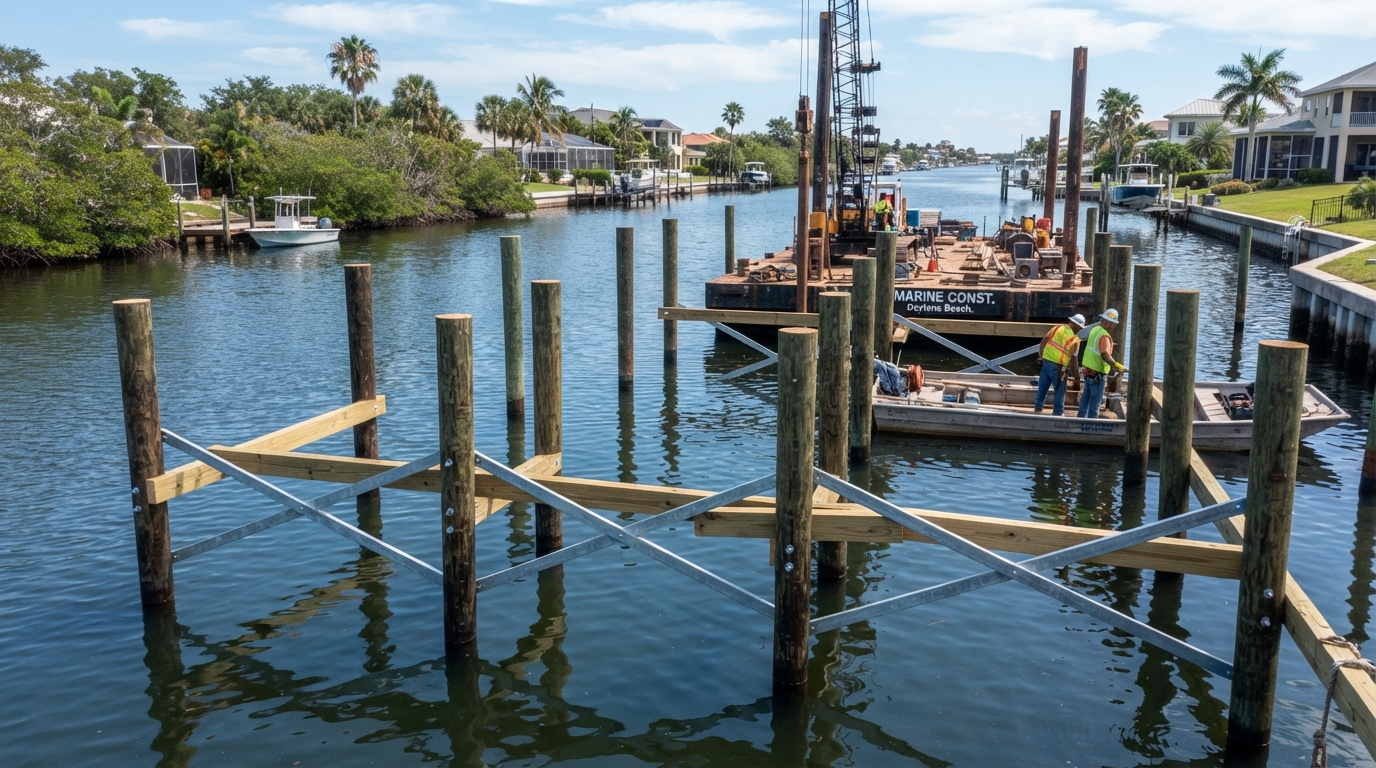
Marine Piling Installation Daytona Beach
Marine pilings are the foundation of most fixed docks, piers, and many seawall systems. This page explains the role of pilings in waterfront construction, the materials and methods involved, and the planning factors for a Daytona Beach marine piling project.
Request a Marine Construction Estimate
Share your dock, seawall, or boat lift project details and we'll review the requirements for your Daytona Beach area waterfront property.
Marine Piling Installation in Daytona Beach
A marine piling is a vertical support driven into the seabed to carry the loads of a dock, pier, boathouse, or seawall anchoring system. Along Daytona Beach waterways, pilings transfer structural loads into the soil, providing the stable foundation that the rest of the structure rests on. The appropriate piling depends on water depth, soil conditions, the structure's loads, and marine exposure.
Piling installation involves selecting a material, driving the pile to the required depth and capacity, and connecting it to the structure above. The number, spacing, and embedment of pilings are set by engineering for the site — no universal specification applies. Damaged or compromised pilings require evaluation before reuse or replacement.
- Pilings as the foundation for docks and marine structures
- Material selection for the waterbody and loads
- Water depth, soil conditions, and engineering
- Installation methods and site access
- Maintenance and replacement considerations
Marine Piling Installation in Daytona Beach
Pilings support fixed docks, piers, boathouses, and many seawall and bulkhead anchoring systems. Driven into the seabed, they carry the structure's gravity, wind, and lateral loads into the soil. Without adequate pilings, a dock or roofed structure cannot safely carry its intended loads, and a seawall's anchoring may be compromised.
The role of a piling depends on the structure it supports. A dock piling carries deck and live loads; a piling beneath a boat lift or boathouse carries greater forces; a tieback anchor piling resists the lateral pull on a seawall. Each application has different requirements, and the piling's material, size, and embedment are set accordingly.
- Vertical supports carrying structural loads into the soil
- Foundation for docks, piers, and boathouses
- Anchoring for seawall and bulkhead tiebacks
- Support for boat lifts and roofed structures
- Material, size, and embedment set by engineering
Types of Marine Pilings Near Daytona Beach
Marine pilings are available in several material categories, each suited to different conditions. No material is universally appropriate.
Treated Wood Pilings
Treated timber pilings are a common, economical choice for residential docks and piers, with proven marine performance when appropriately treated and maintained.
Concrete Pilings
Concrete pilings offer heavy-duty capacity for higher-load or more exposed installations, suited to certain commercial or engineered applications.
Engineered Piling Systems
Steel or other engineered piling systems may be used where conditions require, selected for the specific loads, soil, and exposure at the site.
Piling Installation for Dock Construction
For dock construction, pilings support the framing and deck. Several factors shape the piling layout and specification.
- Dock framing and the loads it must carry
- Water depth at the piling locations
- Soil and geotechnical conditions
- Vessel access and intended use
- Project design and marine exposure
- Engineering requirements for the site
Marine Pile Installation Methods
Pile installation methods depend on engineering, geotechnical conditions, and applicable requirements. Equipment, embedment depth, hammer energy, and installation specifications are set for the specific site and structure — this page does not prescribe particular methods or values. Installation that does not achieve the required capacity can compromise the entire structure, so methods should be determined by qualified professionals for the project.
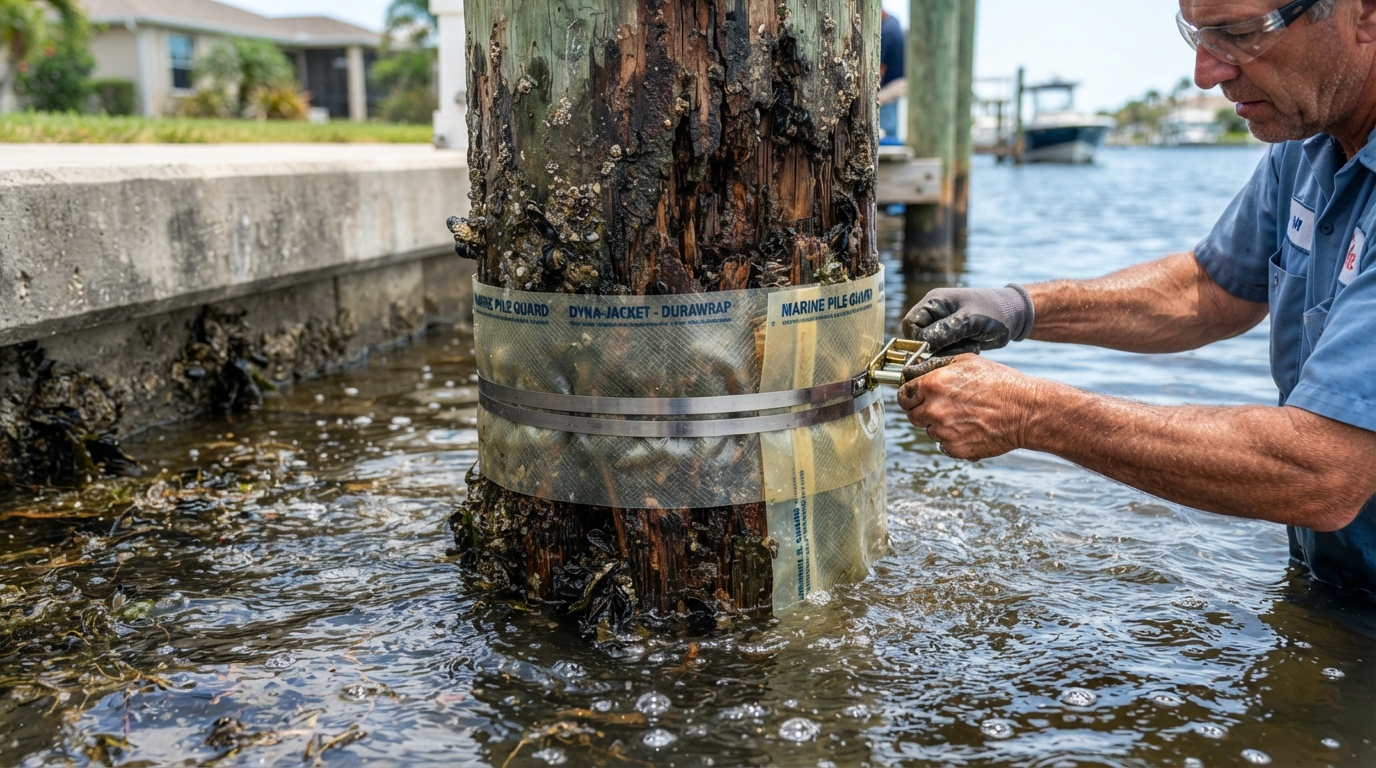
Replacing Damaged Marine Pilings
Deteriorated or compromised pilings require evaluation before reuse or replacement. A piling that has decayed at the waterline, moved, or cracked may not carry its intended load, and reusing it could compromise the structure. Where a piling is damaged, replacement may be necessary rather than repair.
Replacing a piling involves removing or working around the damaged pile, driving a new one, and reconnecting the structure above. The new piling's material, size, and embedment are set for the current loads and conditions, which may differ from the original. Qualified evaluation determines whether a damaged piling can remain or must be replaced.
- Evaluation of deteriorated or compromised pilings
- Decay, movement, or cracking at the waterline
- Replacement where a piling cannot carry its load
- New piling set for current loads and conditions
- Reconnection of the structure above
Piling Installation for Boat Lift Systems
Pilings that support a boat lift carry greater forces than ordinary dock pilings. Lift support requirements differ from general dock access.
- Lift loads in addition to dock loads
- Vessel weight and lift capacity
- Mounting and bracket compatibility
- Piling condition and capacity
- Manufacturer specifications for the lift
Waterfront Access & Construction Logistics
Piling installation may require equipment access from land or water. Several factors shape the approach.
- Equipment access from land or by barge
- Shoreline constraints and adjacent structures
- Water depth for any water-based equipment
- Environmental review where applicable
- Scheduling around waterfront use
- Protection of adjacent improvements
Related Services Near Daytona Beach
Explore other marine construction topics relevant to your waterfront project.