
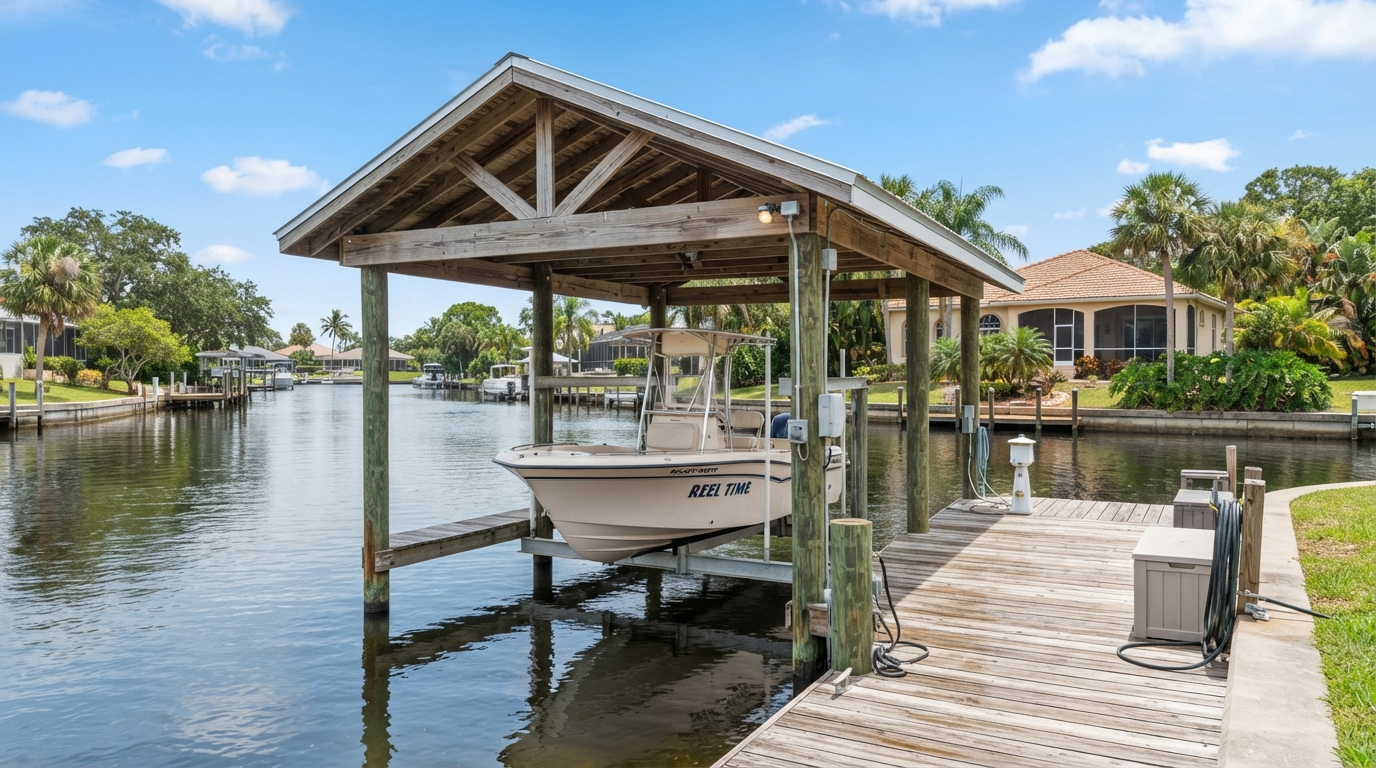
St. Johns River Home Dock Construction & Installation Daytona Beach
The St. Johns River is a separate inland river system, not Atlantic beachfront or Mosquito Lagoon. This page explains dock construction for St. Johns River homes in the greater Daytona Beach service area, the variable water levels and flow that shape riverfront planning, and why no single river dock design suits every property.
Request a Marine Construction Estimate
Share your dock, seawall, or boat lift project details and we'll review the requirements for your Daytona Beach area waterfront property.
Dock Construction for St. Johns River Homes
Riverfront docks along the St. Johns River face conditions that differ from coastal or canal settings: variable water levels, seasonal changes, flow and current, floating debris, and bank elevation that can vary significantly from parcel to parcel. A dock that works at one river property may not suit another, and the design depends on the actual frontage, water depth, and bank conditions.
Not every community in the St. Johns marketing groups has direct river frontage. The zone labels are marketing groupings, not guarantees that every property fronts the river. For any specific property, waterbody frontage, access, parcel conditions, and issuing authorities must be verified before design or regulatory statements are made.
- Variable water levels and seasonal changes
- Flow, current, and floating debris
- Bank elevation and shoreline stability
- Water depth and boat draft
- Fixed versus floating configurations
- Piling and foundation choices
- Dock length and vessel mooring
Riverfront Dock Planning in the Greater Daytona Beach Service Area
Daytona Beach is the business service base, and the St. Johns River is a separate inland river system. Riverfront dock planning in this service area considers the actual property frontage, water levels, flow, and bank conditions at the parcel — not assumptions drawn from coastal or lagoon settings. The river is not Atlantic beachfront, Daytona Beach oceanfront, or Mosquito Lagoon, and it should not be described as any of those.
Fixed Versus Floating Docks for River Properties
Fixed and floating docks behave differently under variable river levels and flow. Neither is automatically better; the choice depends on the site.
Fixed Docks
- Stable platform set to river conditions
- Pilings driven into the river bottom
- Height must account for water-level range
- May suit stable banks and consistent depth
- Exposed to flow and debris loads
Floating Docks
- Rise and fall with changing river level
- Maintain consistent freeboard for access
- Gangway evaluated for slope over the range
- May suit fluctuating water levels
- Anchoring or guides assessed for flow
Changing Water Levels and River Access
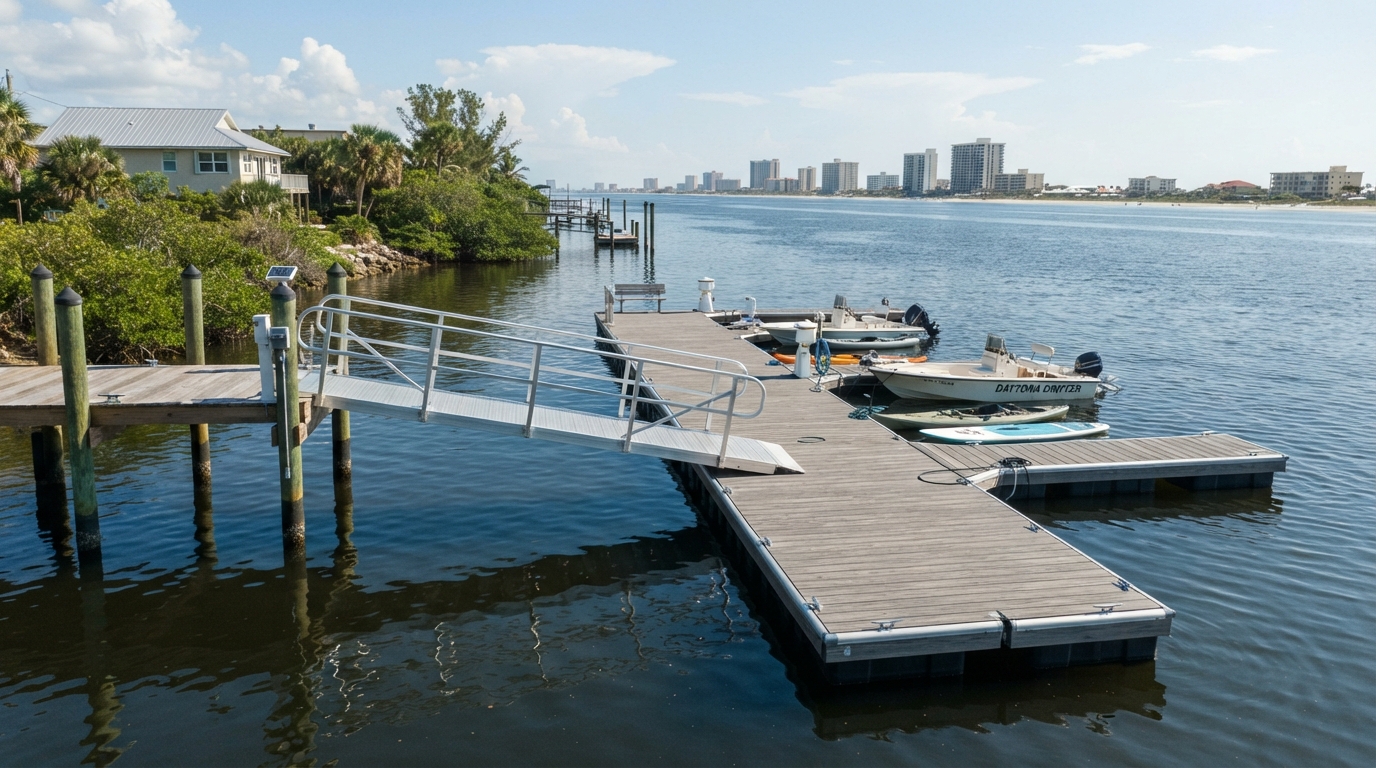
The St. Johns River experiences variable water levels and seasonal changes that can significantly affect dock access. A dock built for one water level may be too high or too low at another, affecting boarding, mooring, and vessel clearance. Floating docks can maintain consistent freeboard as levels change; fixed docks are set to a specific height and must account for the full range.
Floating docks do not automatically perform better during flooding, and fixed docks are not inherently more storm-resistant or structurally safe. Site-specific design depends on the water-level range, flow conditions, bank configuration, and vessel use, evaluated by a qualified professional.
- Water-level range at the property across seasons
- Effect of high and low water on access and clearance
- Floating versus fixed behavior under changing levels
- Gangway slope and access over the range
- No automatic flood or storm-performance advantage
Piling, Foundations and Shoreline Conditions
River pilings and foundations face flow, debris, and variable bottom conditions. The shoreline and bank elevation shape the whole layout.
- Piling embedment and capacity in river bottom conditions
- Flow and current loads on pilings and framing
- Bank elevation and the path from home to dock
- Shoreline stability and erosion considerations
- Debris impact on pilings and the dock structure
Boat Lift and Mooring Considerations
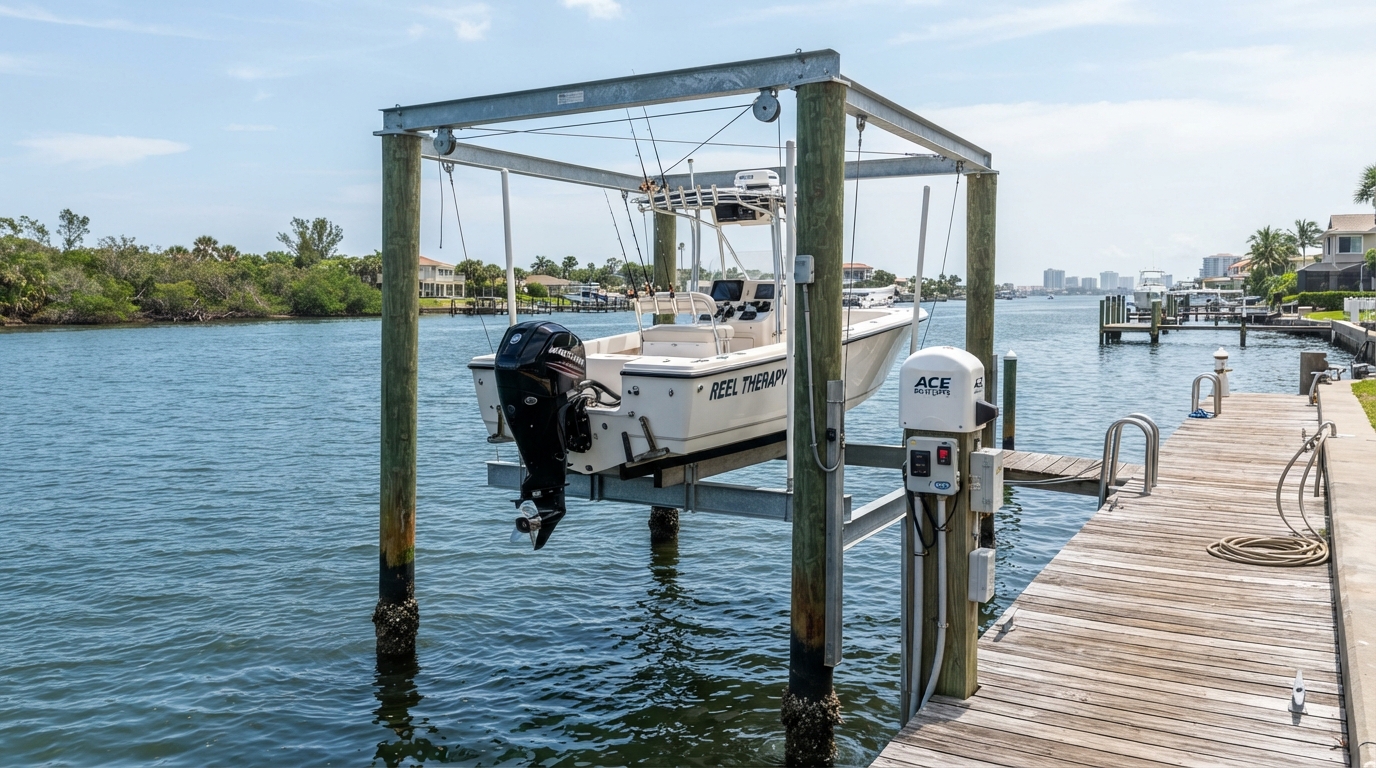
A boat lift can be included with a river dock where the structure, water depth, and vessel support it, but river conditions add considerations. Variable water levels affect lift operation and clearance, and flow and debris can affect the vessel at rest. Lift selection follows current manufacturer documentation and qualified design review, and the dock or independent lift pilings must carry the combined load.
Mooring arrangements must account for current, wind, and debris. A river dock's mooring loads differ from those in calm canal or Intracoastal settings, and the connections and cleats are sized accordingly.
- Lift compatibility with the vessel and water depth
- Variable water levels affecting lift operation
- Flow and debris effects on a vessel at rest
- Mooring loads from current and wind
- Dock or independent lift piling capacity
Site Access and Environmental Review
River dock construction may require access by land or water, and equipment access can be constrained by bank conditions and the river itself. Applicable review may involve local requirements, state environmental review, submerged-lands considerations, and habitat protections depending on the parcel and scope. A river dock is not automatically exempt from permitting, and a neighboring property's approval does not establish the same rights for another parcel. Project-specific determinations are referred to the appropriate authority and qualified professionals.
Related Services Near Daytona Beach
Explore other marine construction topics relevant to your waterfront project.