
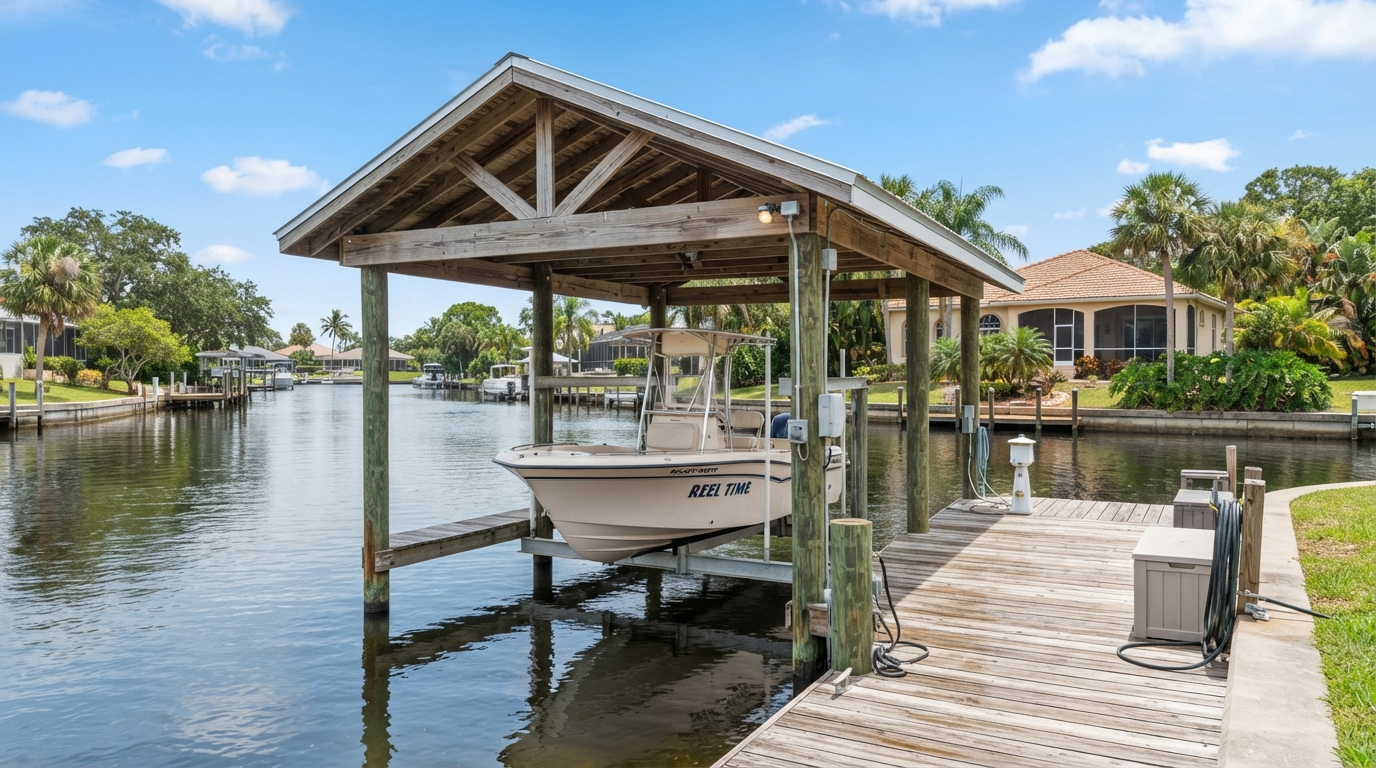
Fixed Dock Construction & Installation Daytona Beach
A fixed dock is a rigid, pile-supported platform that stays at a constant height regardless of water level. This page explains how fixed docks are built, where they are appropriate, and the materials and planning considerations involved in a Daytona Beach fixed dock project.
Request a Marine Construction Estimate
Share your dock, seawall, or boat lift project details and we'll review the requirements for your Daytona Beach area waterfront property.
Fixed Dock Construction & Installation in Daytona Beach
A fixed dock is supported by marine pilings driven into the seabed and framed with structural lumber, composite, or other materials to form a steady platform. Unlike a floating dock, a fixed dock stays at a constant height above the water, providing a rigid, stable surface for walking, fishing, and vessel access. Along Daytona Beach waterways, fixed docks suit moderate, stable water levels where a steady deck surface is preferred.
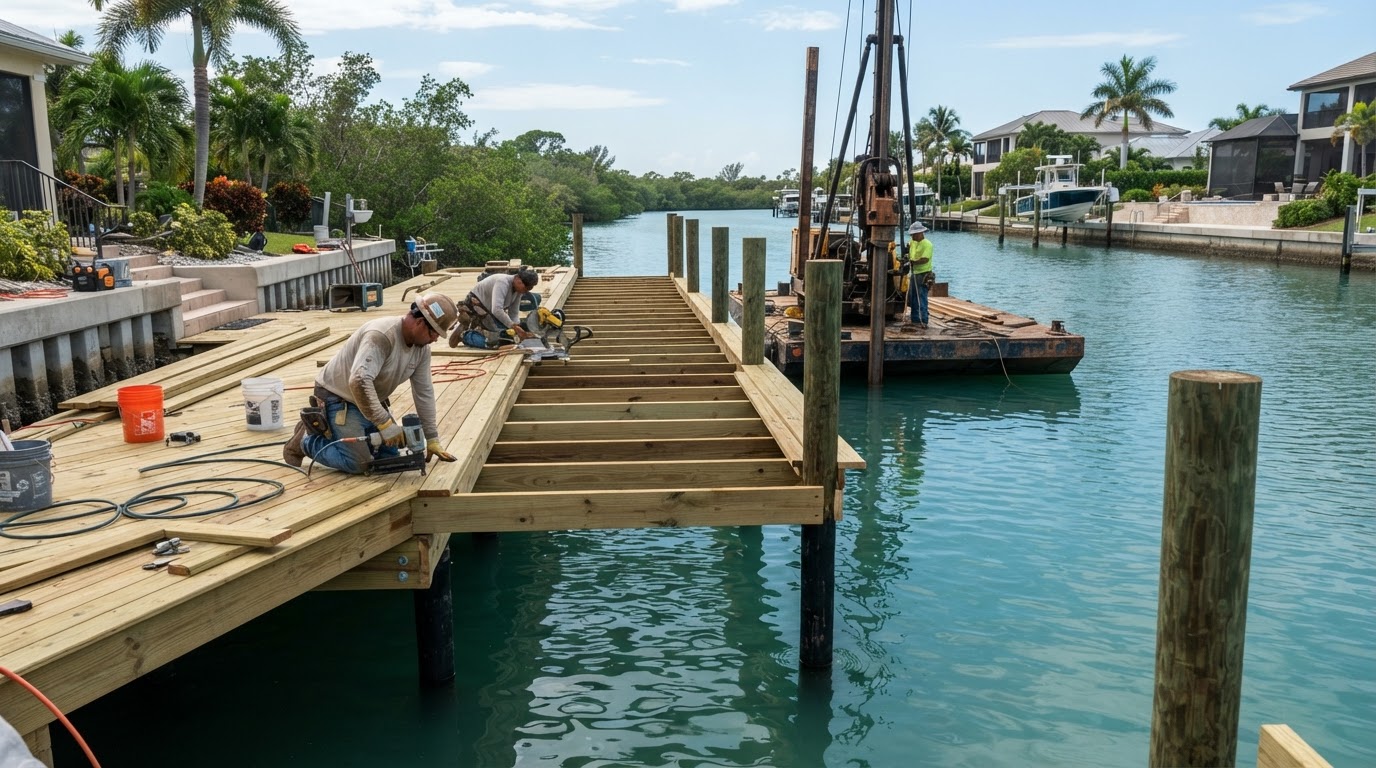
Fixed dock construction involves driving pilings, installing structural framing and cross-bracing, laying decking, and adding hardware, connections, and access features. Each component is selected for water depth, soil conditions, vessel use, and marine exposure. No universal structural specification applies — the appropriate design depends on the site.
- Marine pilings and pile-supported framing
- Decking, hardware, and corrosion-resistant connections
- Water depth and water-level considerations
- Vessel use and shoreline access
- Engineering and permit considerations
Pile-Supported Dock Construction Near Daytona Beach
A fixed dock rests on marine pilings driven into the seabed, with structural framing spanning between piles to support the deck. Pilings transfer the dock's load into the soil, while cross-bracing and connections keep the frame rigid against wind, current, and wave action. Decking and hardware complete the walking surface.
The number, spacing, and embedment of pilings depend on water depth, soil conditions, the dock's intended load, and engineering requirements. A dock built for foot traffic differs from one supporting a boat lift or a roofed structure. Each element is sized for the site — no universal specification applies.
- Marine pilings driven for stable foundation support
- Structural framing and cross-bracing for rigidity
- Decking selected for exposure and intended use
- Corrosion-resistant hardware and connections
- Access features such as ladders, cleats, and bumpers
Fixed Dock Applications for Waterfront Properties
Fixed docks suit a range of recreational and access uses. Suitability depends on water depth, water-level stability, and intended use.
- Recreational boating access on moderate, stable water levels
- Fishing access from a steady platform
- Waterfront properties with consistent water depth
- Sites where a rigid, constant-height deck is preferred
- Integration with boat lifts, roofs, and accessories
- Shoreline access where pilings can be driven
Fixed Dock Materials in Daytona Beach
Fixed docks can be built from several materials, each with different maintenance and exposure considerations.
Wood Framing & Decking
Treated wood offers a traditional look and proven marine performance, with periodic maintenance to address weathering and wear in a saltwater environment.
Composite Decking
Composite decking resists rot and splintering with less upkeep than wood, suiting owners who want a lower-maintenance walking surface on a fixed dock.
Structural Components
Corrosion-resistant hardware, fasteners, and connections protect the structural integrity of the frame against marine exposure over time.
Fixed Dock Elevation & Water-Level Considerations
Because a fixed dock stays at a constant height, water depth and water-level variation directly influence the deck elevation and access. A dock set too high can make boarding a vessel difficult at low water; one set too low may sit close to the water at high levels. The right elevation balances access across the range of water levels at the site.
On waterways with significant tidal or seasonal variation, the gap between the fixed deck and the water changes throughout the day or year. This affects gangway slope, boarding, and lift operation. Where variation is large, a floating dock may be worth considering alongside a fixed structure.
- Deck elevation set for the range of water levels
- Access and boarding considerations at high and low water
- Gangway slope and connection height
- Boat lift compatibility with fixed framing
Fixed vs. Floating Docks Near Daytona Beach
Fixed and floating docks serve water access in different ways. The right choice depends on water depth, water-level variation, and intended use.
Fixed Dock
- Pile-supported, rigid platform
- Stays at a constant height regardless of water level
- Suited to moderate, stable water levels
- Preferred where a steady deck surface matters
Floating Dock
- Rises and falls with the water
- Deck stays at a consistent height relative to water
- Suited to deeper water and greater tidal variation
- Adapts to changing water levels
Existing Fixed Dock Repair & Replacement
Common fixed dock concerns involve decking, framing, pilings, and structural connections. The appropriate response depends on the condition of each component.
- Deteriorating or damaged decking boards
- Loose, corroded, or failed hardware and connections
- Damaged structural framing or cross-bracing
- Piling movement, deterioration, or compromise
- Storm-related damage requiring qualified assessment
- Decisions between targeted repair and full replacement
Planning Fixed Dock Construction
A fixed dock project involves site access, vessel use, shoreline conditions, water depth, engineering, and permit considerations specific to the waterbody. Pilings on certain waterways may involve environmental or sovereign submerged lands review. Project-specific determinations should be referred to the appropriate authority and qualified professionals rather than assumed from general guidance.
Related Services Near Daytona Beach
Explore other marine construction topics relevant to your waterfront project.