
Wood, Composite & Aluminum Dock Materials Guide Daytona Beach
Choosing dock materials means comparing decking surfaces, structural framing, and hardware — and understanding that no single material is universally best for every waterfront. This guide compares wood, composite, and aluminum dock materials for Daytona Beach properties, explains how decking differs from structural support, and avoids inventing universal lifespans, slip-resistance ratings, or temperature guarantees.
Request a Marine Construction Estimate
Share your dock, seawall, or boat lift project details and we'll review the requirements for your Daytona Beach area waterfront property.
Dock Material Options in Daytona Beach
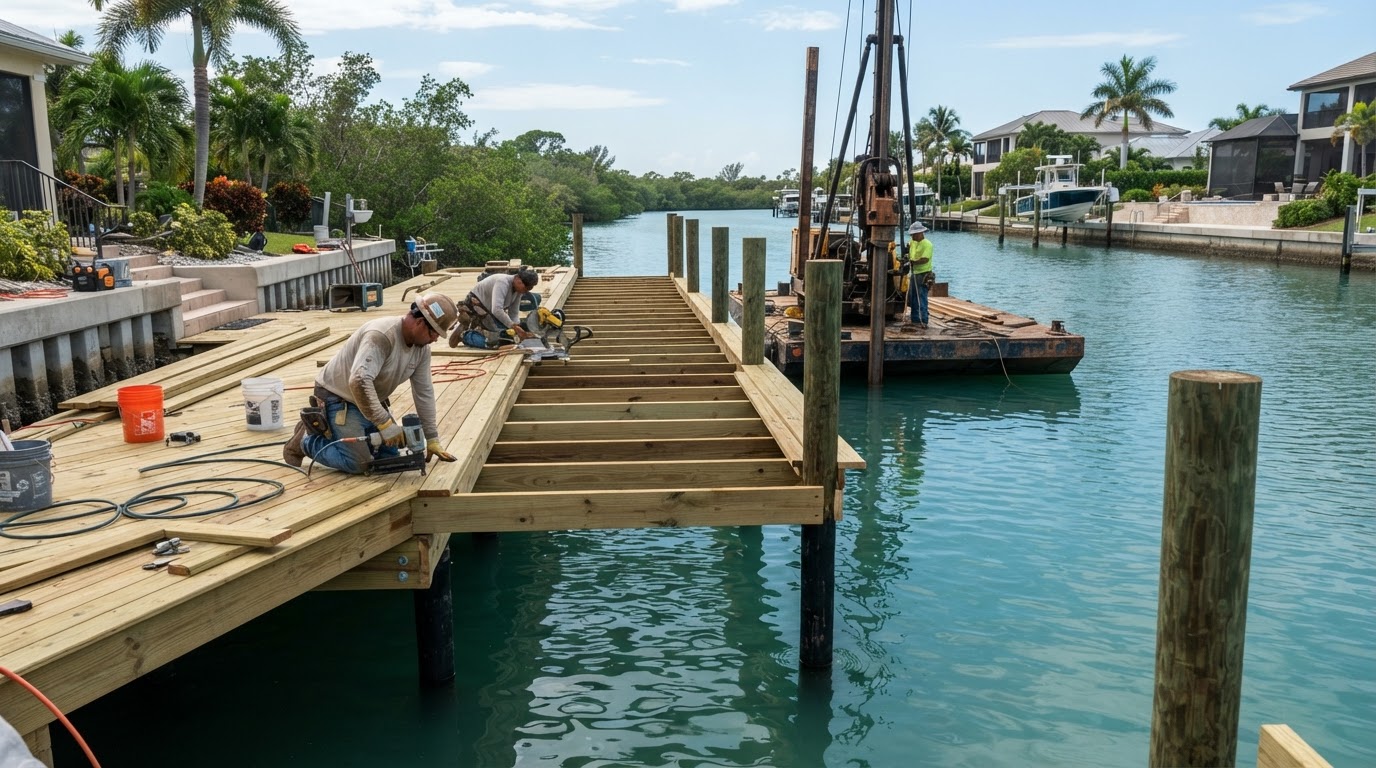
Dock material selection is not a single decision. The decking surface people walk on, the framing that supports it, and the pilings or floats that hold it up are often different materials chosen for different reasons. A useful comparison separates these layers rather than treating "dock material" as one choice.
This page compares wood, composite, and aluminum as common dock materials and explains the considerations that affect which may suit a specific waterfront in Daytona Beach. It does not claim that one material is always best, does not invent universal lifespans, and does not publish unsupported slip-resistance or temperature-performance guarantees. Product-specific performance should be verified against current manufacturer documentation.
- Decking surfaces versus structural framing
- Wood, composite, and aluminum characteristics
- Maintenance and exposure tradeoffs
- Fastener and framing compatibility
- Fixed and floating dock considerations
- Why no single material is universally best
Wood Dock Decking Considerations
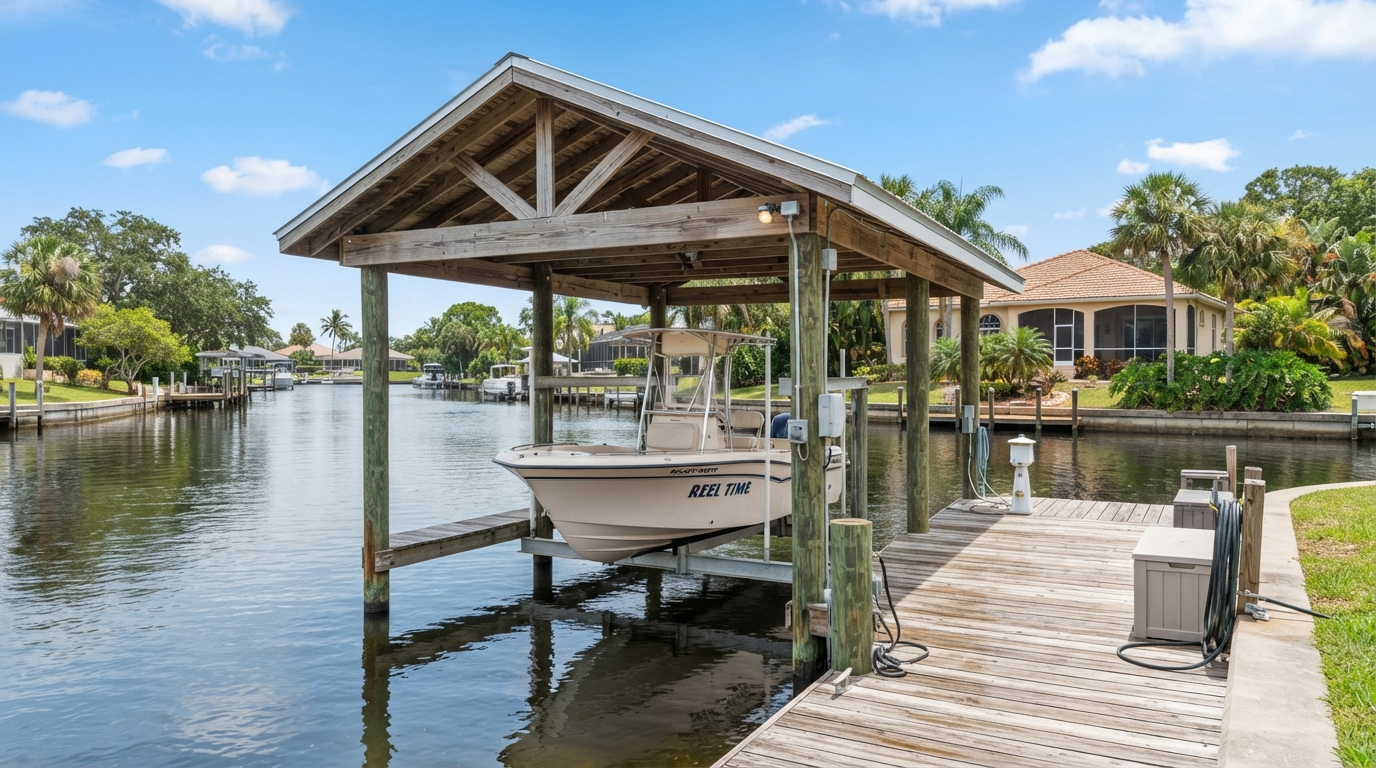
Wood is a traditional dock decking and structural material. Its appearance, maintenance needs, and longevity depend on the wood species, treatment, fasteners, and exposure. Wood decking can be repaired board by board, which some owners value, but it generally requires more ongoing attention than some alternative materials on exposed saltwater sites.
This page does not claim that wood is always the least expensive option or that it is always inferior to composite. The practical comparison depends on the species, the installation, and the owner's maintenance expectations. Wood's suitability for a specific dock is a site-specific question, not a universal one.
- Appearance and maintenance depend on species and treatment
- Board-by-board repair is possible where framing is sound
- Wood generally needs more ongoing attention on exposed sites
- Cost comparisons depend on species and installation, not a universal rule
Composite Dock Decking Near Daytona Beach
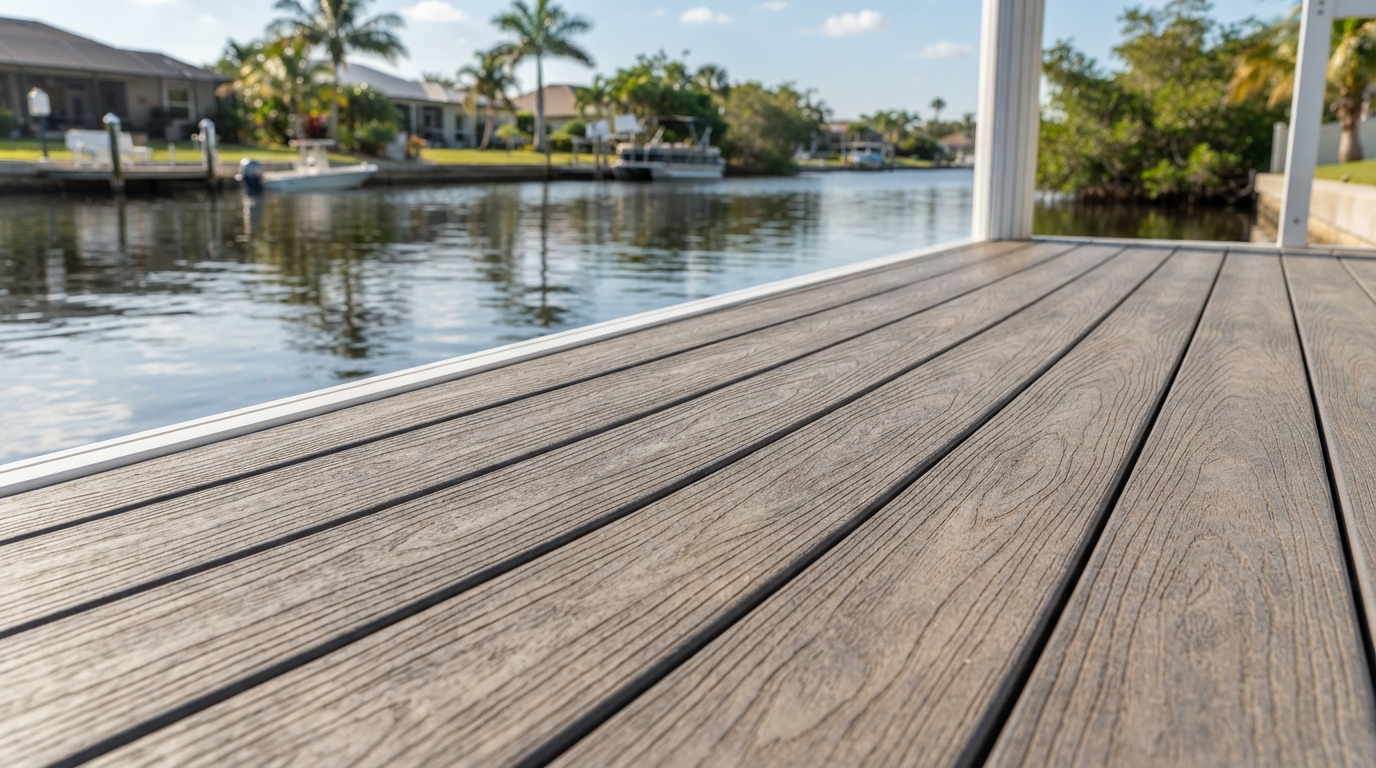
Composite decking is manufactured from a blend of materials and is marketed for lower maintenance and consistent appearance. Not all composite products have the same composition, and this page does not imply that every composite board performs identically. Installation requirements — including fastener type, spacing, and framing compatibility — vary by product and should follow the manufacturer's documentation.
Composite is not maintenance-free, and this page does not claim that composite "lasts forever." Whether composite is appropriate for a given dock depends on the product, the framing, the exposure, and the manufacturer's installation requirements. Product-specific performance should be verified against current manufacturer documentation rather than general assumptions.
- Composite is marketed for lower maintenance and consistent appearance
- Not all composite products have the same composition or performance
- Installation requirements vary by product and follow manufacturer docs
- Composite is not maintenance-free and does not "last forever"
Aluminum Dock Components and Applications
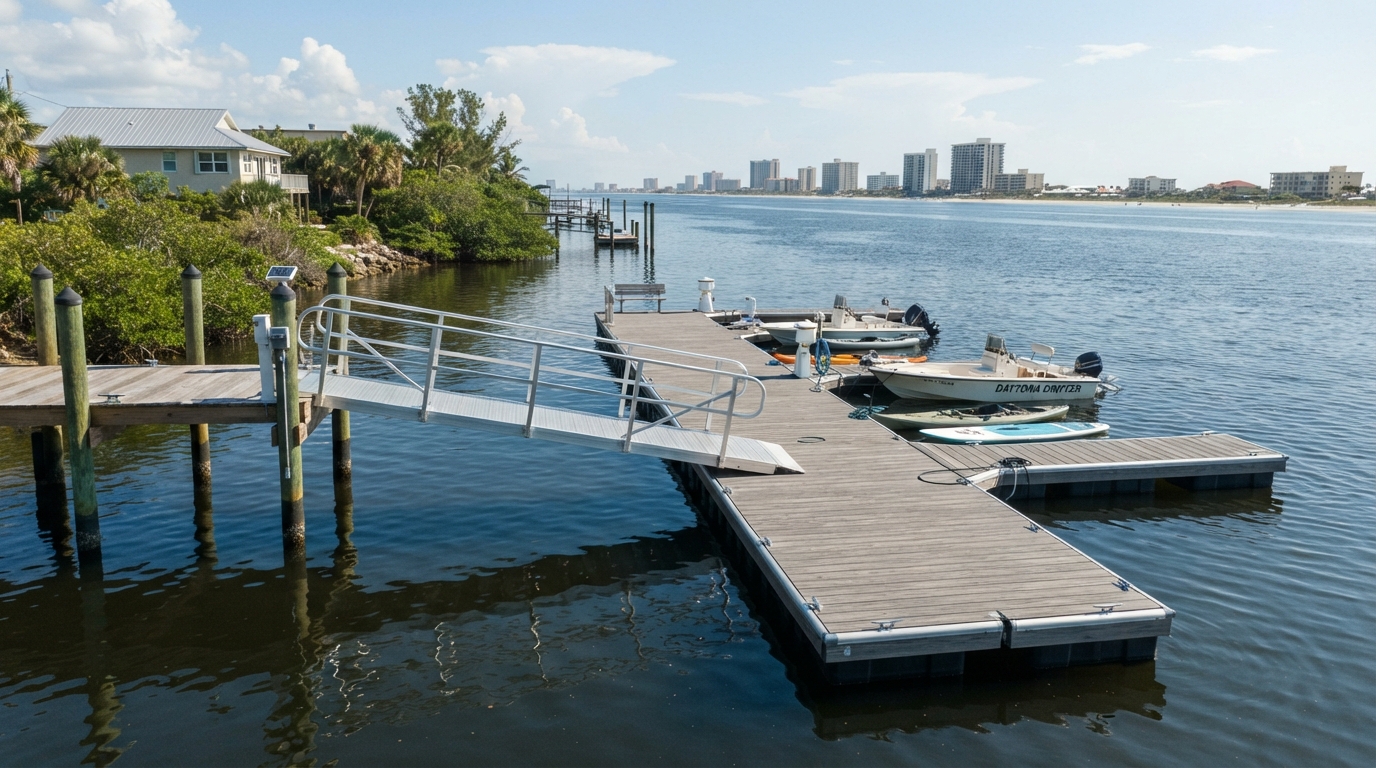
Aluminum is used in dock framing, decking surfaces, gangways, and accessory components, and is valued for its strength-to-weight ratio and corrosion resistance in marine environments. Aluminum components are not corrosion-proof, however — galvanic interaction with dissimilar metals and certain water conditions can affect them. This page does not claim that aluminum never corrodes.
Aluminum is one option among several, and whether it suits a specific dock depends on the application, the fasteners used, the waterbody, and the structural design. Mixing aluminum with incompatible metals or fasteners can create galvanic concerns, so material compatibility is part of the selection, not an afterthought.
- Aluminum is valued for strength-to-weight ratio and marine corrosion resistance
- Aluminum is not corrosion-proof — galvanic interaction can affect it
- Material and fastener compatibility matters in mixed-metal assemblies
- Suitability depends on application, waterbody, and structural design
Decking Materials Versus Structural Materials
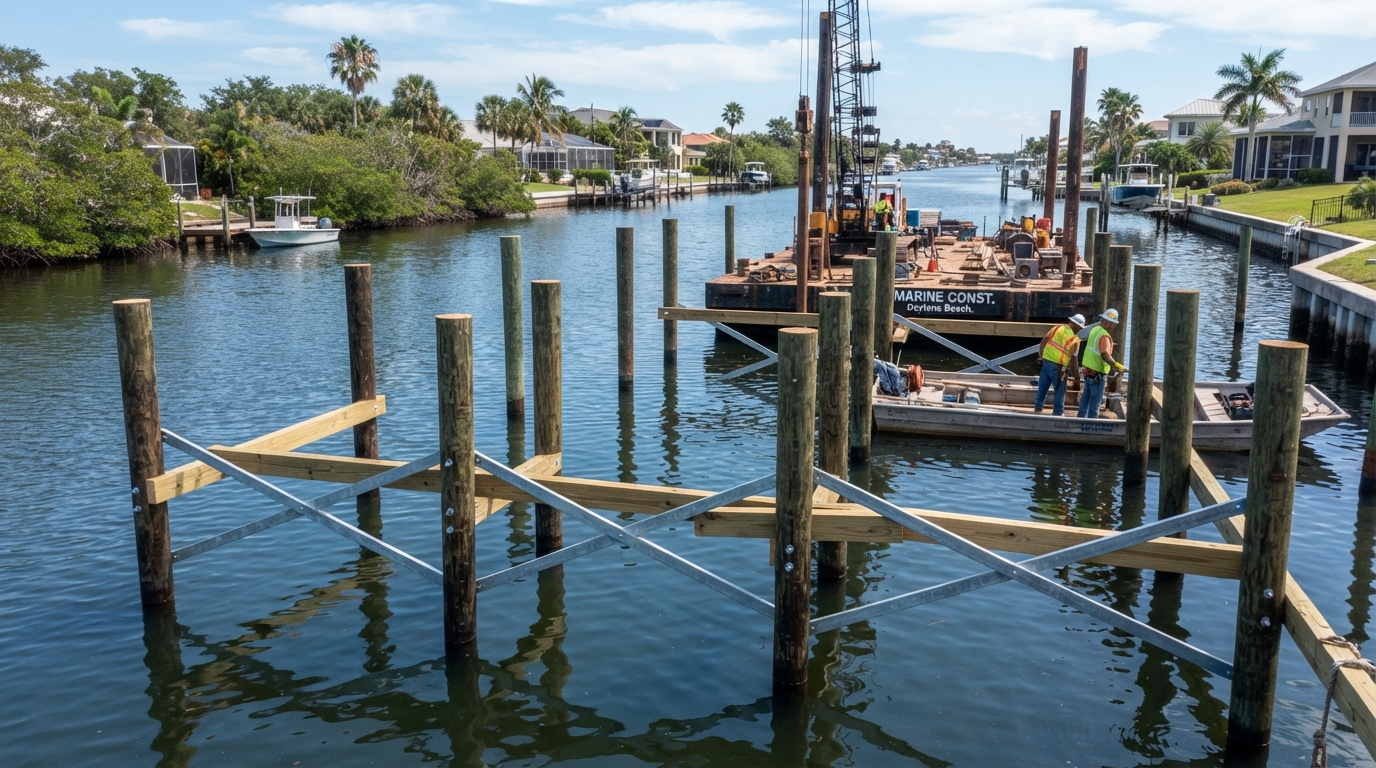
A common source of confusion is treating the decking surface and the structural support as the same choice. They are not. A dock might have composite decking over wood framing, or aluminum framing with wood decking, or any combination. The decking determines the walking surface and its maintenance; the framing and pilings determine the structure and its capacity. Comparing materials usefully means comparing each layer for its role, not collapsing them into a single "dock material" decision. This page does not recommend a specific combination without site-specific consideration.
Maintenance and Exposure Tradeoffs
Each material involves tradeoffs among appearance, maintenance, exposure, and installation.
Maintenance Expectations
- Wood generally needs the most ongoing attention on exposed sites
- Composite is marketed for lower maintenance but is not maintenance-free
- Aluminum framing typically needs less surface maintenance than wood
- All materials require observation for fastener and connection condition
Exposure Considerations
- Saltwater accelerates corrosion of metal fasteners and components
- Sun exposure affects surface temperature and appearance over time
- Moisture and drainage affect wood and some composites differently
- No material is immune to marine exposure
Choosing Materials for Fixed and Floating Docks
Fixed docks and floating docks use materials differently. A fixed dock's structure rests on pilings, so piling material and condition drive its longevity, while the decking and framing are replaceable layers above. A floating dock's structure includes floats and framing that move with water levels, so connection and guide hardware wear is a key consideration alongside the decking surface.
This page does not recommend a specific material for fixed versus floating docks without knowing the site, vessel use, waterbody, and budget. The practical approach is to compare materials for each layer of the dock and to verify product-specific performance against current manufacturer documentation before deciding.
- Fixed docks: piling material and condition drive longevity
- Floating docks: connection and guide hardware wear is a key concern
- Compare materials for each layer, not as a single choice
- Verify product-specific performance against manufacturer documentation
Related Services Near Daytona Beach
Explore other marine construction topics relevant to your waterfront project.