
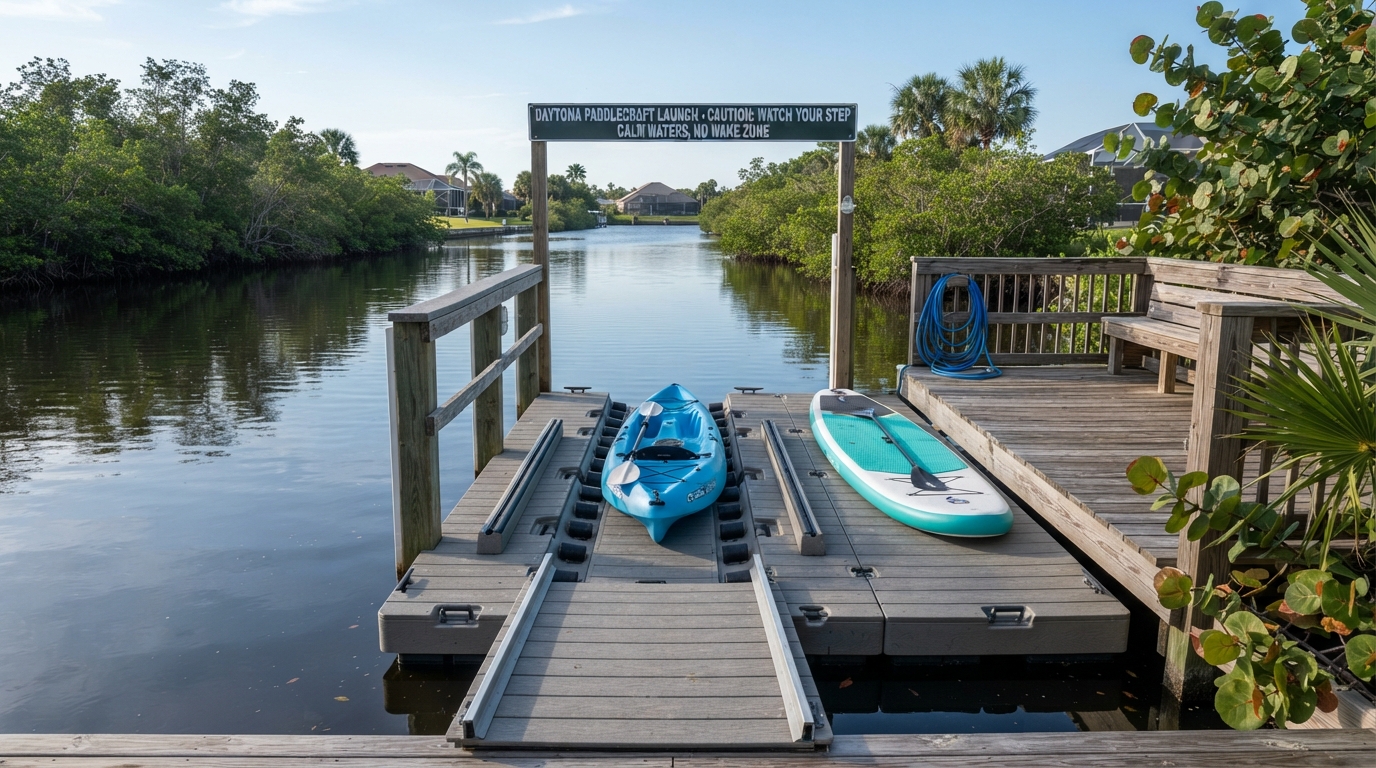
Shallow-Water Dock Construction & Installation Daytona Beach
Shallow water, changing water levels, soft bottoms, and sensitive habitat can all shape whether and how a dock works at a given property. This page explains shallow-water dock planning in the Daytona Beach service area, including considerations relevant to Mosquito Lagoon — a distinct waterbody south of the Daytona Beach core — and why a dock cannot always extend into deeper water.
Request a Marine Construction Estimate
Share your dock, seawall, or boat lift project details and we'll review the requirements for your Daytona Beach area waterfront property.
Planning Shallow-Water Docks in Daytona Beach
Shallow-water dock planning starts with the actual conditions at the property: water depth at the proposed dock location, seasonal or tidal changes, vessel draft, bottom conditions, and the shoreline access available from land. These factors interact, and a configuration that works at one property may not work at another even within the same waterbody.
Mosquito Lagoon is a distinct shallow estuarine waterbody south of the Daytona Beach core. Not every property in the broader Indian River North and Mosquito Lagoon marketing zone directly fronts the lagoon, and conditions vary widely. This page addresses shallow-water considerations generally and notes lagoon-specific context where relevant, without assuming the same habitat or depth at every parcel.
- Water depth at the proposed dock location
- Seasonal or tidal water-level changes
- Vessel draft and bottom conditions
- Shoreline access from land
- Fixed versus floating configurations
- Sensitive aquatic habitat where present
- Environmental review and authorization
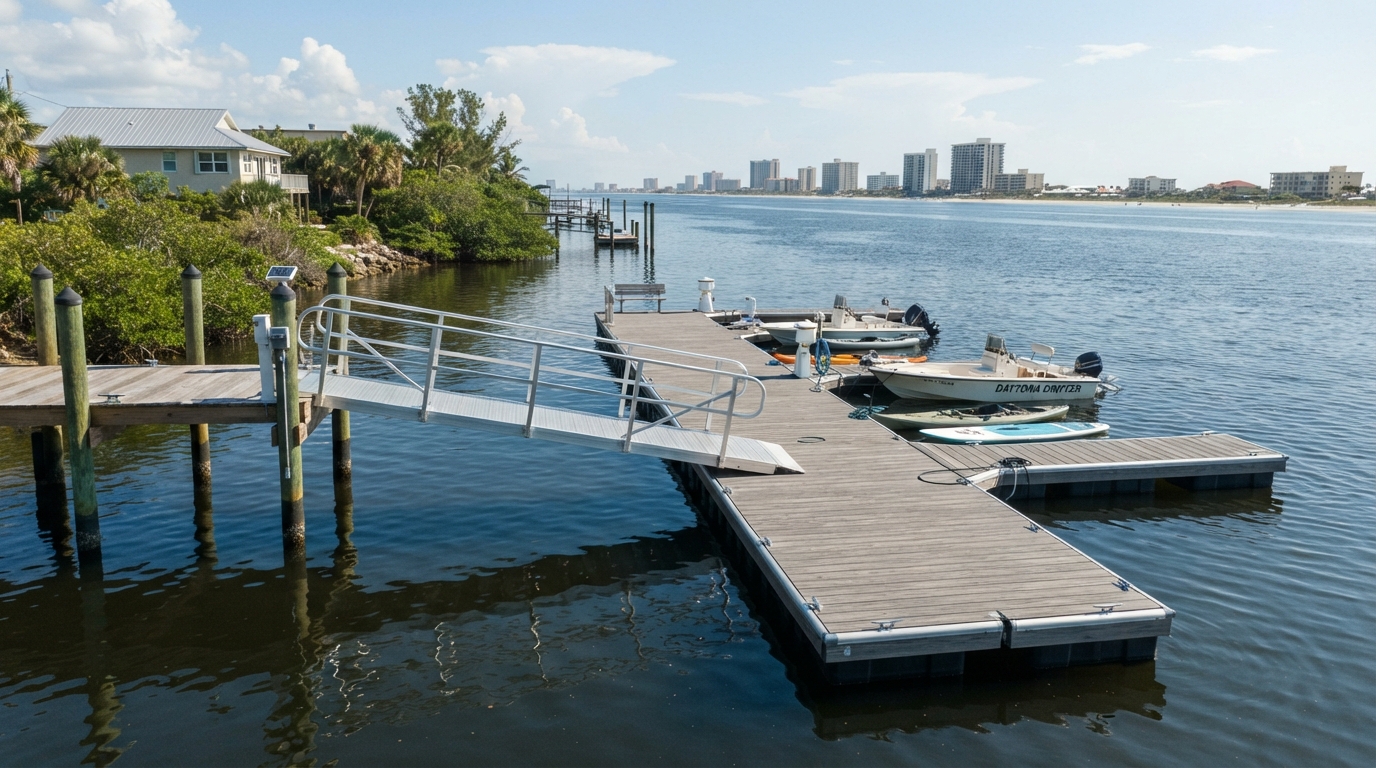
Dock Construction Considerations Near Mosquito Lagoon
Mosquito Lagoon is known for shallow water, seagrass, oyster habitat, and protected-species considerations. Where a property genuinely fronts the lagoon, those conditions can directly affect dock design, height, placement, and the review required. The lagoon is a separate waterbody from the Atlantic beachfront and from inland freshwater settings, and it should not be treated as interchangeable with either.
Not every property marketed within the Indian River North and Mosquito Lagoon zone directly fronts the lagoon. Some parcels front canals, the Intracoastal, or other waters with different depth and habitat. The actual frontage and waterbody at a specific parcel must be verified before any design or regulatory statements are made.
- Lagoon-front properties may face shallow depth and sensitive habitat
- Seagrass and oyster habitat are site-specific, not universal
- Manatee and protected-species considerations may apply where relevant
- Canal or Intracoastal frontage differs from open lagoon frontage
- Actual parcel frontage must be verified before planning
How Water Depth and Boat Draft Affect Dock Planning
Depth and draft together determine whether a vessel can reach and rest at the dock. Shallow water does not automatically mean a dock is impossible, but it constrains the options.
- Depth at the proposed dock location and along the approach
- Seasonal or tidal low-water conditions
- Vessel draft at normal and loaded conditions
- Bottom conditions that may affect piling placement
- Whether a floating dock can rise and fall with water level
- Whether a fixed dock height suits the vessel and the water level
Fixed Versus Floating Docks in Shallow Water
Fixed and floating systems behave differently in shallow, changing water. Neither is universally better; the choice depends on the site.
Fixed Docks
- Stable platform height set to water conditions
- Pilings driven into the bottom for support
- Height must account for low-water draft access
- May suit deeper, more stable water
- Bottom conditions affect piling feasibility
Floating Docks
- Rise and fall with changing water level
- Can maintain consistent freeboard in shallow water
- Anchoring or piling guides assessed for the site
- May suit shallow, fluctuating water
- Gangway access evaluated for slope and length
Environmental Sensitivities and Waterfront Habitat
Seagrass, oyster habitat, and protected-species considerations are site-specific. They are issues to verify, not assumptions to apply everywhere.
Seagrass & Oyster Habitat
Where seagrass or oyster habitat is present, dock placement, shading, and piling location may be constrained. These conditions are verified at the specific parcel, not assumed from the region.
Protected Species
Manatee and other protected-species considerations may apply in certain waters. Where relevant, they can affect construction timing, materials, or design and require agency review.
Water Quality
Construction in shallow, sensitive water may involve turbidity and habitat protections. Methods and controls depend on the site and applicable authorizations.
Bottom Conditions
Soft or shifting bottom conditions can affect piling support and dock stability. Bottom conditions are evaluated as part of feasibility, not assumed.
Site Access and Marine Construction Equipment
Shallow water can limit the equipment that can reach a site. Barge or pile-driving access may be constrained by depth, and land access may be the alternative at some properties. Equipment access is part of feasibility planning, not an afterthought.
A dock cannot always be extended into deeper water to solve a shallow-water problem. Extension may affect navigation, habitat, or exceed what applicable review allows. Dredging or habitat removal is not a routine solution to insufficient depth.
- Water depth limits on barge or equipment access
- Land access as an alternative where water access is constrained
- Whether extension into deeper water is feasible or allowable
- Navigation and adjacent waterfront uses
- Applicable permitting and environmental review
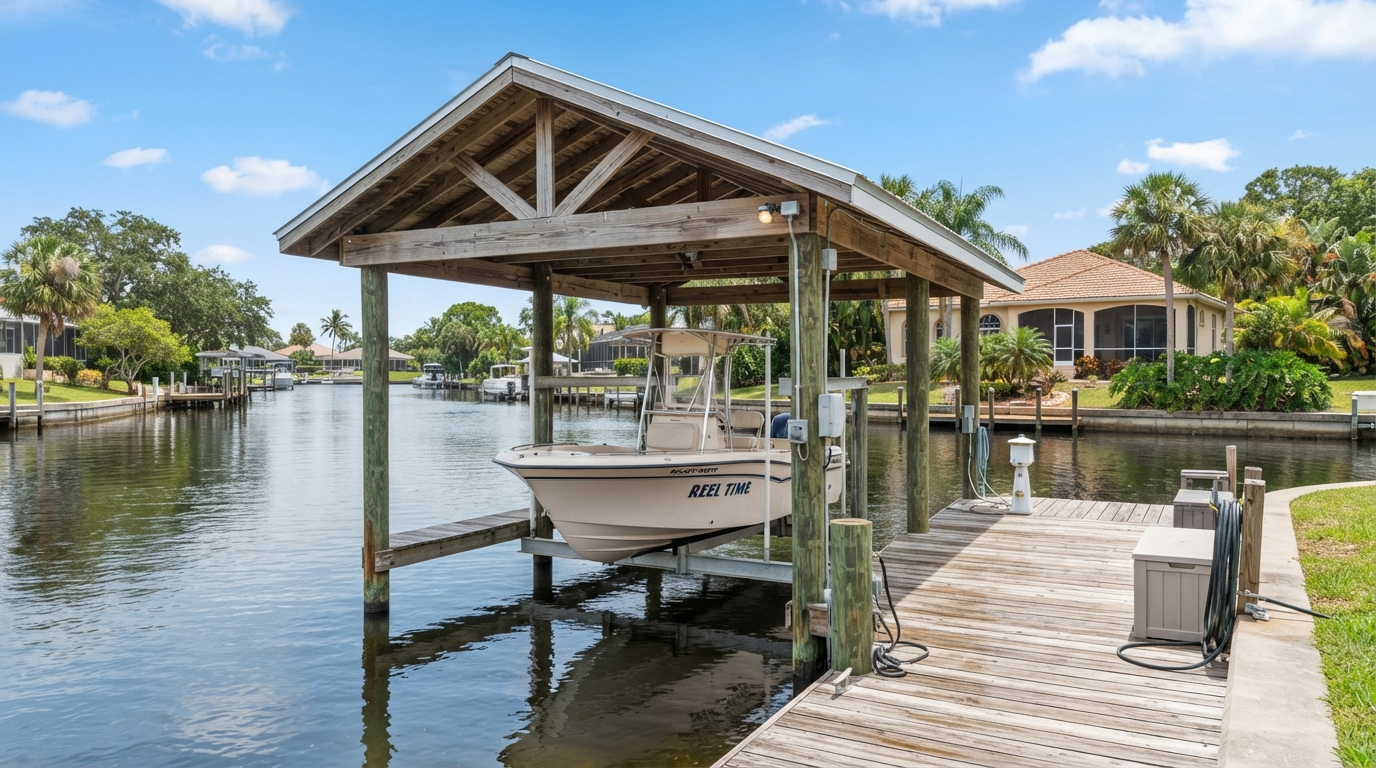
Why Neighboring Dock Designs May Not Apply
A neighboring dock's layout does not prove the same configuration is permissible or suitable at another parcel. Depth, bottom, habitat, frontage, and prior authorizations can differ property to property. Each shallow-water dock concept is reviewed on its own conditions, and applicable review is referred to the appropriate authority and qualified professionals.
Permitting and Authorization Considerations
Shallow-water docks may involve local, state, submerged-lands, and habitat-related review depending on the parcel and scope. No configuration is preapproved.
- Local zoning and construction requirements
- State environmental review where applicable
- Sovereign submerged lands considerations
- Habitat and protected-species review where relevant
- Federal considerations where applicable
- Project-specific determination by the appropriate authority
Related Services Near Daytona Beach
Explore other marine construction topics relevant to your waterfront project.