
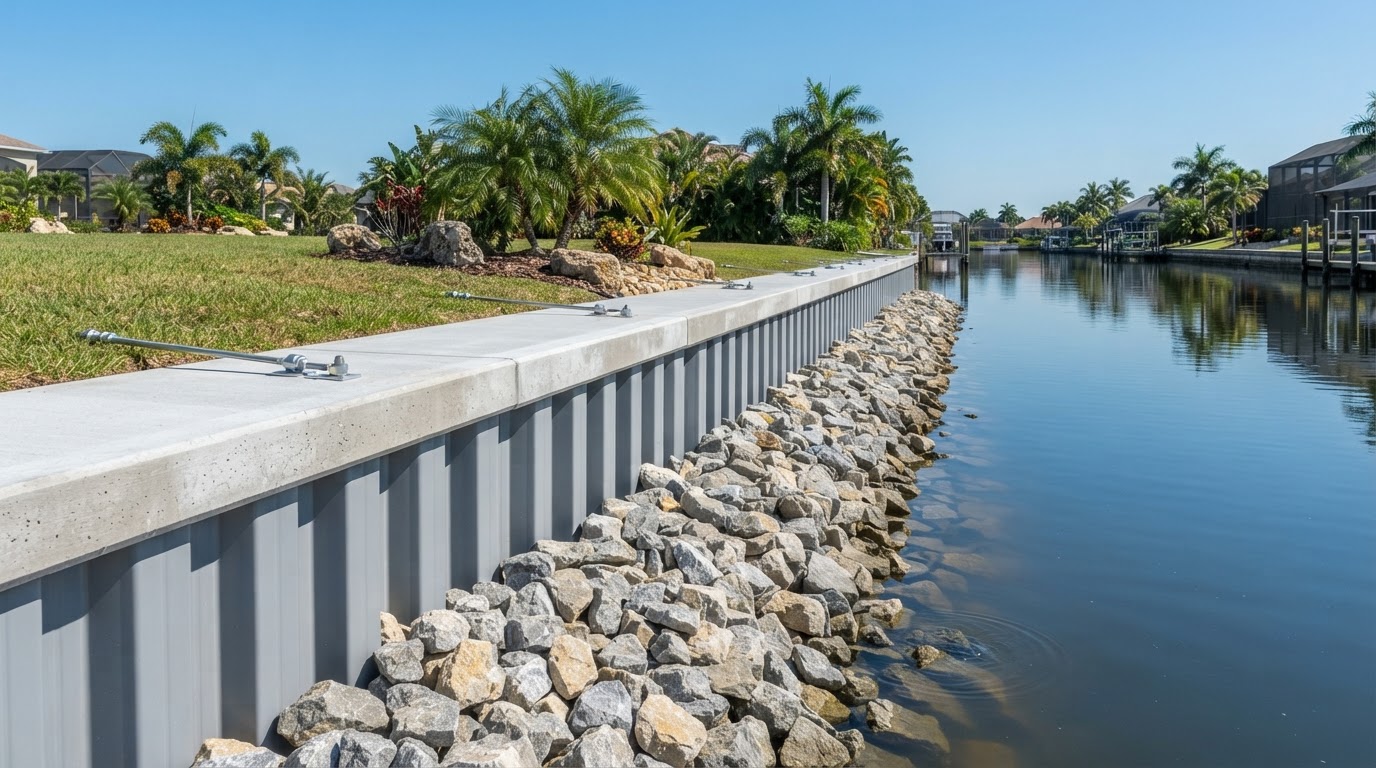
Volusia County Coastal Armoring Rules Daytona Beach
Coastal armoring rules in Volusia County apply to Atlantic beachfront shorelines — not to inland canal walls, Halifax River bulkheads, or St. Johns River docks. This guide explains how local beach-and-dune review relates to state Coastal Construction Control Line review, why armoring repair and new construction are treated differently, and why property-specific review matters — without inventing coastal setbacks, construction thresholds, or guaranteed approvals.
Request a Marine Construction Estimate
Share your dock, seawall, or boat lift project details and we'll review the requirements for your Daytona Beach area waterfront property.
Coastal Armoring Rules in Volusia County
Coastal armoring refers to structures such as seawalls, revetments, and bulkheads built to stabilize an oceanfront shoreline against erosion and storm waves. In Volusia County, beachfront armoring may be subject to both local beach-and-dune review and state Coastal Construction Control Line (CCCL) review — two separate processes that are distinct from ordinary canal seawall permitting.
This page is general educational guidance, not an agency determination. Specific armoring rules, boundaries, and conditions should be verified against current official Volusia County and Florida DEP sources before relying on them. This site does not issue or guarantee any permit, and does not imply that any oceanfront parcel qualifies for new armoring.
- What coastal armoring means in Volusia County
- Local beach-and-dune review versus state CCCL review
- Existing armoring repair versus new construction
- Construction access and coastal habitat considerations
- Why property-specific review matters
- Where to verify current armoring rules
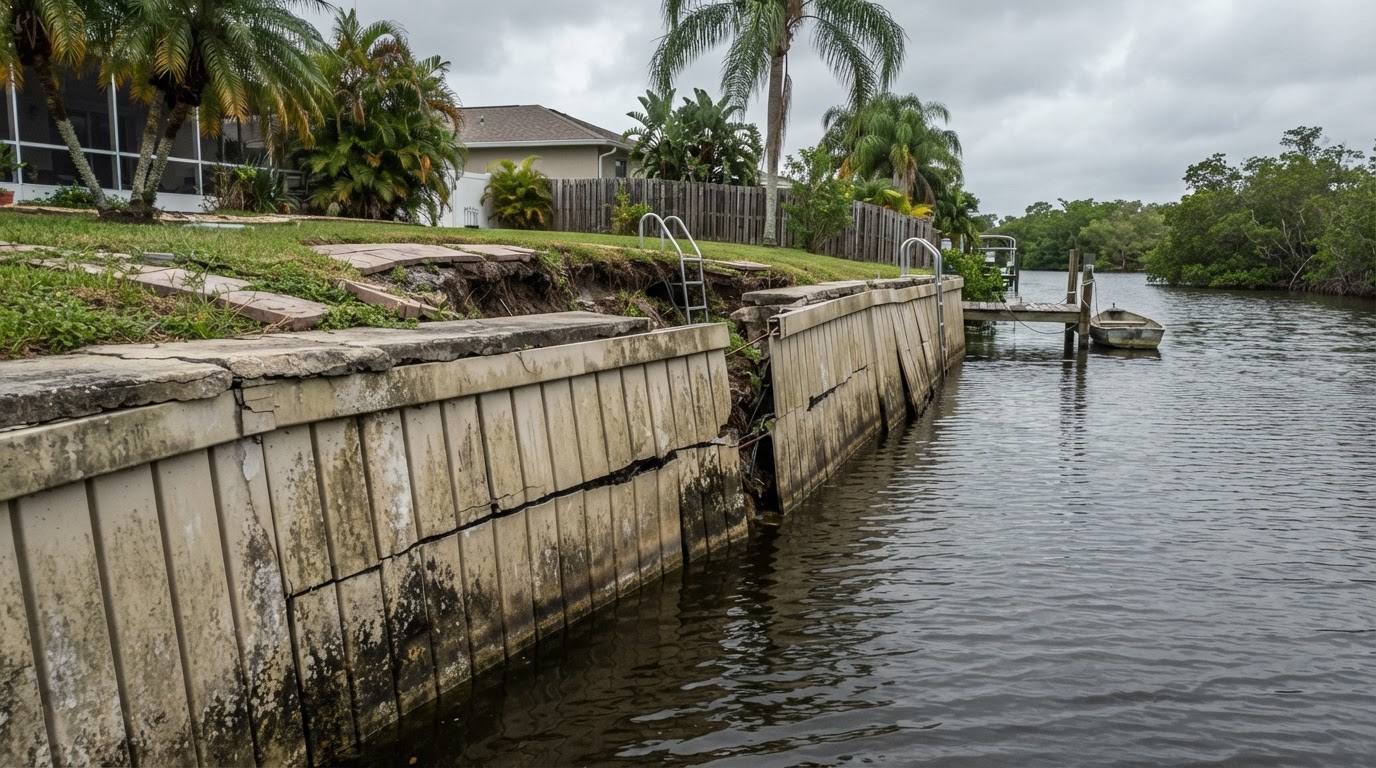
Beachfront Seawall Review in Daytona Beach
Atlantic beachfront conditions differ from protected Halifax River, Intracoastal, canal, and inland freshwater shorelines. Oceanfront armoring faces wave exposure, storm surge, beach erosion, and dune dynamics that ordinary canal walls do not. Because of that exposure, beachfront seawall work may involve coastal-specific review that a canal seawall project would not.
This page does not treat oceanfront armoring and ordinary canal seawall construction as interchangeable projects. The applicable rules depend on the shoreline setting, the actual jurisdiction, and the proposed work — all of which must be confirmed for the specific parcel.
- Atlantic beachfront faces wave and storm exposure canal walls do not
- Beachfront work may involve coastal-specific review
- Oceanfront and canal armoring are not interchangeable
- Applicable rules depend on the shoreline setting and proposed work
Local Beach and Dune Requirements
Volusia County has a beach-and-dune permit process that addresses work affecting the beach and dune system. This local review is separate from state CCCL authorization and from a standard local building permit. A beachfront armoring project may need to address more than one of these, and one local permit does not replace every other authorization.
This page does not publish an unsupported setback, construction threshold, or exemption. Local beach-and-dune requirements should be verified against the current official Volusia County Beach and Dune Permit page before relying on them.
- Volusia County beach-and-dune review is a local process
- It is separate from state CCCL authorization and local building permits
- A beachfront project may need to address more than one review
- One local permit does not replace every other authorization
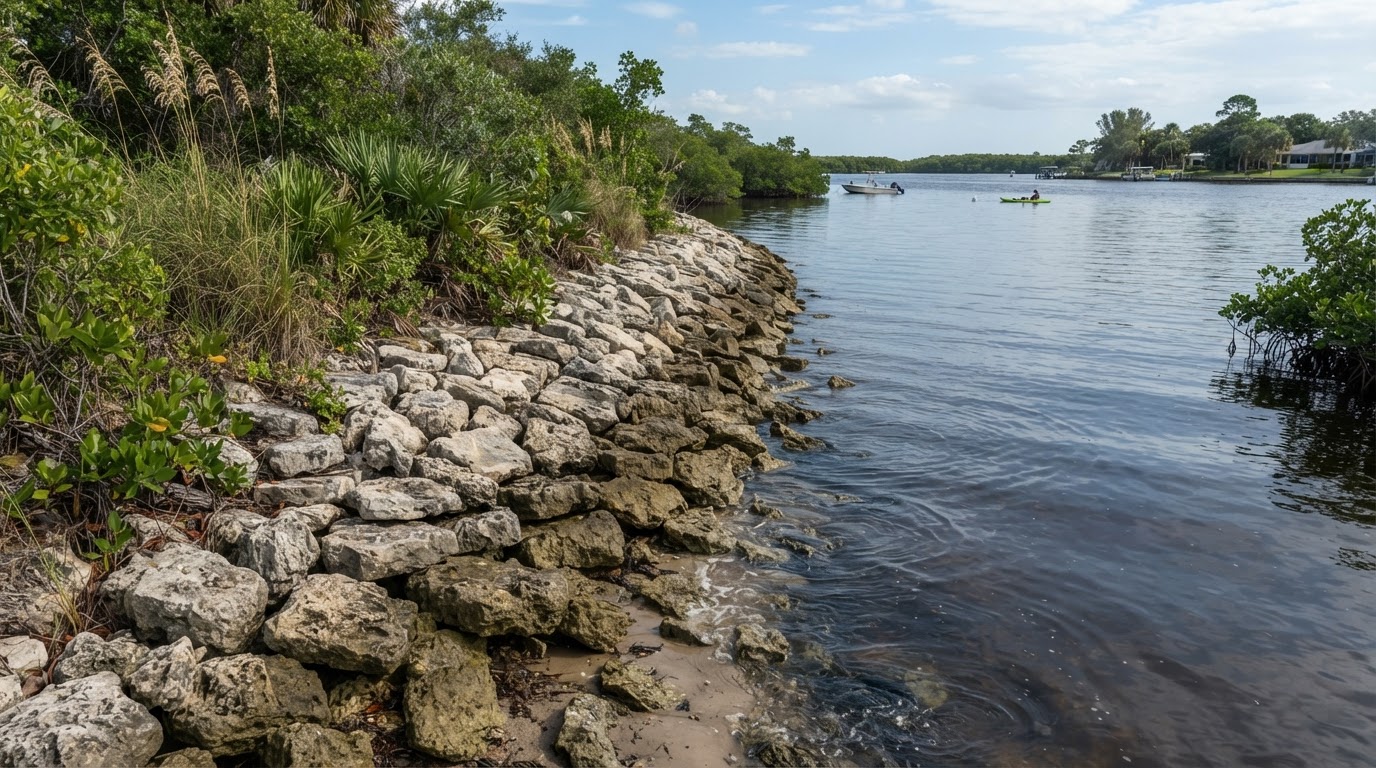
State CCCL Review and Coastal Construction
State coastal review addresses construction seaward of the CCCL and is separate from local beach-and-dune review.
Local Beach & Dune
- Volusia County review of work affecting the beach and dune system
- A local process separate from state CCCL authorization
- Does not replace state coastal review or a building permit
- Requirements should be verified with current county sources
State CCCL Review
- State review of construction seaward of the Coastal Construction Control Line
- Addresses coastal forces such as erosion and storm waves
- Separate from local beach-and-dune review and local building permits
- Whether a project is seaward of the CCCL depends on current DEP maps
Existing Armoring Repair Versus New Construction
A localized repair to an existing coastal structure may be possible where the structure is otherwise sound, but a repair is not automatically exempt from coastal review. New armoring, substantial replacement, or a change in footprint or design may raise broader engineering, dune, and habitat questions than a like-for-like repair.
This page does not guarantee that a damaged seawall can be reconstructed, and does not claim every oceanfront parcel qualifies for new armoring. Whether a repair or new construction is appropriate depends on the property, the proposed work, and current coastal requirements.
- A localized repair is not automatically exempt from coastal review
- New armoring or substantial replacement may raise broader questions
- A damaged seawall cannot always be reconstructed without review
- Not every oceanfront parcel qualifies for new armoring
Construction Access and Coastal Habitat Near Daytona Beach
Beachfront construction access and habitat considerations are site-specific and must be verified against current official sources.
Beach Access
Public beach access may be a relevant factor on oceanfront projects. Impacts on access are part of the coastal review where applicable and must be confirmed for the specific site.
Dune & Habitat
Dune vegetation, beach conditions, and protected coastal habitat can affect armoring review. These are part of the coastal setting and are evaluated for the specific property.
Construction Staging
Equipment access on a beachfront site can be constrained by the dune system, public access, and habitat. Staging is a site-specific planning consideration.
Temporary Measures
Temporary protective measures may be treated differently from permanent armoring. Whether a temporary measure is appropriate depends on the scope and current requirements.
Adjacent Shoreline
An armoring project may affect the surrounding shoreline. Coastal review can consider impacts beyond the individual parcel.
Current Requirements
Coastal requirements change. Verify current county and state armoring rules with official Volusia County and Florida DEP sources before relying on any specific requirement.
Why Property-Specific Review Matters
Coastal armoring rules depend on the shoreline setting, the actual jurisdiction, and the proposed work. A property in Daytona Beach, Daytona Beach Shores, Ormond Beach, or another coastal community may face different beach-and-dune conditions, CCCL boundaries, and review requirements. The mailing city alone does not establish which rules apply.
This page does not imply that one local permit replaces every other authorization, does not guarantee a damaged seawall can be reconstructed, and does not claim every oceanfront parcel qualifies for new armoring. Where precise coastal requirements are needed, verify them against current official Volusia County and Florida DEP sources.
- Armoring rules depend on the shoreline setting and proposed work
- The mailing city alone does not establish which rules apply
- One local permit does not replace every other authorization
- Verify precise coastal requirements with current official sources
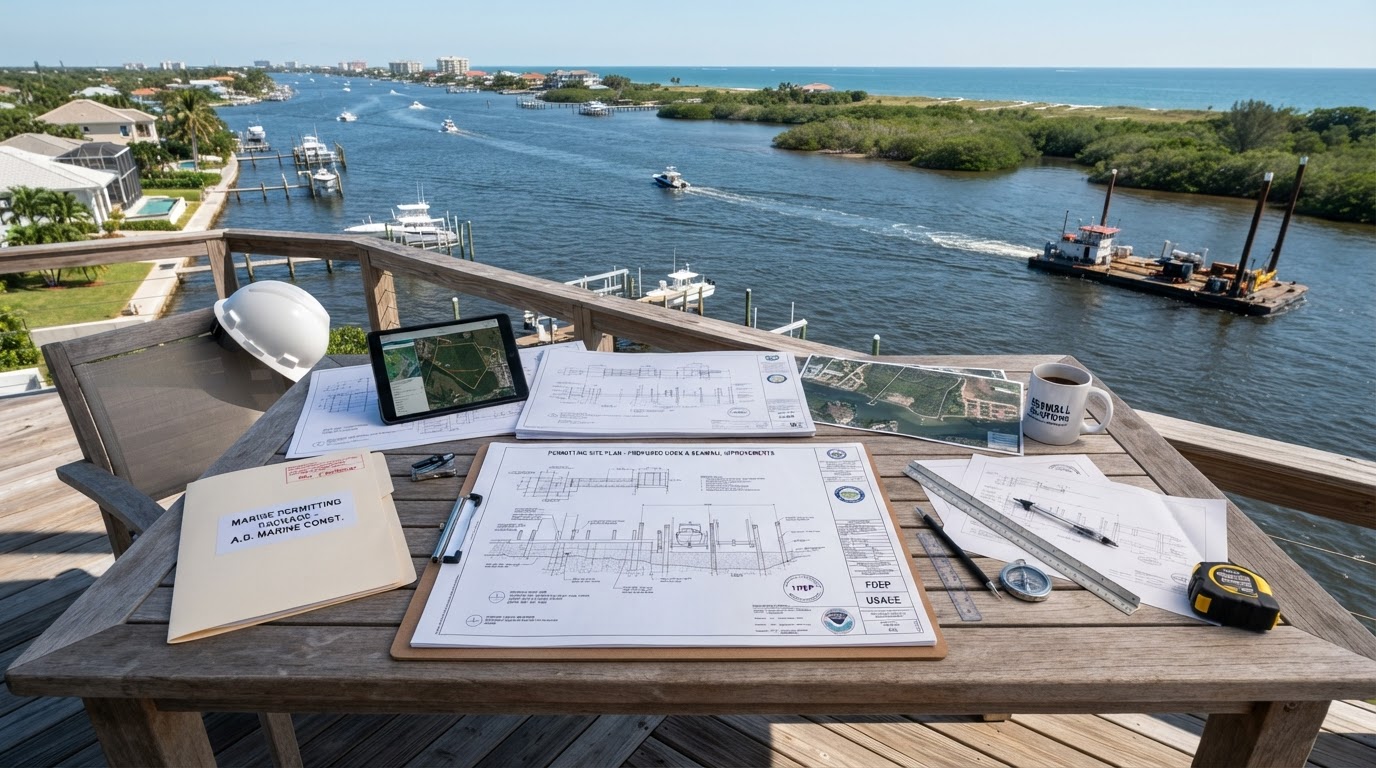
Where to Verify Current Guidance
For current official information, consult the Volusia County Beach and Dune Permit page (volusia.org) and the Florida DEP Coastal Construction Control Line program (floridadep.gov). Verify current armoring rules, CCCL maps, and conditions before relying on any specific requirement. This page provides general guidance and does not replace agency determinations or qualified professional advice.
Related Services Near Daytona Beach
Explore other marine construction topics relevant to your waterfront project.