
Rotted Dock Piling Repair & Replacement Daytona Beach
Dock pilings carry the weight of a waterfront structure and keep it stable against wind, current, and vessel loads. This page explains the warning signs of deteriorated pilings in Daytona Beach, why visible rot does not by itself establish structural capacity, and how repair, wrapping, and replacement options are evaluated.
Request a Marine Construction Estimate
Share your dock, seawall, or boat lift project details and we'll review the requirements for your Daytona Beach area waterfront property.
Signs of Rotted Dock Pilings in Daytona Beach
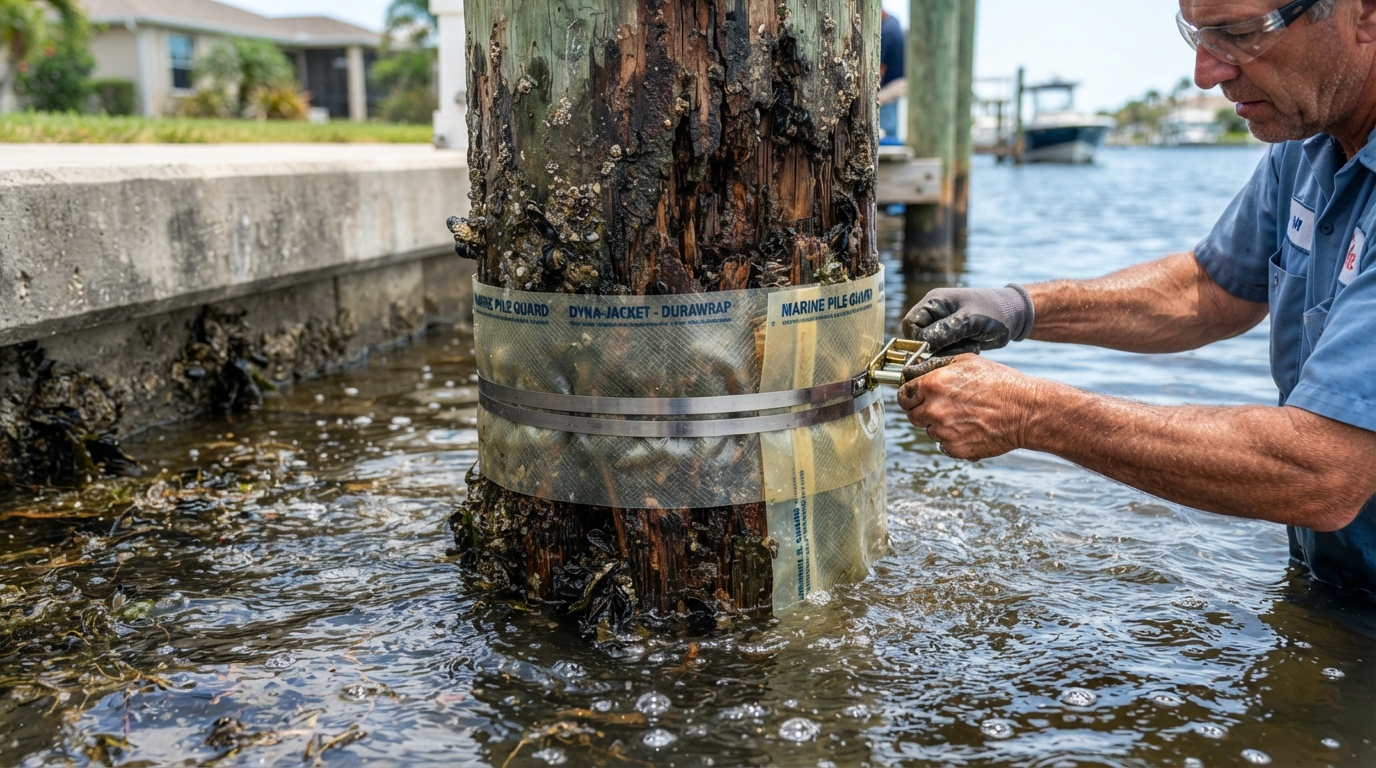
Marine pilings deteriorate over time through rot, marine-borer activity, splitting, and connection wear. Observable signs — soft wood, visible material loss, loose connections, or deck movement — are worth noting, but they do not independently determine whether a piling can still carry its load. Hidden deterioration below the waterline or inside the timber can be more serious than what is visible.
Several mechanisms can produce similar surface symptoms, and the actual condition requires qualified evaluation. A piling that looks sound above the water may be compromised at the waterline or below, where deterioration often progresses fastest.
- Soft or visibly deteriorated wood
- Splitting, checking, or localized material loss
- Loose or corroded connections and fasteners
- Movement or bounce in the dock structure
- Deterioration near the waterline
- Unusual deck movement or alignment changes
- Visible biological damage where applicable
Why Marine Pilings Deteriorate
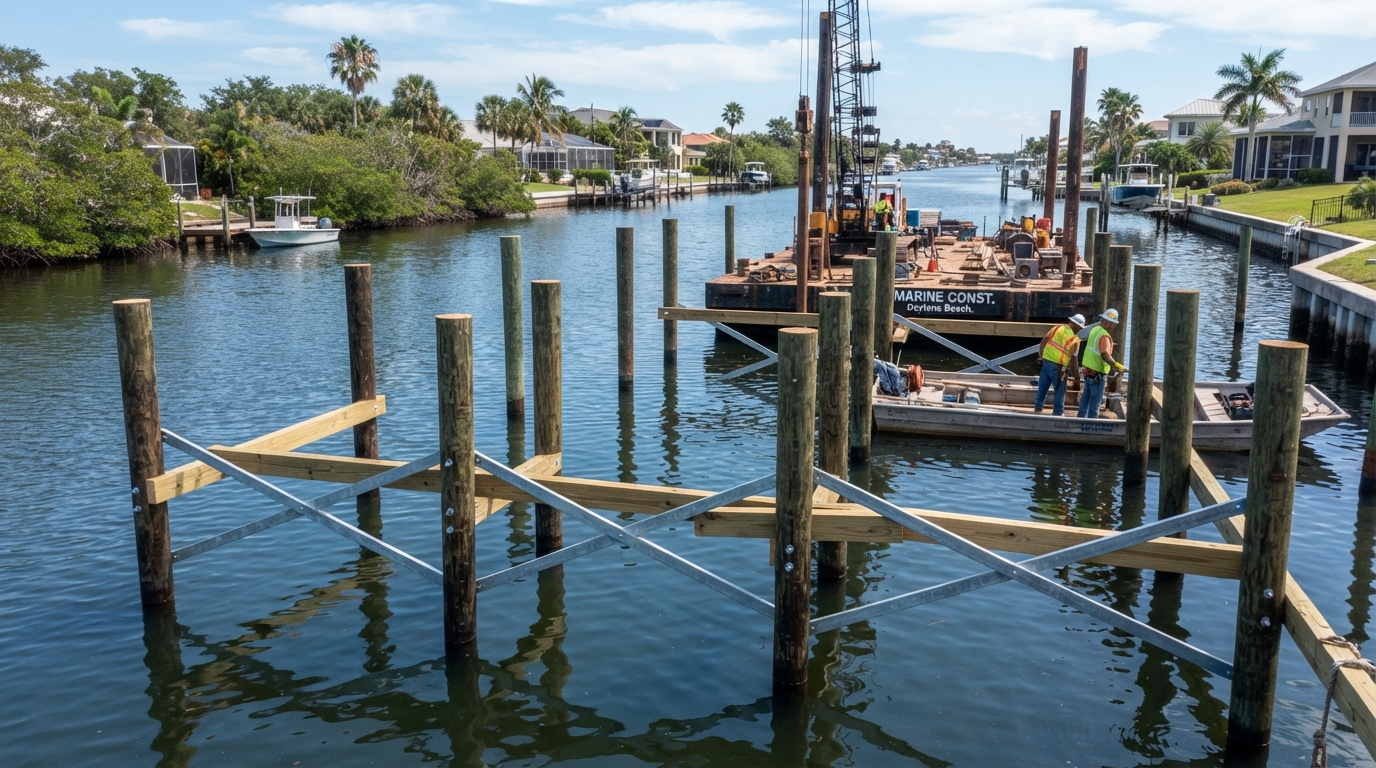
Deterioration mechanisms vary by material, water conditions, exposure, and construction details. Treated timber pilings can rot at the waterline, suffer marine-borer damage below the waterline, or split and check with age and sun exposure. Connections and fasteners corrode, and the combined effect can reduce a piling's capacity even when the timber above water looks intact.
Because the most aggressive deterioration often occurs at and below the waterline, surface inspection alone is not a reliable measure of structural condition. A piling that appears sound from the dock may be substantially compromised where it matters most for load.
- Rot at the waterline where moisture and oxygen meet
- Marine-borer damage below the waterline
- Splitting and checking from age and UV exposure
- Corrosion of connections and fasteners
- Combined deterioration reducing load capacity
Piling Inspection and Condition Assessment
A piling inspection evaluates the visible and accessible condition of the timber, connections, and surrounding structure, and considers where hidden deterioration may be present. Visible signs are documentation, not a determination of capacity. Where there is visible instability or suspected structural failure, the area should be treated with caution and evaluated by a qualified professional before use.
Piling Repair Versus Replacement Near Daytona Beach
Not every damaged piling can be repaired, and not every deteriorated piling needs full replacement. The appropriate response depends on the extent and location of the deterioration.
Repair or Wrapping
- Protective wrapping for sound pilings
- Localized treatment where structural capacity remains
- Connection and fastener repair
- Monitoring of early-stage deterioration
- Not a structural repair where rot has reduced capacity
Replacement
- Piling that has lost structural capacity
- Deterioration at or below the waterline
- Multiple compromised pilings
- Dock movement or instability tied to piling failure
- Reconstruction where repair cannot restore support
What Piling Wrapping Can and Cannot Address
Piling wrapping is a protective measure, not an automatic structural repair. Understanding the difference matters for safety.
- Wrapping can protect sound timber from further deterioration
- Wrapping does not restore load capacity to rotted wood
- A wrapped piling that has lost section may still be unsound
- Wrapping is not a substitute for replacement where capacity is gone
- The decision to wrap versus replace depends on the piling's actual condition
Dock Stability and Structural Connections
Pilings do not work alone. Bracing, cross-members, connections, and fasteners transfer loads between pilings and the deck. A deteriorated piling can place added demand on adjacent members, and corroded connections can fail even when the timber remains sound. The whole support system is evaluated, not just individual posts.
Where multiple pilings show deterioration, the entire dock's stability may be affected. A single compromised piling can sometimes be addressed in isolation; widespread deterioration often points toward broader reconstruction.
- Bracing and cross-member condition
- Connection and fastener corrosion
- Load transfer between pilings and deck
- Effect of one failed piling on adjacent members
- Whether deterioration is isolated or widespread
Planning Piling Work Around Existing Docks
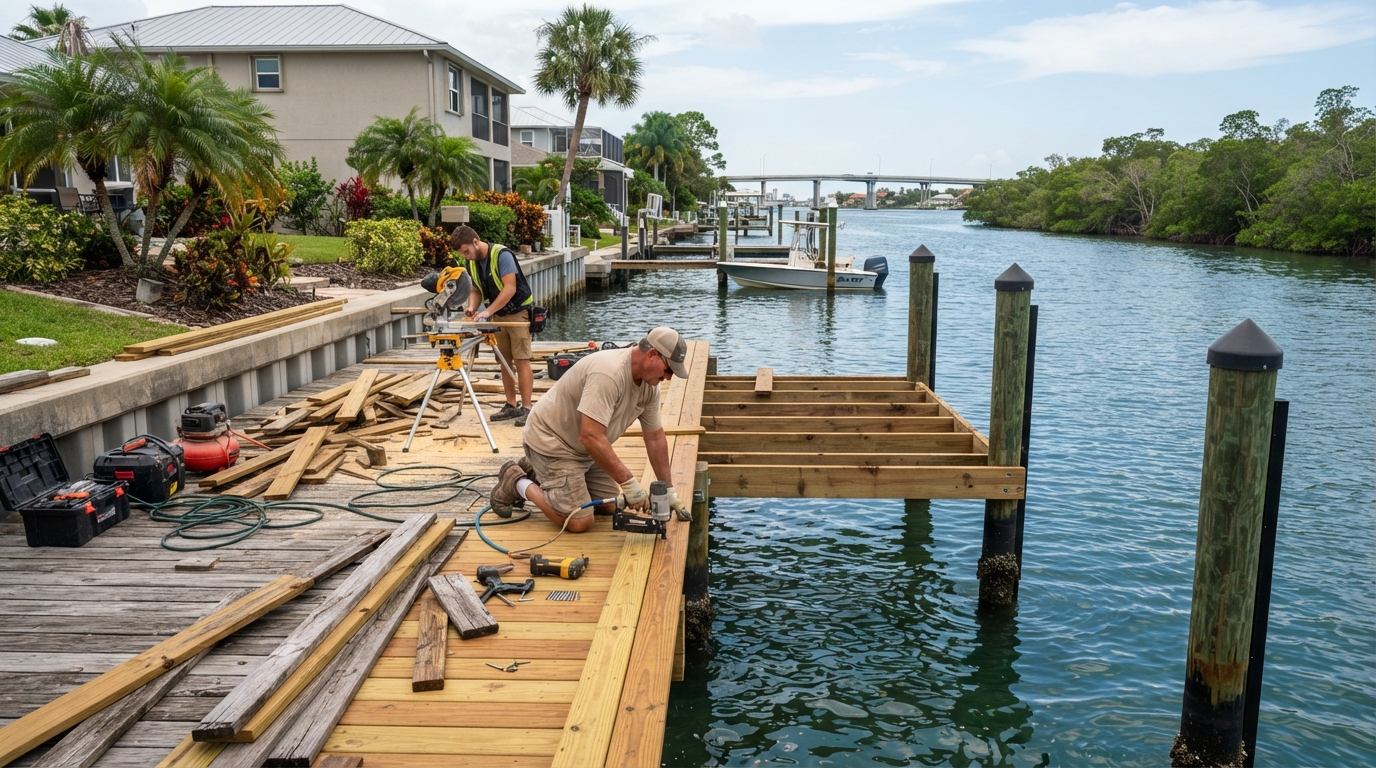
Piling repair or replacement must account for the existing dock structure, utilities, boat lifts, and access. Replacing a piling can require temporary support, equipment access by land or water, and coordination with any lift attached to the structure. Share the dock's layout, the observed piling conditions, and any movement you have noticed so the scope can be evaluated properly. Visible instability or suspected structural failure calls for qualified professional evaluation — not DIY repair.
Related Services Near Daytona Beach
Explore other marine construction topics relevant to your waterfront project.