
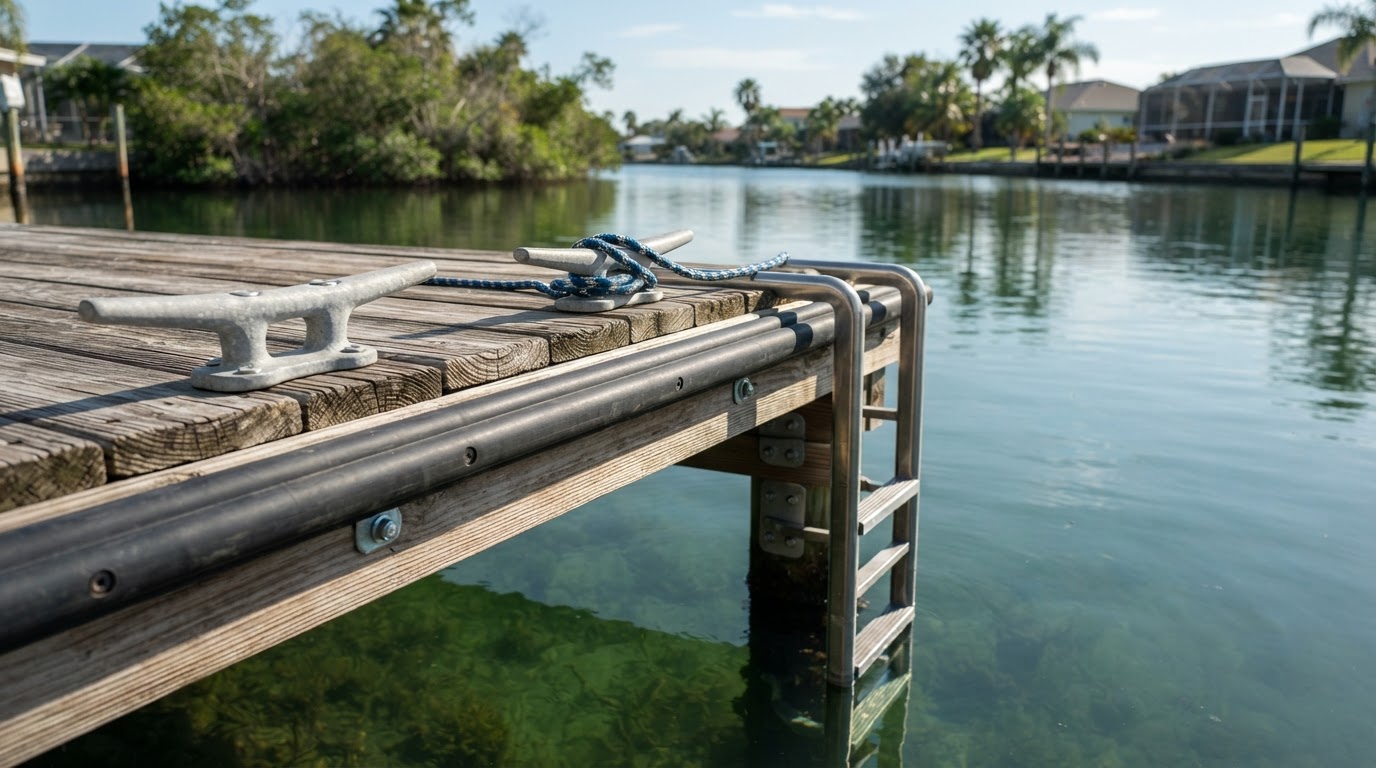
Dock Accessories, Cleats, Bumpers & Ladders Daytona Beach
Dock accessories — cleats, bumpers, ladders, and hardware — support mooring, boarding, and protection at a waterfront dock. This page explains common dock accessories, how they are selected and installed, and the practical considerations for adding them to an existing or new dock.
Request a Marine Construction Estimate
Share your dock, seawall, or boat lift project details and we'll review the requirements for your Daytona Beach area waterfront property.
Dock Accessories & Hardware in Daytona Beach
Dock accessories are the hardware and fittings that make a dock functional for mooring, boarding, and protecting a vessel. Along Daytona Beach waterways, common accessories include cleats for tying off lines, bumpers and fenders to cushion vessel contact, and ladders for water access. Each accessory must be appropriate for the dock, the vessel, and the marine environment.
Selecting and installing dock accessories involves material compatibility, mounting strength, and manufacturer requirements. Not every accessory suits every dock, and adding hardware to an existing structure may require evaluating whether the framing and connections can support it. This page explains the practical considerations for choosing and installing dock accessories.
- Cleats for mooring and line handling
- Bumpers and fenders for vessel protection
- Ladders for water access and boarding
- Material compatibility and corrosion resistance
- Mounting and structural support requirements
- Repair and replacement of existing hardware
Boat Dock Cleats Near Daytona Beach
Cleats are the fittings used to secure a vessel's lines to a dock. Their size, positioning, and mounting must match the vessel and the mooring loads expected at the site. A cleat that is too small or poorly mounted can fail under load, so manufacturer ratings and structural support matter.
Mounting compatibility depends on the dock's framing and decking. A cleat must be anchored into solid structural support, not just the decking surface. Hardware materials should resist corrosion in the marine environment, and positioning should suit the vessel's line arrangement.
- Mooring use and expected line loads
- Positioning to match the vessel's lines
- Mounting into solid structural support
- Hardware materials and corrosion resistance
- Manufacturer ratings and specifications
- No universal mooring capacity applies
Dock Bumpers & Fender Protection
Bumpers and fenders cushion certain vessel-contact impacts. They reduce contact forces but do not guarantee prevention of vessel or dock damage.
- Cushion contact between vessel and dock
- Positioning along boarding and contact areas
- Material selection for marine exposure
- Mounting compatible with the dock structure
- Reduce certain impacts, not prevent all damage
- Maintenance and replacement as materials wear
Marine Dock Ladders in Daytona Beach
Dock ladders provide water access and boarding. Material, mounting, placement, and safe use all factor into selection.
- Access needs and intended use
- Mounting compatibility with the dock
- Corrosion-resistant materials for marine exposure
- Placement for safe boarding and water exit
- Inspection for loose or corroded components
- Safe use considerations for owners and guests
Dock Accessory Materials & Marine Exposure
Marine exposure drives material selection for dock accessories. Corrosion and material compatibility affect long-term performance.
Corrosion Resistance
Salt air and water exposure corrode hardware over time, so corrosion-resistant materials and finishes are important for dock accessories.
Material Compatibility
Mixing incompatible metals can accelerate corrosion, so material compatibility between accessories, fasteners, and dock components matters.
Maintenance
Regular inspection and timely replacement of worn or corroded accessories help maintain safe and functional dock hardware.
Adding Accessories to Existing Docks
Adding hardware to an existing dock may require evaluating the decking, framing, and connections for adequate support.
- Condition of existing decking and framing
- Whether connections can support the accessory
- Need for reinforcement or backing support
- Compatibility with existing hardware
- Structural evaluation where loads are significant
- Manufacturer requirements for mounting
Dock Hardware Repair & Replacement
Loose, corroded, damaged, or deteriorating accessories should be evaluated and may need repair or replacement.
- Loose or spinning cleats and fittings
- Corroded or deteriorating hardware
- Cracked or damaged bumpers and ladders
- Failed mounting or connections
- Whether repair or replacement is appropriate
- Qualified evaluation of structural concerns
Choosing Dock Accessories Near Daytona Beach
Practical selection factors include vessel size, dock use, access needs, and manufacturer documentation. Accessories should be matched to the vessel and the dock rather than chosen by appearance alone. Where loads are significant or the existing structure's condition is uncertain, qualified evaluation helps ensure safe and functional installation.
Related Services Near Daytona Beach
Explore other marine construction topics relevant to your waterfront project.