
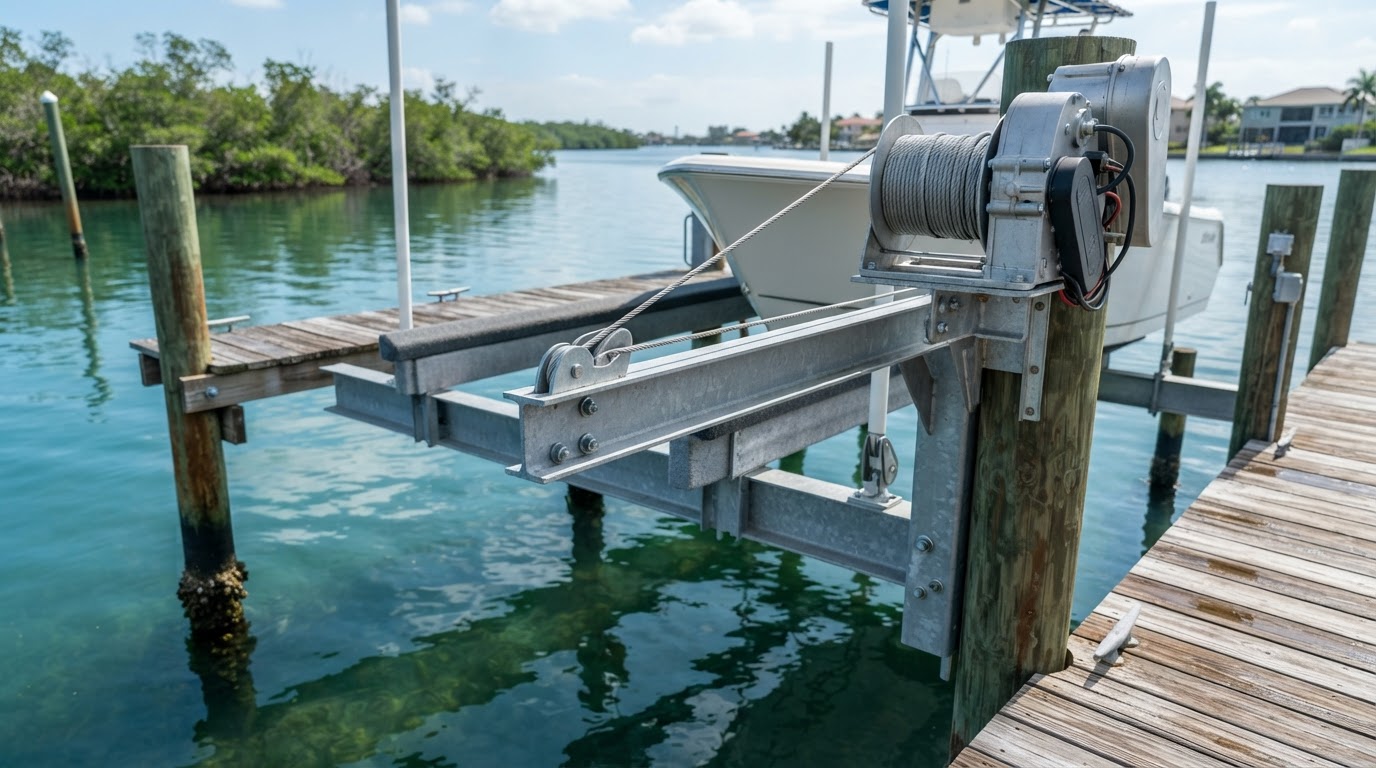
Hurricane Preparation for Docks & Boat Lifts Daytona Beach
Hurricane preparation for docks and boat lifts near Daytona Beach is about early planning, not last-minute construction during dangerous conditions. This guide covers maintaining a storm plan, reviewing vessel and lift decisions well before hazardous weather, documenting conditions, and prioritizing official emergency directions and personal safety — without promising any dock, seawall, or lift will withstand a hurricane.
Request a Marine Construction Estimate
Share your dock, seawall, or boat lift project details and we'll review the requirements for your Daytona Beach area waterfront property.
Hurricane Preparation for Docks in Daytona Beach
Hurricane preparation for docks and boat lifts focuses on early planning rather than emergency construction. Maintaining a household and vessel storm plan, reviewing official forecasts, considering vessel relocation well before hazardous conditions, and observing existing dock condition can help waterfront owners prepare — but no preparation guarantees a dock, seawall, or boat lift will withstand a hurricane.
This page is general educational guidance, not a guarantee of property protection. It does not encourage last-minute work on docks during dangerous storm conditions, does not provide instructions that conflict with evacuation orders or manufacturer guidance, and prioritizes official emergency directions and personal safety above all else.
- Planning ahead for boats and boat lifts
- Dock maintenance before storm season
- Loose equipment and dock accessories
- Boat lift manufacturer guidance
- Electrical and structural safety near Daytona Beach
- Checking dock conditions after a storm
Planning Ahead for Boats and Boat Lifts
Early planning is the most useful step a waterfront owner can take before hurricane season. Maintaining a household and vessel storm plan, reviewing current official forecasts, and considering vessel relocation well before hazardous conditions give owners time to make safe decisions. Last-minute work on docks during dangerous storm conditions is not encouraged.
Appropriate vessel and boat-lift preparation depends on the equipment, dock configuration, water levels, location, and storm conditions. This page does not prescribe a single boat-lift height or position for all systems, and does not recommend operating damaged electrical equipment.
- Early planning is the most useful step before storm season
- Maintain a household and vessel storm plan
- Consider vessel relocation well before hazardous conditions
- No single boat-lift height or position is prescribed for all systems
Planning Ahead for Boats and Boat Lifts
Vessel and lift decisions depend on the equipment, dock, water levels, and storm conditions.
Vessel Decisions
- Review vessel relocation options well before hazardous conditions
- Follow current official forecasts and evacuation directions
- Vessel preparation depends on the boat, location, and storm
- Do not remain on waterfront property during unsafe conditions
Boat Lift Guidance
- Review boat-lift manufacturer recommendations for storm preparation
- No single lift height or position suits all systems
- Do not operate damaged electrical equipment
- Lift preparation depends on the equipment and storm conditions
Dock Maintenance Before Storm Season
Observing existing dock condition before storm season can help owners identify loose boards, corroded hardware, or damaged components that could become worse in a storm. Addressing routine maintenance early — through qualified professionals where structural or electrical work is involved — is safer and more effective than last-minute repairs during hazardous conditions.
This page does not encourage last-minute work on docks during dangerous storm conditions, and does not provide instructions that conflict with evacuation orders, manufacturer guidance, or qualified professional recommendations. Structural and electrical maintenance is referred to qualified professionals.
- Observe existing dock condition before storm season
- Address routine maintenance early through qualified professionals
- Last-minute work during dangerous conditions is not encouraged
- Structural and electrical work is referred to qualified professionals
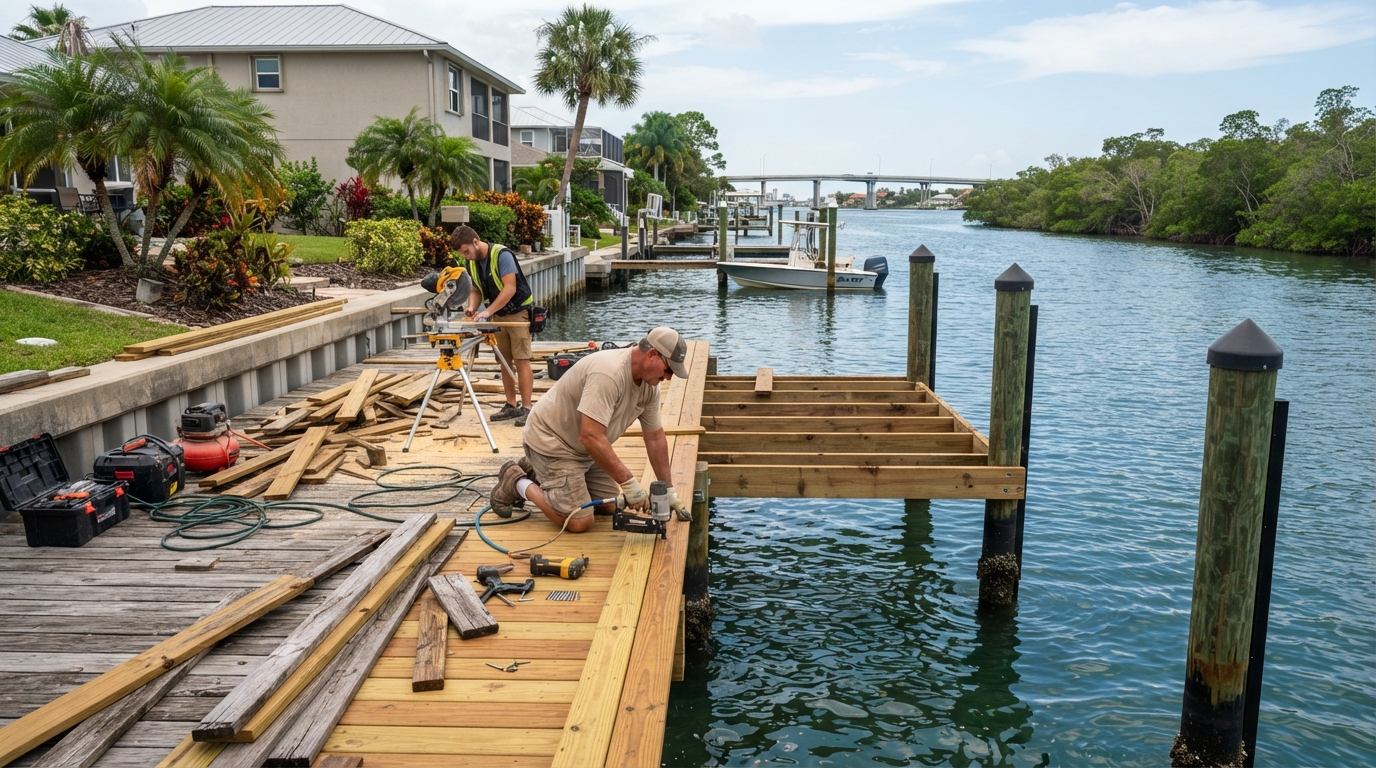
Loose Equipment and Dock Accessories
Securing or removing loose accessories when safe can reduce hazards, but safety comes first.
Loose Accessories
Securing or removing loose dock accessories when safe can reduce hazards during severe weather. This should be done well before hazardous conditions, not during a storm.
Document Conditions
Documenting existing dock, seawall, and lift conditions before a storm can support later assessment. Photographs and records are useful if storm damage occurs.
Electrical Safety
Dock electrical issues should be checked through qualified professionals. Do not operate damaged electrical equipment or shore power that may be compromised.
Lift Equipment
Boat-lift manufacturer guidance governs storm preparation for lift equipment. Do not assume one lift position suits all systems or storm conditions.
Post-Storm Access
After a storm, avoid unstable structures and exposed utilities. Plan safe access and do not assume a dock is safe to use until it is evaluated.
Official Directions
Official emergency directions and evacuation orders take priority over any dock or lift preparation. Personal safety comes before property protection.
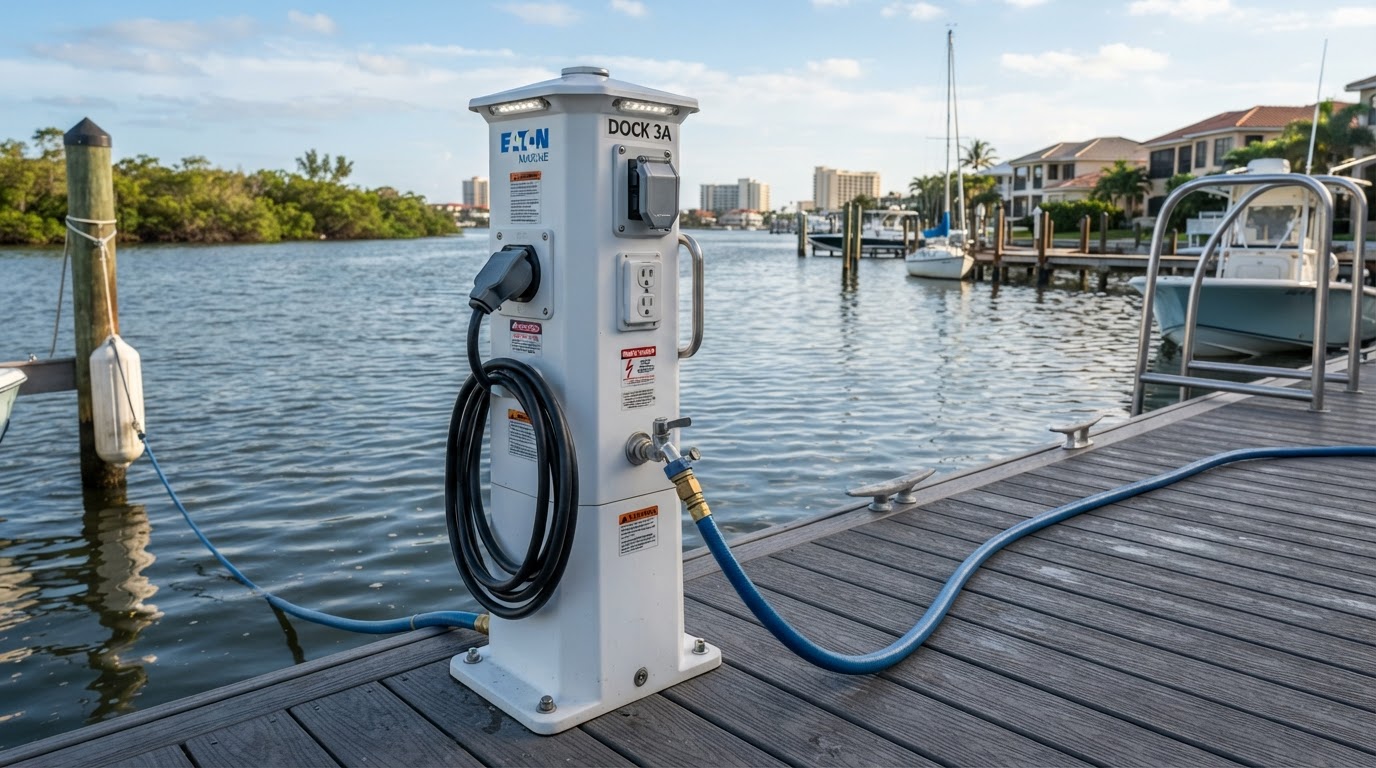
Boat Lift Manufacturer Guidance
Boat-lift storm preparation should follow the lift manufacturer's recommendations, which are specific to the equipment. This page does not prescribe a single boat-lift height or position for all systems, because the appropriate preparation depends on the lift type, the vessel, the dock, water levels, and storm conditions.
Do not operate damaged electrical equipment, and do not assume one lift position suits every storm. Where manufacturer guidance is unavailable or unclear, consult a qualified professional before storm season rather than during hazardous conditions.
- Boat-lift preparation should follow manufacturer recommendations
- No single lift height or position is prescribed for all systems
- Do not operate damaged electrical equipment
- Consult a qualified professional before storm season when unsure
Electrical and Structural Safety Near Daytona Beach
Electrical and structural safety are critical concerns before and after a storm. Dock lighting, shore power, and lift electrical systems should be checked through qualified professionals, and damaged equipment should not be operated. Structural components such as pilings, framing, and connections should be evaluated before a dock is used again.
This page does not advise staying on waterfront property during unsafe conditions, and does not recommend operating damaged electrical equipment. Personal safety and official emergency directions take priority over property protection.
- Electrical and structural safety are critical before and after a storm
- Damaged equipment should not be operated
- Structural components should be evaluated before reuse
- Personal safety and official directions take priority
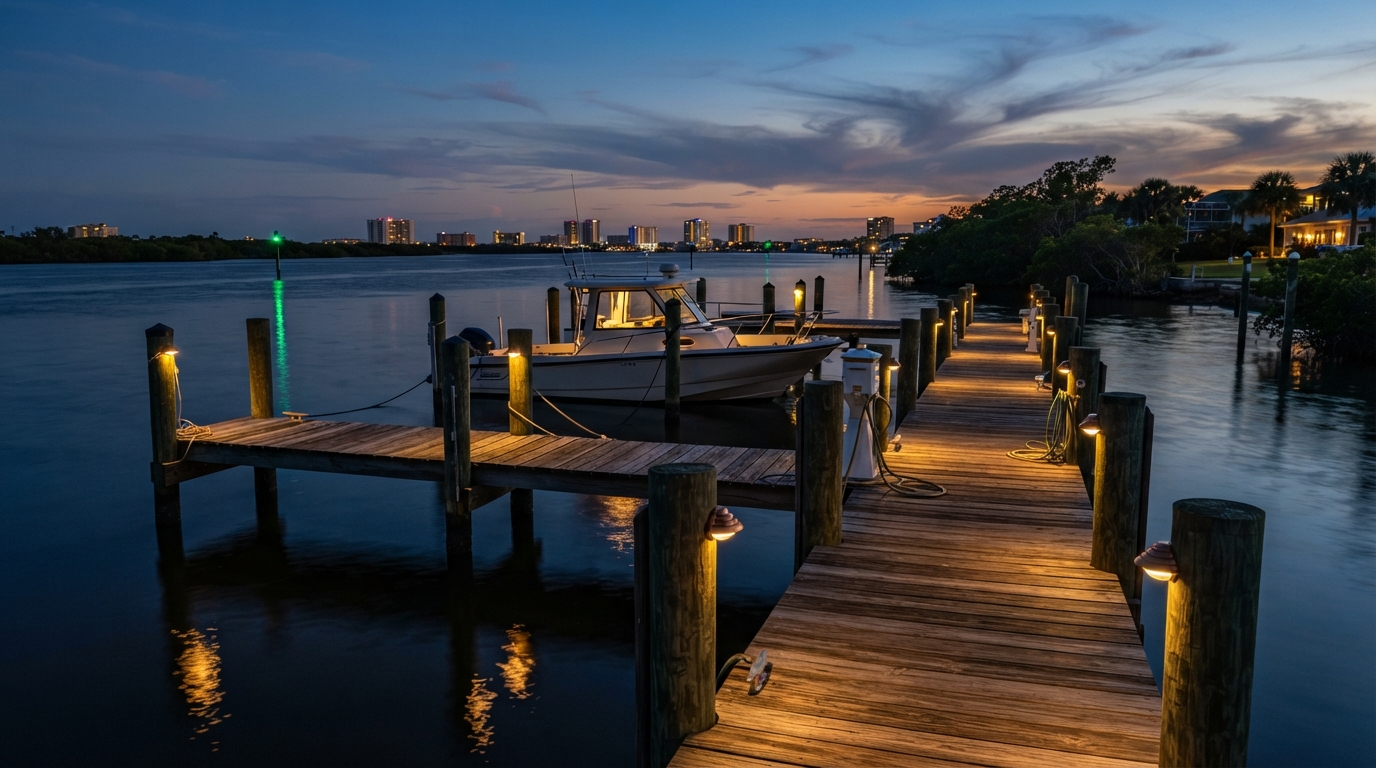
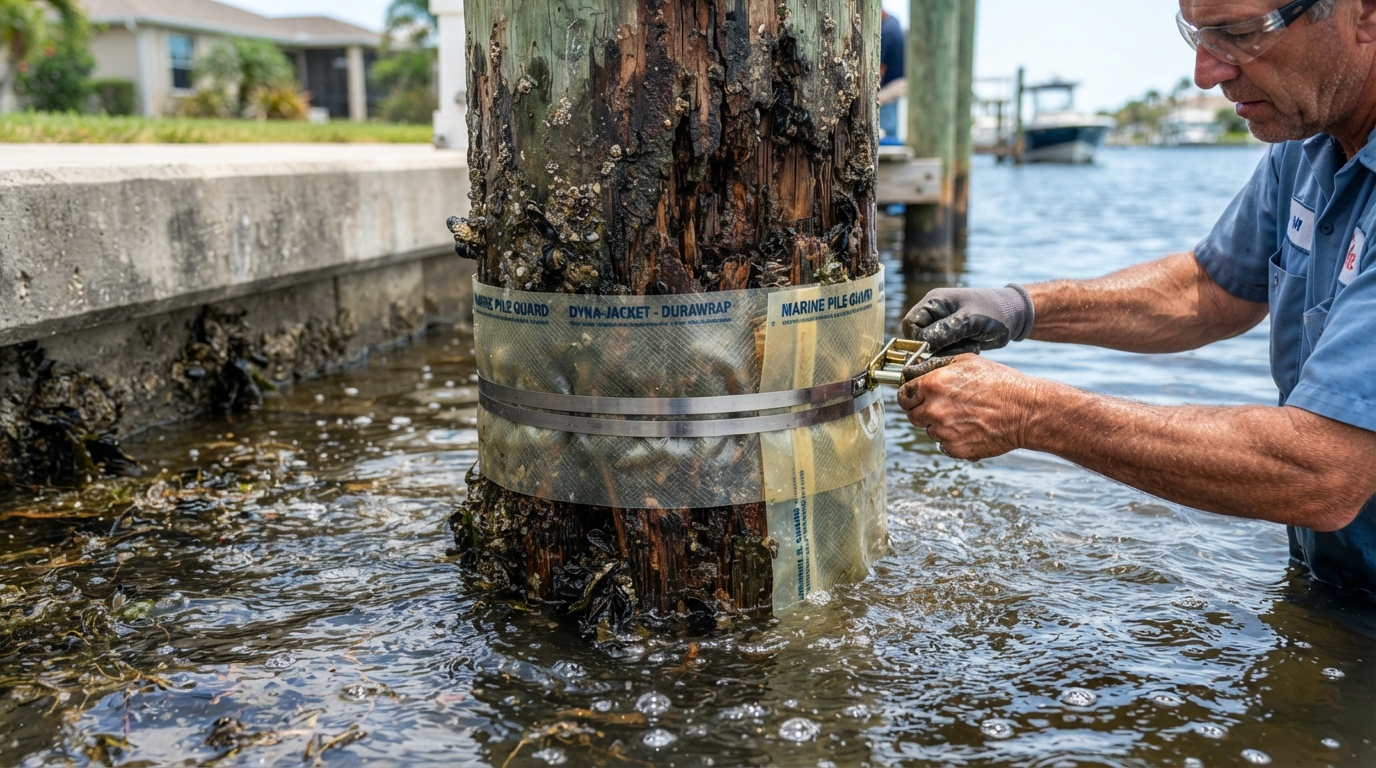
Checking Dock Conditions After a Storm
After a storm, avoid unstable structures and exposed utilities, and plan safe access before approaching a dock. Recognize that a dock or lift that looks intact may have hidden damage. Do not assume a dock is safe to use until it is evaluated by a qualified professional, especially where electrical systems or structural components may be compromised.
Where storm damage affects a dock or lift, seek qualified assessment and plan repair or replacement through appropriate channels. This page does not present general advice as a guarantee of property protection, and refers structural, electrical, and lift-rating decisions to qualified professionals.
- Avoid unstable structures and exposed utilities after a storm
- A dock that looks intact may have hidden damage
- Do not assume a dock is safe to use until evaluated
- Seek qualified assessment for observed storm damage
Prioritize Official Emergency Directions and Safety
For current official hurricane safety information, consult the National Weather Service Hurricane Safety for Mariners page (weather.gov) and FWC storm preparation resources (myfwc.com). Always prioritize official emergency directions and evacuation orders over any dock or lift preparation. This page provides general educational guidance and does not guarantee property protection or replace qualified professional advice.
Related Services Near Daytona Beach
Explore other marine construction topics relevant to your waterfront project.