
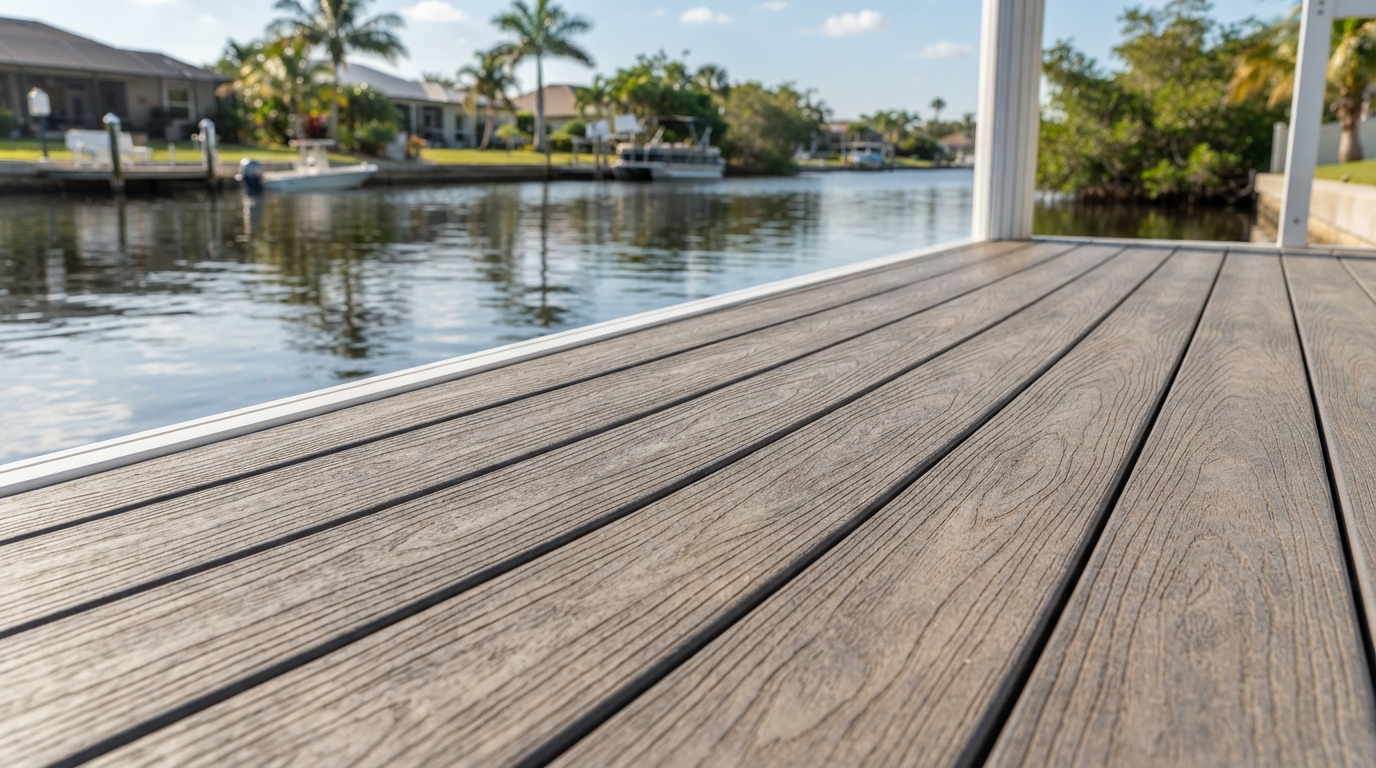
Composite Dock Decking Conversions & Installation Daytona Beach
Replacing wood dock decking with composite is a common upgrade, but it is not simply screwing new boards onto an existing frame. This page explains composite dock conversions in Daytona Beach, why the existing framing must be evaluated for compatibility, and what product-specific installation requirements govern whether a conversion is appropriate.
Request a Marine Construction Estimate
Share your dock, seawall, or boat lift project details and we'll review the requirements for your Daytona Beach area waterfront property.
Composite Dock Conversions in Daytona Beach
A composite dock conversion typically means replacing existing wood deck boards with composite decking while potentially retaining suitable underlying structure. The scope can range from swapping only the boards to replacing selected framing, rebuilding part of the dock, or changing the footprint. Each scope has different structural, cost, and approval implications.
Composite products are not all identical, and not every composite is appropriate for marine use. An existing dock's framing must be evaluated for compatibility before decking materials change, and the manufacturer's installation instructions govern product suitability, fastener choice, and joist spacing.
- Replacing only the deck boards
- Replacing boards and selected framing
- Rebuilding part of the dock structure
- Converting from one decking material to another
- Changing the footprint or configuration
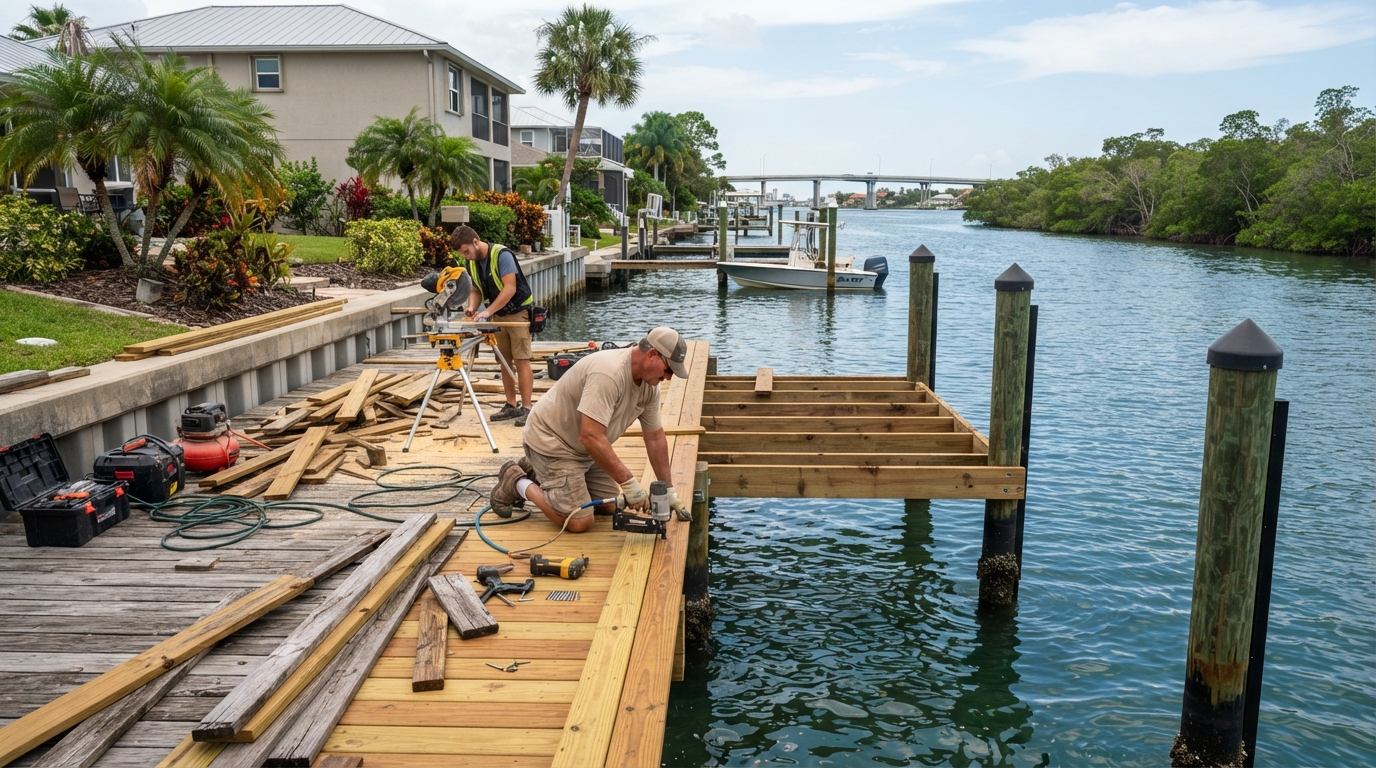
Replacing Wood Decking with Composite Materials
A decking conversion is distinct from a structural rebuild. Replacing only the boards refreshes the surface; replacing boards and selected framing addresses worn structure; a rebuild restores the dock along its footprint; and changing the footprint or configuration is a different project entirely. The right scope depends on the condition of the existing structure and the owner's goals.
Composite decking is chosen for appearance, maintenance expectations, and durability, but those benefits depend on correct installation over a compatible frame. A conversion done over inadequate framing or with the wrong fasteners can perform poorly regardless of the decking quality.
- Board-only replacement over sound framing
- Board and selected framing replacement
- Full rebuild within the existing footprint
- Footprint or configuration changes
- Material change without structural change where feasible
Can an Existing Dock Frame Support a Decking Conversion?
The existing joist spacing, framing condition, support structure, and fastener compatibility must be evaluated before changing decking materials. Composite products often have specific joist-spacing and fastener requirements that differ from wood, and an older frame may not meet them. A frame that is warped, rotted, or undersized may need repair or replacement before new decking is installed.
Composite Decking Benefits and Tradeoffs
Composite decking offers real benefits, but no product is universally maintenance-free, slip-proof, cooler underfoot, or hurricane-resistant. Claims should follow manufacturer documentation.
Maintenance
Composite generally needs less staining and sealing than wood, but it is not maintenance-free. Cleaning, inspection, and fastener checks still apply, and products vary.
Moisture & Slip
Marine exposure tests any surface. Composite is not automatically slip-proof, and wet-deck traction depends on the product texture and finish.
Surface Temperature
Some composites can run warm underfoot in sun exposure. Product color and composition affect temperature; no composite is universally cooler.
Durability
Composite can resist rot and insects, but no decking is hurricane-resistant or suitable for every span. Structural performance depends on the frame, not just the boards.
Fasteners, Framing and Installation Requirements
Manufacturer installation instructions govern product suitability. Fastener compatibility, joist spacing, and spacing gaps are product-specific, not generic.
- Joist spacing required by the specific product
- Fastener type and compatibility with the decking
- Board spacing and gap requirements for expansion
- Framing condition and structural adequacy
- Water exposure and drainage considerations
- Product-specific limitations and warranty terms
Composite Versus Wood Dock Decking Near Daytona Beach
Composite, PVC, and other marine decking products differ. Not all composites are the same, and the right material depends on the dock and the owner's priorities.
Composite Decking
- Generally lower staining and sealing maintenance
- Product-specific joist and fastener requirements
- Appearance and color options vary by product
- Not universally maintenance-free or slip-proof
- Performance depends on correct installation
Wood Decking
- Familiar material with established marine use
- Regular staining, sealing, and board replacement
- Susceptible to rot and marine-borer damage
- Fastener and spacing requirements differ by product
- May suit owners prioritizing traditional appearance
Repair, Conversion or Complete Dock Replacement?
A decking conversion makes sense where the existing frame is compatible and sound. Where the framing is deteriorated, undersized, or the layout no longer works, a conversion alone will not solve the underlying issues — a rebuild or replacement may be the better path. The decision depends on the actual condition of the structure, not just the surface.
Cost factors include the product, the scope of framing work, fasteners, access, and any structural repairs. Specific price estimates require reviewing the actual dock and product choice; generalized figures are not useful without that context.
- Conversion where the frame is sound and compatible
- Framing repair or replacement where needed
- Rebuild where structure is deteriorated or inadequate
- Replacement where the layout no longer works
- Cost depends on product, scope, and access
Related Services Near Daytona Beach
Explore other marine construction topics relevant to your waterfront project.