
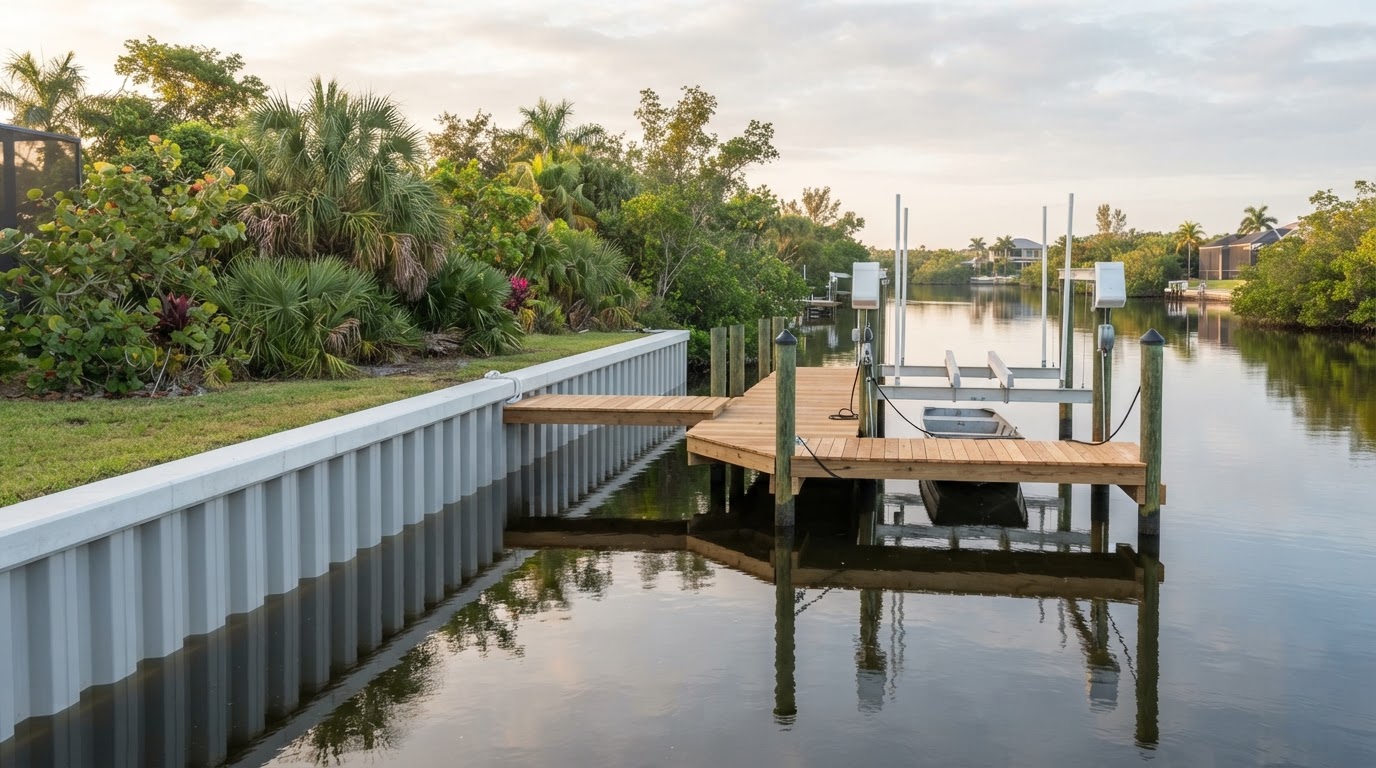
Canal Home Seawall Replacement & Installation Daytona Beach
Replacing a seawall on a residential canal can involve different constraints than an open shoreline or oceanfront project. This page explains canal home seawall replacement in Daytona Beach — limited waterway access, neighboring walls, existing docks and lifts, drainage, and the property-specific approvals that shape the work — and why canal-front conditions cannot be determined from the city name alone.
Request a Marine Construction Estimate
Share your dock, seawall, or boat lift project details and we'll review the requirements for your Daytona Beach area waterfront property.
Canal Home Seawall Replacement in Daytona Beach
A canal-front seawall protects retained soils and supports the waterfront edge of a narrow residential lot. When that wall deteriorates, leans, cracks, or loses backfill, replacement may become the appropriate option. But canal replacement is rarely as simple as pulling out the old wall and setting a new one in the same place — the waterway, the neighbors, and the existing improvements all shape what is feasible.
Canal-front conditions vary. A property in Daytona Beach, Port Orange, New Smyrna Beach, Palm Coast, or another service-area community may have a different waterbody, jurisdiction, shoreline layout, and set of construction constraints. Not all canals share identical tides, depths, soil conditions, or permit requirements, and the right approach depends on the actual parcel rather than assumptions drawn from the canal's name.
- Limited waterway access and narrow residential lots
- Neighboring seawalls and shared property lines
- Existing docks, boat lifts, and utilities
- Drainage outlets and retained soils
- Wall alignment and construction equipment access
- Demolition, disposal, and material selection
- Property-specific approvals and review
When a Residential Canal Seawall May Need Replacement
Replacement may be considered when a canal seawall shows significant movement, widespread cracking, cap deterioration, soil loss behind the wall, or loss of structural function that localized repair cannot address. Visible signs alone do not establish the full condition of the wall, its anchorage, or the soil behind it, and a qualified evaluation is the appropriate next step before any construction decision. A wall that has performed for years can still be approaching the end of its useful life, and storm exposure can accelerate conditions that were already developing.
Canal Access and Neighboring Waterfront Structures
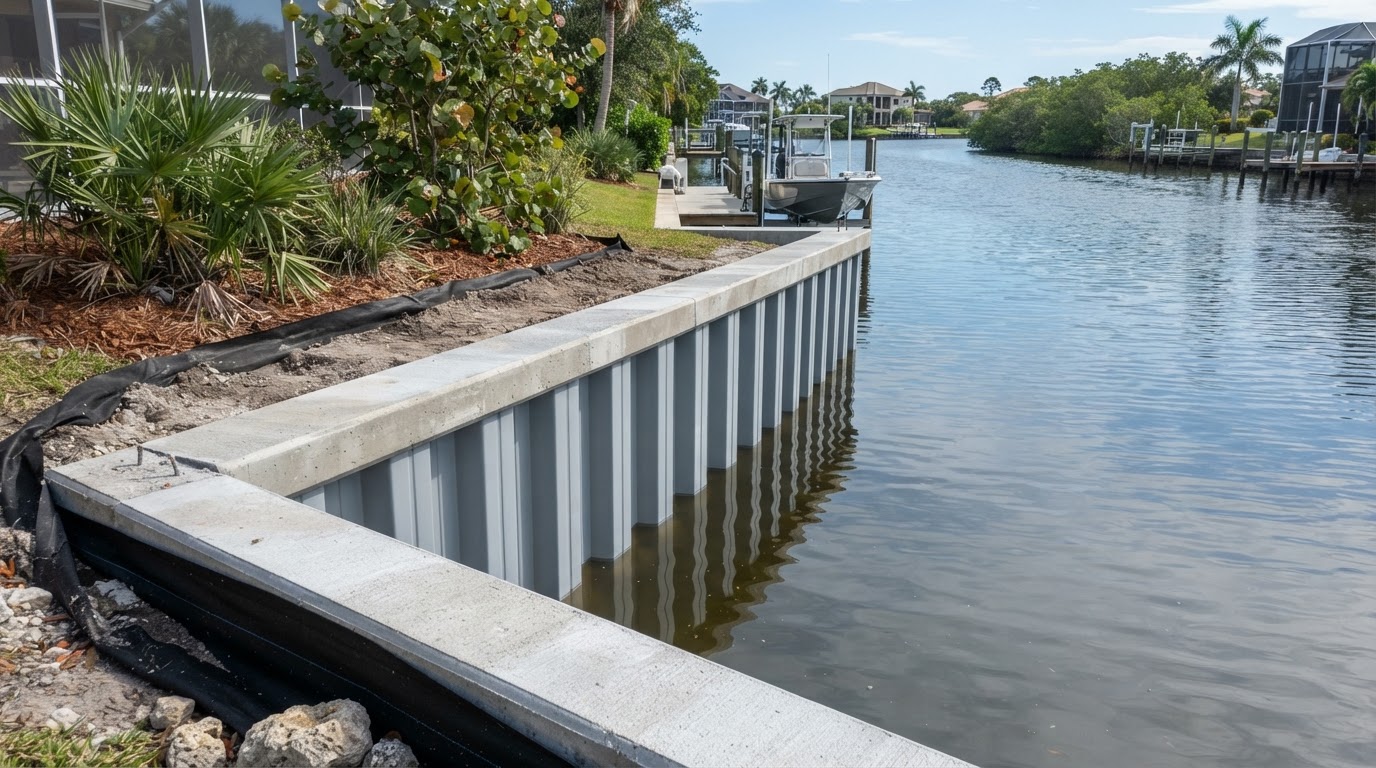
Canal lots are often narrow, with limited room for equipment and limited waterway width for barges or pile-driving rigs. Neighboring seawalls may share a property line or tie into a common alignment, and an existing dock or boat lift may be attached to or supported by the wall being replaced. Each of these conditions affects how demolition, temporary support, and new construction are sequenced.
Replacing a wall around an attached dock or lift requires planning to preserve appropriate boat access and avoid damaging adjacent improvements. Tight access can limit equipment choices and may influence material selection, construction method, and project timeline.
- Waterway width and barge or equipment access
- Neighboring seawall connections and property lines
- Existing docks, boat lifts, and utilities tied to the wall
- Temporary support during demolition and reconstruction
- Preserving appropriate boat access during the project
Vinyl and Concrete Seawall Options Near Daytona Beach
Vinyl and concrete are common canal seawall material categories, each with different installation, cost, and site considerations. Neither is universally best for every canal property.
Vinyl Seawalls
- Sheet-pile sections driven into the canal bottom
- Often paired with a concrete or timber cap
- Corrosion-resistant in protected canal water
- Suitability depends on soil and height conditions
- Installation access and equipment considerations
Concrete Seawalls
- Reinforced panels or poured sections with tiebacks
- Heavier installation equipment may be required
- Common where greater wall height or loading applies
- Cap and anchorage designed for the site
- Access and canal width affect feasibility
Drainage, Tiebacks and Soil Retention Considerations
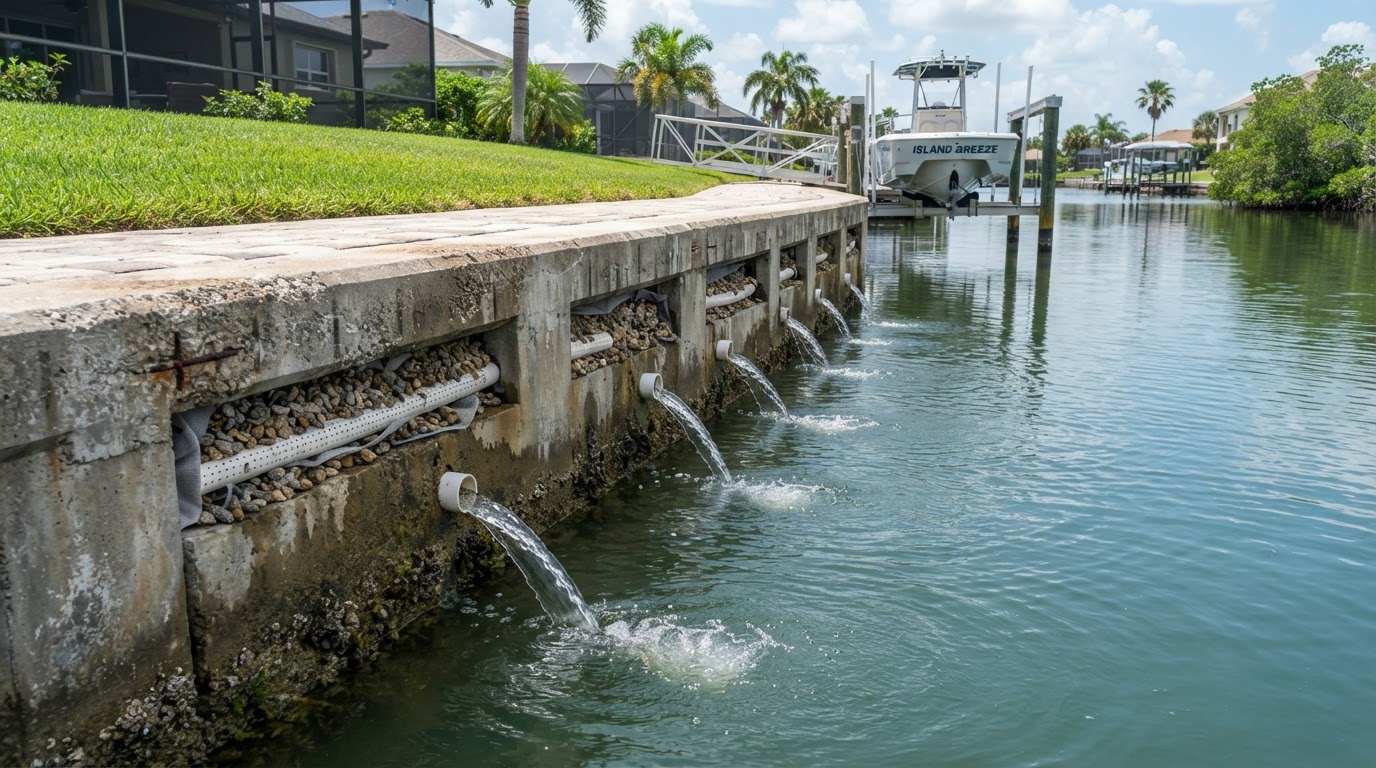
A replacement wall must retain soil and manage water behind it. Drainage, tiebacks, and backfill are part of the system, not afterthoughts.
- Weep holes or drainage outlets to relieve water pressure
- Tieback or anchor design for the retained soil loads
- Backfill placement and compaction behind the new wall
- Filter material to prevent soil migration through drainage
- Coordination with existing drainage outlets from the lot
Replacing a Seawall Around Existing Docks and Boat Lifts
When a dock or boat lift is attached to or supported by the canal seawall, replacement planning must account for those structures. The dock may need temporary support during wall removal, and lift pilings or mounts may need to be reconnected, relocated, or re-engineered to work with the new wall alignment. An attached dock can also restrict access to the wall face and influence construction sequencing.
A boat lift's pilings or cradle may be independent of the seawall or tied into it; either arrangement changes how the replacement proceeds. Preserving appropriate boat access during and after the project is a planning consideration, not a guarantee that the existing layout can remain unchanged.
- Temporary support for an attached dock during wall work
- Lift piling or mount reconnection or relocation
- Access restrictions from existing dock framing
- Re-establishing appropriate boat access afterward
- Coordination with utilities along the waterfront
Permits and Site Review for Canal Seawall Projects
Canal seawall replacement may involve local requirements, state environmental review, submerged-lands considerations, and adjacent-property questions depending on the parcel and scope. An existing wall does not automatically approve a replacement, and a neighboring property's approval does not establish the same rights for another parcel. Work within an existing footprint, a changed alignment, or a wall-in-front concept can raise different review questions. Project-specific determinations are referred to the appropriate authority and qualified professionals.
Related Services Near Daytona Beach
Explore other marine construction topics relevant to your waterfront project.