
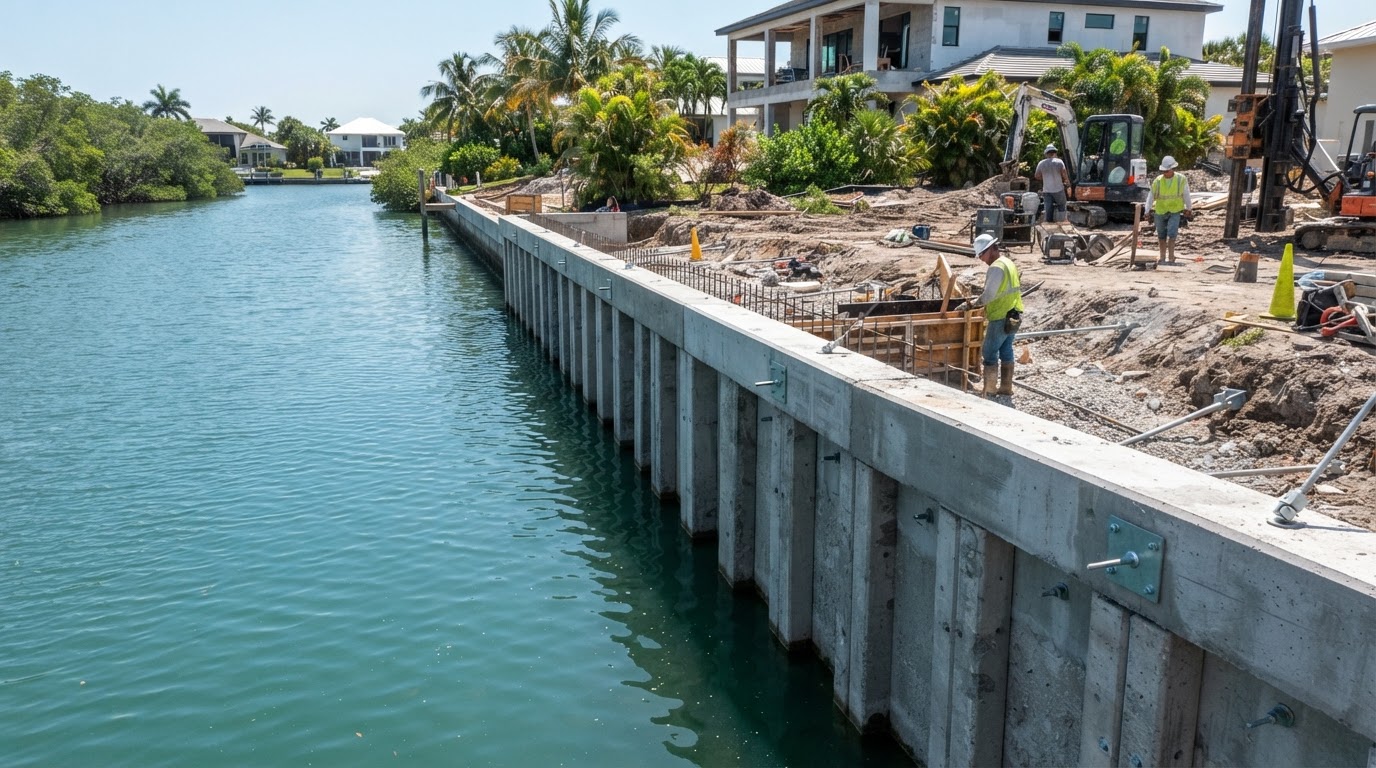
Seawall Encasement & New Wall Construction Daytona Beach
Some seawall replacement concepts involve placing a new retaining structure waterward of an existing deteriorated wall rather than removing the old wall entirely. This page explains the concept of seawall encasement in Daytona Beach, the considerations that determine whether a wall-in-front approach is feasible, and why it is not automatically simpler, cheaper, or easier to permit than full removal and replacement.
Request a Marine Construction Estimate
Share your dock, seawall, or boat lift project details and we'll review the requirements for your Daytona Beach area waterfront property.
What Is Seawall Encasement in Daytona Beach?
Seawall encasement generally describes installing a new retaining wall in front of an existing, deteriorated wall. The concept appeals to owners who hope to avoid the cost and disruption of removing the old structure. Whether such an approach is feasible or allowable, however, depends on design, existing conditions, available space, waterfront boundaries, environmental impacts, and agency approvals.
This page does not present encasement as a universal solution. In some cases the old wall can remain in place; in others it must be removed. Encasement is not automatically less expensive, stronger, quicker, or easier to permit than a full removal and replacement — each path has its own considerations.
- Condition of the existing structure
- Proposed alignment of the new wall
- Available waterway width
- New wall placement relative to the old wall
- Retaining and supporting soils
- Connections or tiebacks
- Drainage and shoreline footprint changes
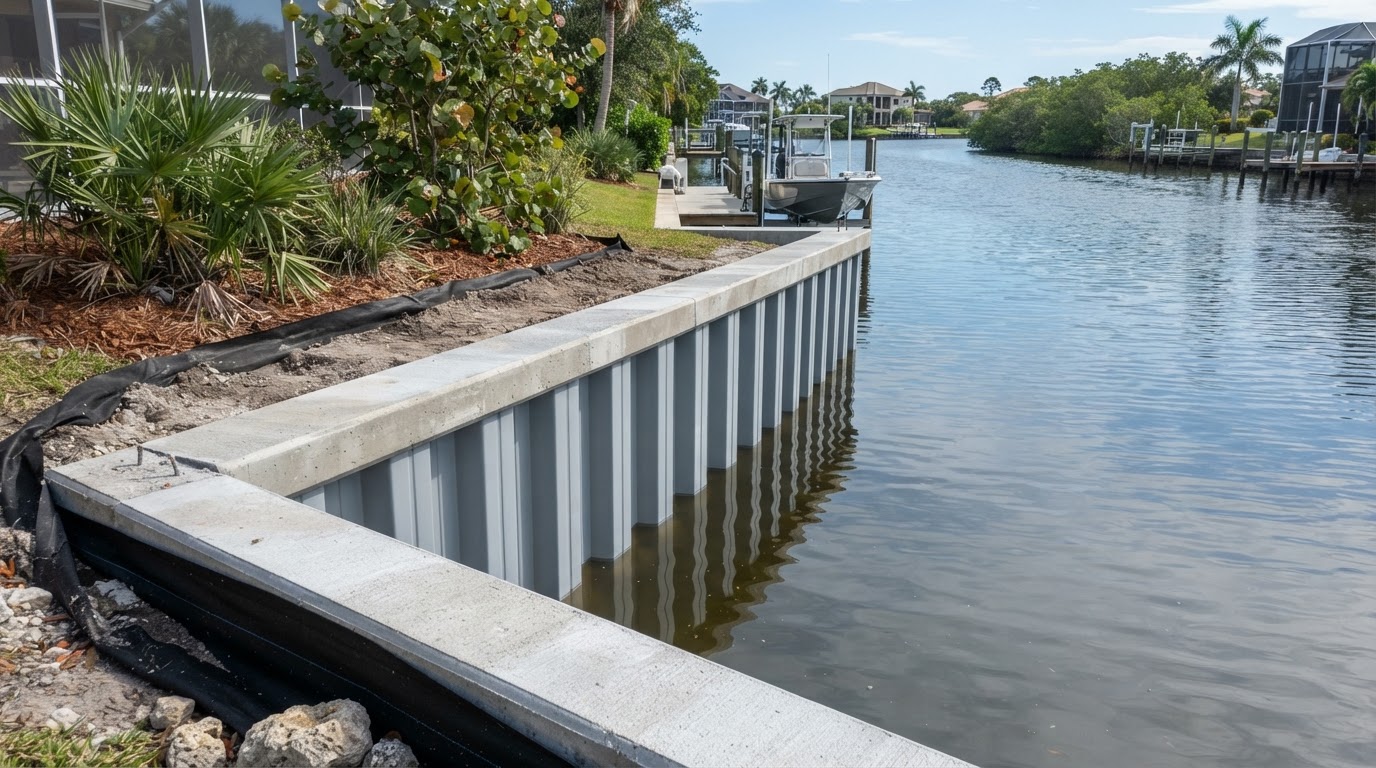
New Seawall in Front of an Existing Wall: Key Considerations
A wall-in-front concept raises questions about where the new wall sits relative to the old one, how the soils between and behind the walls are retained, and how drainage is managed. Placing a new wall waterward can change the shoreline footprint and the available water area, which can affect navigation, habitat, and submerged-land questions.
The existing wall's condition matters. A deteriorated wall left in place may continue to degrade, and its presence can influence the new wall's design. Whether the old wall can remain, must be partially removed, or requires full demolition is a project-specific determination, not a default.
- Proposed alignment and available waterway width
- Soil retention between and behind the walls
- Drainage design for the new configuration
- Changes to the shoreline footprint
- Possible impact on access or navigation
- Habitat and submerged-land questions
- Adjacent structures and demolition or disposal needs
Encasement Versus Full Seawall Replacement
These are planning questions, not assertions that either approach is approved. Each path has its own design, access, and review considerations.
Wall-in-Front Concept
- Can the proposed alignment be designed and permitted?
- What happens to drainage and shoreline position?
- How much water area remains available?
- Can the old wall remain, or must it be removed?
- How are soils between the walls retained?
Full Removal & Replacement
- What demolition and disposal considerations apply?
- What temporary shoreline support is needed?
- How is access managed during reconstruction?
- How does the new wall's alignment compare to the old?
- What reconstruction sequencing is required?
Waterway Space and Shoreline Footprint Near Daytona Beach
Placing a new wall waterward of an existing wall can change the shoreline footprint and reduce the available water area. Depending on the waterbody, that change can raise questions about navigation, habitat, and sovereign submerged lands. Whether encroaching waterward is allowed depends on the parcel, the waterbody, and applicable review — it is not automatically permitted simply because a wall already exists.
Engineering and Permit Review for Wall-in-Front Concepts
A wall-in-front concept requires qualified engineering review and applicable permit review. The old wall's presence does not exempt the new wall from either.
- Structural design of the new wall and any retained soils
- Drainage design for the new configuration
- Alignment relative to the existing wall and waterfront boundary
- Environmental and submerged-land review where applicable
- Adjacent property and navigation considerations
- Demolition or disposal where the old wall must be removed
Planning the Next Step for a Deteriorating Seawall
For a deteriorating seawall, the first step is understanding the existing wall's condition and the options that fit the site. Encasement is one possible concept; full replacement is another. The choice depends on the wall, the waterway, the available space, and the applicable review — not on a preference for avoiding demolition.
Qualified engineering and permit review determine whether a wall-in-front design is feasible and allowable at a given property. Neither approach is approved until that review is complete.
- Assess the existing wall's condition and remaining function
- Evaluate available waterway width and alignment options
- Compare encasement against full replacement for the site
- Identify drainage, habitat, and submerged-land questions
- Refer design and approval to qualified professionals
Related Services Near Daytona Beach
Explore other marine construction topics relevant to your waterfront project.