
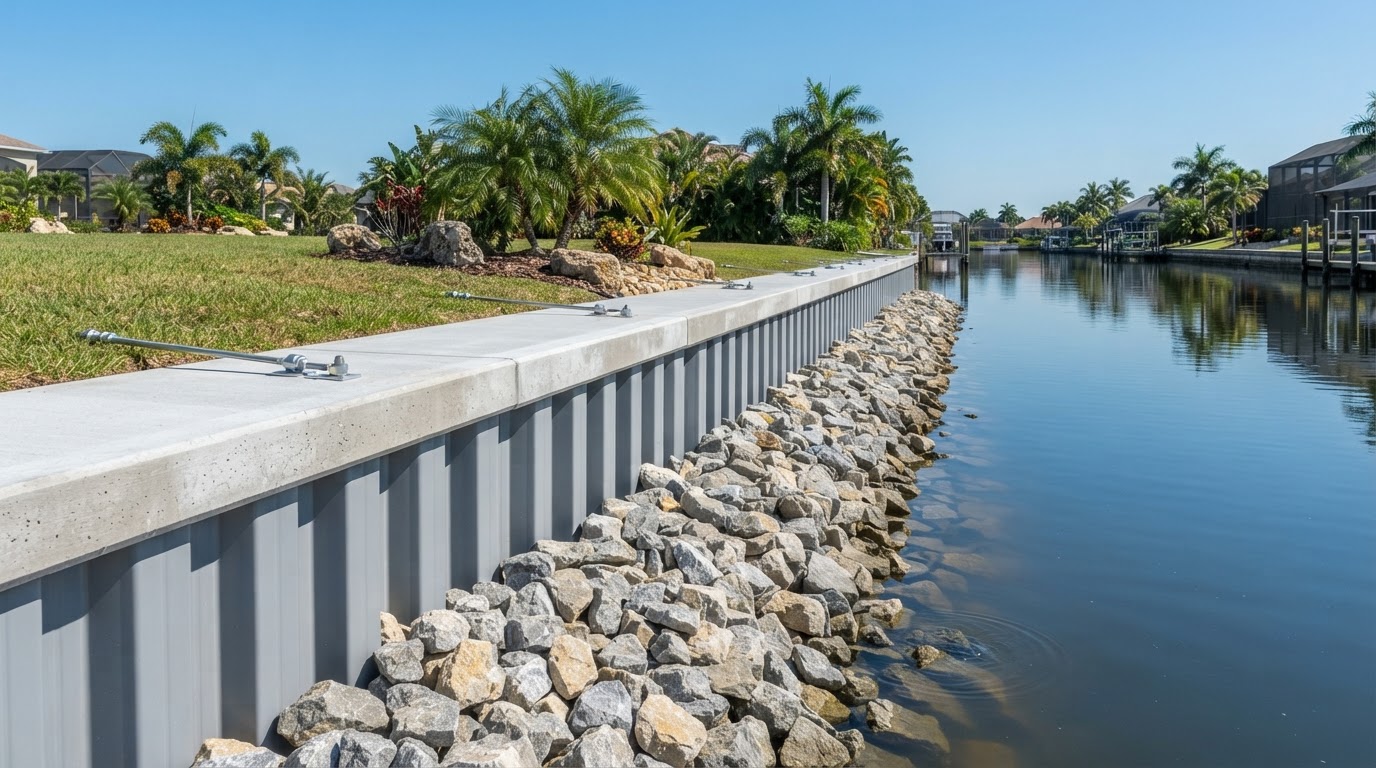
Beachfront Seawalls & Coastal Armoring Daytona Beach
Atlantic beachfront conditions differ from protected Halifax River, Intracoastal, canal, lagoon, and inland freshwater shorelines. This page reviews beachfront seawalls and coastal armoring in Daytona Beach at a general level — erosion, wave and storm exposure, existing coastal structures, engineering, and the site-specific approvals that govern oceanfront work — without treating oceanfront armoring and ordinary canal seawall construction as interchangeable.
Request a Marine Construction Estimate
Share your dock, seawall, or boat lift project details and we'll review the requirements for your Daytona Beach area waterfront property.
Beachfront Seawalls and Coastal Armoring in Daytona Beach
Beachfront and oceanfront properties face direct Atlantic wave exposure, storm surge, coastal erosion, and the dynamic relationship between the beach, dunes, and any existing structures. Coastal armoring is a different category of work from a canal or riverfront seawall, with different engineering, environmental, and regulatory considerations. The two should not be treated as interchangeable projects.
This page provides general information about coastal armoring concepts, existing structure assessment, and the review that oceanfront work may involve. It does not promise that constructing a seawall is legally available to every oceanfront owner, that a specific armoring design is always permitted, or that any approach guarantees storm protection, erosion prevention, or a particular structural life.
- Coastal erosion and wave exposure
- Storm-related damage and surge
- Beach and dune relationships
- Existing coastal structures and alignment
- Adjacent properties and shoreline effects
- Qualified coastal engineering
- Regulatory and permit review
How Oceanfront Shorelines Differ from Canal and Riverfront Properties
Oceanfront shorelines are exposed to direct Atlantic wave energy, storm surge, and active coastal erosion, and they interact with the beach and dune system. Protected canal, Intracoastal, lagoon, and inland freshwater shorelines face very different conditions. A seawall or armoring concept that may be appropriate on a calm canal is not automatically appropriate on an exposed beachfront, and the engineering, materials, and review differ accordingly. Treating the two as the same project is inaccurate.
Common Coastal Erosion and Structural Concerns
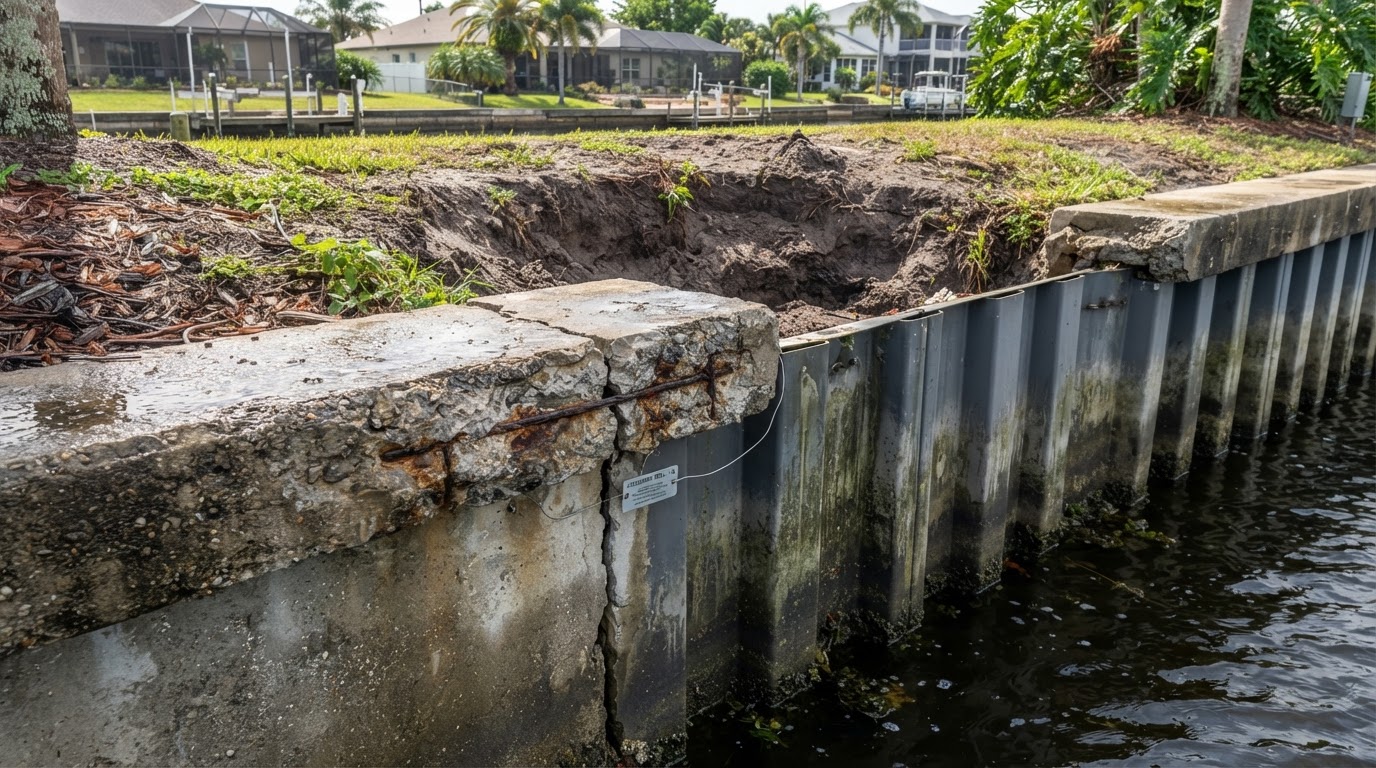
Beachfront property owners may observe erosion at the toe of an existing structure, loss of beach in front of a wall, storm damage to a cap or wall face, or movement of an older armoring structure. These conditions reflect the dynamic coastal environment and may point to the need for assessment of an existing structure or consideration of repair, replacement, or alternative approaches.
Visible conditions do not by themselves establish whether a structure can be repaired, replaced, or newly built. Coastal work may involve Coastal Construction Control Line considerations and other applicable authorities, and not every property falls within the same regulatory boundary or has identical requirements. A qualified coastal assessment is the appropriate next step.
- Toe erosion and loss of beach in front of a wall
- Storm damage to caps, faces, or connections
- Movement of older armoring structures
- Dune and shoreline relationship changes
- Effects on adjacent shoreline
Coastal Armoring Concepts Near Daytona Beach
Coastal armoring covers a range of approaches. These are informational concepts, not preapproved construction options, and suitability depends on the property and review.
Seawall & Repair
- Assessment of an existing beachfront wall
- Localized maintenance or repair where appropriate
- Substantial replacement where warranted
- Engineering for wave and surge loads
- Subject to coastal controls and review
Revetment & Alternatives
- Riprap or revetment concepts
- Sloped armoring rather than a vertical wall
- Living shoreline approaches where suitable
- Different footprint and habitat effects
- Also subject to coastal review
Engineering and Environmental Review
Coastal armoring is engineered for the actual wave, surge, and erosion conditions at the parcel, and the design considers the structure's foundation, height, and connection to the shoreline. Environmental review considers effects on the beach, dunes, adjacent shoreline, and any protected habitat or species. These are not generic design choices; they depend on the property and the proposed scope.
No universal claims are made here about storm protection, erosion prevention, structural life expectancy, or property protection. A qualified coastal engineer and the applicable authorities determine what is appropriate and allowable for a specific parcel. This page does not invent those determinations.
- Design for actual wave and surge loads
- Foundation, height, and shoreline connection
- Effects on beach, dunes, and adjacent shoreline
- Protected habitat and species considerations
- Qualified coastal engineering and review
Coastal Construction Controls and Site-Specific Approvals
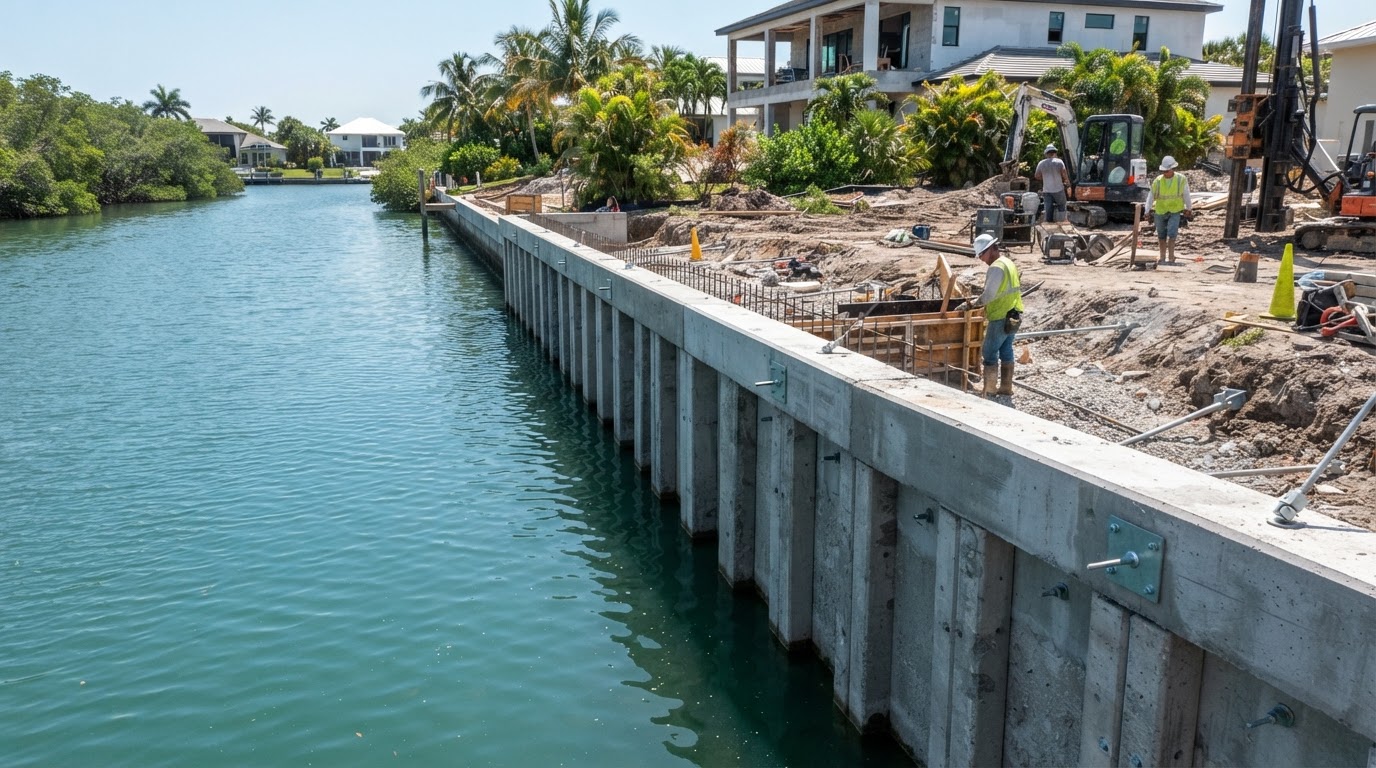
Beachfront work may involve Coastal Construction Control Line considerations and other authorities. Requirements depend on the parcel, not on a single rule for the whole coast.
- Coastal Construction Control Line considerations where applicable
- State and federal coastal jurisdiction
- Local requirements and property boundaries
- Adjacent property and shoreline effects
- Sea turtle nesting-season considerations where verified
Why Permit Requirements Depend on the Property
Permit requirements for beachfront work depend on the parcel's location, the existing conditions, the proposed scope, and which authorities have jurisdiction. Not every oceanfront property falls within the same regulatory boundary, and a neighboring property's approval does not establish the same rights for another parcel. Sea turtle nesting-season considerations are addressed only when verified for the location, timing, and scope — this page does not invent turtle-season dates or construction prohibitions. Detailed coastal controls will be covered in dedicated resource pages after official-source review; until then, project-specific determinations are referred to the appropriate authority and qualified professionals.
Related Services Near Daytona Beach
Explore other marine construction topics relevant to your waterfront project.