
Hurricane-Damaged Seawall Repair Daytona Beach
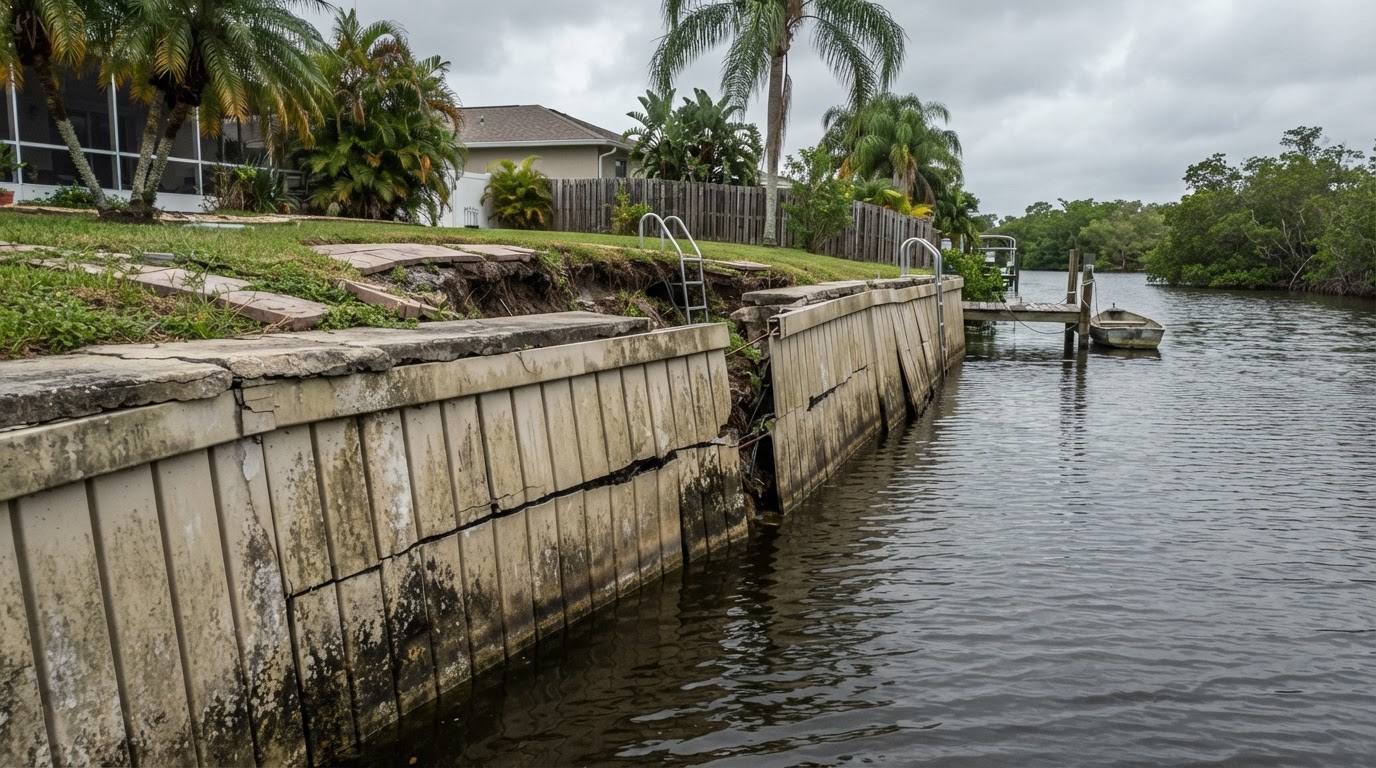
A hurricane or named storm can expose or worsen conditions that were already developing along a seawall. This page explains what Daytona Beach waterfront owners can safely document after storm damage, why visible damage alone does not establish the full condition of a wall, and how targeted repair options are evaluated against the possibility of more substantial rebuilding.
Request a Marine Construction Estimate
Share your dock, seawall, or boat lift project details and we'll review the requirements for your Daytona Beach area waterfront property.
Assessing Storm-Related Seawall Damage in Daytona Beach
After a storm passes, the most useful first step is careful observation from a safe location. A seawall may show new cracks, shifted sections, or lost backfill, yet the full condition of the wall, its anchorage, and the soil behind it cannot be determined from the surface alone. Storm-related damage often combines with pre-existing wear, so a wall that performed for years may suddenly reveal distress that was already progressing.
Targeted hurricane damage repair focuses on identifying which components can be addressed and which conditions point toward broader structural concerns. The appropriate response depends on the wall's design, materials, soil support, drainage, and applicable approvals — not on the fact that a storm caused the visible change.
- Newly opened or widened cracks
- Shifted or displaced wall sections
- Loss of backfill or voids near the wall
- Damaged caps or separated joints
- Exposed tiebacks or structural connections
- Changes in wall alignment
- Erosion around drainage outlets
Recognizing Storm-Related Seawall Damage in Daytona Beach
Observable changes after a storm are worth noting, but they are documentation, not a technical determination of the wall's condition.
Cracks & Joint Separation
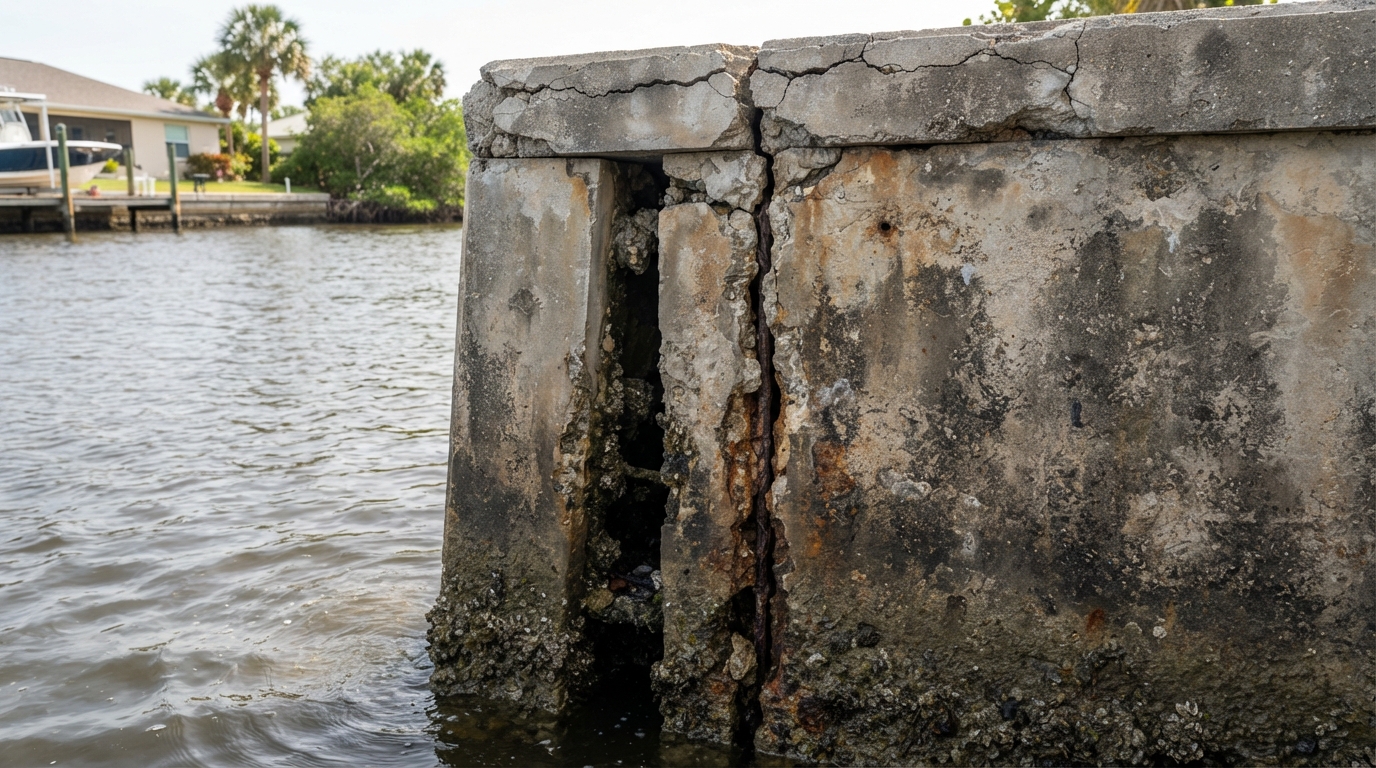
New or widened cracks in a concrete cap, separated vinyl panel joints, or spalling along the cap can indicate movement or stress from storm surge and wave action.
Displacement & Alignment
Sections that appear shifted, tilted, or out of alignment may signal movement of the wall or its supporting soil. The extent of movement requires qualified evaluation.
Backfill & Soil Loss
Depressions, voids, or missing soil behind the wall suggest material has migrated through or beneath the structure. Surface appearance may not reveal the full extent of loss.
Exposed Tiebacks
Tieback rods, anchors, or structural connections that become visible may indicate the wall or surrounding soil has moved relative to its anchorage system.
What to Document Before Requesting a Seawall Evaluation
Property owners may record what changed and photograph observable conditions from a safe location. Do not enter unstable areas or excavate behind a wall to investigate damage.
- Photographs of visible cracks, gaps, and displacement from a safe vantage
- Notes on when the damage was first observed relative to the storm
- Approximate length of the affected wall section
- Location of any voids, depressions, or lost backfill
- Condition of drainage outlets, weep holes, and caps
- Any changes to adjacent docks, lifts, or walkways
- Whether utilities near the wall appear affected
Targeted Hurricane Damage Repairs Near Daytona Beach
When storm damage is limited to specific components, targeted repair may address cracks, joints, caps, drainage, or localized soil loss without rebuilding the entire wall. The feasibility of a focused repair depends on whether the wall's overall structure, anchorage, and soil support remain sound.
Repair options are considered against the wall's materials, the extent of movement, and whether the underlying cause of the damage is ongoing. A crack that is sealed without addressing drainage pressure or soil loss may recur. Qualified evaluation helps distinguish cosmetic damage from conditions that point toward deeper structural concerns.
- Crack and joint sealing where the wall remains structurally sound
- Cap repair or replacement for spalled or broken sections
- Drainage and weep-hole restoration to relieve pressure
- Localized backfill and soil-loss repair
- Tieback or anchor assessment where connections are exposed
When Storm Damage May Require More Than a Repair
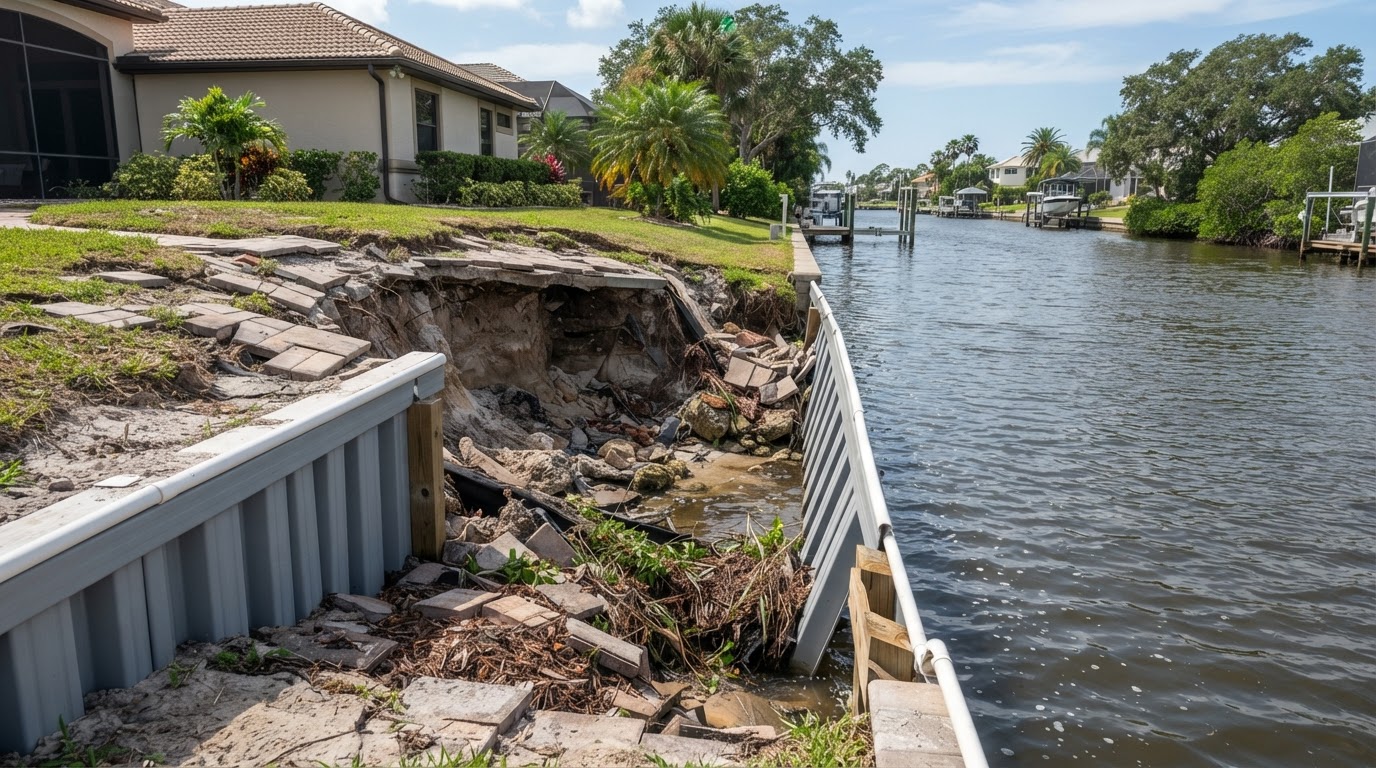
Significant wall movement, ongoing soil loss, damaged electrical infrastructure, or exposed utilities call for professional attention rather than a targeted patch. Where the wall has lost structural function or the damage is extensive, rebuilding may be the appropriate path. Explore post-storm seawall rebuilding considerations to compare repair against full replacement planning.
Drainage, Backfill and Tieback Concerns
Storm damage often interacts with conditions that were already present. Drainage pressure, lost backfill, and tieback distress can each produce visible symptoms that resemble simple storm damage.
- Hydrostatic pressure from inadequate drainage can stress the wall
- Lost backfill reduces soil support and may continue migrating
- Tieback or anchor distress can allow outward movement
- Storm surge can accelerate pre-existing deterioration
- Adjacent dock or lift connections may transfer load to the wall
Waterfront Access and Environmental Review
Post-storm repair planning also considers site access, the waterbody, and any applicable environmental or permitting review. Storm damage does not automatically exempt a project from review — the requirements depend on the parcel, the waterbody, the scope of work, and the relevant authorities.
Where repair work extends beyond like-for-like restoration of an existing footprint, additional review may apply. Project-specific determinations should be referred to the appropriate authority and qualified professionals rather than assumed from general guidance.
- Land or water access for equipment and materials
- Adjacent property and shoreline conditions
- Applicable local, state, or federal review where relevant
- Sovereign submerged lands considerations where applicable
- Habitat and shoreline protections that may apply
Related Services Near Daytona Beach
Explore other marine construction topics relevant to your waterfront project.