
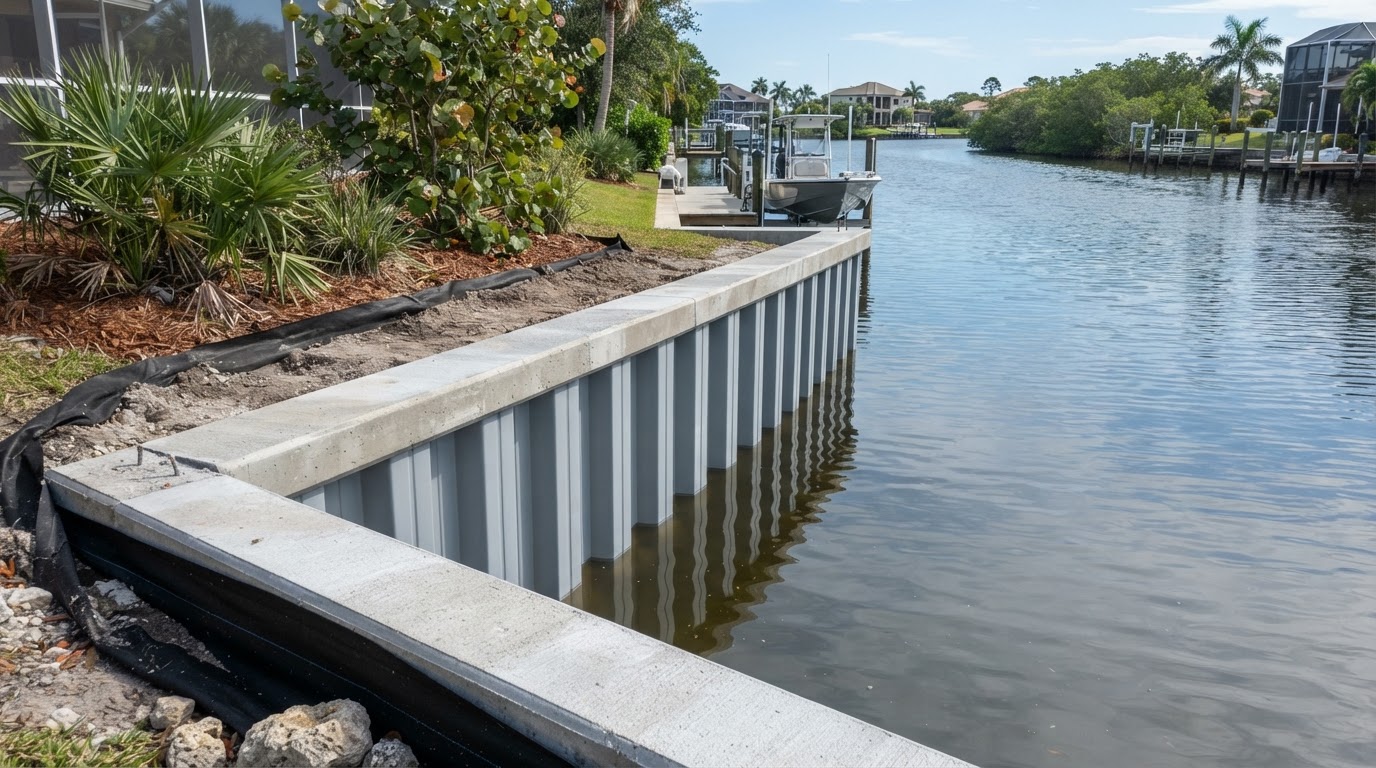
Post-Storm Seawall Rebuilds & Replacement Daytona Beach
When storm damage is extensive or a seawall has lost structural function, focused repair may no longer be appropriate. This page explains how post-storm seawall rebuilds in Daytona Beach differ from targeted repairs, what planning considerations shape a substantial reconstruction, and why an existing wall does not automatically guarantee a simpler approval path.
Request a Marine Construction Estimate
Share your dock, seawall, or boat lift project details and we'll review the requirements for your Daytona Beach area waterfront property.
When Rebuilding May Be Considered in Daytona Beach
A post-storm rebuild becomes a consideration when a seawall has displaced significantly, lost structural function, or sustained damage too extensive for localized repair. Rebuilding is a separate planning path from the targeted repair assessment covered on the hurricane-damaged seawall repair page — here the question is whether and how to reconstruct the wall rather than patch a damaged component.
Rebuild planning weighs the condition of remaining wall sections, the soil and backfill, the anchorage system, drainage, materials, site access, and any adjacent docks or lifts. Each of these factors influences whether the project follows the existing alignment or takes a substantially different approach.
- Condition and alignment of remaining wall sections
- Soil and backfill conditions behind the wall
- Tieback or anchorage system integrity
- Drainage and hydrostatic pressure considerations
- Wall material and design
- Site elevation, access, and adjacent improvements
- Existing docks and boat lifts connected to the wall
Storm Repair Versus Full Seawall Replacement
Targeted repair addresses specific damaged components where the wall remains structurally sound. Rebuilding addresses a wall that has lost function or sustained extensive damage.
Targeted Storm Repair
- Addresses cracks, caps, joints, or localized soil loss
- Considered where the wall's overall structure remains sound
- May involve drainage or tieback restoration
- Scope stays within the existing footprint
- Evaluated against the underlying cause of damage
Post-Storm Rebuild
- Considered where the wall has lost structural function
- Involves substantial reconstruction or full replacement
- Weighs alignment, materials, and anchorage design
- May require demolition and disposal sequencing
- Reviewed against access, environmental, and permit factors
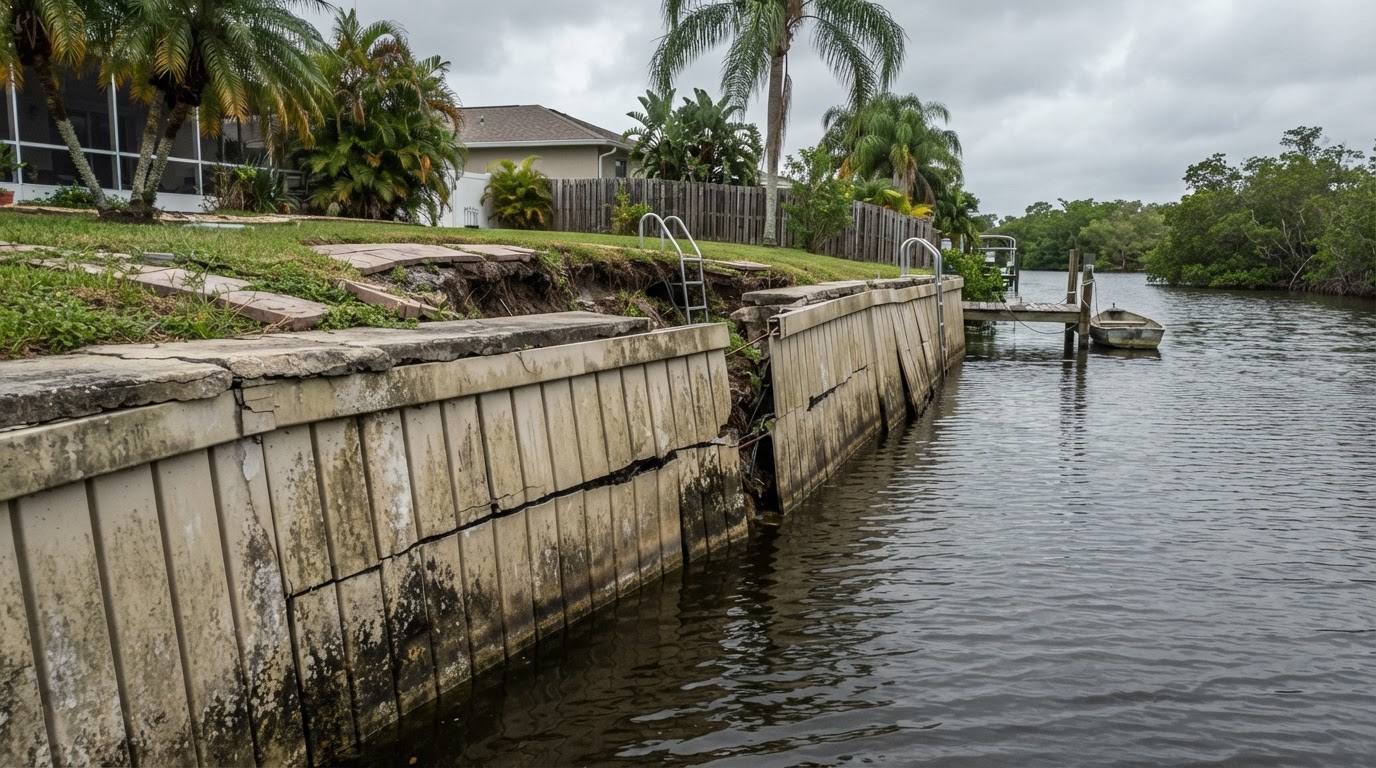
Evaluating the Existing Shoreline and Wall Structure
A rebuild evaluation begins with the condition of what remains. The alignment of surviving sections, the state of the soil and backfill, the integrity of any tieback or anchorage system, and the drainage path all inform whether the new wall can follow the existing line or must be redesigned.
Adjacent improvements matter too. A dock, boat lift, walkway, utility, or neighboring seawall connected to the damaged wall can affect demolition sequencing, temporary support, and the rebuilt wall's design. These relationships are part of the planning conversation, not an afterthought.
- Remaining wall alignment and section condition
- Soil and backfill stability
- Tieback and anchorage system status
- Drainage path and hydrostatic considerations
- Adjacent dock, lift, and utility connections
- Neighboring shoreline improvements
Rebuild Materials and Design Considerations Near Daytona Beach
Vinyl and concrete are common material categories for rebuilt seawalls, but neither is a universal recommendation. Material selection follows the site conditions, exposure, and qualified design review.
Vinyl Sheet Piling
Vinyl seawalls offer corrosion resistance in salt and brackish water. Suitability depends on wall height, soil conditions, exposure, and the site's loading requirements.
Reinforced Concrete
Concrete bulkheads are used where heavier structural capacity is needed. Design depends on wave exposure, soil loads, and engineering review of the section.
Tiebacks & Anchorage
A rebuilt wall's anchorage system is designed for the site's lateral soil pressure. Existing tiebacks are not automatically reusable without evaluation.
Drainage Design
Drainage and weep-hole systems relieve hydrostatic pressure behind the wall. Rebuild planning includes drainage as part of the wall's long-term performance.
Demolition, Access and Construction Sequencing
Rebuilding a seawall involves more steps than a repair. Demolition, disposal, temporary support, and equipment access all shape the construction sequence.
- Demolition and disposal of the existing wall where required
- Temporary shoreline support during reconstruction
- Land or barge access for equipment and materials
- Sequencing around adjacent docks, lifts, and utilities
- Piling or sheet installation for the new wall
- Cap, drainage, and backfill restoration
Approvals and Environmental Questions Before Rebuilding
Rebuilding a seawall is not automatically approved simply because one existed before. Reconstructing along an existing alignment, installing a substantially different wall, extending a wall, or changing a shoreline footprint can each raise different review questions. Applicable local, state, and federal review — and sovereign submerged lands considerations where relevant — depend on the parcel and scope. Project-specific determinations should be referred to the appropriate authority and qualified professionals.
Related Services Near Daytona Beach
Explore other marine construction topics relevant to your waterfront project.