
Kayak & Paddleboard Dock Builders & Installation Daytona Beach
Paddlecraft docks are designed around how people board, launch, and exit kayaks and paddleboards — which differs from motorboat access. This page explains kayak and paddleboard dock planning near Daytona Beach, the low-freeboard and launch considerations that shape a safe design, and why no single dock satisfies every user or accessibility need.
Request a Marine Construction Estimate
Share your dock, seawall, or boat lift project details and we'll review the requirements for your Daytona Beach area waterfront property.
Kayak & Paddleboard Docks in Daytona Beach
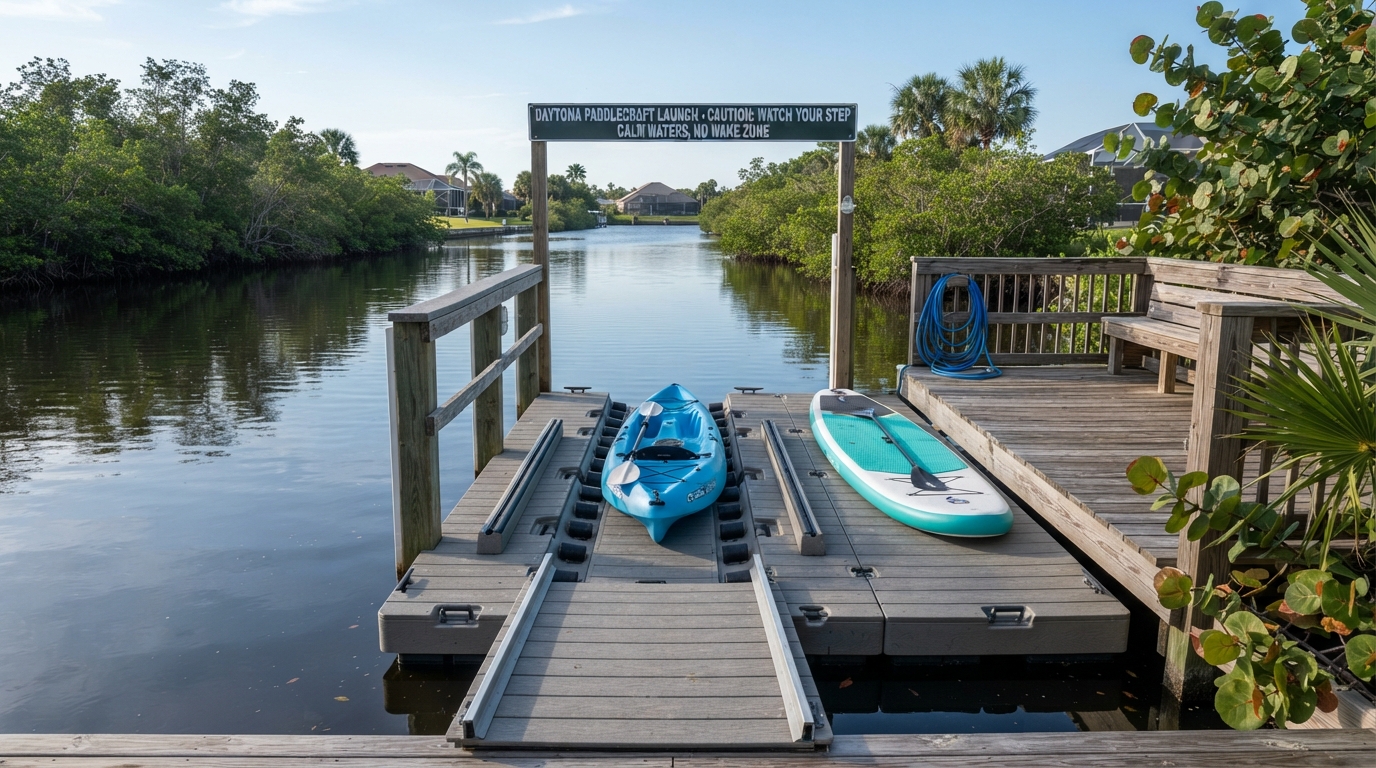
Kayak and paddleboard docks prioritize low-freeboard access, stable staging, traction, and easy boarding and exit. Paddlecraft users sit low to the water and enter from a seated or standing position, so the platform height, surface, and entry method matter more than they do for a motorboat slip. A dock built for a powerboat is not automatically a good paddlecraft launch.
Private residential launches, commercial outfitters, and public facilities each have different requirements. Public or commercial installations may involve additional accessibility, operational, owner-approval, and safety requirements that need qualified review, and no single dock design satisfies every accessibility standard.
- Low-freeboard access for boarding and exit
- Stable staging areas
- Dock surface traction
- Handholds where appropriate
- Changing water levels
- Shoreline access and launch orientation
- Fixed and floating platform options
How Paddlecraft Dock Designs Differ from Boat Docks
Motorboat docks are built around a vessel that floats at a relatively consistent freeboard and is boarded from the side. Paddlecraft are low to the water, entered from above or alongside, and easily affected by dock height and stability. A paddlecraft launch benefits from a lower platform, a stable surface, and an entry method suited to sitting or standing entry.
Because paddlecraft users interact with the dock differently, the platform height, traction, handholds, and staging area all matter. Universal dock-height measurements are not useful without support — the right height depends on the waterbody, water levels, and the users.
- Lower freeboard suited to paddlecraft entry
- Stable platform to reduce roll during boarding
- Traction surface for wet footwear and boards
- Handholds or grab points where appropriate
- Staging area for gear and craft
Low-Profile and Floating Launch Options
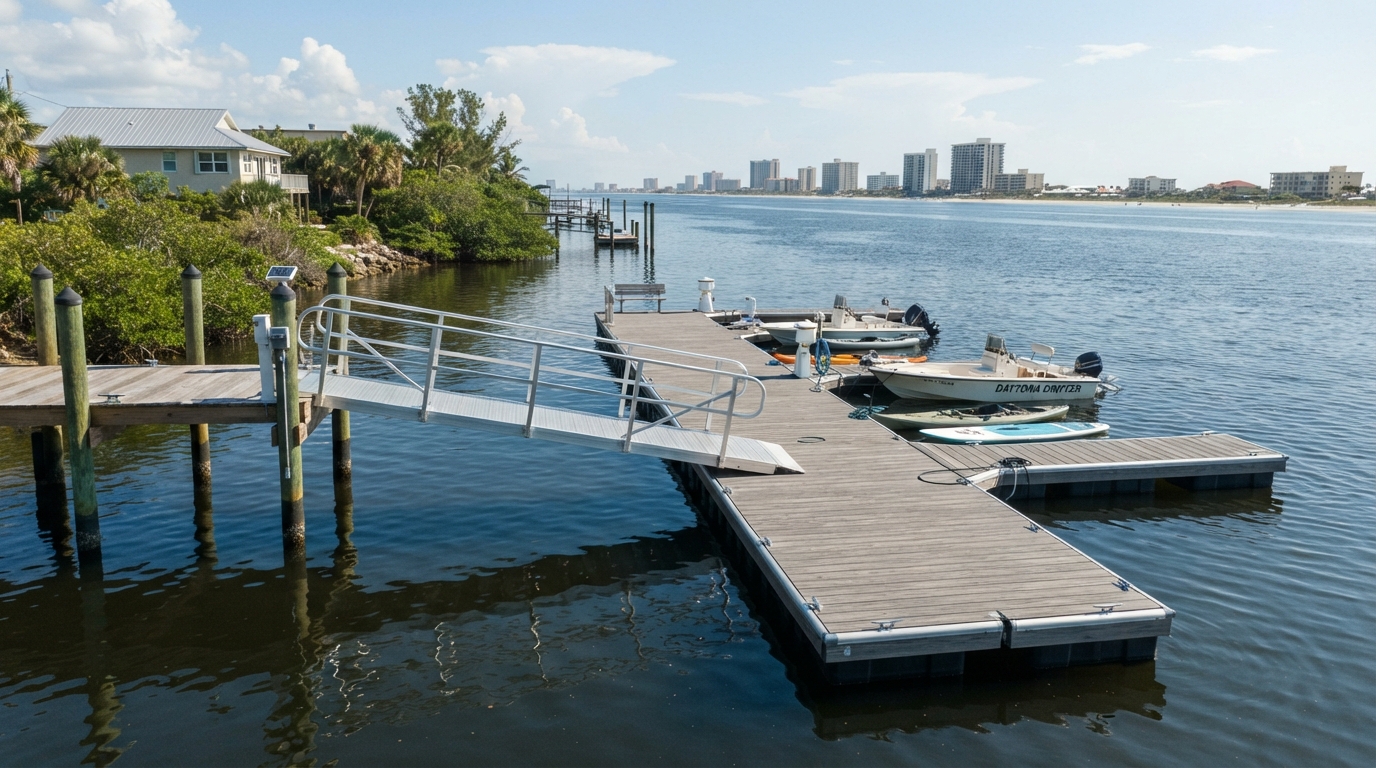
Fixed and floating platforms each suit different paddlecraft settings. The choice depends on water levels, shoreline, and user needs.
Fixed Launches
- Stable platform set to water conditions
- Pilings support a consistent height
- Height must suit low-water paddlecraft access
- May suit stable-water shorelines
- Bottom conditions affect piling feasibility
Floating Launches
- Rise and fall with changing water level
- Maintain consistent freeboard for entry
- Gangway access evaluated for slope
- May suit fluctuating or tidal water
- Anchoring or guides assessed for the site
Safe Access Considerations Near Daytona Beach
No paddlecraft arrangement is universally safe, accessible, or compliant. Dock height, traction, handholds, and stability all affect safe boarding and exit, and changing water levels can change the relationship between the dock and the water. A private residential launch and a commercial or public facility have different safety and accessibility obligations, and public or commercial installations may require qualified review.
Private Residential Paddlecraft Launches
A private launch is built for the owner's use and shoreline. It is distinct from a commercial outfitter or public facility, which carries additional requirements.
- Designed for the owner's craft and shoreline
- Launch orientation suited to the waterbody
- Optional storage for kayaks or boards
- Shoreline access and entry path
- Distinct from commercial or public facilities
Water Levels, Shoreline Conditions and Environmental Review
Changing water levels affect paddlecraft access directly — a launch that works at one water level may be too high or too low at another. Shoreline configuration, water depth, and sensitive habitat can all shape where and how a launch is placed. Shallow-water access is common for paddlecraft, which can be an advantage, but it can also involve environmental sensitivities.
Applicable review depends on the parcel, waterbody, and scope. A paddlecraft launch is not automatically exempt from permitting, and shoreline or habitat protections may apply. Project-specific determinations are referred to the appropriate authority.
- Water-level changes affecting launch height and access
- Shoreline configuration and entry path
- Shallow-water access and bottom conditions
- Sensitive habitat where present
- Applicable permitting and environmental review
Planning Materials and Layout
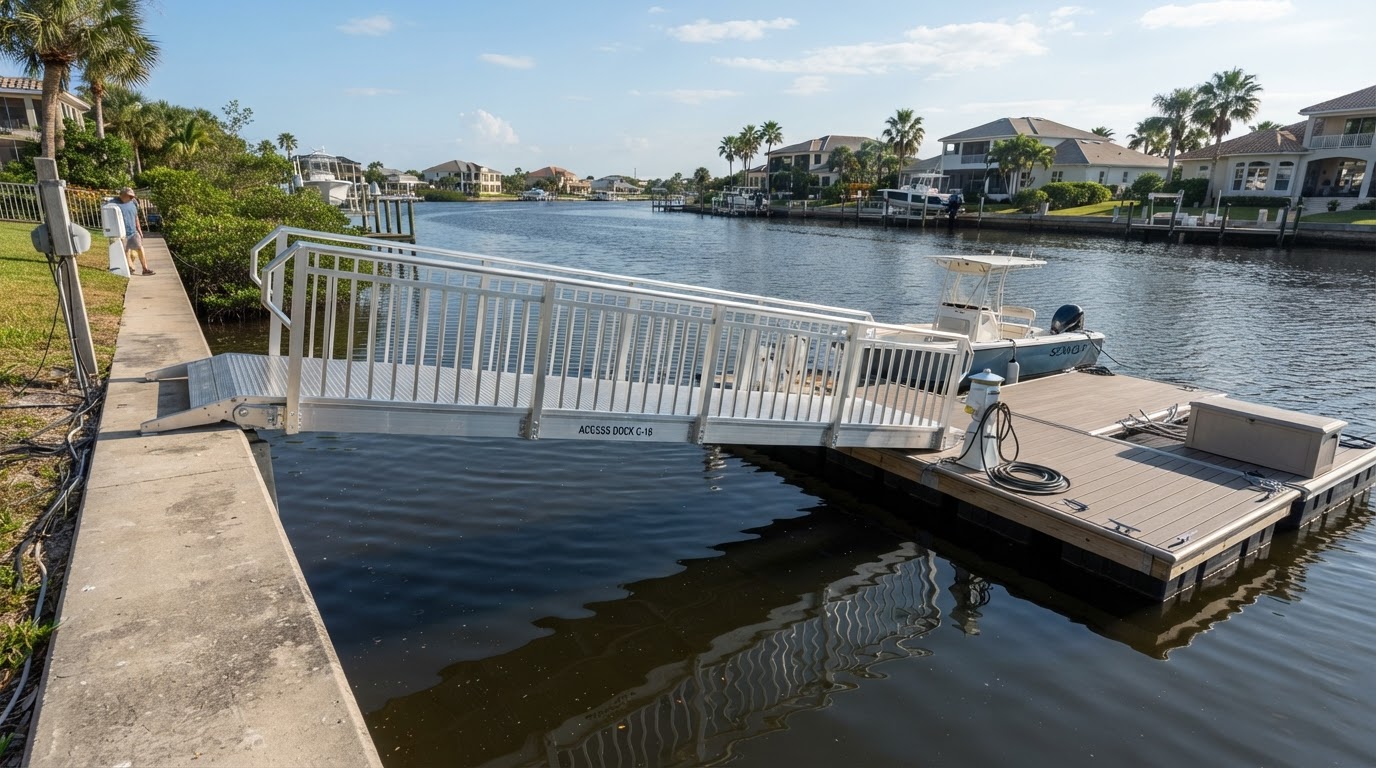
Materials and layout follow the waterbody, users, and shoreline. No single design suits every paddlecraft setting.
Materials
Marine-grade materials suited to the waterbody and exposure. Composite, wood, or modular floating sections each fit different settings and maintenance expectations.
Dimensions
Platform size and launch orientation depend on the craft, the users, and the shoreline. Appropriate dimensions are site-specific, not universal.
Storage
A private dock can include kayak or board storage where space and design allow. Storage is planned as part of the layout, not added as an afterthought.
Shoreline
Shoreline sensitivity and water depth shape placement. Shallow access suits paddlecraft but may involve habitat considerations that require review.
Related Services Near Daytona Beach
Explore other marine construction topics relevant to your waterfront project.