
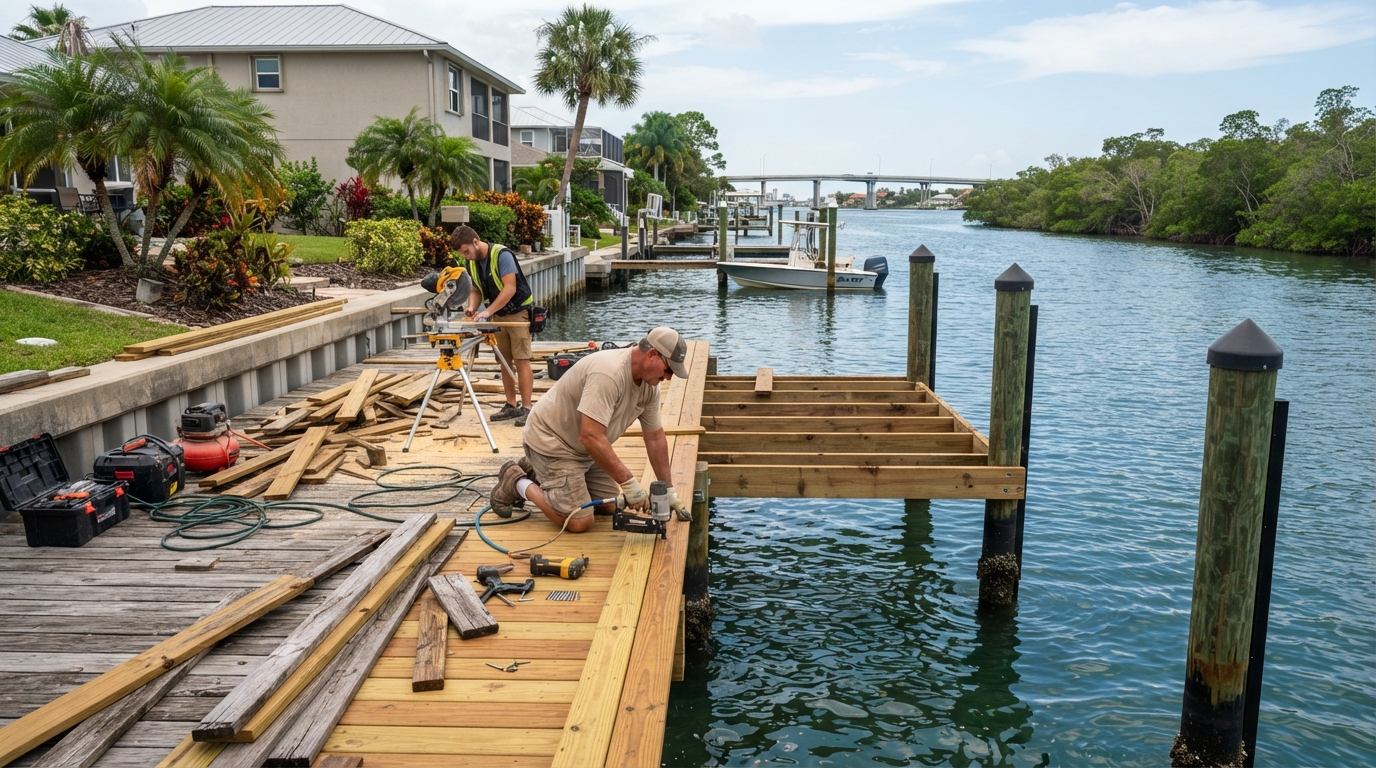
Dock & Seawall Repair for Insurance Claims Daytona Beach
This is a marine construction information page, not an insurance service. It explains dock and seawall repair planning where an insurance claim may be involved — how to document visible damage safely, the difference between construction documentation and insurance decisions, and why a contractor estimate or photograph does not establish coverage, payment, or claim approval.
Request a Marine Construction Estimate
Share your dock, seawall, or boat lift project details and we'll review the requirements for your Daytona Beach area waterfront property.
Dock & Seawall Repairs for Insurance Claims in Daytona Beach
When a dock or seawall is damaged and an insurance claim may be involved, property owners often need two different things at once: an understanding of the damage and repair options, and documentation that supports their own decision-making. This page focuses on the marine construction side — observing and recording conditions, organizing repair information, and separating repair scope from insurance decisions.
This business is not an insurance company, a claims administrator, a public adjuster, an insurance attorney, or a coverage determination specialist. A contractor estimate, photograph, inspection report, or repair recommendation does not establish insurance coverage. Coverage and claim obligations depend on the actual policy and applicable circumstances, and those determinations belong to the insurer and the policyholder.
- Observing visible damage safely
- Recording when damage was discovered, if known
- Preserving existing photographs and records
- Identifying damaged components
- Separating repair and replacement scope
- Considering structural evaluations
- Organizing estimates and construction information
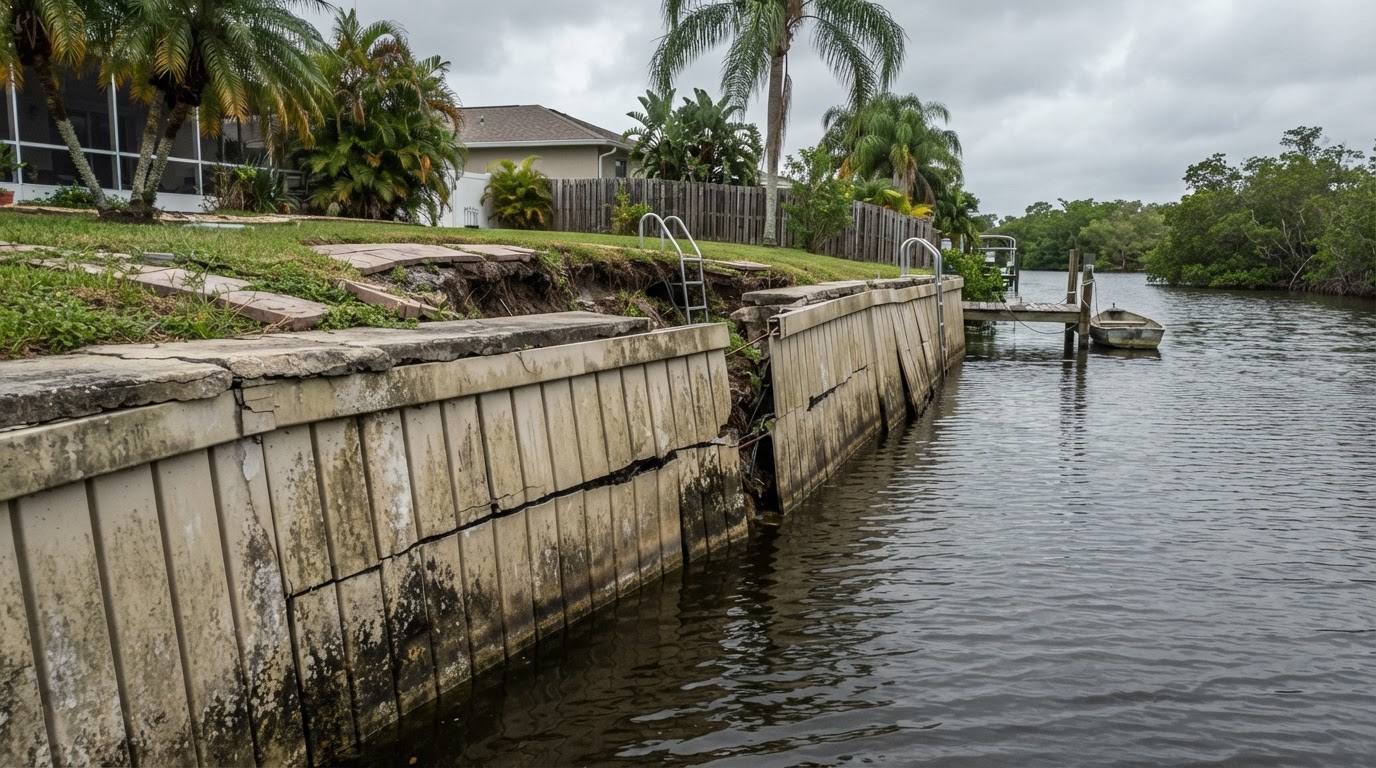
Documenting Waterfront Property Damage
Useful documentation begins with observing visible damage from a safe location and recording what changed. Where the date damage was discovered is known, note it. Preserve existing photographs and legitimate records that show the property's condition before and after. Identify which components appear damaged — decking, pilings, framing, wall sections, caps, drainage outlets, or boat lift equipment — and avoid entering unstable areas to investigate.
Do not alter damage descriptions, exaggerate scope, or present old damage as newly caused. Accurate documentation supports your own decision-making and any conversation with your insurer, but it does not prove coverage. The cause and extent of damage require appropriate evaluation, and not all storm damage is insured.
- Photograph visible damage from a safe location
- Note when damage was discovered, if known
- Preserve pre-existing condition photographs
- Identify damaged dock or seawall components
- Do not alter or exaggerate damage descriptions
Dock Repair and Seawall Repair Are Different Scopes
Dock and seawall damage are often evaluated and repaired separately, with different components, structural considerations, and documentation.
Dock Damage
- Decking, framing, and fasteners
- Broken or displaced pilings
- Displaced dock sections
- Boat lift equipment damage
- Gangway, railing, or accessory damage
Seawall Damage
- Wall cracking, joints, or cap
- Wall movement or displacement
- Soil loss behind the wall
- Drainage outlet damage
- Tieback or anchorage concerns
Why Qualified Damage Assessment Matters
Visible damage may not reveal the full extent of the problem. A dock piling can look sound above the waterline while deteriorating below it, and a seawall crack can reflect soil loss or anchorage issues that are not visible from the surface. Storm-related damage should be professionally evaluated where structural conditions, exposed utilities, or hidden damage are suspected. A qualified assessment helps define the actual repair scope and separates pre-existing conditions from newly caused damage.
Organizing Repair Estimates and Construction Information
Construction documentation helps you understand repair options. It is not an insurance determination and does not establish coverage or reimbursement.
- Estimates that describe repair and replacement scope separately
- Identification of damaged versus undamaged components
- Notes on potential hidden damage requiring evaluation
- Records of any authorized work performed
- Separation of pre-existing and newly caused conditions
Insurance Coverage Versus Construction Repair Planning
Construction repair planning and insurance coverage are separate matters. A repair estimate describes what work may be needed and what it may involve; it does not determine whether the damage is covered, what the insurer will pay, or whether a claim will be approved. Coverage depends on the actual policy, the cause of loss, exclusions, and the applicable claim process.
This business does not represent the insurer, provide legal or public-adjusting services, or determine policy coverage. Questions about coverage, claim obligations, and reimbursement belong with your insurer and, where appropriate, qualified legal or adjusting professionals.
- An estimate describes scope, not coverage
- Coverage depends on the policy and cause of loss
- Not all storm damage is insured
- Claim decisions belong to the insurer and policyholder
- Legal and adjusting questions go to qualified professionals
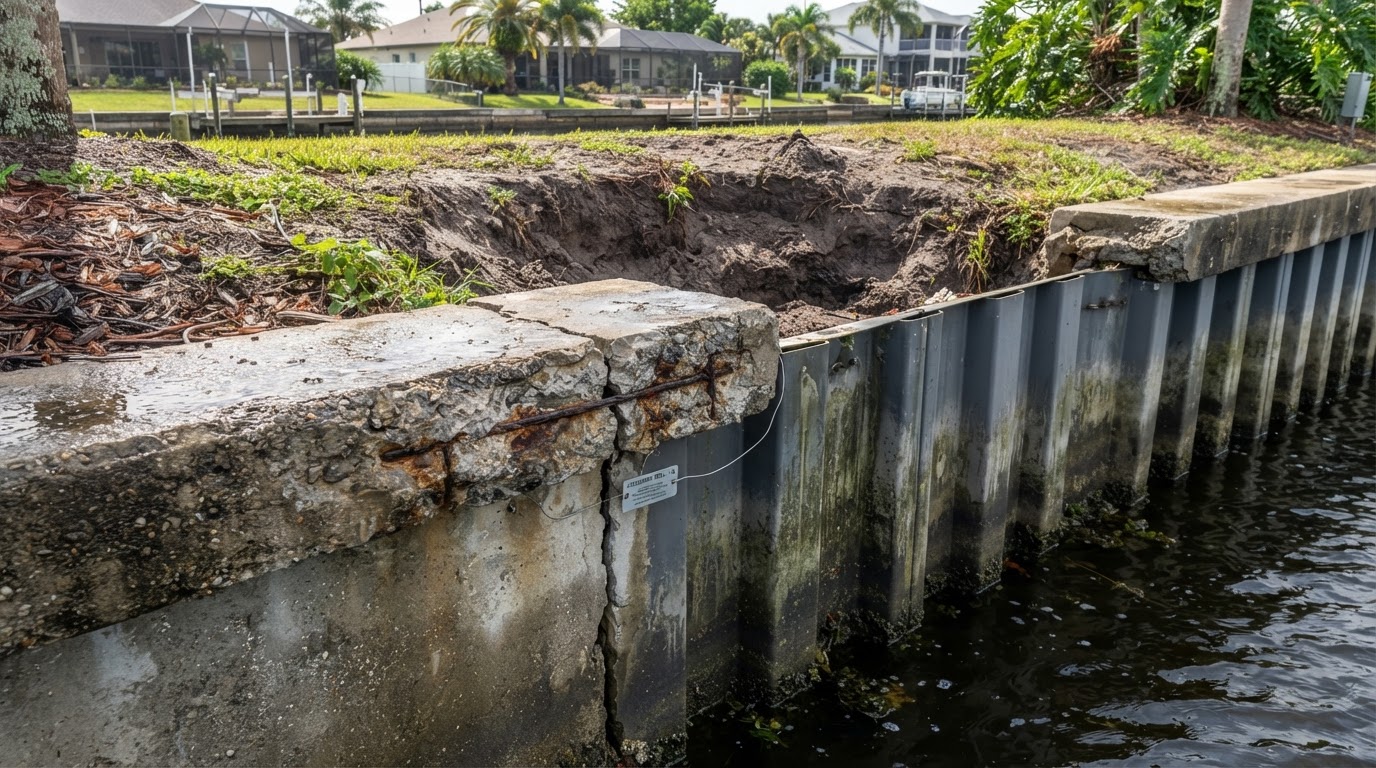
Storm Damage and Existing Structural Conditions
Storms can expose or worsen conditions that were already developing. A wall that was leaning before a storm, a piling that was already deteriorating, or a dock with prior patchwork may show new damage that overlaps with pre-existing conditions. Separating the two is part of an accurate assessment and matters for both repair planning and any claim discussion. Do not present old damage as newly caused, and do not assume all visible storm damage is covered.
Related Services Near Daytona Beach
Explore other marine construction topics relevant to your waterfront project.
Frequently Asked Questions About Dock & Seawall Repair for Insurance Claims in Daytona Beach
Planning Repairs While a Claim May Be Involved?
Share the damaged components, when damage was discovered, and any existing records. That context helps frame an accurate repair scope and the construction documentation that supports your own decision-making — separate from any insurance coverage determination.