
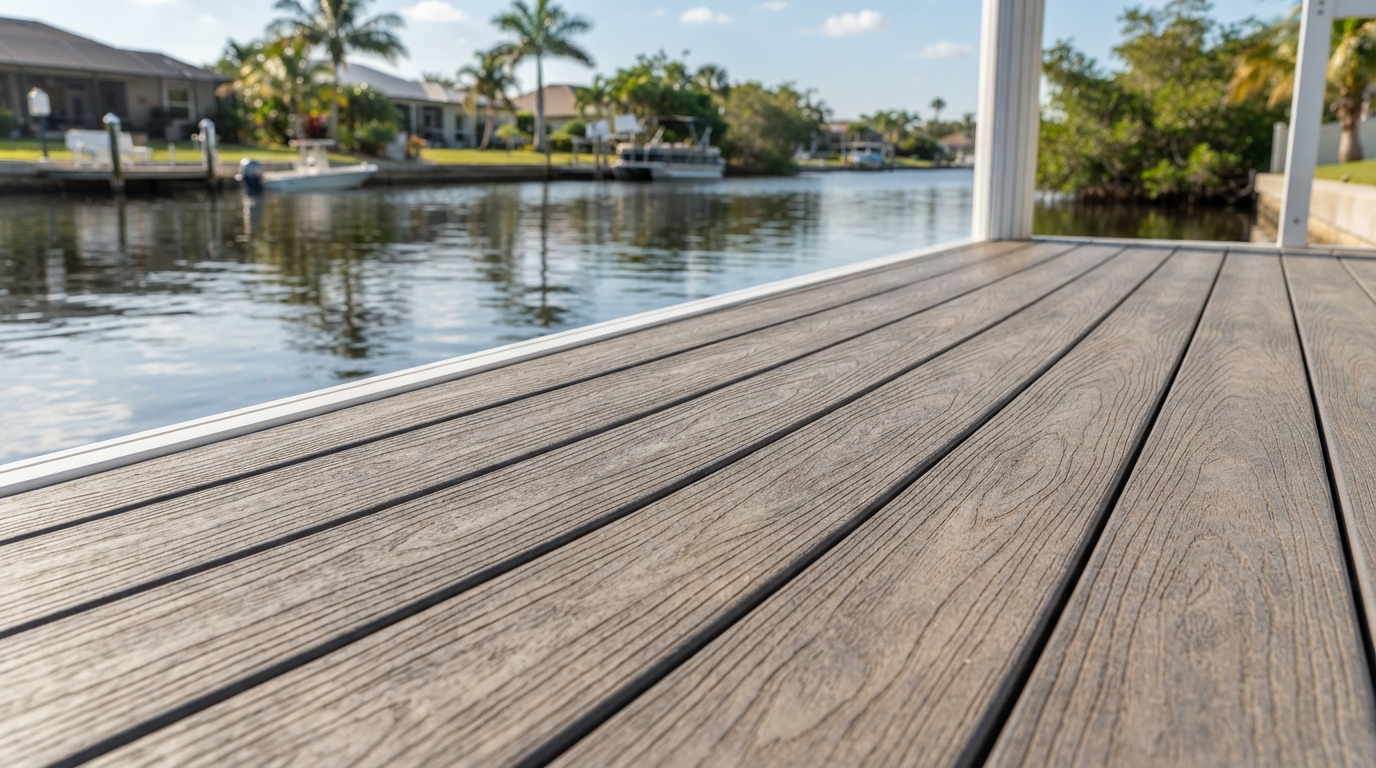
Wood vs Composite Dock Decking Comparison Daytona Beach
Choosing between wood and composite dock decking is not a matter of one material being universally better — it is a comparison of appearance, maintenance, surface performance, exposure tolerance, framing compatibility, and the product-specific installation requirements the manufacturer sets. This guide explains how wood and composite decking differ for docks near Daytona Beach so you can frame an informed, product-specific conversation rather than choosing a material by reputation.
Request a Marine Construction Estimate
Share your dock, seawall, or boat lift project details and we'll review the requirements for your Daytona Beach area waterfront property.
Wood vs Composite Dock Decking in Daytona Beach
Wood and composite are the two most common dock decking categories, but they are not interchangeable, and composite products are not all the same. The right comparison weighs appearance, maintenance, sun and moisture exposure, fastener requirements, framing compatibility, and the manufacturer's installation requirements for the specific product.
This page does not claim composite is maintenance-free, cooler, safer, stronger, or longer-lasting than wood in every case, nor that wood is always less expensive. Decking material is one layer of a dock — it does not independently establish structural capacity, and the framing beneath it must be compatible with the chosen product.
- Wood and composite are different decking categories, not equivalents
- Composite products vary; performance is product-specific
- Maintenance, exposure, and fastener needs differ by material
- Framing compatibility matters for both materials
- Decking does not independently establish structural capacity
- Neither material is universally better or always cheaper
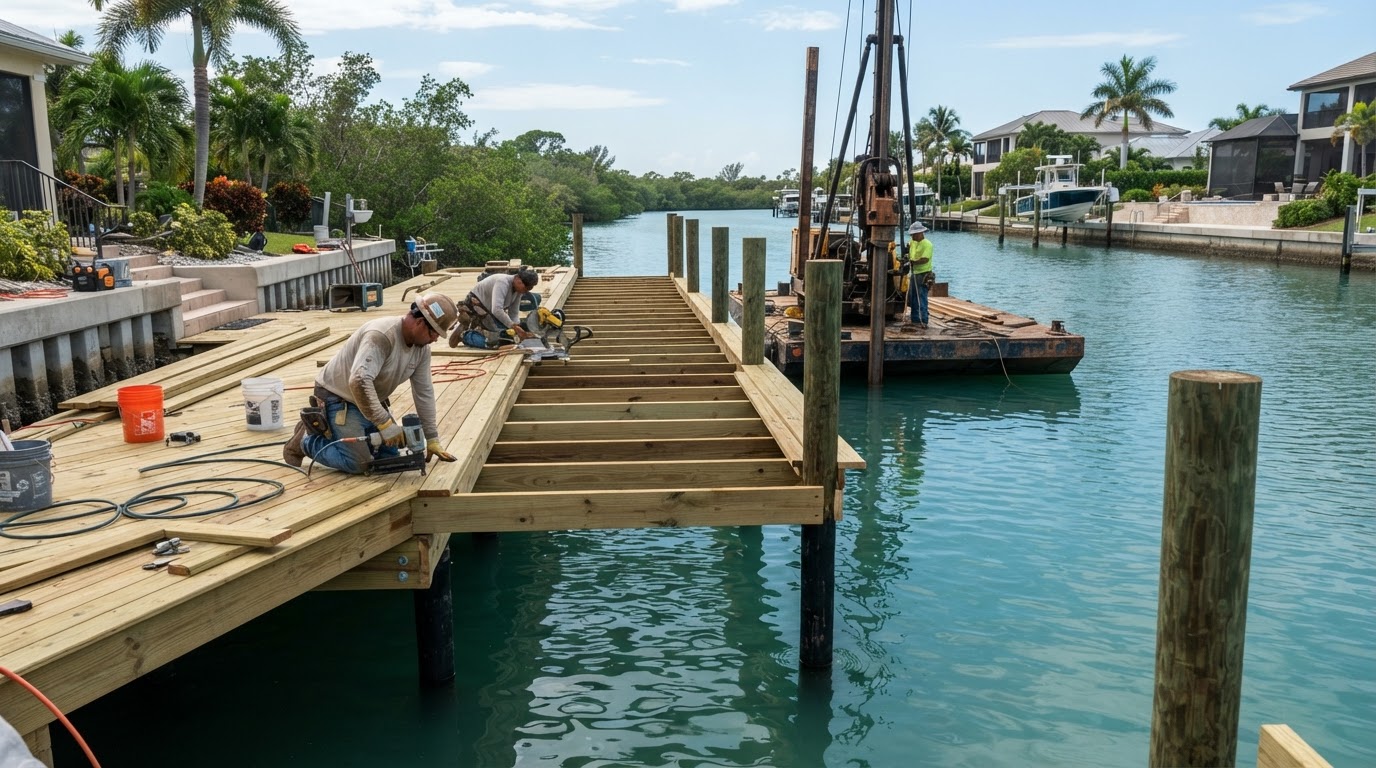
Wood Dock Decking Benefits and Tradeoffs
Wood decking offers a familiar appearance and is a traditional choice for Florida docks. Its performance depends on the species selected, the treatment, the fasteners, and the exposure to sun, moisture, and marine corrosion. Wood requires ongoing attention — boards can wear, fasteners can corrode, and surfaces may need periodic refinishing or replacement over time.
This page does not claim wood is always the least expensive option. Material and fastener costs, the condition of existing framing, and the scope of any replacement all affect the comparison, and a wood deck on framing that needs repair is a different project than a decking swap alone.
- Familiar traditional appearance for Florida docks
- Performance depends on species, treatment, and fasteners
- Requires ongoing attention to wear and corrosion
- Not always the least expensive option
Composite Dock Decking Benefits and Tradeoffs
Composite decking uses engineered board products that can offer consistent color and surface characteristics and may reduce some routine surface maintenance compared with wood. But composite is not maintenance-free — it can require cleaning, and its performance depends on the product, its composition, and the manufacturer's installation requirements.
This page does not claim composite is always cooler, safer, stronger, or longer-lasting than wood, or that all composite products perform identically. Thermal movement, fastener requirements, framing spacing, and marine suitability vary by product, and a product that performs well on a residential deck may not be appropriate for a dock over saltwater without verified manufacturer support.
- Consistent color and surface characteristics
- Not maintenance-free; may require cleaning
- Performance is product- and manufacturer-specific
- Not all composite products are appropriate for marine use
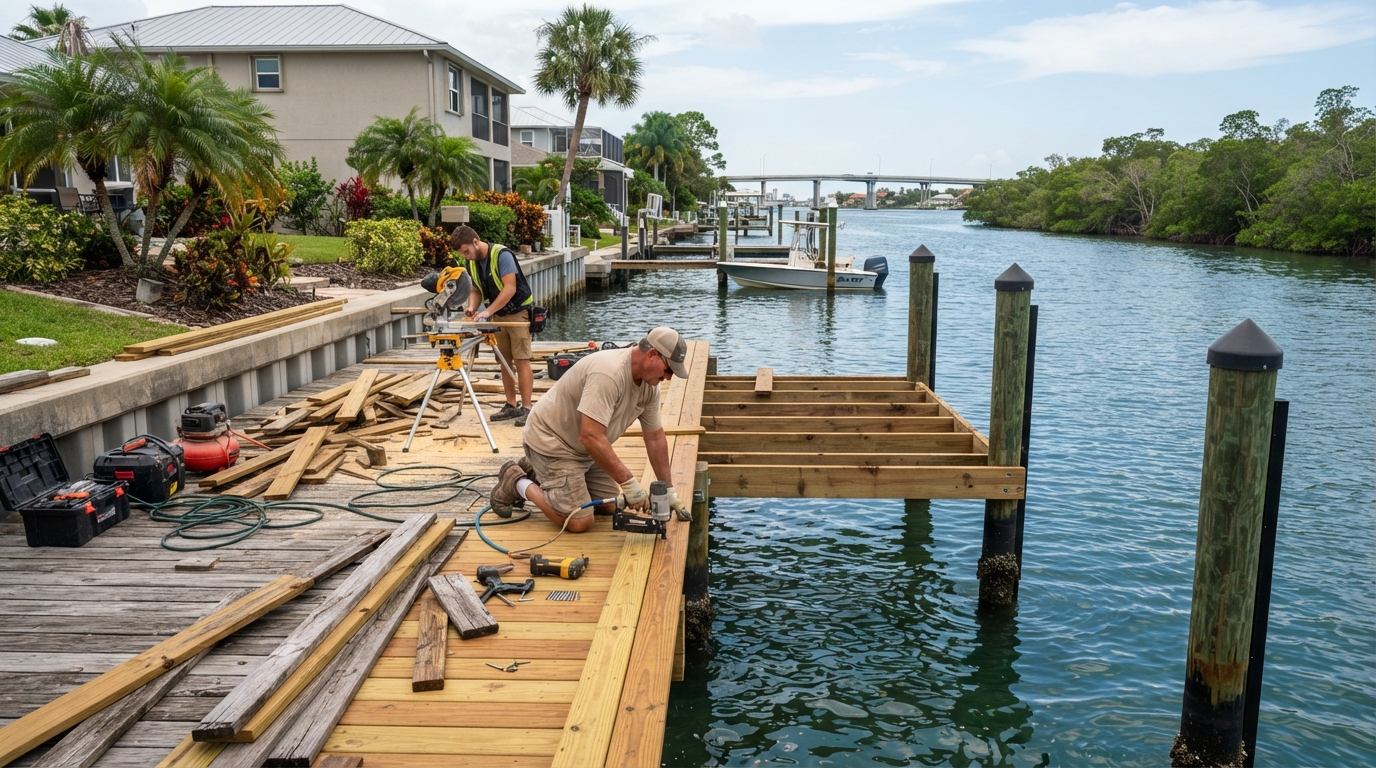
Maintenance and Exposure Near Daytona Beach
Sun, moisture, and marine corrosion shape how any decking performs over water. Wood may weather, crack, or show fastener staining; composite may expand and contract with temperature and can require specific fastener systems and framing spacing to manage that movement. Neither material eliminates exposure-related maintenance.
The comparison is not simply composite-versus-wood in the abstract. A dock with heavy sun exposure, saltwater, and wave splash may behave differently than a covered dock on a calm canal, and the right material choice depends on the site's exposure and the product's documented performance, not a universal ranking.
- Sun, moisture, and corrosion shape performance for both materials
- Composite may require specific fasteners and framing spacing
- Wood may weather or show fastener staining over time
- Site exposure should inform the product choice
Decking Installation and Framing Compatibility
Before converting from wood to composite, the existing framing should be evaluated for compatibility. Composite products often specify joist spacing, fastener systems, and clearance requirements that differ from a wood board installation, and framing that supported wood decking may not meet the composite manufacturer's requirements without modification.
Decking material does not independently establish the dock's structural capacity. The pilings, framing, bracing, and connections carry the structural loads, and a decking change does not upgrade the structure beneath it. A qualified evaluation of the existing framing helps determine what a conversion or replacement actually involves.
- Existing framing must be evaluated before a composite conversion
- Composite may require different joist spacing and fasteners
- Decking does not upgrade the structural capacity beneath it
- Pilings, framing, and connections carry the loads
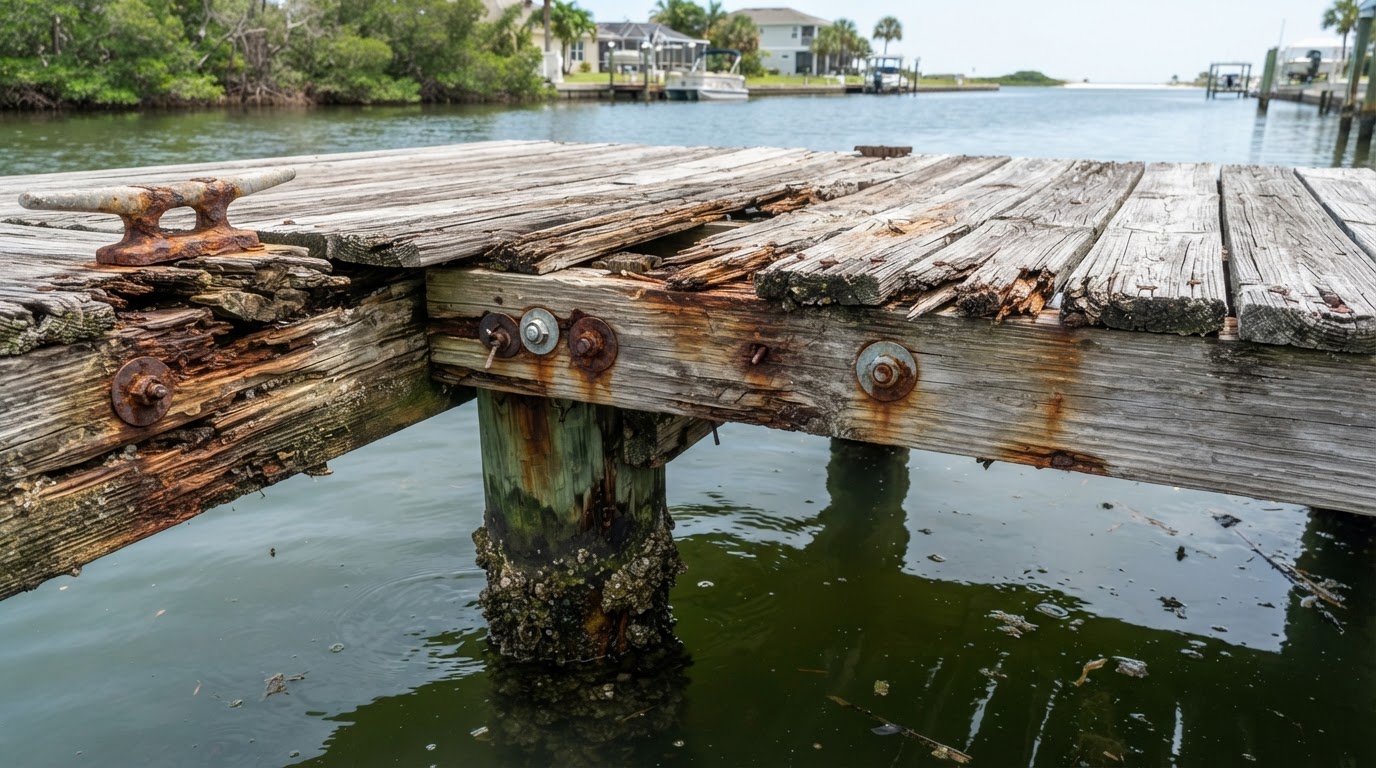
Surface Characteristics and Product Documentation
Wood and composite differ in surface, maintenance, fasteners, and product requirements — neither is universally best, and composite performance is product-specific.
Wood Decking
- Traditional appearance and material selection
- Ongoing attention to wear and fastener corrosion
- Performance depends on species and treatment
- Not always the least expensive option
Composite Decking
- Consistent color and surface characteristics
- Not maintenance-free; performance is product-specific
- Manufacturer sets framing and fastener requirements
- Not all products suit marine or saltwater exposure
Material Cost Factors
Material cost is one factor among several, and this page does not publish a universal price comparison or claim one material always saves money. The total scope of a decking project depends on the product, fasteners, any framing modifications, the extent of any demolition, and whether the work is a surface replacement or a broader dock repair. Referencing the specific product's manufacturer documentation and the actual framing condition produces a more useful scope than a generic wood-versus-composite cost ranking, and a useful estimate clarifies what is included and what is excluded.
Related Services Near Daytona Beach
Explore other marine construction topics relevant to your waterfront project.