
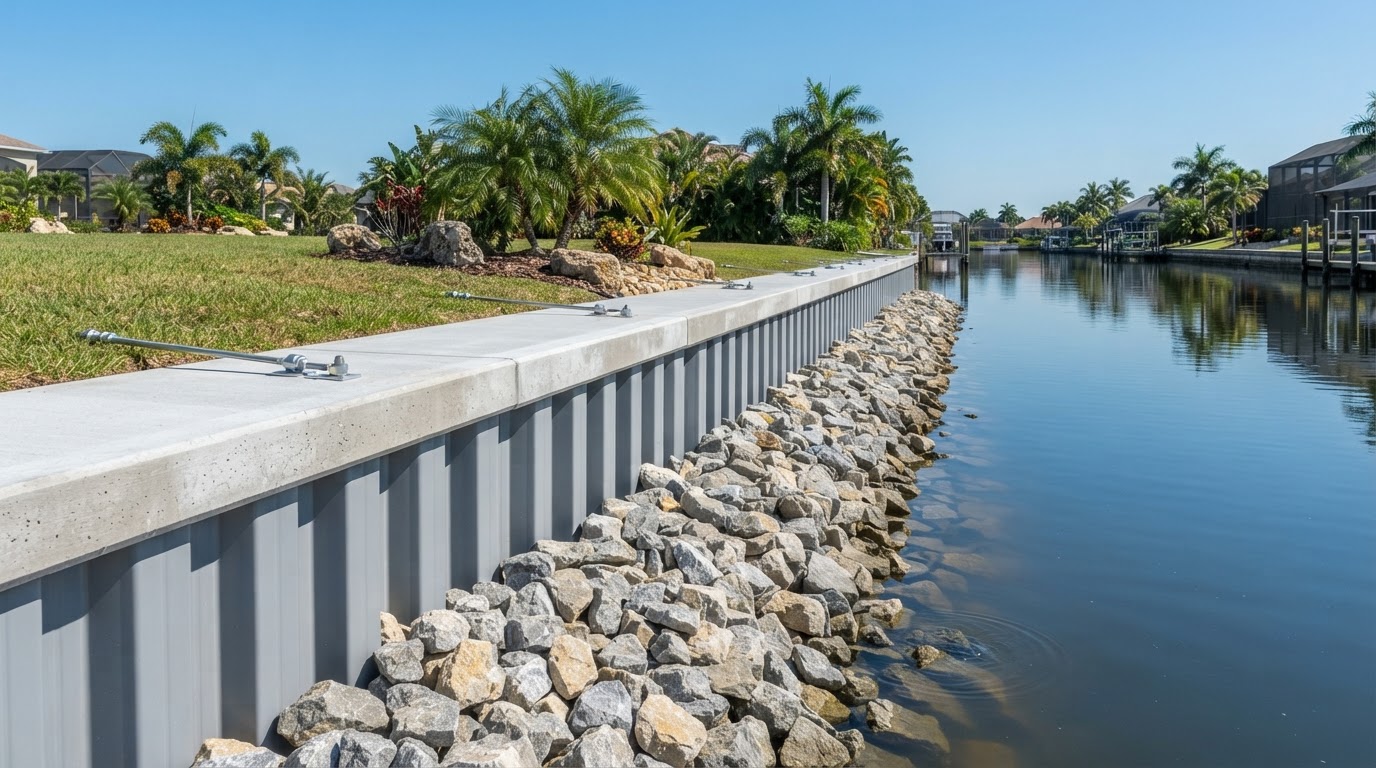
Municipal Seawall & Shoreline Construction Daytona Beach
Municipal seawall and shoreline projects near Daytona Beach involve public waterfront infrastructure — retaining walls, stabilized banks, pedestrian access, and drainage that protect public assets and the people who use them. This page explains general project-planning considerations without claiming the brand holds any municipal contract, public-works prequalification, or government endorsement.
Request a Marine Construction Estimate
Share your dock, seawall, or boat lift project details and we'll review the requirements for your Daytona Beach area waterfront property.
Municipal Seawall Projects in Daytona Beach
A municipal seawall project differs from a private residential wall because it protects public infrastructure, serves public access, and is usually subject to agency procurement, design, and approval processes that differ from private construction. Public waterfront assets may include retaining walls along parks, roadways, utility corridors, boat ramps, public docks, and pedestrian promenades — each with its own structural, drainage, and access requirements.
This page provides general shoreline-infrastructure planning information. It does not describe the brand as an approved city vendor, prequalified public-works provider, or bonded government contractor, and does not invent procurement procedures or bidding deadlines. Project-specific determinations are referred to the responsible public authority and qualified professionals.
- Condition of existing public waterfront structures
- Seawall repair, replacement, and stabilization options
- Public access and pedestrian circulation during work
- Drainage and soil-retention considerations
- Engineering and environmental review
- Construction phasing and traffic coordination
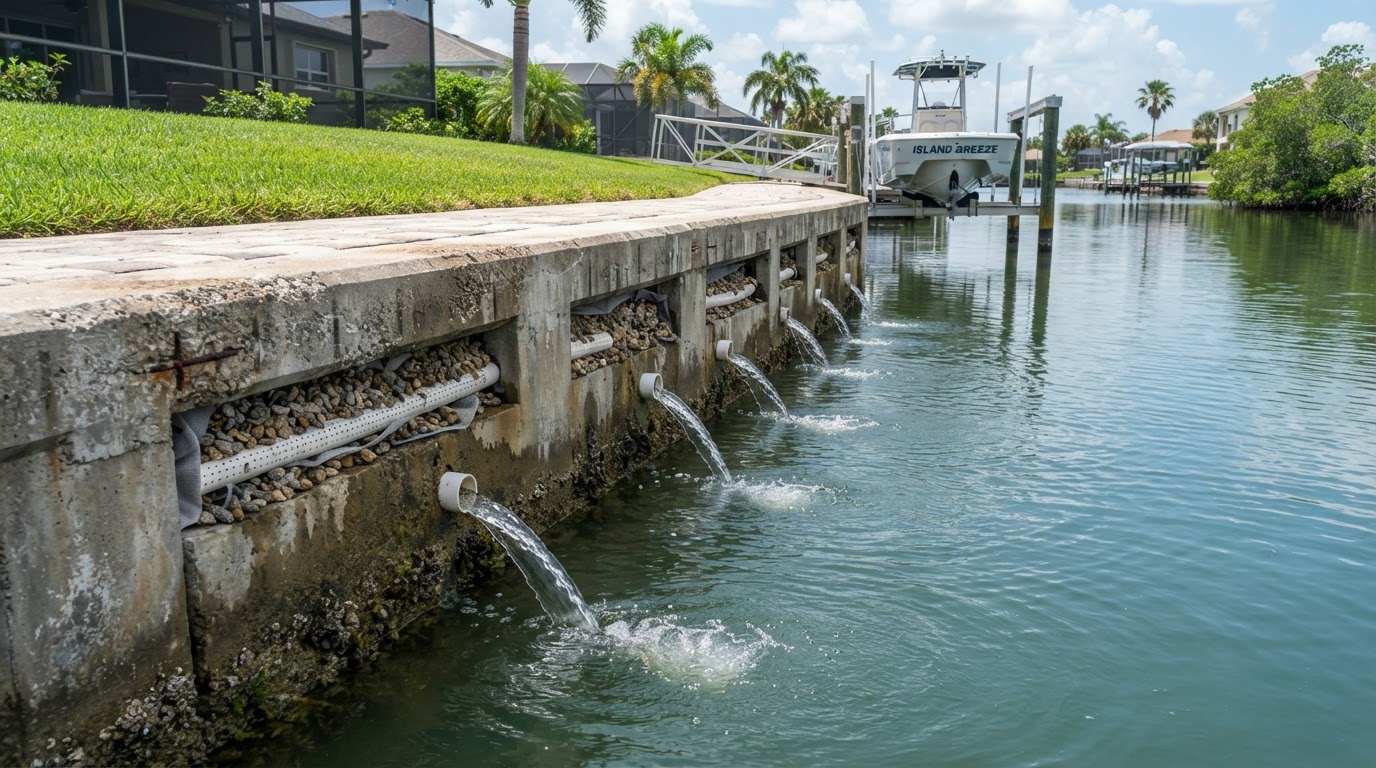
Public Shoreline Infrastructure and Existing Wall Conditions
Public seawalls often protect assets the community cannot easily do without — roadways, parks, utilities, promenades, and public access points. Evaluating a municipal wall means assessing its current condition, alignment, cap integrity, drainage function, tieback or anchorage, and the soils it retains. Visible cracking, cap deterioration, movement, or soil loss behind a public wall may point to conditions that warrant qualified structural assessment.
Public assets also carry maintenance histories, prior repairs, and documentation that private owners may not keep. Reviewing those records, where available, helps frame the scope of a repair, replacement, or stabilization effort. This page does not declare a public structure safe or unsafe from a checklist; condition determinations are referred to qualified professionals.
- Wall condition, alignment, and cap integrity
- Drainage function and soil-retention performance
- Tieback or anchorage systems and connections
- Adjacent infrastructure and public access points
- Available maintenance and repair history
Seawall Repair, Replacement and Stabilization Options
Municipal shoreline work can take several forms depending on the wall's condition, the assets it protects, and applicable approvals — not a single prescribed method.
Localized Repair
Crack, joint, cap, or drainage repair that addresses a specific failure while retaining the existing wall alignment and structure.
Wall Replacement
Removing a failed or undersized wall and constructing a new retaining structure along the existing or revised shoreline alignment.
Shoreline Stabilization
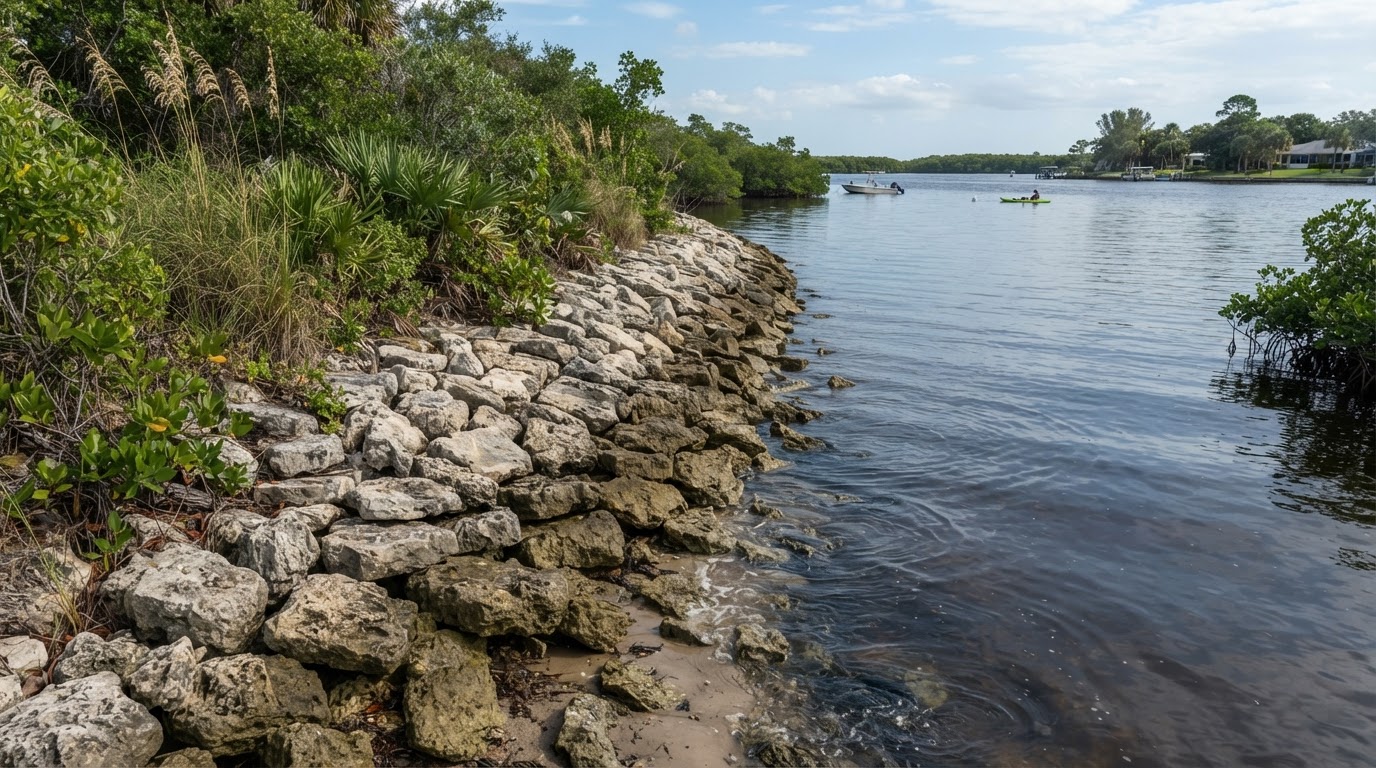
Riprap, revetment, or living-shoreline approaches that address erosion as part of a broader public waterfront project.
Drainage Correction
Weep holes, filters, and drainage improvements that address the hydrostatic pressure often driving public-wall deterioration.
Tieback Repair
Addressing anchorage or tieback concerns that affect a wall's ability to retain soil along a public waterfront.
Adjacent Coordination
Coordinating wall work with nearby docks, ramps, utilities, and pedestrian infrastructure that share the shoreline.
Public Access and Construction Coordination
Public projects take place where people are present. A seawall along a park, promenade, or roadway may require pedestrian routing, temporary closures, signage, and coordination with nearby facility users during construction. Planning public waterfront work means accounting for how the public moves through and around the site while the work is staged.
This page does not promise that a public area can remain fully open during construction. Certain conditions — an unstable wall, damaged drainage, or soil loss near a walkway — may require restricting access until a qualified evaluation determines the area is safe.
- Pedestrian routing and temporary closures
- Signage and safe separation from the work zone
- Coordination with adjacent public facilities
- Construction staging within public right-of-way
- Traffic and access management where applicable
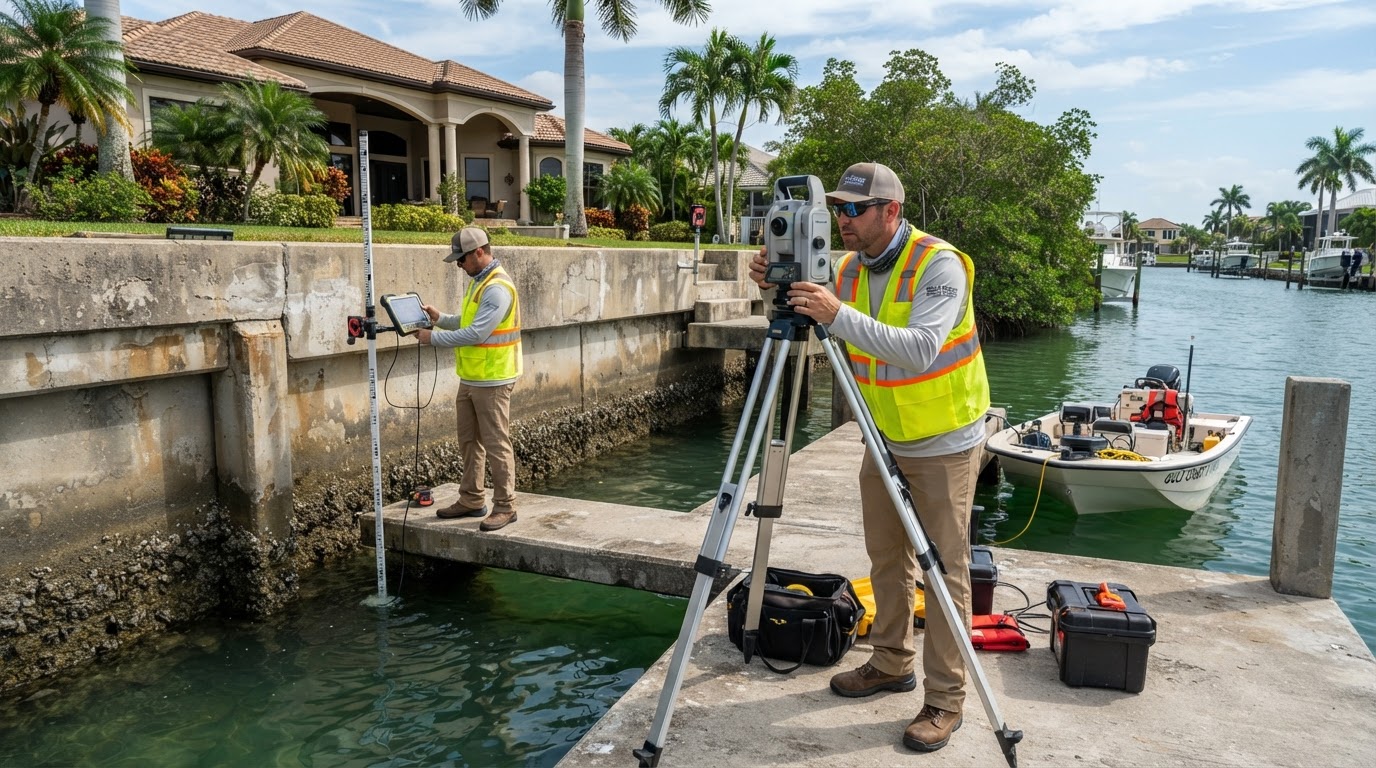
Municipal Waterfront Engineering Considerations
Public seawalls may require structural, geotechnical, and coastal engineering review sized to the assets they protect and their exposure.
- Structural condition assessment of the existing wall
- Geotechnical review of retained soils and bottom conditions
- Coastal exposure, wave, and storm-loading considerations
- Drainage and hydrostatic-pressure evaluation
- Tieback and anchorage review where applicable
- Coordination with adjacent public infrastructure
Environmental Review Near Daytona Beach
Municipal shoreline work may involve state environmental review, sovereign submerged-lands considerations, coastal controls where relevant, and federal review depending on the location and scope. Habitat, water quality, and protected-species considerations are site-specific and must be verified against current official sources rather than assumed.
This page does not invent permit timelines, agency approvals, or exemption rules. Where current regulatory detail is needed, the applicable official source should be consulted and the source, date, and scope recorded. General planning guidance is provided here; precise determinations are referred to the responsible authority.
- State environmental and submerged-lands review
- Coastal controls where the site falls within applicable boundaries
- Habitat and protected-species considerations
- Water-quality and drainage review
- Site-specific verification against current official sources
Project Documentation and Authorization
Municipal projects typically require owner authorization through the responsible public agency and may follow agency procurement, design, and contracting processes. An existing public structure does not automatically exempt a replacement from current review, and approval from one authority does not satisfy every other jurisdiction. This page does not claim bonding, purchasing qualifications, prevailing-wage compliance, or procurement eligibility without confirmation. Project-specific authorization is referred to the responsible authority.
Related Services Near Daytona Beach
Explore other marine construction topics relevant to your waterfront project.
Frequently Asked Questions About Municipal Seawalls & Shoreline Projects in Daytona Beach
Planning a Municipal Waterfront Project?
Share the public asset involved, the waterbody and frontage, the wall's observed condition, approximate length, adjacent infrastructure, and public access considerations. That context helps frame a municipal seawall approach suited to the site, the public use, and what review may apply.