
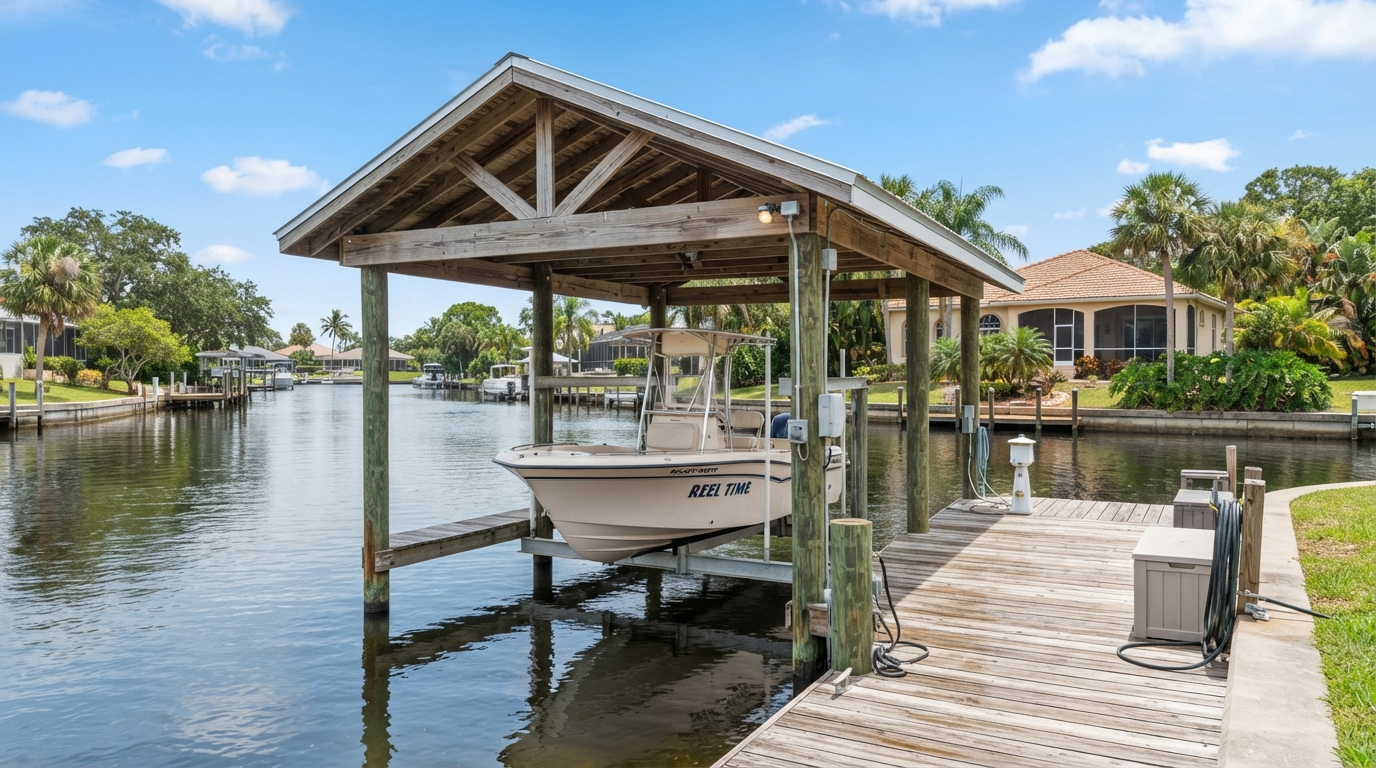
Fishing Pier Construction & Installation Daytona Beach
A fishing pier extends a waterfront property's recreational reach over the water for angling and shoreline access. This page explains fishing pier construction, the configurations available, and the site considerations that shape a Daytona Beach pier project.
Request a Marine Construction Estimate
Share your dock, seawall, or boat lift project details and we'll review the requirements for your Daytona Beach area waterfront property.
Fishing Pier Construction & Installation in Daytona Beach
A fishing pier is a pile-supported platform that extends from the shoreline out over the water to provide recreational fishing access. Along Daytona Beach area waterways, private fishing piers give waterfront property owners a dedicated space for angling, crabbing, and enjoying the waterfront without the vessel-access requirements of a docking pier.
Fishing pier construction involves driving marine pilings, installing structural framing and cross-bracing, laying decking, and adding railings and hardware where applicable. Each element is selected for water depth, soil conditions, intended use, and marine exposure. No universal structural specification applies — the appropriate design depends on the specific site.
- Marine pilings and pile-supported framing
- Decking, railings, and corrosion-resistant hardware
- Water depth and water-level considerations
- Intended recreational use and shoreline access
- Environmental sensitivity and permitting considerations
Residential Fishing Pier Construction Near Daytona Beach
A residential fishing pier provides private waterfront access for recreational fishing and enjoyment of the shoreline. Unlike a vessel dock, a fishing pier prioritizes a stable walking and standing surface over boarding and mooring considerations. The pier's length, width, and elevation are designed for the property's water depth and the owner's intended use.
On Daytona Beach canals and Intracoastal waterfronts, fishing piers extend from the shoreline over protected or semi-protected water. The appropriate length and configuration depend on water depth, shoreline conditions, existing structures, and applicable environmental review. Not every waterfront property is suitable for a pier.
- Private waterfront recreational access
- Stable platform designed for fishing and shoreline enjoyment
- Length and elevation set for site water depth
- Coordination with existing docks and shoreline improvements
Types of Fishing Pier Structures
Several pier configurations are possible, each suited to different water depths, shoreline conditions, and intended uses. Not every option is suitable for every property.
Pile-Supported Piers
Fixed pile-supported piers rest on marine pilings driven into the seabed, providing a rigid, constant-height platform suited to moderate, stable water levels where pilings can be driven.
Floating Access Systems
Where water levels vary significantly or pilings are impractical, appropriate floating access platforms may be considered, rising and falling with the water for consistent access height.
Pier Extensions
An existing dock or platform may be extended where permitted, adding fishing access to an existing structure — subject to evaluation of the existing capacity and applicable approvals.
Recreational Platforms
Purpose-built recreational fishing platforms can be designed for specific uses — angling, crabbing, or waterfront relaxation — with railings and features as appropriate and permitted.
Fishing Pier Materials & Construction in Daytona Beach
Pier materials are selected for marine exposure, intended use, and maintenance. No universal specification applies.
- Marine pilings for foundation support
- Structural framing and cross-bracing for rigidity
- Wood decking for a traditional walking surface
- Composite decking for lower-maintenance options
- Railings where applicable and permitted
- Corrosion-resistant hardware and connections
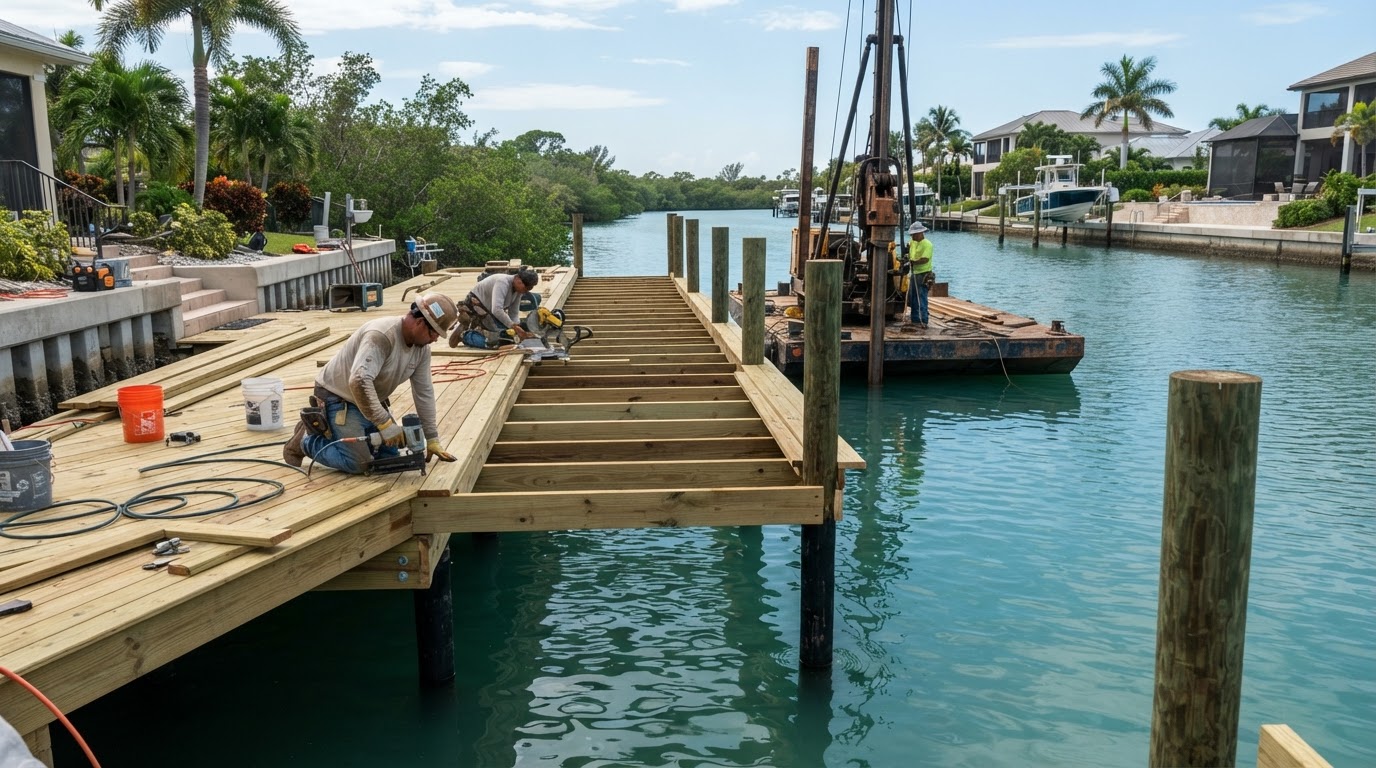
Fishing Pier Design Considerations in Daytona Beach
Fishing pier design depends on water depth, water-level changes, intended use, property access, shoreline conditions, existing structures, environmental sensitivity, and permitting considerations. A pier built for light recreational fishing differs from one intended for heavier use or integration with a dock system.
Environmental sensitivity matters — certain waterways, shorelines, or habitat conditions may affect what is permitted. No pier design is automatically approved for every property. Site-specific evaluation and applicable review determine what is appropriate.
- Water depth and water-level variation at the site
- Intended recreational use and expected loads
- Property access and shoreline conditions
- Existing docks, seawalls, and improvements
- Environmental sensitivity and permitting review
Fishing Piers vs. Residential Docks
Fishing piers and residential docks serve different primary purposes, though they share construction methods. The right structure depends on intended use.
Fishing Pier
- Prioritizes a stable walking and standing surface
- Designed for recreational fishing and shoreline access
- May not require vessel mooring or boarding features
- Railings and access features as permitted
Residential Dock
- Designed for vessel access and mooring
- Includes cleats, boarding access, and lift support
- Sized for vessel dimensions and water depth
- May integrate with boat lifts and accessories
Fishing Pier Maintenance Near Daytona Beach
General inspection of decking, framing, pilings, and connections helps catch issues early. Structural concerns should be referred to qualified professionals.
- Inspect decking for deterioration or loose boards
- Check framing and cross-bracing for damage
- Monitor pilings for movement or deterioration
- Examine hardware and connections for corrosion
- Note changes after storms or heavy weather
- Refer structural concerns to qualified professionals
Fishing Pier Repair vs. Replacement
When a fishing pier shows deterioration, the appropriate response depends on the extent and cause. Localized decking or hardware issues may be repaired; widespread piling or framing problems may require replacement evaluation. Qualified assessment determines whether repair or replacement is appropriate for the specific structure — no single symptom automatically requires full replacement.
Related Services Near Daytona Beach
Explore other marine construction topics relevant to your waterfront project.