
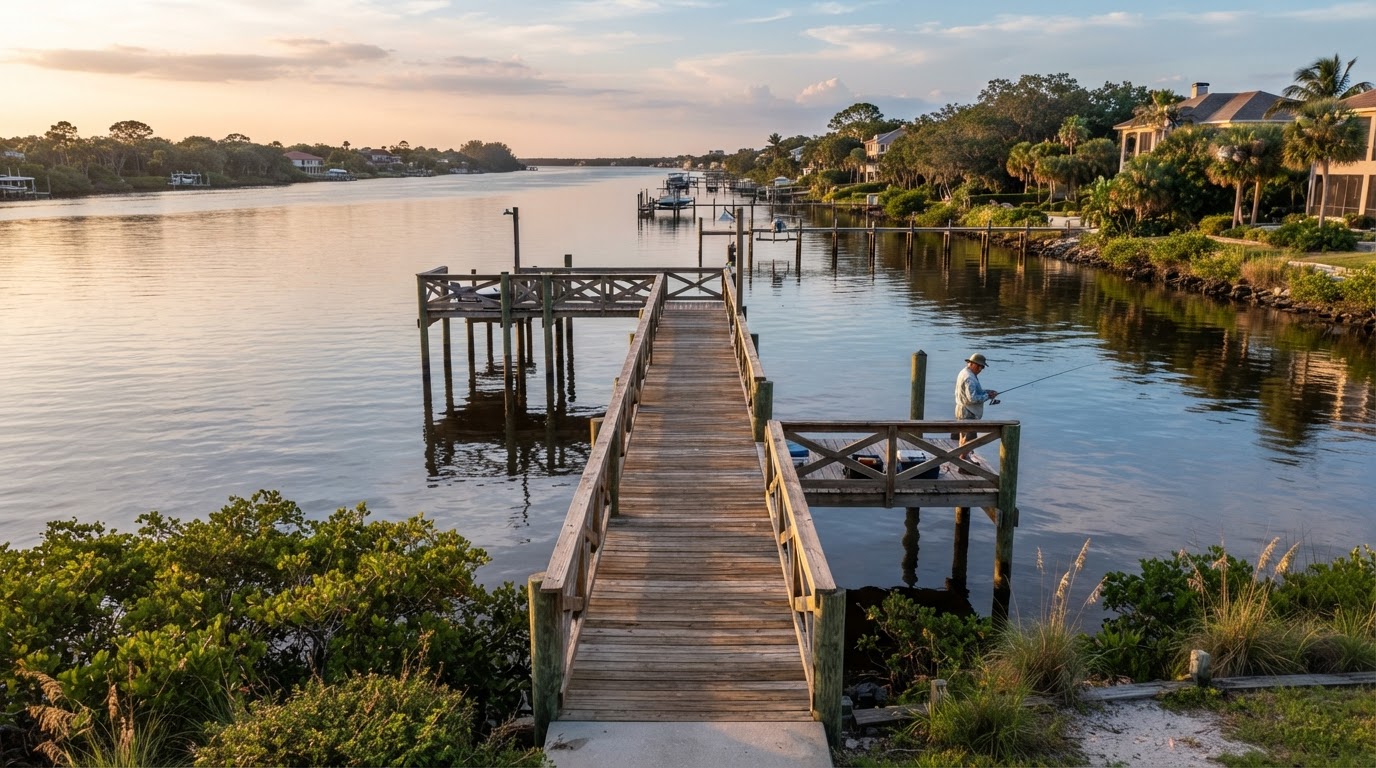
Fishing Pier Construction & Repair Daytona Beach
Fishing pier construction and repair in Daytona Beach is structurally distinct from a private residential dock. A pier built for public or commercial fishing carries its own loading, exposure, railing, accessibility, and occupancy considerations. This page explains pier project-planning considerations without claiming the brand has completed any specific public fishing pier contract.
Request a Marine Construction Estimate
Share your dock, seawall, or boat lift project details and we'll review the requirements for your Daytona Beach area waterfront property.
Fishing Pier Construction in Daytona Beach
A fishing pier is a long, pile-supported structure built to carry people, gear, and sometimes vehicles out over the water to reach fishable depth. Its structural requirements depend on its intended use — public recreational fishing, commercial operation, or private access — plus the occupancy it will see, the exposure it faces, and the water depth and bottom conditions at the site. A pier is not simply a long dock; the engineering scale is different.
This page does not claim a standard load capacity, guarantee that any existing pier can be repaired rather than replaced, or state that every pier must have identical railing or accessibility design. Pier structural requirements are referred to qualified engineering and applicable review.
- New fishing pier construction and reconstruction
- Piling, decking, and railing repair
- Public and commercial-use pier considerations
- Accessibility and life-safety review where applicable
- Lighting and operational access
- Site-specific engineering and permits
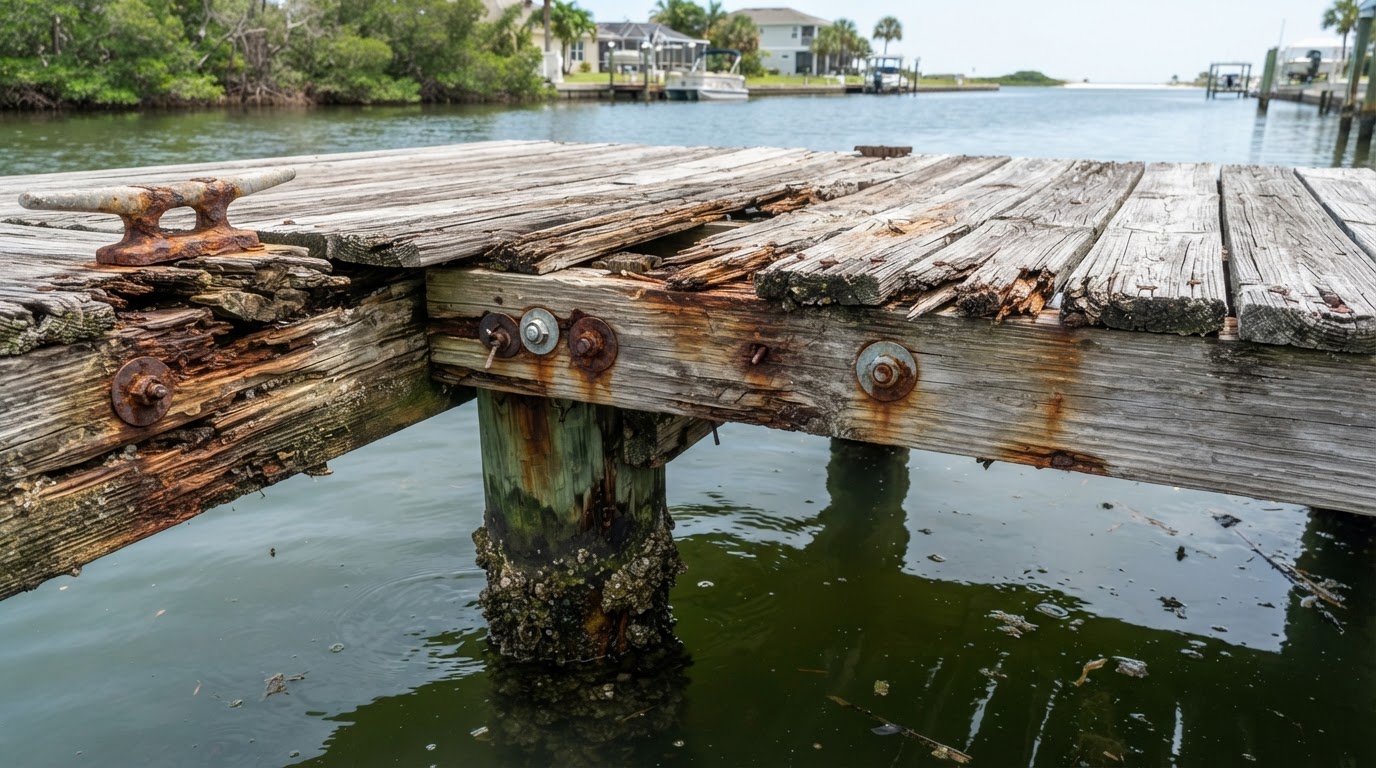
Commercial and Public-Use Fishing Pier Considerations
A fishing pier's design starts with how it will be used. A public pier open to foot traffic, a commercial pier that may carry vehicles or equipment, and a private association pier each have different occupancy, loading, railing, and life-safety considerations. Expected user count, fishing activity, and whether the pier will operate day or night all shape the structural and operational requirements.
Public-access piers may involve additional accessibility, life-safety, and operational review that a purely private dock does not. This page treats those as project-specific matters subject to applicable review, and does not state that one pier design satisfies every accessibility standard.
- Intended use — public, commercial, or private association
- Expected occupancy and fishing activity
- Vehicle or equipment access where applicable
- Day and night operating considerations
- Accessibility and life-safety review where applicable
Fishing Pier Structural Components
A fishing pier is a system of interdependent components. The condition and design of each affect whether the pier is safe, serviceable, and repairable.
Piling Supports
Pilings carry the pier, its users, and the lateral loads from wind, current, and wave action. Pile type, embedment, and spacing are sized to the site and use.
Framing & Decking
Joists, stringers, and deck boards transfer load to the pilings. Framing condition, span, and material affect capacity and how decking performs.
Railings
Railings protect users over open water. Height, post spacing, and material depend on the pier's use, occupancy, and applicable requirements.
Access Route
The shore connection — gangway, ramp, or fixed approach — links the upland to the pier and affects access, slope, and circulation.
Utilities
Lighting, water, or power where provided must be designed for marine corrosion exposure and installed per applicable electrical codes.
Connections
Bolts, brackets, and fasteners corrode over time. Deteriorated connections can undermine an otherwise sound pier structure.
Piling, Decking and Railings Near Daytona Beach
Piling condition is often the defining question on a fishing pier. Deterioration near the waterline, biological damage, splitting, or movement can affect whether a pier can be repaired or whether pilings need replacement. Decking and framing wear too — loose boards, rot, and corroded fasteners are common — but framing and surface issues may be addressable without rebuilding the piles.
Railings are a safety-critical component over open water. Their height, post spacing, and material should fit the pier's use and applicable requirements. This page does not state that every pier needs an identical railing design; railing decisions are referred to qualified review.
- Piling condition near the waterline and below
- Framing, stringer, and joist integrity
- Deck board and surface condition
- Railing height, post spacing, and material
- Corroded fasteners and connection hardware
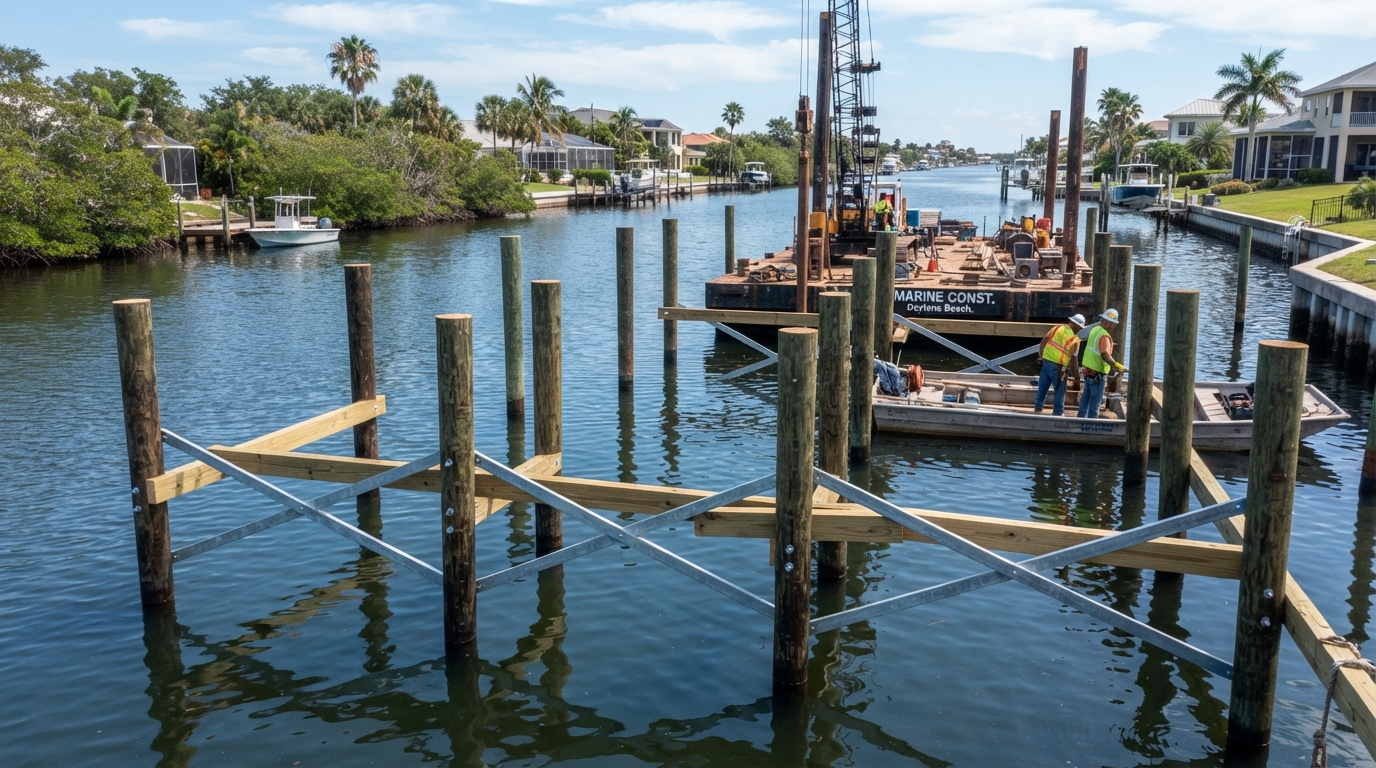
Fishing Pier Repair Versus Replacement
Whether a pier can be repaired or needs replacement depends on what is failing. Replacing deck boards, repairing railings, or addressing localized framing can extend a pier's life when the pilings are sound. When pilings are deteriorated, the structure is moving, or the pier no longer reaches usable water, more substantial reconstruction may be appropriate.
This page does not promise that any existing pier can be repaired rather than replaced. The determination depends on a qualified condition assessment of the pilings, framing, connections, and the pier's remaining service life — not on a blanket recommendation.
- Decking and surface replacement where piles are sound
- Railing and access-feature repair or upgrade
- Localized framing and connection repair
- Piling replacement where deterioration is advanced
- Full reconstruction where the structure has failed
Access, Maintenance and User Needs
A fishing pier is built to be used. Its layout should reflect how anglers, guests, and operators actually move along it.
- Railings and edge protection for fishing activity
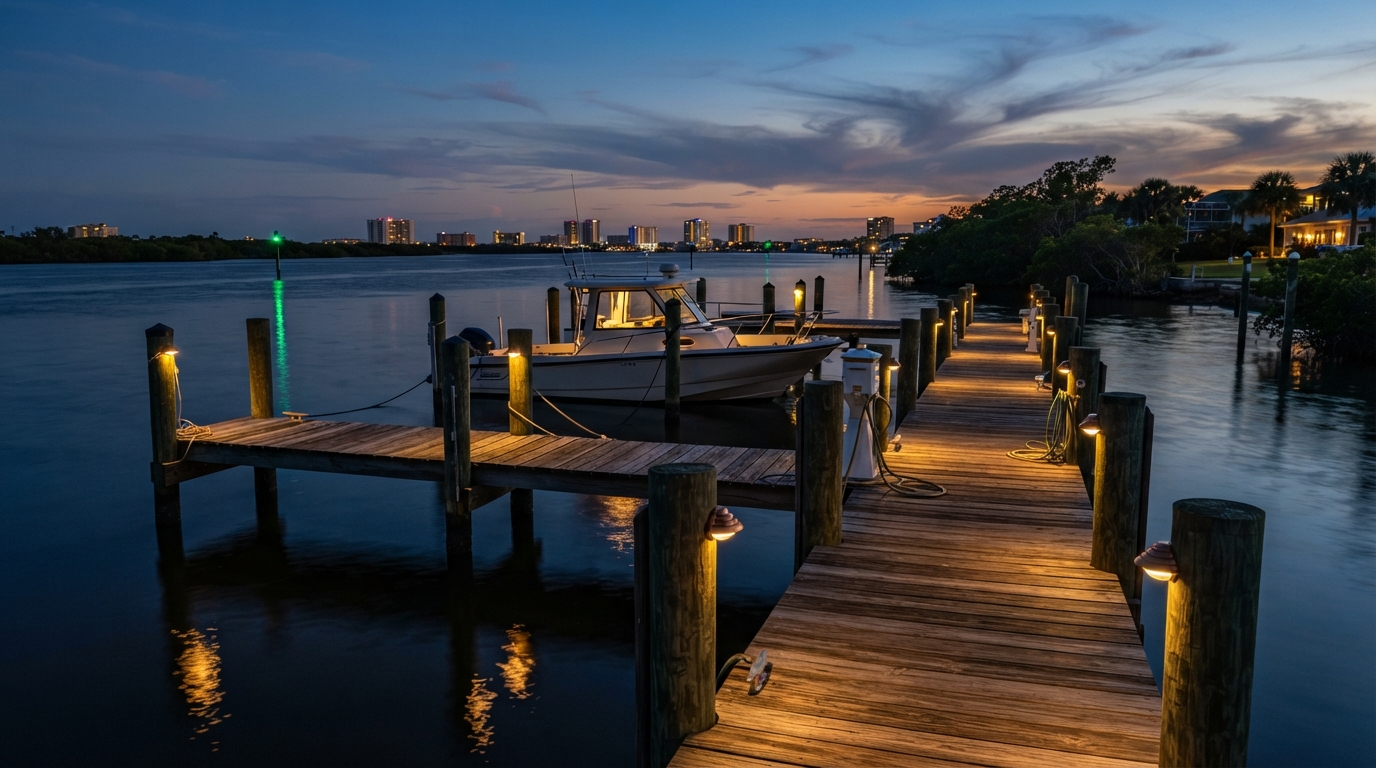
- Lighting for early, late, or night operation
- Cleaning and maintenance access
- Seating, rod holders, or amenity placement where applicable
- Signage and user-flow considerations
- Coordination with adjacent docks or shoreline access
Engineering and Permitting Considerations
Fishing pier construction and repair may involve structural engineering for piling and framing, accessibility review where the pier is public, environmental review of habitat and waterway impacts, and local, state, submerged-lands, or federal permitting depending on the site and scope. This page does not claim completed public fishing pier contracts or verified specialized capabilities. Project-specific determinations are referred to qualified professionals and the applicable authority.
Related Services Near Daytona Beach
Explore other marine construction topics relevant to your waterfront project.