
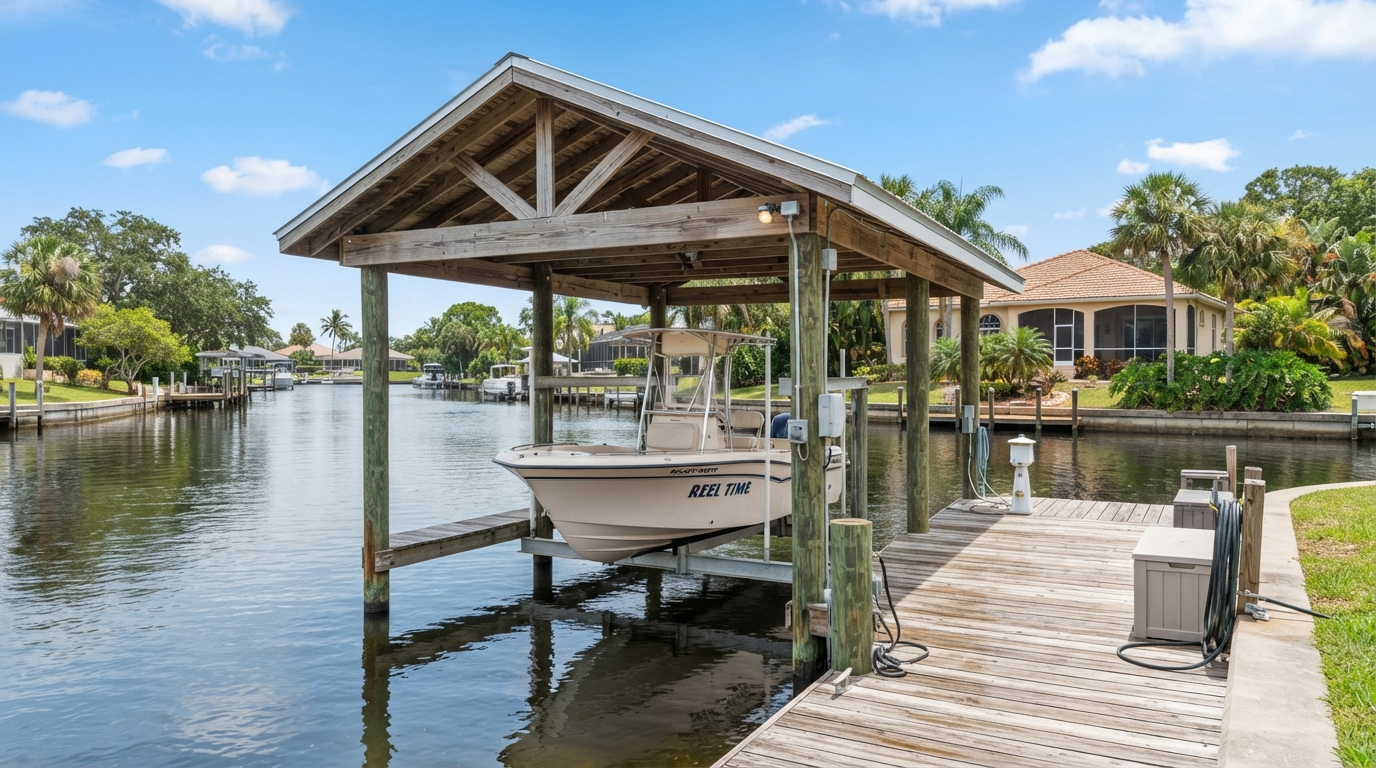
Dock Extensions & Marine Construction Daytona Beach
An existing dock that no longer fits how a property is used may be a candidate for an extension. This page explains dock extension options in Daytona Beach, the structural and access questions that shape a safe expansion, and why extending beyond the current footprint can raise different design and approval questions than a like-for-like repair.
Request a Marine Construction Estimate
Share your dock, seawall, or boat lift project details and we'll review the requirements for your Daytona Beach area waterfront property.
Dock Extension Options in Daytona Beach
Common reasons to consider a dock extension include reaching appropriate water depth for a changed vessel, reconfiguring a boarding area, adding platform space, improving fishing or recreation access, or preparing a lift-compatible arrangement. Each motivation points to a different scope, and not every dock can be extended to any desired length or configuration.
A dock extension is distinct from a structural repair, a decking replacement, or a rebuild within an existing footprint. Extending beyond the current footprint can present different design and approval questions because it changes the dock's position, load, and relationship to the waterway.
- Reaching appropriate water depth for a changed vessel
- Reconfiguring a boarding area or slip
- Adding platform space
- Improving fishing or recreation access
- Preparing a lift-compatible arrangement
- Modifying a walkway or gangway connection
When an Existing Dock Layout No Longer Fits
A dock built for one vessel or use may no longer suit a changed boat, a different boarding routine, or a new recreational goal. Extending the dock is one option; reconfiguring the existing layout, replacing the dock, or adding a separate platform are others. The right choice depends on the existing structure, the water depth, and what the owner is trying to achieve.
An extension should not be assumed to reach any desired depth or location. Water depth, tides or changing water levels, vessel maneuvering, navigation, and applicable review all constrain what is feasible.
- Changed vessel requiring different depth or slip length
- Boarding or access reconfiguration
- Additional platform or seating space
- Fishing or recreation access improvements
- Lift-compatible layout planning
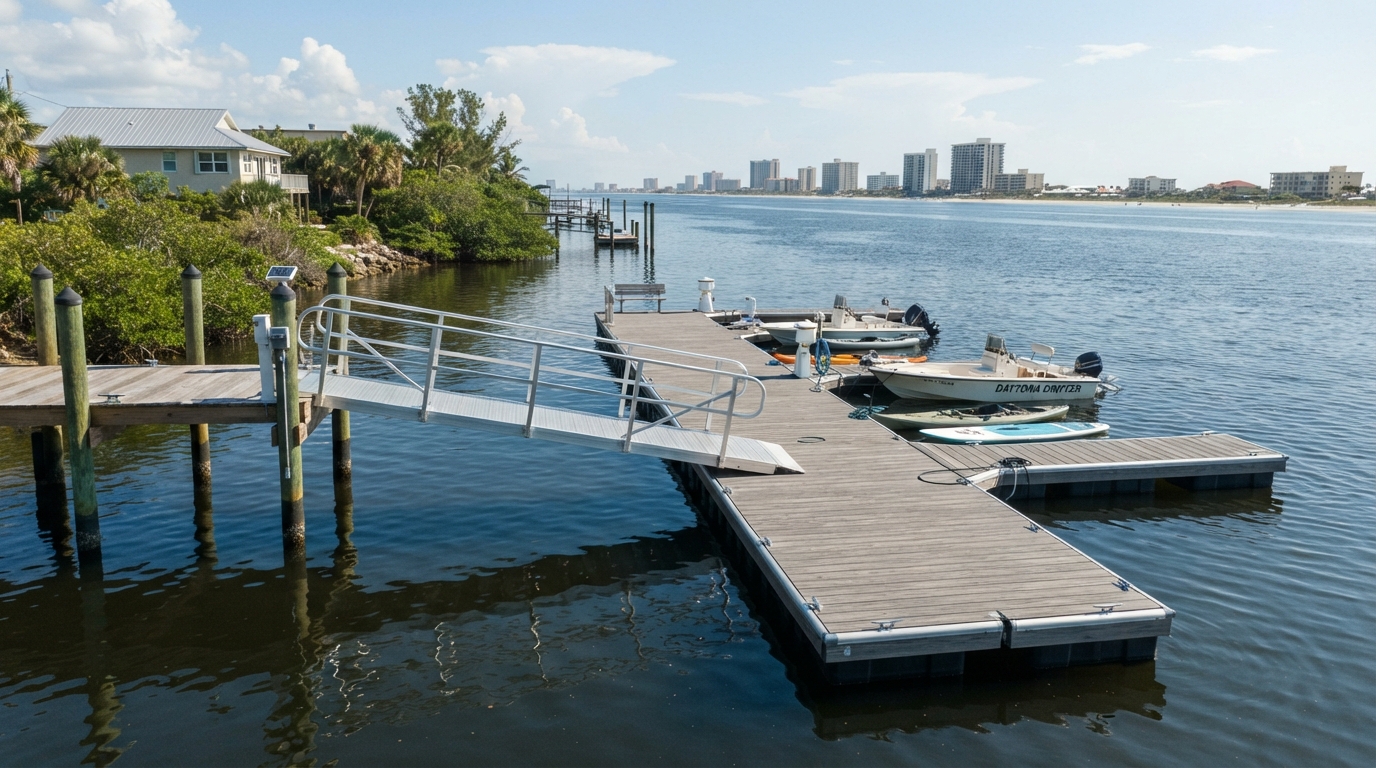
Extending Fixed and Floating Docks Near Daytona Beach
Fixed and floating systems extend differently. The existing dock type shapes the structural and access questions for any expansion.
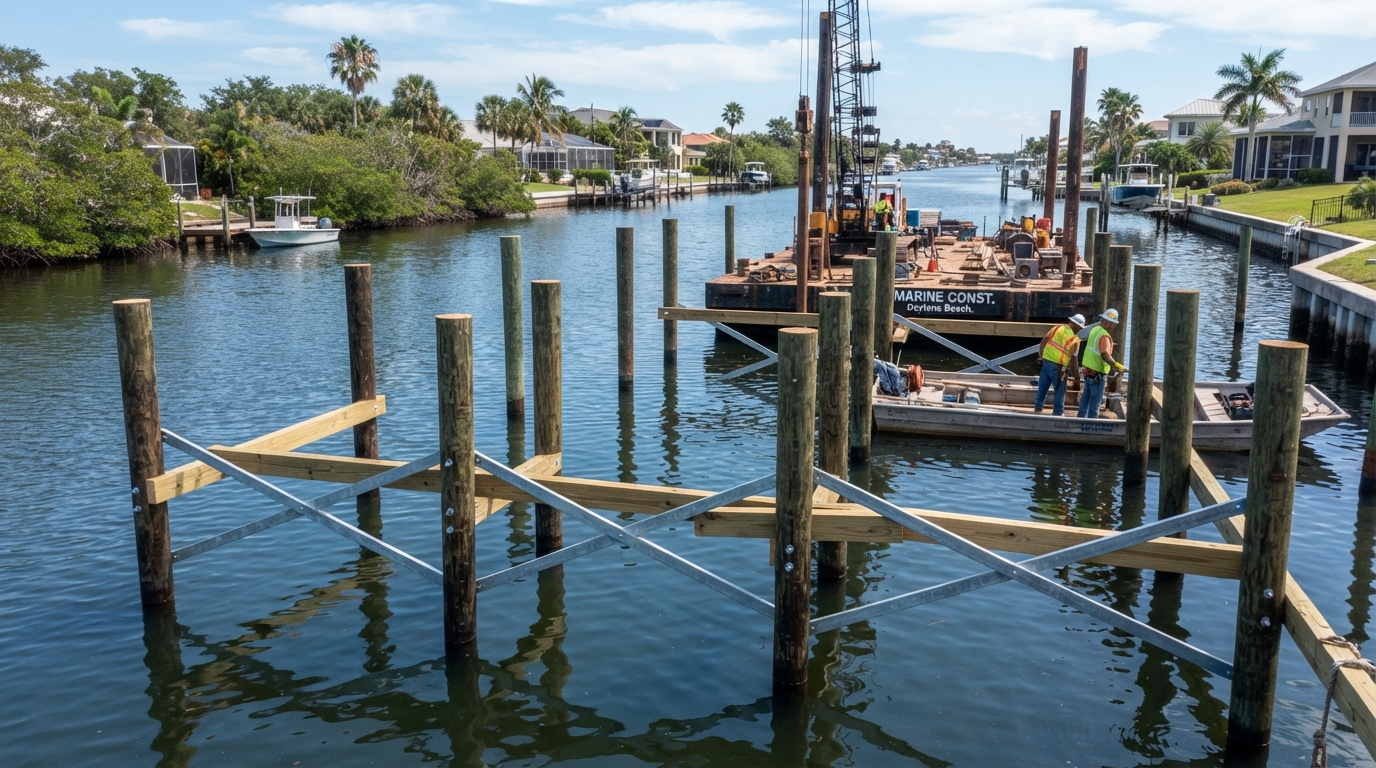
Fixed Dock Extensions
- Additional pilings to carry the extended load
- Framing tied into the existing structure
- Decking matched or coordinated with the existing surface
- Load paths evaluated for the new length
- Water depth and piling placement assessed
Floating Dock Extensions
- Additional modular sections connected to the existing dock
- Gangway or hinge connections evaluated for the added length
- Flotation capacity checked for the added section
- Anchoring or piling guides assessed for the new layout
- Water-level changes considered in the connection design
Structural and Access Questions Before Dock Expansion
An existing dock should not be assumed to carry additional loads. The structure, pilings, and access path are evaluated before an extension is designed.
- Existing pile and framing capacity for the added length
- Load paths from the extension back to the shore
- Proposed dimensions and their relationship to the waterway
- Water depth and tides or changing water levels
- Vessel maneuvering room for the new layout
- Land access for equipment and materials
- Adjacent waterfront uses and navigation
Water Depth, Navigation and Environmental Review
Extending beyond the current footprint can raise questions that a repair within the existing layout does not. The new length may reach different water depth, affect navigation, or interact with sensitive habitat. A neighboring dock's layout does not prove an extension is permissible — each property is reviewed on its own conditions.
Applicable permitting and authorization depend on the parcel, waterbody, and scope. An extension is not automatically exempt from review simply because a dock already exists. Project-specific determinations should be referred to the appropriate authority and qualified professionals.
- Water depth at the proposed extension length
- Tides or changing water levels affecting access
- Navigation and adjacent waterfront uses
- Sensitive habitat where relevant
- Applicable permitting and authorization
Dock Extensions Versus Repairs or Replacement
A structural repair addresses damage within the existing dock. A decking replacement refreshes the surface. A rebuild within the existing footprint restores the dock along its current layout. An extension changes the footprint, which can raise different design and approval questions. A boat lift is not automatically included in an extension — lift planning is a separate consideration that depends on the dock's structure and the vessel.
Related Services Near Daytona Beach
Explore other marine construction topics relevant to your waterfront project.