
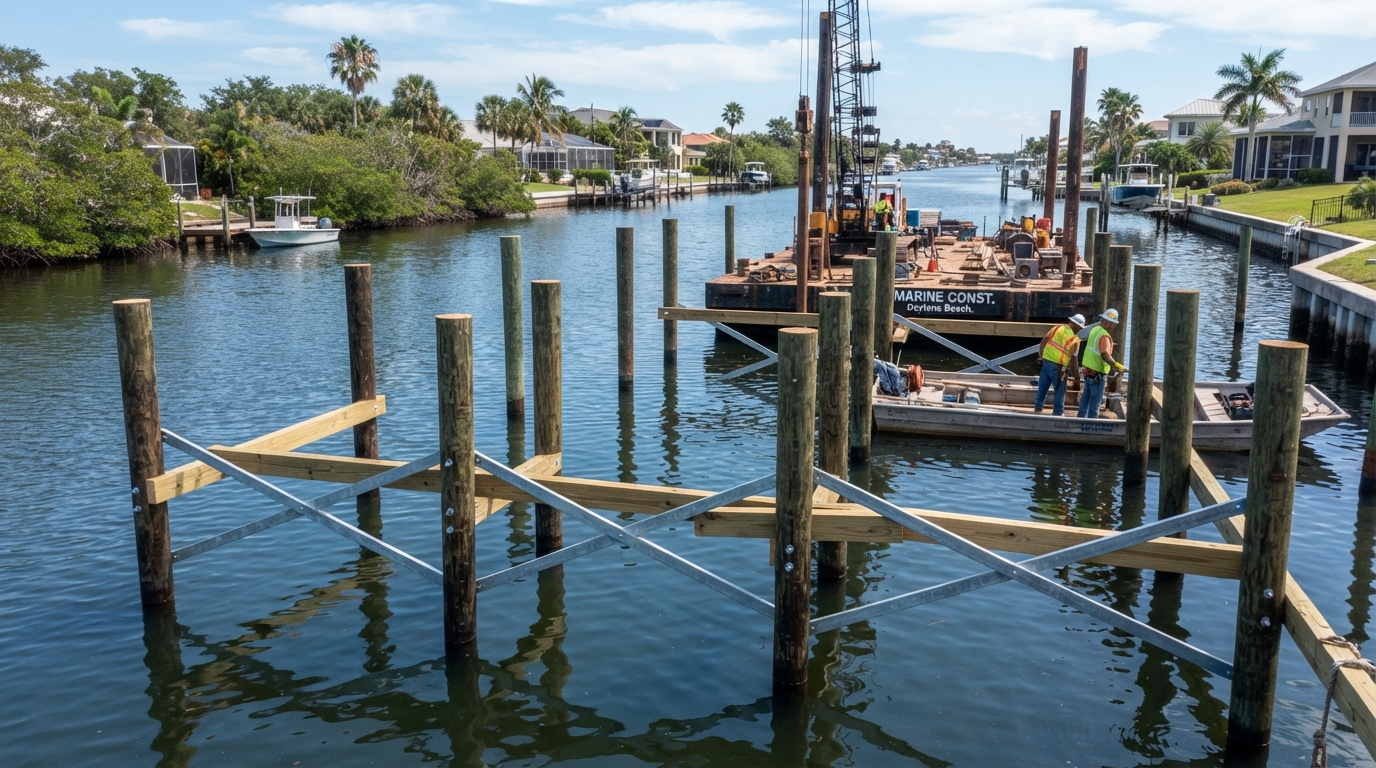
Commercial Marine Pile Driving & Installation Daytona Beach
Commercial marine pile driving near Daytona Beach is the foundation work beneath docks, marinas, piers, and gangways — the pilings that carry every load those structures see. This page explains pile-installation planning considerations without claiming the brand owns pile-driving rigs, barges, cranes, or specialized heavy marine equipment, and without asserting certified pile-driving expertise.
Request a Marine Construction Estimate
Share your dock, seawall, or boat lift project details and we'll review the requirements for your Daytona Beach area waterfront property.
Commercial Marine Pile Driving in Daytona Beach
Marine pilings are the structural foundation for most fixed waterfront construction. They carry docks, piers, gangway supports, and selected shoreline structures, transferring vertical and lateral loads into the bottom. The right pile type, material, embedment, and installation method depend on qualified design, geotechnical information, the structural loads the pile will carry, site access, and environmental constraints — not a generic specification.
This page does not advertise specific maximum pile sizes, depths, equipment capacities, or production rates without documented support, and does not claim licensed engineering or certified pile-driving expertise without confirmed credentials. Pile selection and installation method are referred to qualified professionals and manufacturer documentation.
- New pile installation for docks and waterfront structures
- Replacement of deteriorated marine pilings
- Piling reinforcement and repair-and-wrap concepts
- Soil conditions and geotechnical review
- Site access and equipment logistics
- Environmental sensitivities and applicable approvals
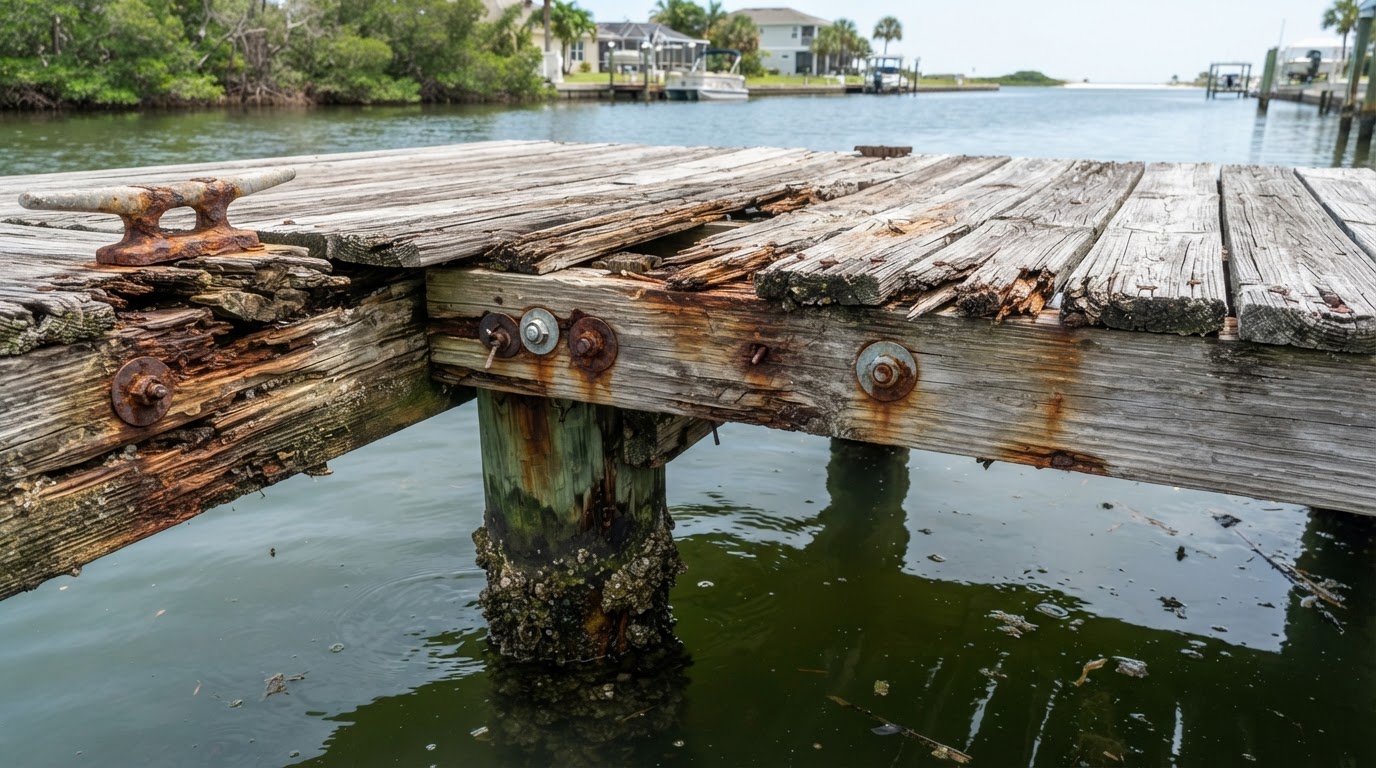
Pile Installation for Docks and Waterfront Structures
Marine pilings support a range of waterfront structures: commercial docks, marina slips, fishing piers, gangway supports, and selected shoreline structures where a pile foundation is appropriate. Each application carries different loads — a pier built for public foot traffic, a dock built for vessel berthing, and a gangway support each place different demands on the piles beneath them.
This page distinguishes new pile installation, replacement of deteriorated piles, piling reinforcement concepts, and piling repair and wrapping. These are different scopes: wrapping a deteriorated pile is not the same as replacing it, and reinforcing a pile is not the same as installing a new foundation. The appropriate approach depends on the pile's condition and the structure's requirements.
- Commercial docks and marina structures
- Fishing piers and gangway supports
- Selected shoreline and retaining structures
- New installation versus replacement versus repair
- Reinforcement concepts versus wrap-based maintenance
Marine Piling Materials and Foundation Considerations
Pile material, alignment, and embedment are selected for the site's soils, water depth, loads, and exposure — not assumed from a standard section.
Pile Material
Timber, concrete, steel, or composite piles each suit different loads, environments, and service lives. Selection follows design and site conditions.
Embedment
How deeply a pile is driven affects its load capacity and stability. Embedment depends on soil conditions, water depth, and structural loads.
Alignment
Pile placement and bracing affect how the structure carries lateral loads from wind, current, vessels, and users. Alignment follows the layout.
Soil Conditions
Bottom soils — soft muck, sand, hard bottom — determine what a pile can carry and how it is installed. Geotechnical information is site-specific.
Water Depth
Depth at the pile location affects pile length, equipment access, and how the structure relates to water-level changes.
Structural Loads
The loads the pile must carry — from the structure, vessels, wind, current, and users — drive its type, size, and spacing.
Site Access and Equipment Planning Near Daytona Beach
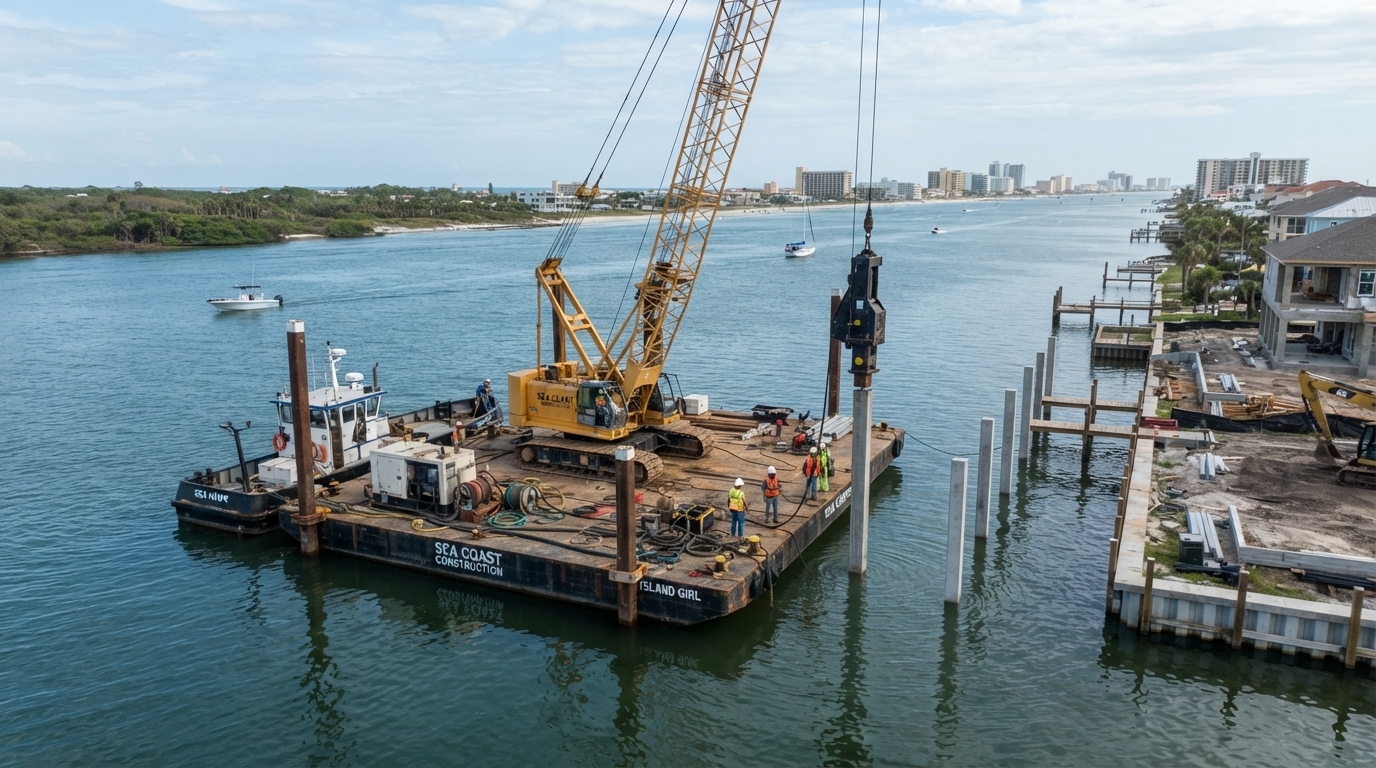
Pile driving requires equipment and access. A barge-mounted rig, crane, vibratory or impact hammer, and material staging all need waterway room, upland access, and a sequencing plan that respects the site and its neighbors. A tight canal, an occupied marina, and an open riverfront each present different equipment-access constraints, and the method that works at one may not suit another.
This page does not claim the brand owns pile-driving rigs, barges, cranes, vibratory hammers, or impact hammers without verification, and does not advertise specific equipment capacities or production rates. The appropriate equipment and method depend on the site and confirmed service capabilities.
- Barge versus land-based pile-driving access
- Waterway width and upland staging room
- Hammer type and method for the site
- Adjacent structure and neighbor coordination
- Equipment access confirmed against site conditions
Soil Conditions and Qualified Structural Design
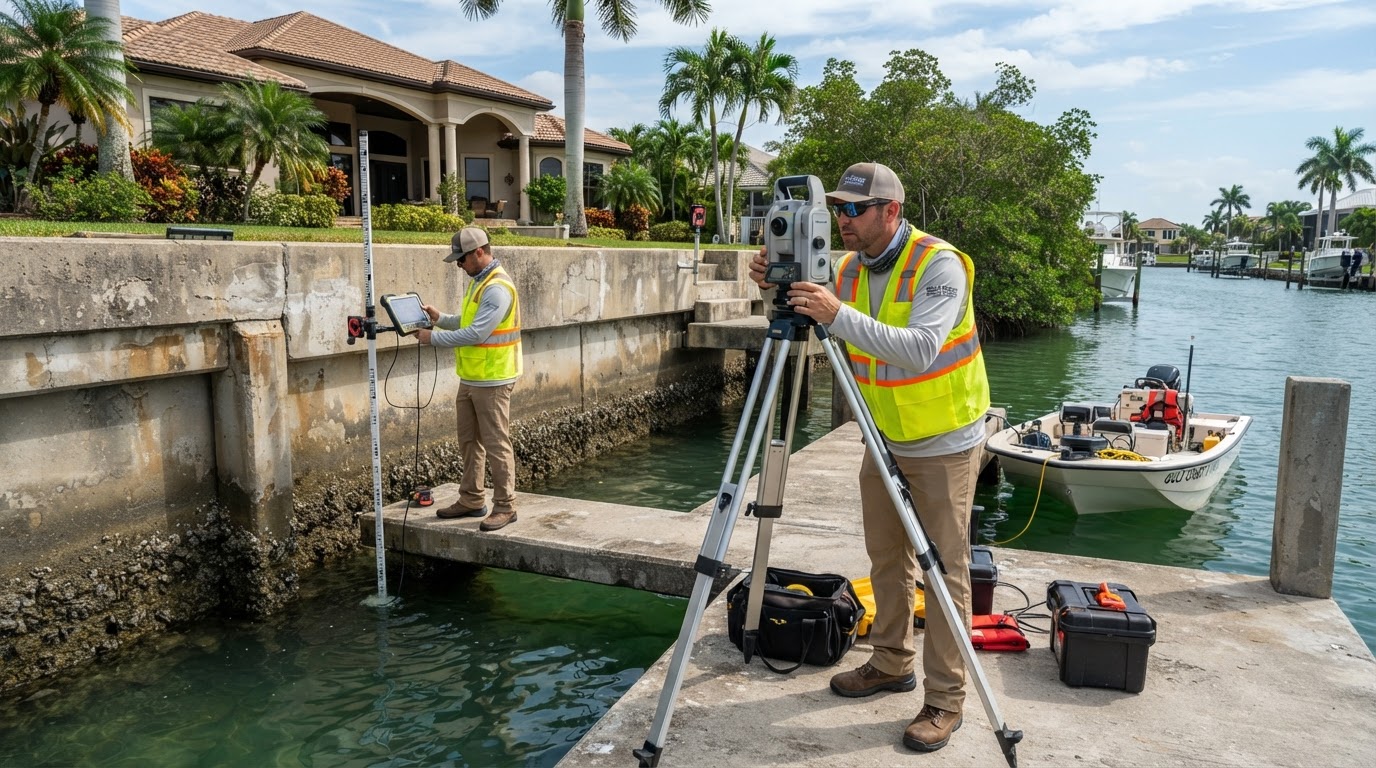
Soil conditions drive pile design more than almost any other factor. A pile in soft muck behaves differently than one in sand or hard bottom, and the load a pile can carry depends on the soils it bears on. Geotechnical information — where available — informs pile type, embedment, and spacing, but this page does not prescribe installation depths or engineering loads. Those are qualified-professional determinations.
Vibration and noise are real considerations on pile-driving projects, especially near occupied facilities, homes, or sensitive habitat. Whether a particular driving method works at a location depends on the soils, the structure, nearby receptors, and applicable review — not a guarantee that one method suits every site.
- Geotechnical review of bottom soils
- Pile type, embedment, and spacing from design
- Structural loads referred to qualified professionals
- Vibration and noise considerations near receptors
- Installation method matched to site and structure
Pile Replacement Versus Piling Repair
Whether a deteriorated pile is replaced, reinforced, or wrapped depends on its actual condition and the loads it carries — not a blanket choice.
Pile Replacement
- Removing a failed or undersized pile
- Installing a new pile sized to current loads
- Addressing advanced deterioration or movement
- New embedment for the site's soils
- Subject to current design and approvals
Piling Repair & Wrapping
- Protective wrapping at the waterline
- Addressing surface deterioration where sound
- Not automatically a structural repair
- Does not restore load-bearing capacity on its own
- Maintenance rather than foundation replacement
Environmental and Permit Review
Commercial pile driving may involve local construction review, state environmental review, submerged-lands considerations, navigational review, and federal review depending on the site and scope. Habitat, protected-species, noise, and vibration concerns are site-specific and subject to current authority and qualified review. This page does not provide unsupported structural specifications or equipment claims, and does not invent permit approvals or agency determinations. Project-specific determinations are referred to the applicable authority and qualified professionals.
Related Services Near Daytona Beach
Explore other marine construction topics relevant to your waterfront project.
Frequently Asked Questions About Commercial Pile Driving in Daytona Beach
Planning a Commercial Piling Project?
Share the structure the piles will support, approximate pile count and layout, water depth, bottom conditions, access constraints, and any environmental or scheduling considerations. That context helps frame a commercial pile-driving approach suited to your site, structure, and what review may apply.