
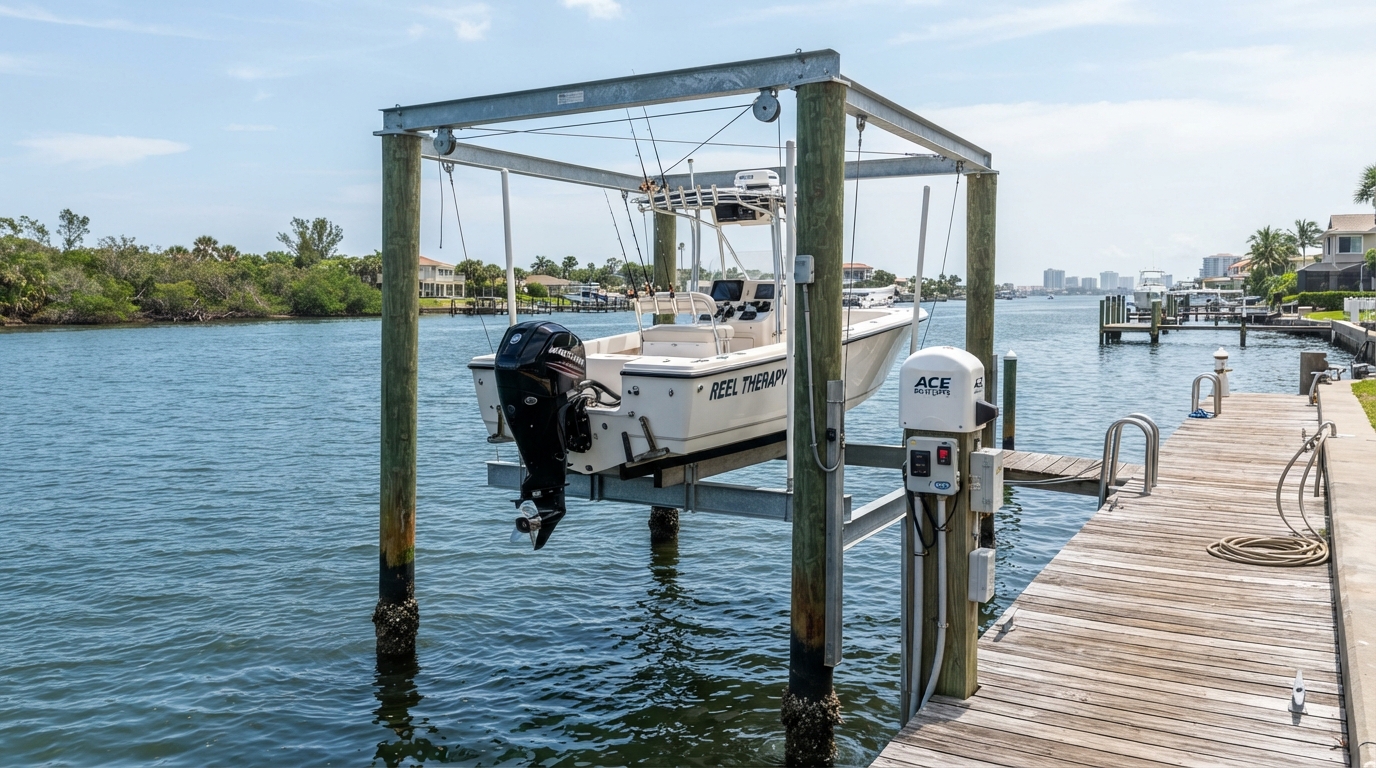
Dock Upgrades for Larger Boats & Marine Construction Daytona Beach
Upgrading to a larger boat can affect more than the available dock length. This page explains how a vessel change in Daytona Beach may influence dock loads, vessel clearance, piling capacity, lift compatibility, and layout — and why the existing dock's suitability cannot be determined from the size of the boat currently using it.
Request a Marine Construction Estimate
Share your dock, seawall, or boat lift project details and we'll review the requirements for your Daytona Beach area waterfront property.
Dock Upgrades for Larger Boats in Daytona Beach
A new vessel often brings a longer hull, a wider beam, more loaded weight, greater draft, and different wind exposure. Each of those changes can affect whether an existing dock, lift, or mooring arrangement still works safely. A dock that performed well for one boat is not automatically suited to a larger one simply because the slip looks long enough.
Dock upgrades for larger boats range from minor improvements to structural reinforcement, piling replacement, dock expansion, boat lift upgrades, or a complete dock replacement. The right scope depends on the vessel, the existing structure, the waterbody, and applicable review — not on a single dimension.
- Vessel length, beam, draft, and loaded weight
- Hull configuration and drive arrangement
- Wind exposure and mooring requirements
- Dock layout and vessel clearance
- Piling and structural capacity
- Approach and maneuvering room
- Water depth and lift compatibility
Can Your Existing Dock Accommodate a Larger Vessel?
The fact that a dock currently holds a boat does not establish its capacity for a heavier or wider one. Loaded weight, beam, draft, and mooring loads all change with the vessel, and the existing pilings, framing, connections, and lift must be evaluated against those new loads. A qualified assessment compares the vessel's documented specifications against the dock's actual structural condition rather than assuming the slip is adequate.
Dock Length, Width and Vessel Clearance Considerations
Clearance is about more than fitting the boat into the slip. Maneuvering room, windage, and access all change as the vessel grows.
- Slip length relative to overall vessel length
- Beam clearance on both sides of the slip
- Maneuvering room for approach and departure
- Wind exposure on a taller or wider vessel
- Cleat and mooring placement for the new load
- Boarding access from the dock to the vessel
Piling and Structural Questions Near Daytona Beach
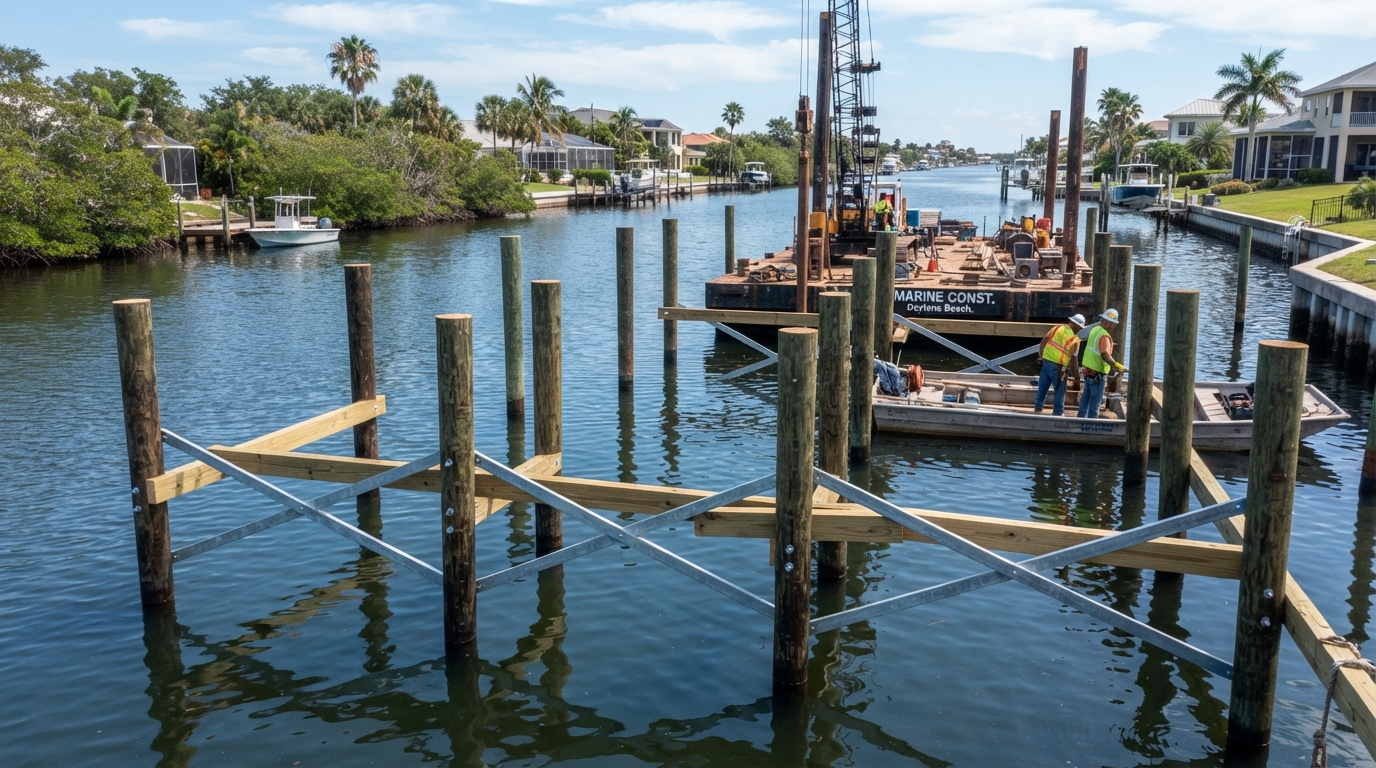
A larger vessel transfers greater mooring and impact loads into the dock, and those loads travel through connections, framing, and pilings into the bottom. Existing pilings may be adequate, may need reinforcement, or may require replacement depending on their condition, spacing, embedment, and the new loads.
Structural suitability cannot be judged from the size of the boat currently using the dock. A piling that supported a lighter vessel may be undersized, deteriorated, or poorly connected for a heavier one. Qualified evaluation considers the pilings, connections, bracing, and framing together.
- Existing piling condition, spacing, and embedment
- Connection and bracing capacity for new loads
- Framing span and load paths to the shore
- Potential need for additional or replacement pilings
- Hardware corrosion and fastener condition
Boat Lift Compatibility for Larger Boats
A lift rated for the previous boat may not suit the new one. Lift selection follows current manufacturer documentation and qualified design review.
Capacity & Vessel Fit
Lift capacity must match the vessel's documented loaded weight, beam, and hull configuration. A lift is not selected from length alone, and an undersized lift is a safety concern.
Structural Support
The dock or independent lift pilings must carry the combined weight of the lift and vessel. Existing supports are evaluated before any lift upgrade is planned.
Depth & Clearance
Water depth, changing water levels, and hull draft affect whether the vessel can rest on the lift without grounding or straining the cradle.
Power & Controls
Larger lifts may have different power requirements. Electrical work is referred to appropriately qualified professionals and applicable codes.
Dock Extension Versus Full Replacement
A larger boat does not always require a new dock. The appropriate scope depends on what the existing structure can support.
Targeted Upgrades
- Reinforcing or replacing selected pilings
- Adding cleats or mooring points
- Upgrading a boat lift
- Adjusting framing or connections
- Reconfiguring boarding access
Full Replacement
- Dock too small or structurally inadequate
- Widespread piling or framing deterioration
- Layout cannot be adapted to the vessel
- Water depth or access no longer suitable
- Permitting supports a new configuration
Water Depth and Access Planning
A larger vessel may draw more water and need more room to maneuver, which can affect whether the existing dock location and water depth still work. Depth at the slip, the approach path, and changing water levels are all considered alongside the structural questions.
Access from land for equipment and materials also matters if reinforcement, piling replacement, or a new lift is needed. Site-specific conditions and applicable review shape what is feasible at a given property.
- Water depth at the slip and along the approach
- Tides or changing water levels affecting draft
- Maneuvering room for the larger vessel
- Land or water access for construction equipment
- Applicable permitting and authorization
Evaluating Existing Utilities
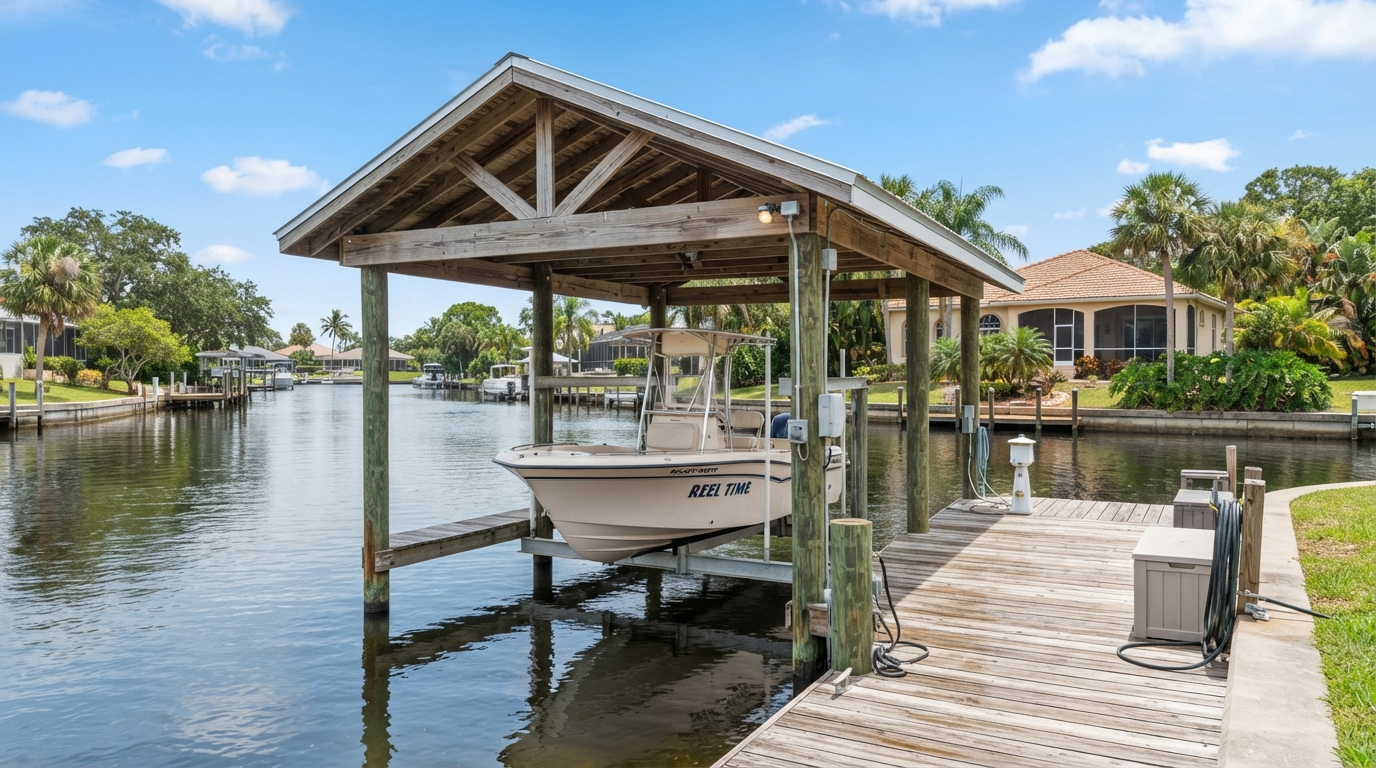
A vessel upgrade may also change utility needs — shore power capacity, water, or lighting. Existing dock utilities are reviewed for compatibility with the new vessel, and any electrical work is referred to appropriately qualified professionals. Share the vessel specifications and your current dock conditions so the structural, lift, and utility questions can be evaluated together.
Related Services Near Daytona Beach
Explore other marine construction topics relevant to your waterfront project.