
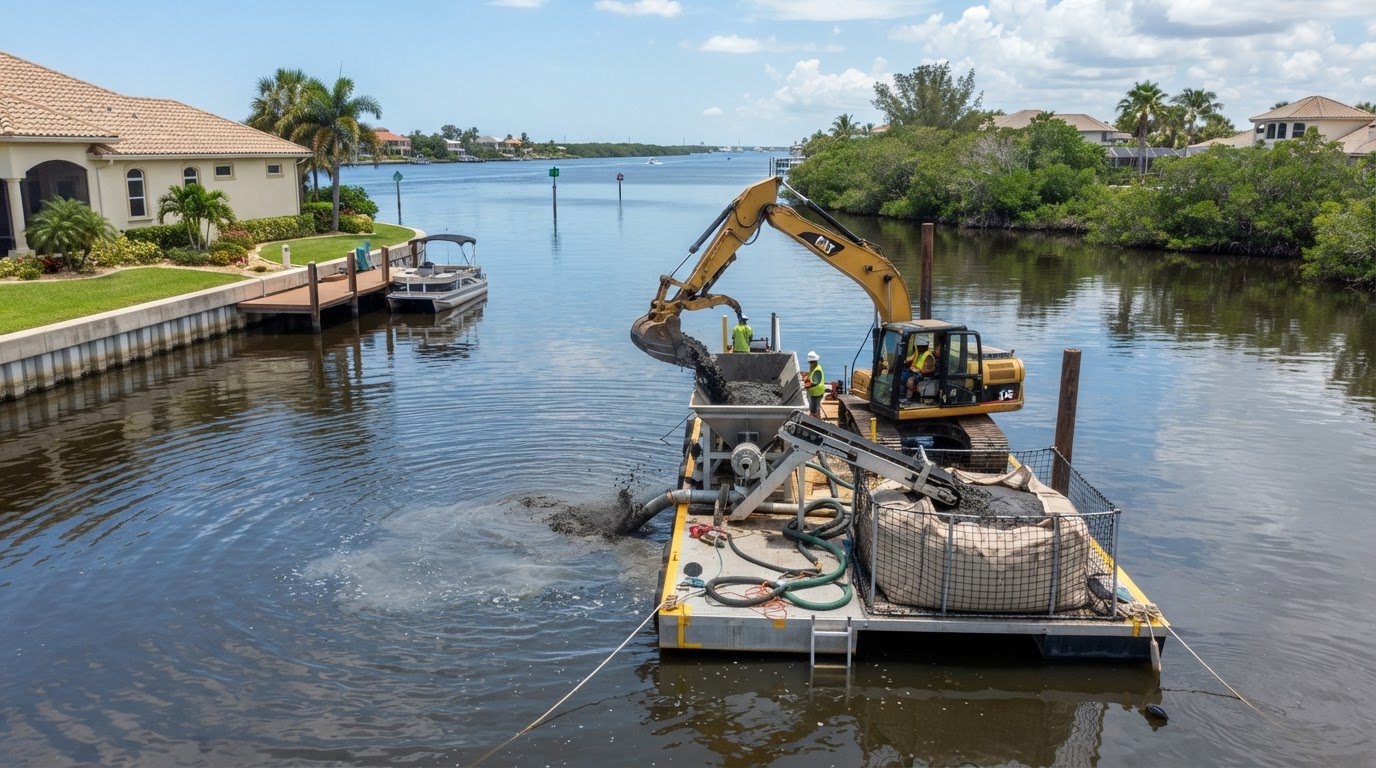
Commercial Dredging & Marine Site Planning Daytona Beach
Commercial dredging near Daytona Beach is the planned removal or management of underwater material for a defined purpose — not ordinary dock repair, routine seawall maintenance, or unrestricted sediment removal. This page explains dredging project planning without advertising dredging vessels, disposal sites, excavation capacity, or specialized equipment ownership.
Request a Marine Construction Estimate
Share your dock, seawall, or boat lift project details and we'll review the requirements for your Daytona Beach area waterfront property.
Commercial Dredging Planning in Daytona Beach
Dredging is the planned removal or management of underwater material for a defined purpose, subject to applicable evaluation and authorization. A marina deepening a slip approach, a facility restoring navigational access, and a waterfront development establishing a new basin each have different purposes, footprints, sediment conditions, and review paths — and none is automatically authorized simply because a dock or marina already exists.
This page distinguishes maintenance dredging, new dredging, localized sediment concerns, navigation-channel considerations, and commercial waterfront development. It does not claim previously dredged areas are exempt from review, does not promise a particular dredging depth or schedule, and does not suggest dredging is a default solution for every shallow-water dock.
- Maintenance dredging versus new dredging
- Water depth, sediment, and navigation questions
- Material handling and disposal planning
- Equipment access and site logistics
- Environmental review and required authorizations
- Coordination with nearby marine structures
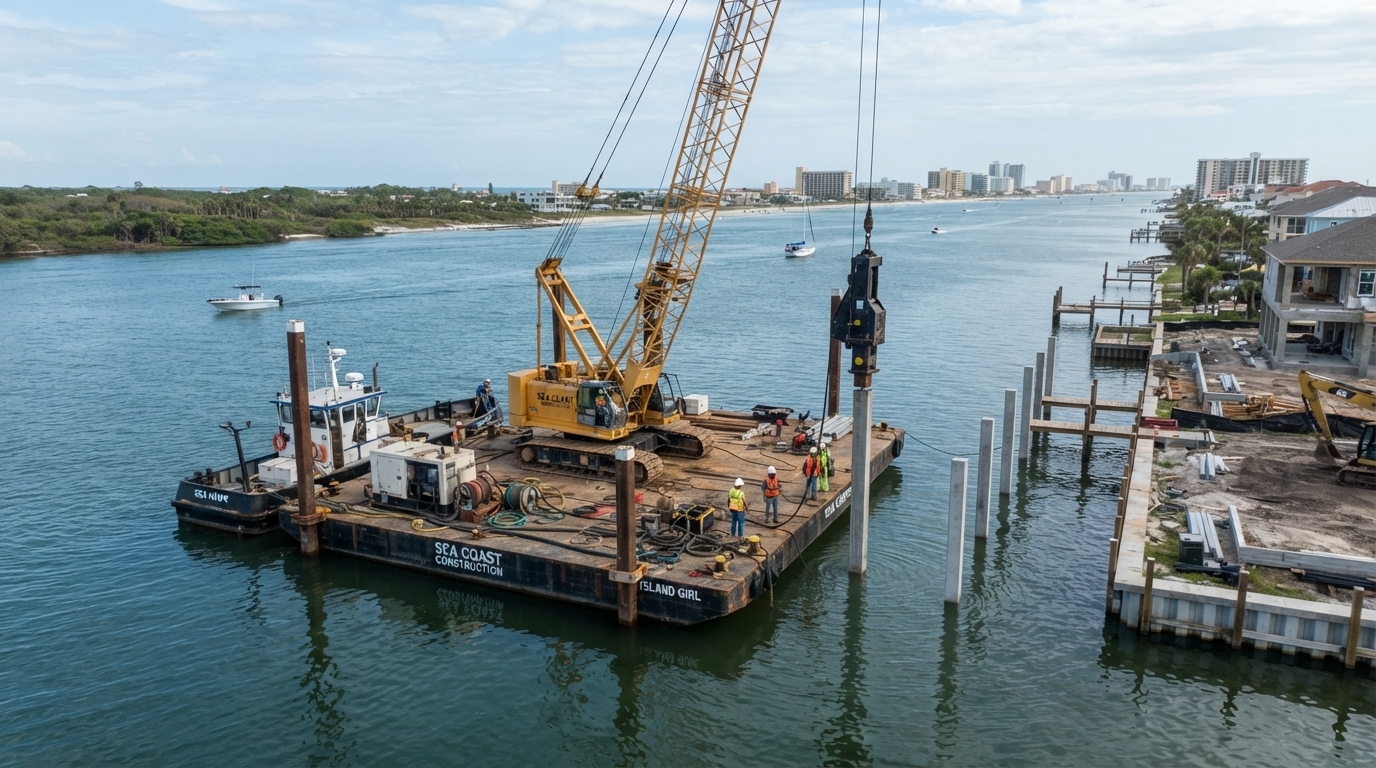
When Waterfront Facilities Consider Dredging
Facilities consider dredging when water depth limits the vessels that can reach a slip, when sediment accumulation has reduced navigational access, or when a proposed development needs a basin or channel that does not yet exist. The trigger is a defined access or development need — not a shallow reading on its own. A dock that is shallow at low tide may be perfectly adequate for the vessels that use it.
Dredging is not a default solution for every shallow-water dock. Where depth is marginal, alternatives — a longer dock reaching deeper water, a different vessel, or a floating configuration — may be more appropriate than removing bottom material. Whether dredging is even permissible at a given location depends on the sediment, the waterbody, the project footprint, and the applicable review.
- Navigational access limited by accumulated sediment
- Vessel draft that no longer fits the existing depth
- Proposed development requiring a new basin or channel
- Maintenance of a previously dredged area
- Coordination with docks, ramps, and shoreline structures
Maintenance Dredging Versus New Dredging
Maintenance dredging restores a previously authorized depth; new dredging creates a depth or footprint that did not exist before. The two are not treated the same way.
Maintenance Dredging
- Restoring a previously authorized depth
- Removing sediment that has re-accumulated
- Generally within an existing footprint
- Still subject to current review and conditions
- Not automatically exempt from authorization
New Dredging
- Creating a depth or footprint that did not exist
- New basin, channel, or slip approach
- Different review considerations than maintenance
- May affect habitat, navigation, and adjacent uses
- Subject to applicable environmental and permitting review
Water Depth, Sediment and Navigation Questions
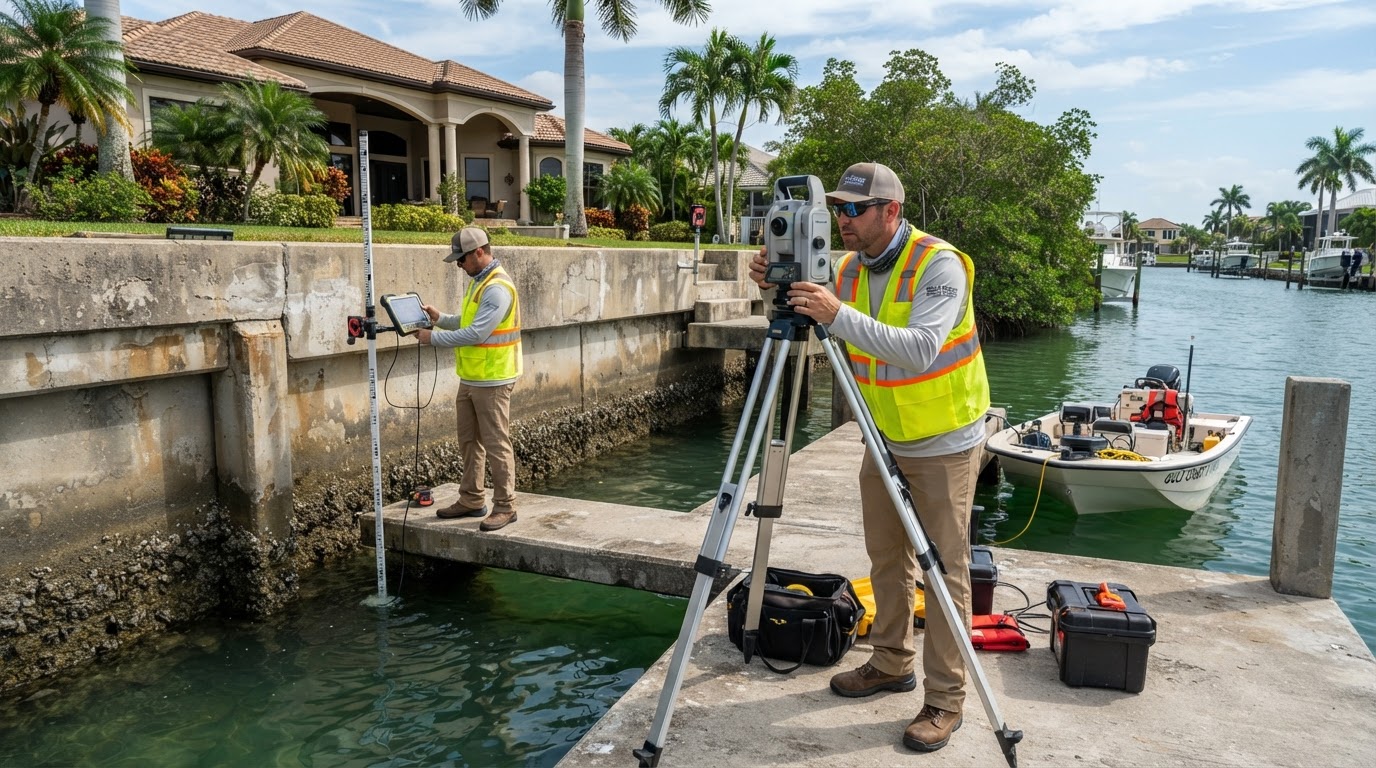
Dredging planning starts with the actual depth, the sediment that fills it, and the navigation the work is meant to support — not an assumed footprint.
Existing Depth
Current depth at the proposed dredging area, measured against the draft of the deepest vessel expected to use it, defines the gap the project would address.
Sediment Conditions
Sediment type, layer depth, and possible contamination affect how material is handled, tested, and disposed of. Sediment information is site-specific.
Project Footprint
The area and depth proposed for dredging define the volume of material and the potential effect on habitat, navigation, and adjacent structures.
Navigation
How the dredged area relates to navigation channels, slips, and vessel maneuvering affects whether the project achieves its access purpose.
Adjacent Structures
Docks, seawalls, ramps, and neighboring facilities near the dredging area may be affected by the work and need to be considered in planning.
Water Movement
Current, tide, and sediment transport affect whether a dredged depth will persist or re-fill, and how the work is sequenced.
Dredging Equipment Access Near Daytona Beach
Dredging requires equipment and access. A pipeline, mechanical, or hydraulic operation each has different staging, waterway-room, upland-access, and material-handling requirements. A tight canal, an occupied marina, and an open waterfront each present different equipment-access constraints, and the method that works at one may not suit another.
This page does not claim the brand owns dredging vessels, disposal sites, or excavation equipment without verification, and does not advertise specific excavation capacities or production rates. The appropriate equipment and method depend on the site, the sediment, and confirmed service capabilities.
- Equipment type matched to sediment and site access
- Waterway room and upland staging
- Material handling and transport logistics
- Coordination with operating facilities
- Equipment access confirmed against site conditions
Material Handling and Disposal Planning
Removed sediment has to go somewhere, and where it goes is a project decision, not an afterthought. Material handling and disposal planning considers the sediment type, possible testing requirements, the volume produced, and the disposal or beneficial-use destination. Some sediments can be managed through beneficial reuse; others require specific handling. This page does not promise a particular disposal method or destination.
Potential testing requirements depend on the sediment, the waterbody, and the applicable review. Sediment testing — where required — informs whether material can be reused, placed upland, or requires a different handling path. These are site-specific determinations, not a universal procedure.
- Sediment type and possible testing requirements
- Volume of material the project would produce
- Disposal or beneficial-use destination
- Handling method matched to the sediment
- Disposal planning as part of project scope, not an add-on
Environmental Review and Required Authorizations
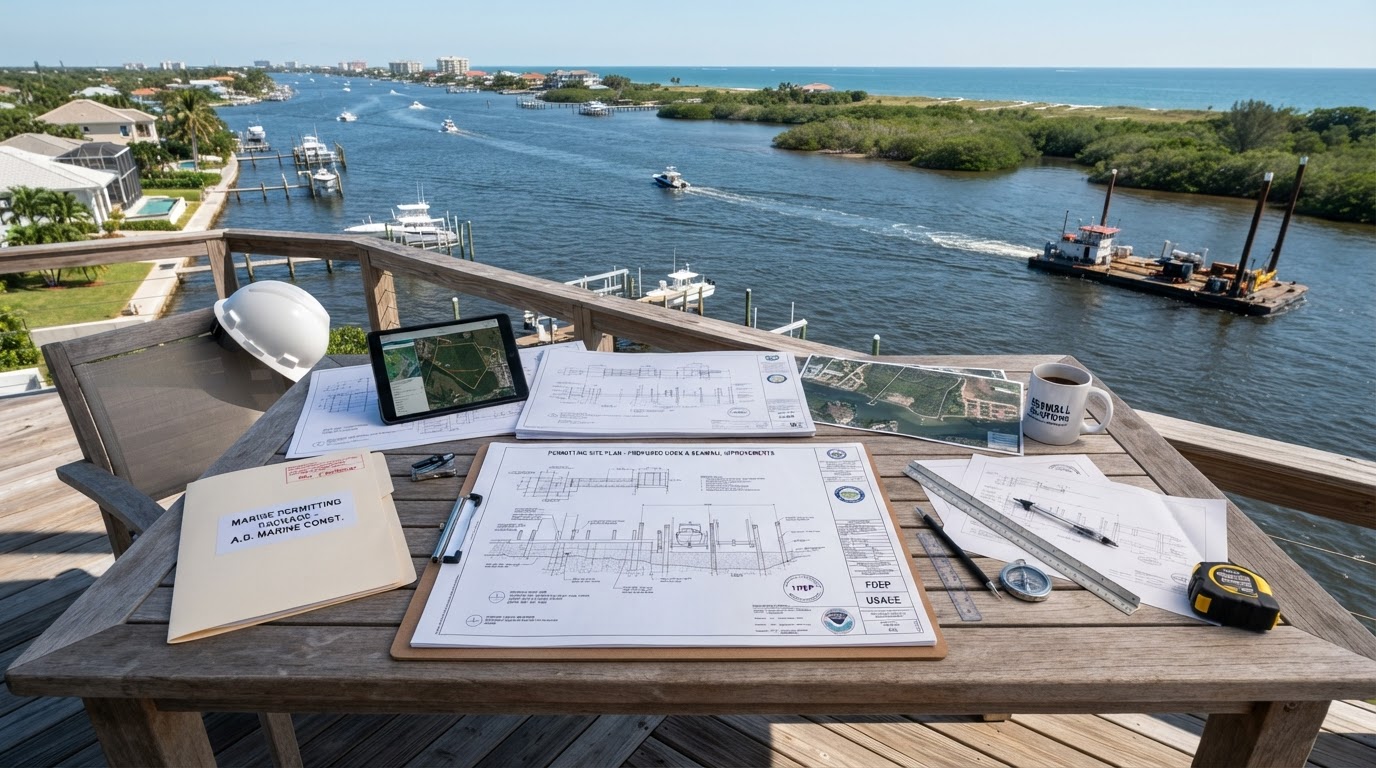
Commercial dredging may involve local review, state environmental review, submerged-lands considerations, federal review, and habitat or water-quality considerations depending on the site and scope. Previously dredged areas are not automatically exempt from review, and an existing dock or marina does not automatically authorize dredging. This page does not invent exemptions, disposal approvals, or agency determinations. Project-specific determinations are referred to the applicable authority and qualified professionals.
Related Services Near Daytona Beach
Explore other marine construction topics relevant to your waterfront project.
Frequently Asked Questions About Commercial Dredging in Daytona Beach
Planning a Commercial Dredging Project?
Share the waterbody, the existing and desired depth, the area being considered, the vessel use driving the project, any known sediment conditions, and access constraints. That context helps frame a dredging planning approach suited to your facility and what review may apply.